


FW
EU brassiere, girdle, corset market retains momentum in 2019
 Growing modestly at 3.5 per cent over previous year, the EU brassiere, girdle and corset market reached $3.2 billion in 2019. As per Indexbox stats, the market remained relatively stable from 2013-19 with an average annual growth rate of 2.4 per cent. The most prominent growth was recorded in 2018 at 6.6 per cent y-o-y. Growth peaked further in 2019 and the momentum is expected to sustain in future too.
UK emerges largest consumer
UK with 156 million units was the largest consumer of brassiere, girdles and corsets in 2019 followed by the UK with a consumption of 156 million, France with 100 million units and Germany with 99 million units. These countries comprised 44 per cent of total global consumption followed by Spain, Italy, the Netherlands, Portugal, Poland, Ireland, Austria, the Czech Republic and Greece.
The biggest consumption increase from 2013 to 2019 was recorded in Ireland, while other countries experienced more modest paces of growth. In value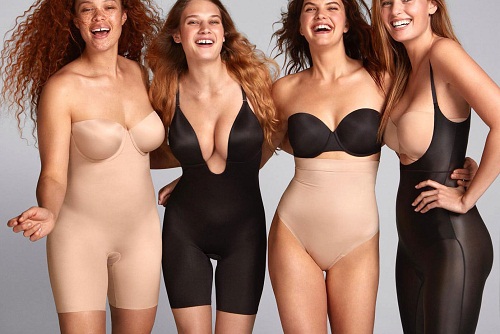 terms, Germany was the largest consumer of brassiere, girdle and corsets in the European Union with consumption worth $525 million. It was followed by the UK with consumption worth $491 million and France with $457 million worth of consumption. Together, these two countries had 47 per cent share in the total market while Spain, Italy, the Netherlands, Poland, Austria, Ireland, Portugal, the Czech Republic and Greece had 39 per cent share.
The largest per capita consumers in 2019 were Ireland with average consumption of six units per person, Portugal with 3.44 units per person and Austria with 3.26 units per person.
Croatia top producer
EU’s production of brassieres, girdles and corsets declined 14.5 per cent to 56 million units in 2019. Though production peaked in 2013 to 104 million units it failed to gain momentum from 2014 to 2019. With 11 million units, Croatia emerged as the biggest producer of brassiere, girdle and corsets in 2019 followed by Spain and Italy which together had 50 per cent share of total production. These were followed by Romania, Poland, Latvia, Hungary, Sweden, Portugal, the Czech Republic, Cyprus and Austria with 42 per cent share.
The most notable growth during this period was attained by Sweden, while production by other countries grew at a modest pace.
UK retains top position as imports increase
In 2019, import of brassieres, girdles and corsets in the European Union increased by 2 per cent to 1.1 billion units, Total import volume increased at an average annual rate of +4.4 per cent, with a few prominent fluctuations. The value of brassiere, girdle and corset imports declined slightly to $4.2 billion in 2019.
In 2019, the UK with 180 million units, Germany with 156 million units and France with 140 million units were the major importers of brassieres, girdles and corsets in the European Union. Together, these countries constituted 43 per cent of total import share. These were followed by Spain with 8.2 per cent share, followed by Italy, Austria , the Netherlands and Poland .
The most notable growth in imports from 2013 to 2019 was attained by Ireland, while imports for the other leaders experienced more modest paces of growth. In value terms, Germany, France and the UK were the largest import markets constituting 48 per cent of total imports. These were followed by Italy, the Netherlands, Spain, Austria, Poland, Belgium, the Czech Republic, Portugal and Ireland with 42 per cent share.
Streetwear brand Supreme merges with VF Corp
Streetwear brand Supreme has merged with multi-fashion player VF Corporation as investors Carlyle Group and Goode Partners have sold their stakes in the brand. The merger will further accelerate VF’s hyper-digital business model transformation and drive its commitment to top quartile total shareholder return and long-term value creation. It will validate its vision and strategy to further evolve its portfolio of brands to align with the total addressable market opportunities driving the apparel and footwear sector.
The partnership will help Supreme maintain its unique culture and independence, while allowing it to grow on the same path we’ve been on since 1994. The transaction is expected to be completed late in calendar year 2020, subject to customary closing conditions and regulatory approval. Additional details regarding the transaction and the strategic rationale supporting it will be reviewed during a VF conference call.
Forum for the Future invites US Cotton Trust Protocol to join Cotton 2040 coalition
Nonprofit organization, Forum for the Future has invited US Cotton Trust Protocol to join its Cotton 2040 coalition. The Trust Protocol also will be included in Cotton 2040’s CottonUP guide, a toolkit to help sourcing directors make sustainable decisions. The CottonUP guide to sourcing sustainable cotton seeks to address one of the main barriers for companies looking to start sourcing or increase the amount of sustainable cotton they source: the time and resource required to research and implement the most appropriate sourcing approach for their organisation’s sustainability priorities. The guide highlights the business case and main sourcing options for sustainable cotton, provides guidance on creating a sourcing strategy and on working with suppliers, and shares case studies from companies that have already navigated the complex challenges of sourcing more sustainable cotton.
The coalition is a unique partnership that brings together representatives from standards, producers, brands and retailers, and existing industry initiatives specifically to build on and accelerate collective action to scale up and overcome barriers to sustainable cotton uptake across multiple standards.
The US Cotton Trust Protocol is a new system for responsibly-grown cotton that provides annual data for six areas of sustainability aligned with the UN Sustainability Goals. This year-over-year data, available for the first time, allows brands and retailers to better measure progress towards meeting sustainability commitments.
Transformers Foundation publishes report on ethical business practices
A non-profit organization, Transformers Foundation has published its first white paper: ‘Ending Unethical Brand and Retailer Behavior: The Denim Supply Chain Speaks Up.’ As per Sportswear International, the report focuses on the experiences of denim supply chain vendors, their ethical business practices, and expectations from brands, retailers, and importers. The report aims to inspire the entire denim industry to collaborate for developing fair business relationship codes and offer actionable steps and solutions for all stakeholders. The report features in-depth interviews with executives representing a diverse cross-section of the denim supply chain, including laundries, mills, and cut-and-sew factories in 14 countries informs Marzia Lanfranchi, Intelligence Director, Transformers Foundation, and Alden Wicker, Freelance Journalist.
The report surveys 79 leading denim suppliers and jeans factories. It shows how even the leading denim suppliers with the longest relationships with brands faced significant financial damage from brand, retailer and importer behavior: Many in the supply chain decided to cancel and delay orders, postponed payments and extend payment terms, with no possibility for negotiation or discussion.
Customers such as brands, retailers and importers refused to pay for goods even after they were delivered to the retailer or the next supplier in the chain. One brand tried to lengthen payment terms from 45 to 90 days, impose a discount of 15 per cent as well as delay payments into a months-long repayment schedule. The survey also analyzes commonalities between brands that canceled orders and those who came upon the table with solutions. According to it, independent, privately-owned brands, acted more reasonably which could be attributed to their core culture.
India’s new product origin rules may hamper trade relations with Bangladesh
As per the Export Promotion Bureau and Bangladesh Trade and Tariff Commission (BTTC), India’s new rule to determine the country of origin of a product may have an adverse impact on its imports from Bangladesh. As per government agencies, these rules undermine its efforts to narrow the trade imbalance between the two countries.
According to BTTC, some provisions in these rules contradict with those of SAFTA RoO (rules of origin). Under the SAFTA, most of the exports from the least developed countries (LDCs), including Bangladesh, get duty-free entry to India based on a document termed as the certificate of origin (CoO) – and Operational Certification Procedures or OCP.
Coming into force in January 2006 to increase intra-regional trade in South Asia which accounts for about 5 per cent of the total trade of the region, SAFTA comprises eight members of the South Asian Association for Regional Cooperation or SAARC namely Afghanistan, Bangladesh, Bhutan, India, Maldives, Nepal, Pakistan and Sri Lanka. BTTC scrutinized the new rule in light of SAFTA’s RoO and the OC.
This fall, men’s wear fabrics to move towards casual, activewear: MintModa
Sharon Graubard, Founder and Creative Director, MintModa, sees men’s wear fabrics in the upcoming fall season moving more towards casual and activewear. According to him, tailored pants along with hardwoven are being replaced by soft sweats and gym shorts, most with adjustable waists.
As per a Souring Journal report, Graubard believes, Corduroy is making a comeback, particularly in plush wide-wale versions, and is being used in pants, jackets and outerwear. New shirt fabrics have a bit of shine, mostly in lustrous cottons. Fabrics for outerwear weights tend to be dense, with a boiled-wool effect. Blanket plaids are key, generally large-scale buffalo checks or tartan yarn-dyes, sometimes with a soft brushed surface.
Graubard adds that similar to women’s wear, leather and leather-like looks are key in men’s, not only for moto jackets but for leather pants and leather shirts. Some leathers or leather alternatives have a shiny or metallic finish, which adds a bit of edge to informal ensembles.
According to Edited’s latest blog addressing ‘3 Winning Narratives for Neutrals in Men’s Wear’ neutrals are taking a front seat in men’s wear. Retailers are ramping up investment in neutral comfort stories across both regions. T-shirts remain the top stocked category, followed by shorts and hoodies. Edited notes, investment in outdoors-inspired products and staycation stories are likely to grow in importance if lockdowns continue.
Linen proved to be a standout trend this season, said the Edited report. Use of this fabric grew by 9 percent year over year across retailers in the second quarter. It will continue to remain in focus in future too.
Streetwear also maintained a foothold in the mass market and neutral palettes remain important, Edited noted. The Fall 2020 collection will focus on the functional aspects of clothes with details like pockets, zips, buckles and tech fabrics being at the fore.
TTF organizes online sustainability event
Taiwan Textile Federation (TTF) has organized a two-day online streaming event featuring six premium textile firms in collaboration with the Bureau of Foreign Trade. The six firms are presenting their latest sustainable innovations and displaying Taiwan's competitive advantage in functional and sustainable textiles to the global textile industry.
The two day online streaming event is being held via TTF's Textile Export Promotion Project (TEPP) official Facebook and Youtube from November 11-12, 2020.
According to UN Conference on Trade and Development, considered the second most polluting industry in the world, the fashion industry releases half a million tonne of microfibers every year. This is equivalent of 3 million barrels of oil being dumped into the ocean. The industry uses roughly 20 per cent or about 93 billion cubic meter, of global waste water annually.
Taiwan textile firms have been quick to act to minimize environmental footprints and be more socially responsible. Through innovative research and development, thes firms are developing sustainable fabrics from waste bio-based materials and PET bottles to help lessen the burden on mother earth.
Agitation in northern states hits Surat textile trade
The ongoing Gurjar agitation in Rajasthan and the farmers’ agitation in Punjab and Haryana has cast a dark shadow on the plans of Surat textile traders as buyers are cancelling orders and transporters are refusing to deliver goods. As per reports, northern states including Delhi, Haryana, Punjab and Rajasthan account for nearly 45 per cent of the total turnover of the textile fabrics supplied from Surat. In the last four days, half a dozen-odd buyers in Punjab and Haryana have cancelled orders to the tune of Rs 10 lakh due to the farmers’ agitation.
Narendra Saboo, President, Surat Mercantile Association says, the agitation has destroyed the city’s textile trade. Only few days are left for the Diwali festival and the supply of goods from Surat has almost stopped. Champalal Bothra, Secretary, Federation of Surat Textile Traders’ Association (FOSTTA) informed, transporters in Surat have completely stopped taking the delivery orders to the northern states due to the ongoing agitations, roadblocks and protests.
Amsterdam public bodies, textile firms collaborate for sustainable denim manufacturing
Public bodies and textile firms working across Amsterdam and civic authorities have signed an agreement to manufacture denim products more sustainably. Known as the denim deal, the new international collaboration focuses on making post-consumer textile recycling the new standard in the industry and has been signed by 30 parties.
Signatories to this deal include the Amsterdam city, the Amsterdam Economic Board, the Dutch Ministry of Infrastructure and Water Management and the municipalities of Haarlem and the Zaanstad and brands including Mud Jeans, Kings of Indigo, House of Denim and Scotch & Soda. These signatories have committed to meet certain sustainable standards a part of their operations. This includes agreeing to work as quickly as possible towards a standard of using at least 5 per cent recycled textile in all denim garments.
Scotch & Soda, Mud Jeans and Kuyuchi have also pledged to jointly make three million denim garments containing at least 20 per cent recycled textiles. The city of Amsterdam will support this aim by collecting old textiles from residents and ensuring as many people as possible recycle their denim correctly. The deal will run for three years and at the end of each year a report will be compiled to assess all of the activities undertaken and the results.
Luxury fashion business demands an overhaul
 Pushing industry stalwarts Brooks Brothers and Lord & Taylor to bankruptcy, the global luxury fashion market is crumbling under the weight of the COVID-19 pandemic, says a The New York Times report. Experts are reexamining business models followed by luxury fashion brands. They are also questioning the validity of fashion weeks and urging for a reset of current fashion cycles.
As per Boston Consulting Group estimates, global luxury sales are expected to contract by 25 to 45 per cent this year. The industry is unlikely to achieve pre-pandemic growth levels before 2023 and designers cannot afford to showcase new collections.
Pandemic affects smaller brands as sales drop
At the latest fashion week in New York, small-scale or online only presentations replaced blockbuster catwalk shows. Now, a few Italian and French brands plan to host physical events to showcase their creations. As Antoine Arnault, Head-Communications, LVMH Moët Hennessy Louis Vuitton explains, these shows should not be underestimated as thousands of freelance makeup artists, seamstresses, drivers, security guards and photographers depend on them for their livelihoods.
The pandemic has affected smaller standalone businesses more than large groups like LVMH which recorded a strong uptick in summer sales from Asian countries like Mainland China, Japan and South Korea. However, the group’s fashion and leather goods sales dropped 37 per cent, as international tourism ground to a halt and footfall into global stores was slow to recover.
Turnaround brands remain worst affected
Brands engaged in turnaround efforts like Ferragamo and Burberry have been worst affected by the pandemic. Most of these companies are currently struggling with a large glut of unsold inventory from the spring and summer collections this year. To rid themselves of unsold stocks, brands are using brick and mortar discount outlets and online marektplaces like the Dutch start-up Otrium, said Stefano Todescan, Managing Director, Boston Consulting Group.
Todescan opines, brands that leveraged data to manage stocks fared better. Data usage enabled them to move supplies from the West to better performing regions like the Asian markets. Brands like Hermes and Chanel, who do not offer discounts, are not trend-drive and have a wide product range emerged in particularly good shape.
Analysts expect the importance of Chinese luxury market to grow as North American and European markets continue to remain unpredictable. More offline retailers are expected to go online as consumers move to digital shopping. Amazon aims to collaborate with global luxury brands as it launched a mobile-only luxury store with one brand: Oscar de la Renta.
Brands to fast-track digital commitments
Jose Neves, Chief Executive, Farfetch believes, convenience and safety are the top priorities of customers in 2020, prompting brands to fast-track their digital strategies. The digital marketplace saw a 60 per cent surge in traffic for the second quarter compared to the same period last year — and 500,000 new customers.
TikTok plans to host own online fashion month for a potential audience of roughly 800 million users, with shows by Saint Laurent and JW Anderson. The show will include smaller collections with more timeless pieces. Many brands also expect people to start buying high-priced items despite a severe recession and ongoing layoffs. It is difficult to predict future luxury demand. However, the industry needs to move on and create fashion that lasts for a long time.











