FW
Uniqlo plans stores in China
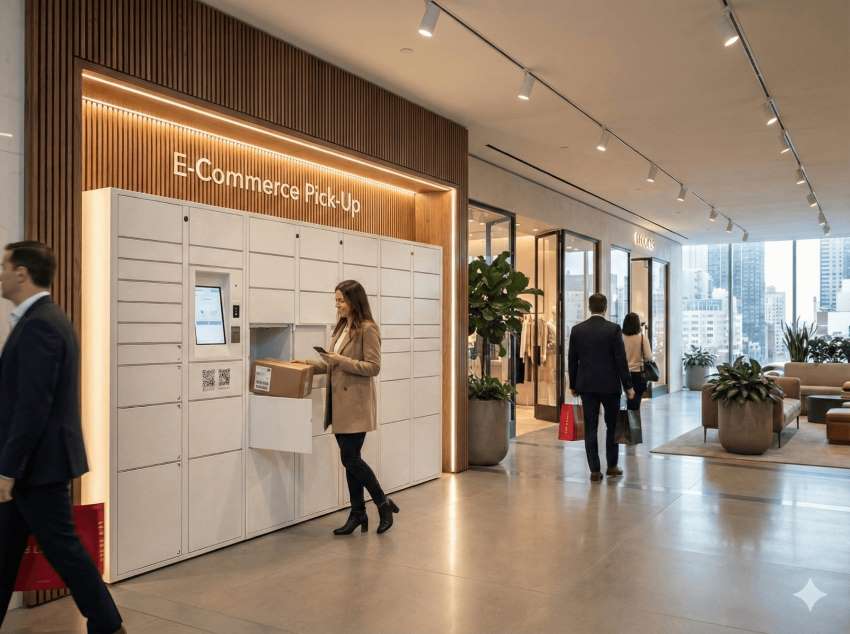
Uniqlo aims at having more than 1000 stores in China in three years. The move comes on the back of Chinese consumers’ soaring demand for upscale clothing. Uniqlo will continue to ride the country's booming consumption upgrade to open more stores in lower tier cities.
As of now, the Japanese clothing brand has some 700 outlets in China. Uniqlo will use both physical and online channels to reach its goals. It will also adopt technologies to improve its digital operations, such as developing mobile phone apps and websites so its products can connect digitally with consumers, especially at places where there are no brick-and-mortar stores. Uniqlo, in the meantime, is catering to the new consumption pattern of China's young consumers, who are willing to pay for quality rather than quantity. From 2014 to 2018, its market share climbed from 0.7 per cent to 1.2 per cent in the Chinese market.
Fast fashion produced rapidly to meet the latest trends mainly uses western designs and does not reflect Chinese preferences. Established global and domestic brands face difficulties in maintaining customer loyalty in China. Integration of fashion and traditional Chinese cultural factors is necessary. Retailers need to adopt innovative upgrades and be more responsive to the needs of consumers.
NIPR organises lecture on revival of the moribund Nigerian textile industry
The Kaduna state chapter of the Nigerian Institute of Public Relations (NIPR) recently organised a public lecture on the ‘Revival of Industry in The North, The Textile Example’. Speaking at the event, two notable textile leaders, Dattijo Adhama and Comrade Issa Aremu identified the revival of the moribund textile industry as the fastest way of President Muhammadu Buhari’s mission of lifting 100 million Nigerians out of poverty.
While Aremu called for creation of a ministry for the textile industry, Dattijio Adhama, Executive Chairman, Adhama Textiles and Garments Industry, noted that even if the textile industry produces only pants, it will have a huge capacity to employ millions of Nigeria. He stated that even if Nigeria produces three pairs of pants for each Nigerian annually, it will produce 600 million pants annually.
Adhama also commended President Muhannadu Buhari and Central Bank Governor, Godwin Emefiele for the policy to compel the military and paramilitary agencies to patronise Made in Nigeria textile.
General-Secretary of National Union of Textile Garments and Tailoring Workers Union, Comrade Aremu recommended the establishment of a Ministry for Textile Industry to fast track the full revival of the industry to generate the desired jobs.
Nilit develops new sustainability strategy
Nilit, one of the largest manufacturers of premium nylon 6.6 fiber, has developed a sustainability business strategy that encompasses all aspects of its operations. Nilit’s sustainability business strategy focuses on reducing its carbon footprint, greenhouse gas emissions, consumption of water and other natural resources, and use of harmful chemicals and nonrenewable materials. It also aims to accelerate the creation and commercialisation of new products that are bio-based, biodegradable and recycled.
The strategy calls for adhering to the highest standard with regard to ethical business practices while treating employees, customers, suppliers, and partners with courtesy and respect and choosing to partner with those who do the same. At the same time, it aims to support sustainability education and charitable programs in the communities in which it operates.
The company, headquartered in Middal Haemek, Israel, has also taken significant measures to strengthen its Corporate Social Responsibility (CSR) position over the past three years. It has examined its products and manufacturing facilities, conducting complete Life Cycle Assessments (LCA).
It has also ensured that its policies and procedures fully safeguard its employees and the communities in which it operates, while protecting the planet and the people who inhabit it.
Luxury goods market shows steady growth
The global luxury goods market is growing steadily at 3.40 per cent. Reason: existence of potentially large players who are focusing hard on making affordable luxury items for luring consumers from emerging economies. Competition between the handful of established vendors is getting intensified as they are vying to gain the attention of millennials and post millennials.
Luxury goods comprise jewelry and watches, fragrance and perfumes, cosmetics and personal care products, apparels, and wine/champagne. Luxury goods are mainly high-value products in terms of quality and price. Such goods have become a status symbol for many individuals. Rising living standards globally and the growing spending capacity of consumers are the main factors driving the growth in the global luxury goods market. Many players in the global luxury goods market are focusing on introducing various tailor-made products matching prevailing trends to meet consumer demand. Growing demand for a variety of luxury goods, and increasingly creative and advanced marketing activities through online platforms, is also propelling growth in the global luxury goods market.
Europe is expected to account for the leading share in the global luxury goods market in coming years. This is attributed to flourishing fashion and luxury brands and the rising number of high-end department stores in the region.
Lanka plans textile zone
A textile processing zone is coming up in Sri Lanka. The zone will have factories for woven manufacturing, knitted manufacturing, dyeing and finishing.
Sri Lanka is an ideal model for speed-to-market given its strategic geographical location. Customers look at the country for reliability, quality and quick response, for which a dedicated textile facility is needed. Apparel exports of Sri Lanka grew 6.38 per cent in May 2019. From January to May apparel exports grew 8.7 per cent against the same period last year. This has been the highest growth rate recorded in the past five years. Sri Lanka’s apparel exports have made a significant impact on American, European and other major export markets around the globe. The country’s target is to reach $ 8 billion in exports by 2025. Apparels are Sri Lanka’s biggest exports to the EU. Almost 90 per cent of Sri Lankan exports to the EU are exported under GSP Plus or with zero duty. About 57 per cent of Sri Lanka’s total exports go to the EU and US markets.
The GSP Plus scheme has encouraged increased value addition within Sri Lanka and promoted backward integration, resulting in the setting up of new industries and creating new employment opportunities in the country.
India does rethink on RCEP
India may opt out of the Regional Comprehensive Economic Partnership (RCEP. The country needs substantial offers in services, including in the area of work visas and easing of movement of workers, for the pact to succeed. Indian industries, including iron and steel, dairy, marine products, electronic products, chemicals and pharmaceuticals and textiles, have expressed concern that the proposed tariff elimination under RCEP would render them uncompetitive. India is also fearful that China will dump its goods into India once the pact is signed. While India may be in a position to be more generous toward Asean, South Korea and Japan, with which it already has trade pacts, the same doesn’t hold true for Australia, New Zealand and most importantly China.
The RCEP, once implemented, could be the largest free trade zone in the world as member countries account for 40 per cent of global GDP, 30 per cent of global trade, 26 per cent of global foreign direct investment flows and 45 per cent of the total population. The 16-member grouping comprises ten Asean countries, China, India, South Korea, Japan, Australia and New Zealand. They are hoping to conclude the agreement by November-end. But India does not want to be hustled.
Georgia Tech will partner with Techtextil North America
The value of this partnership lies in the connections it creates – by serving as a bridge between leaders in the industry and students interested in pursuing a career in textiles. The goal is to influence the generation of ideas that leads to exciting research, new careers, and advancement of the industry as a whole. The partnership will provide exhibiting and visiting companies with direct access to the latest research coming from the world’s leading materials programs, facilitate future careers and strategic partnerships through collaboration with the university’s administration and shine a spotlight on the high level of global innovation and industry development coming from all levels of the North American textile industry.
This partnership will bring about the convergence of advanced fibers, textiles, materials, and technologies. Not only is Georgia Tech the leading university for material science and engineering in the US, it is a key player when it comes to industry research and innovation. The Materials Science and Engineering program has repeatedly made the ten best list for both its undergraduate and graduate programs. Numerous companies have evolved from technologies developed within the university.
Next Techtextil North America will be held on May 12 to 14, 2020.
Fall in Trident’s quarterly income
Trident’s total income was Rs 1318.51 crores during the period ended June 30, 2019, as compared to Rs 1418.31 crores during the period ended March 31, 2019. Net profit was Rs 122.43 crores for the period ended June 30, 2019, as against Rs 92.26 crores for the period ended March 31, 2019. EPS was Rs 2.46 for the period ended June 30, 2019, as compared to Rs 1.85 for the period ended March 31, 2019.
Total income was Rs 1318.51 crores during the period ended June 30, 2019, as compared to Rs 1145.36 crores during the period ended June 30, 2018. Net profit was Rs 122.43 crores for the period ended June 30, 2019, as against Rs 58.89 crores for the period ended June 30, 2018. EPS was Rs 2.46 for the period ended June 30, 2019, as compared to Rs 1.18 for the period ended June 30, 2018.
Trident is the flagship company of the Trident Group, an Indian business conglomerate and a global player. Based in Punjab, Trident is a vertically integrated textile (yarn, bath and bed linen) and paper (wheat straw-based) manufacturer and is one of the largest players in the home textile space in India. The company is upgrading its business operating system.
Fair Trade USA raises funds to promote sustainable livelihoods
Fair Trade USA has raised funds to launch new fair trade products, reach new producer communities and channel additional income to farmers, workers and fishermen. Fair Trade USA is a leading third-party certifier of fair trade products in North America. Its certification seal is added to products that are made according to rigorous fair trade standards that promote sustainable livelihoods and safe working conditions, protection of the environment, and strong, transparent supply chains. Many home goods, include rugs, bedding, furniture, décor and more, are Fair Trade certified.
The certifier supports small-scale family farmers in the fair trade movement so they can tap into vital markets and improve productivity. It brings justice to farm workers both in the United States and abroad so they can build a future free of abuse and poverty. Fair Trade USA has trained more than 75,000 farm workers in human rights, workplace safety and community development. Fair Trade USA is actively investing in new technology to transform its business, developing a world-class monitoring and evaluation system, reducing cost and complexity in its certification standards, and continuing to build consumer demand for Fair Trade Certified products. It is identifying new opportunities for impact to dramatically expand the scale and reach of the proven fair trade model in new sectors.
Egypt garment exports up four per cent
Egypt’s exports of readymade garments grew by 4.4 per cent during the first half of 2019. But readymade garments exported by Egypt to European countries dropped by seven per cent while exports to African countries plunged by 60 per cent. Exports to the US rose by 19 per cent. In addition, Egypt’s readymade garment exports to Arab countries surged by 24 per cent.
June exports of readymade garments grew 11 per cent compared to the same month a year earlier. Egypt’s garment exports go mainly to the US, Turkey, Spain, Britain, North Ireland, Germany, Italy, France, Saudi Arabia, Belgium and the Netherlands. Egypt wants to have stronger trade relations with Africa. Steps include taking part in international exhibitions in the African continent and setting up an Egyptian-African free trade zone. Egypt’s main exports to Africa are engineering industries, pharmaceuticals, chemical garments, food industries, and construction materials. Egypt wants to increase exports to the African continent by 35 per cent in 2017. The main countries Egypt is interested in are Kenya, Zambia and Ivory Coast. However working to make Egypt a leading international trade center in the Middle East requires work to increase the capacities of Egyptian ports in order to attract more container ships as well as working on the development of logistics capabilities and infrastructure to support this trend.