FW
Chile's INE faces concerns over calculation of consumer prices, particularly clothing costs
Chile’s statistics agency, the INE, is facing concerns over its calculation of consumer prices. In particular, the cost of clothing has fallen 6.2 per cent in the last four years, while the overall inflation index has increased by almost 30 per cent.
This is notable given that most clothing is imported and the peso has weakened by about 20 per cent over that period. While adding footwear to the calculation helps, Chile still stands in contrast to Mexico and most other countries in the OECD where prices have risen. Despite overhauls of the methodology in 2013 and 2019, the discrepancy remains. This is significant in a country where about half of all Treasury bonds are index-linked.
The INE has highlighted that annual variations have been contained since the last changes in 2019 and that the figures are in line with international levels. The agency also suggested that price cuts during the pandemic to clear stock and competition from stores’ own brands had depressed prices. However, there are concerns that significant errors in the calculation of clothing prices would mis-price index-linked bonds and alter contracts.
Experts have noted that measuring clothing prices is notoriously difficult, but there are signs that the INE may be getting it wrong. The price of men’s clothing has fallen 9.3 per cent since January 2019 and women’s clothing is down 21 per cent, while school uniform prices have gone up 32 per cent.
While progress has been made in terms of measuring clothing prices, it is important for the INE to continue to carefully consider all components of the CPI to ensure that the best formula possible is used to measure inflation.
H&M joins UN roundtable to discuss policy reforms for renewable energy in Bangladesh
H&M Group recently took part in a roundtable discussion organized by the UNFCCC Fashion Industry Charter for Climate Action in Bangladesh.
The aim of the event was to discuss the need for policy reforms in the renewable energy market, with a particular focus on Power Purchase Agreements and green tariffs.
A range of stakeholders, including fashion brands, policymakers, renewable energy developers, and financial institutions, were in attendance to identify key actions necessary for the industry's transition to renewable alternatives.
The roundtable's primary objective was to advance policies that enable the industry to procure renewable energy. The participants agreed that Power Purchase Agreements could play a crucial role in the industry's green transformation by helping suppliers remain resilient and local communities benefit from the development. Despite acknowledging the challenges that lie ahead, the participants agreed that proactive collaboration among all stakeholders is essential to transform the energy market in Bangladesh.
H&M Group's participation in the roundtable reflects its commitment to reducing its absolute emissions by 56% by 2030, sourcing 100% renewable electricity to power its operations and supply chain. The company also seeks to drive the agenda forward for new frameworks enabling additional renewable electricity into the grids. By collaborating with others in the fashion industry, H&M hopes to be part of the solution to climate change.
The next UN Climate Change Conference (COP28) will provide an opportunity for public and private sectors from all industries to report on their progress towards their climate ambitions.
Bangladesh's RMG exports to EU grow by 15.04%, while export to the US declines
According to the Export Promotion Bureau (EPB), the European Union's (EU) apparel imports from Bangladesh grew by 15.04 per cent in July-January of fiscal year 2022-23, reaching $13.73 billion, up from $11.94 billion in the same period of the previous year.
Among major EU countries, Germany remained the largest market, with a slight growth of only 0.83 per cent. Spain and France showed an increase of 18.18 per cent and 18.74 per cent, respectively. Italy, Austria, the Netherlands, and Sweden also experienced growth, with rates of 57.50 per cent, 32.93 per cent, 32.41 per cent, and 23.28 per cent, respectively, while Poland's export fell by 17.79 per cent year-over-year during the mentioned period.
On the other hand, Bangladesh's export of Ready-Made Garments (RMG) to the US decreased by 1.98 per cent compared to the same period in the previous fiscal year.
However, the country's export to the UK and Canada grew by 14.47 per cent and 19.25 per cent, respectively. Meanwhile, the export to non-traditional markets increased from $3.67 billion to $4.89 billion during the mentioned period, with Japan being the largest market, reaching $920.26 million with a YoY growth of 45.92 per cent.
Other non-traditional markets with high growth included Malaysia (92.77 per cent), Mexico (42.70 per cent), India (58 per cent), Brazil (64.14 per cent), and South Korea (37.39 per cent), according to Bangladesh Garment Manufacturers and Exporters Association (BGMEA).
38th IAF- World Fashion Convention in Philadelphia to focus on building stronger, smarter, and sustainable supply chains
The 38th World Fashion Convention is set to take place in Philadelphia, Pennsylvania, and is jointly organised by the International Apparel Federation (IAF) and the Sewn Products Equipment and Suppliers of the Americas (SPESA), with support from the American Apparel and Footwear Association (AAFA).
This marks the first time in 20 years that the IAF convention will be held in North America, and industry representatives are invited to attend from October 23-25, 2023. The theme of the convention is ‘Our Industry in Transition: Building Stronger, Smarter, and More Sustainable Supply Chains’, as stated in a joint press release by IAF and SPESA.
The aim of the convention is to bring together a diverse range of stakeholders from the global supply chain, including US, Canadian, and European brands; manufacturers from (Latin) America, Europe, Africa, and Asia; technology and solution providers; educators; and policy makers. The event is expected to host over 300 delegates from more than 20 countries.
The convention will be held at the Bellevue hotel in Philadelphia and features a 1.5-day conference, an off-site festive dinner, a business matchmaking activity, and the IAF Golf Tournament.
The overall goal of the convention is to address the industry's current challenges and opportunities, with a particular focus on strengthening supply chains to ensure they are smarter and more sustainable.
Columbia Sportswear introduces size inclusivity with new extended sizing collection
Columbia Sportswear takes the lead in size inclusivity in the fashion industry with its extended sizing collection, offered at price parity for the first time.
Columbia has been selling extended sizing for men and women for over 20 years, but their newest collection for spring 2023 will be the first offered at price parity. All sizes from XS-3XL will be sold for the same price and in the same section.
Columbia has seen significant demand for extended sizing. The outdoor community has become more vocal about their demand for inclusive sizing, and Columbia has responded by working with dozens of plus-size athletes and organizations to advise their product design and merchandising teams.
Columbia’s efforts have paid off, with the company seeing record revenue in the last three months, growing 11 per cent from the previous quarter to reach $3.5 billion.
Denim apparels continue to reign globally as casual dressing becomes the norm
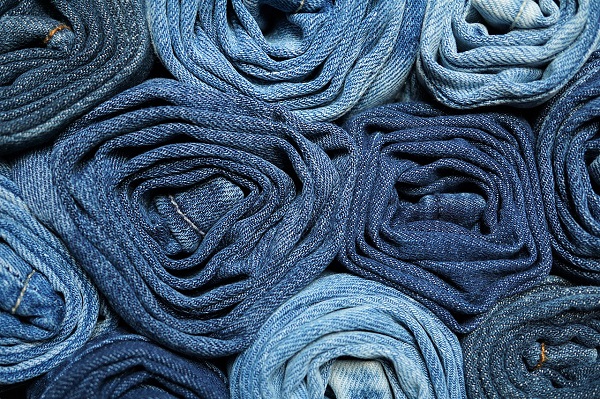
Denim market growth has always been a steady even in the most fluctuating of global economies. Reason: it is a fundamental component of the casual wardrobe and popular across all social and economic segments for men, women and children. With casual dressing becoming the norm in a post-pandemic world, many analysts feel denim will see stronger-than-ever growth in coming years.
Recent forecast by Research and Markets says, the global market for jeans will reach $87.4 billion by 2027 from $63.5 billion in 2020, growing at a CAGR of 4.7 per cent in this period. Be it the US and Canadian markets, Europe or even recovering China, the popularity of fashion denims made with high-tech machinery has propelled it into the luxury segment from being considered as staple wardrobe casual wear earlier.
Versatile on trend portfolio of big players
Leading players in the global denim apparel market are now focusing on growth through new product launches, partnerships, mergers or acquisitions and increasing their geographical footprint. Big names such as Levi Strauss, Gap, VF Corporation, H&M, PVH Corp, Kering, OTB Group, LVMH, True Religion, Ralph Lauren Corporation and Pepe Jeans among others are now improving manufacturing processes while costs, product pricing, and various trends in different regions and countries is being researched in the global denim market.
Companies are now considering various new parameters such as stretch, durability, embellishments, on-trend style, and wearability to provide customized solutions to customers. Regular media coverage of various catwalk fashion shows and celebrity endorsements are attracting customers like magnets in the luxury segment.
Shifting sourcing destinations
As per Office of Textiles and Apparel (OTEXA) statistics, the US recorded the highest levels of denim apparel imports in first quarter of 2022, reaching $965.32 million, up 37.55 per cent from previous year. Once dominated strongly by China and Mexico, US denim apparel sourcing is slowly shifting to other low-cost manufacturing countries such as Bangladesh, Pakistan, Egypt and Vietnam. The denim jeans market is segmented into fitting type, price point, end user, distribution channel, and region. Further segregation takes place in the fitting type with categories such as slim fit, regular fit, skinny fit, relaxed fit, and others. By price point, it is segregated into mass and premium whereas the end-user segment has men, women, and children. The distribution channels include hypermarkets and supermarkets, convenience clothing stores, specialty stores, and online sales channels.
Region-wise distribution is huge as the market is analyzed differently across North America (the US, Canada, and Mexico), Europe (Germany, UK, France, Italy, Spain, the Netherlands and the rest of Europe), Asia-Pacific (China, Japan, India, Australia, South Korea and Rest of Asia-Pacific), and LAMEA (Brazil, Argentina, South Africa, Middle East and the rest of the world.
The Cotton Council International (CCI) and Cotton Incorporated’s 2021 Global Denim Survey conducted in the US, the UK, Germany, Spain, the Netherlands, France, Italy, India, Mexico, and China revealed most popular silhouettes around the globe are regular (37 per cent), slim (34 per cent), straight (33 per cent), skinny (31 per cent), and relaxed (27 per cent).
India presents a fragmented market
India’s domestic denim market has been maintaining an average CAGR of 8 to 9 per cent for a few years and is expected to reach Rs 91,894 crore by 2028. However, denim apparel production in India remains fragmented with only 20-30 per cent of denim apparel manufactured in the organized units. Most denim production activities are concentrated in Delhi-NCR, Mumbai, Bangalore and Ahmedabad. Arvind Mills remains the largest denim manufacturer in India and leads the export markets.
As a versatile fabric that has and will endure many storms, studies show that in spite of the expected recession in 2023, the denim market will continue to grow, even as style trends may change. The global denim market will stride ahead in the next five years as fashionable yet casual dressing popularity even more so in the post-Covid years of comfort and wearability is the USP of most brads.
Bangladesh RMG units increase sourcing raw materials from India
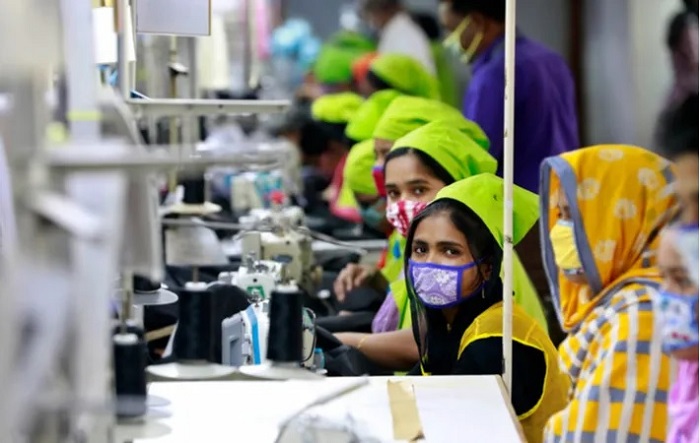
The saying that one man’s loss is another man’s gain is currently apparent for China. The country has been constantly losing ground in global market due to extended Covid restrictions and strict US sanctions that have made Bangladesh shift focus towards India for supply of man-made fiber yarn and fabric for apparel orders supplied to the US and Europe. India has gained ground with its competitive pricing, high quality of raw materials, improved lead time along with the opening of two new land ports. In December 2022, Bangladesh government allowed the import of man-made yarn and fabric through Benapole and two other new land ports of Bhomra in Satkhira and Sonamasjid in Chapainawabganj to save time and meet global orders as per schedule.
ITTF highlights specialized fabrics from Gujrat mills
Readymade garments (RMG) industry has made Bangladesh one of the world's largest exporters, with the sector accounting for 84 per cent of the country’s exports. With the new window of raw material supplies to Bangladesh opening up, India is now focussing on sophisticating its infrastructure for man-made fiber clothing while demand for cotton-made clothing is also decreasing.
At the January 2023 edition of Indian Textile and Trade Fair (ITTF) organised in Dhaka, over 60 companies from textile hubs of Gujarat showcased their yarns and specialized fabrics including man-made fibres and blended yarns. These high-priced specialized fabrics are used to make women’s wear, bridal dresses, gowns, saris, and kids’ wear, which form the bulk of global export orders.
As per Shovon Islam, MD, Sparrow Group, previously, he used to import almost all his requirements from China. Last year, they imported 20 per cent of the raw materials from India. In particular, they have increased import of raw materials for export to the US market. And what works in India’s favour is that besides the lead time, quality and prices are competitive. Sparrow Group is one Bangladesh’s biggest RMG exporters.
Meanwhile, a delegation of the Bangladesh Garment Manufacturers and Exporters Association (BGMEA), led by President Faruque Hassan, is expected to visit India to explore the possibility of sourcing man-made yarn for its global export segment. As per Hassan, Gujarat has a special reputation for man-made fibre yarns and fabrics. Bangladesh has also increased its focus on the export of such products. As a result, BGMEA has increased attention there for raw materials, which will help reduce dependence on China.
Man-made fibres more in demand
As per estimates the global apparel market was worth $440 billion in 2021, of which man-made fibre apparel accounted for over 50 per cent. Bangladesh's cotton-based apparel export accounted for 72 per cent; man-made fibre apparel 24 per cent and the rest were silk, wool, and others.
However, a Research and Policy Integration for Development (RAPID) report has pointed out the apparel market for man-made fibre will continue to grow larger than that of cotton in the next few years. Local textile mills contributed only 15 per cent to Bangladesh's total man-made fibre garment exports in 2021 and around 70 per cent is imported raw materials that came from China and 10 per cent from India. But now, China’s decline due to Covid lockdowns and strict US humanitarian laws on anti-slavery situations in factories is turning this equation. With fear of more restrictions on China, global apparel sourcing from other countries is increasing, which in turn will make Bangladesh import more from India.
In the end, it’s a win-win situation for India if local manufacturing units for raw materials for the global RMG segment are spruced up and the cards are played right.
South Asia experiences growth in fabric imports in 2022
Fabric imports in 2022 saw an increase in South Asian island countries such as Indonesia, Sri Lanka, Thailand, and Malaysia compared to the previous year. Indonesia and Thailand experienced the highest growth in fabric imports, with an increase of over 10 per cent. Sri Lanka also saw a slight increase in fabric imports during the same period.
Indonesia's fabric imports rose by 10.34 per cent to $4.769 billion in 2022, compared to $4.322 billion in 2021. The country's fabric imports in the previous years were $3.159 billion in 2020, $4.320 billion in 2019, $4.472 billion in 2018, and $4.085 billion in 2017.
Similarly, Sri Lanka's fabric imports increased slightly from $2.226 billion in 2021 to $2.292 billion in 2022, despite facing economic and political unrest in the first half of the year. The value of fabric imports in Sri Lanka in the preceding years were $1.758 billion in 2020, $2.239 billion in 2019, $2.212 billion in 2018, and $2.136 billion in 2017.
Thailand's fabric imports saw the highest growth rate of 13.37 per cent, reaching $1.390 billion in 2022 compared to $1.226 billion in 2021. The country's fabric imports in the previous years were $1.079 billion in 2020, $1.328 billion in 2019, $1.282 billion in 2018, and $1.146 billion in 2017.
And, Malaysia's fabric imports remained relatively stable in 2022, with imports of $405.565 million in the first eleven months, almost matching the imports of $416.470 million in 2021. The country's fabric imports in the previous years were $454.332 million in 2020, $554.720 million in 2019, $654.137 million in 2018, and $690.330 million in 2017.
Puma bets on China to recover as sporting goods sector faces profitability pressure, inventory markdowns
The sporting goods sector is facing a challenging time due to several factors such as increasing material and freight costs, a stronger U.S. dollar, inventory markdowns, and higher promotion expenses. As a result, profit margins have been adversely affected, and the industry is hoping for a recovery in China to ease the pressure. To this end, Puma has set its sights on Greater China and plans to expand its revenue contribution from the region, which currently only accounts for 5 per cent.
However, Puma's latest results show that sales in Greater China dropped by 36 per cent YoY, making it a difficult market to penetrate. In addition, Puma is looking to implement a more upscale strategy in the United States, which is a crucial market for the company.
Puma is forecasting an annual operating profit of €590-670 million ($626-711 million) in 2023, with sales expected to grow in high-single-digit percentage points. However, analysts believe that this guidance is assuming limited benefit from the reopening of China. Puma's gross profit margin decreased by 420 basis points to 44% in Q4 2022, citing an industry-wide increase in promotional activity amid high inventory levels.
The company expects gross profit margins to come under more pressure in H1 2023 than H2 2023, as it anticipates currencies, higher freight rates, and raw material prices to continue impacting profitability.
Industrial Textile imports, exports in US rebound in 2022
In 2022, the United States saw an increase in imports of industrial textiles, which totaled $3.095 billion, up from $2.941 billion in 2021.
This was a significant improvement from the $2.302 billion imported in 2020 during the height of the COVID-19 pandemic. US imported $2.571 billion worth of industrial textiles in 2017, which increased to $2.752 billion in 2018 but declined to $2.616 billion in 2019.
On the other hand, the US exported $2.235 billion worth of industrial textiles in 2022, showing a recovery from the pandemic-induced decline in 2020, where exports were worth $1.891 billion. The US exported $2.089 billion in 2021, and $2.337 billion and $2.292 billion in 2018 and 2017, respectively.
China was the top exporter of industrial textiles to the US in 2022, accounting for 13.88 per cent of total imports, followed by Mexico (12.57 per cent), Canada (11.58 per cent), Vietnam (9.27 per cent), and India (6.98 per cent).
In terms of exports, Mexico was the largest market for US industrial textiles, accounting for 50.38 per cent of total exports in 2022, followed by Canada (16.34 per cent), China (4.45 per cent), Germany (3.21 per cent), and Japan (2.04 per cent).