FW
Who's Next Paris Fashion Show: A "Back to School" Celebration
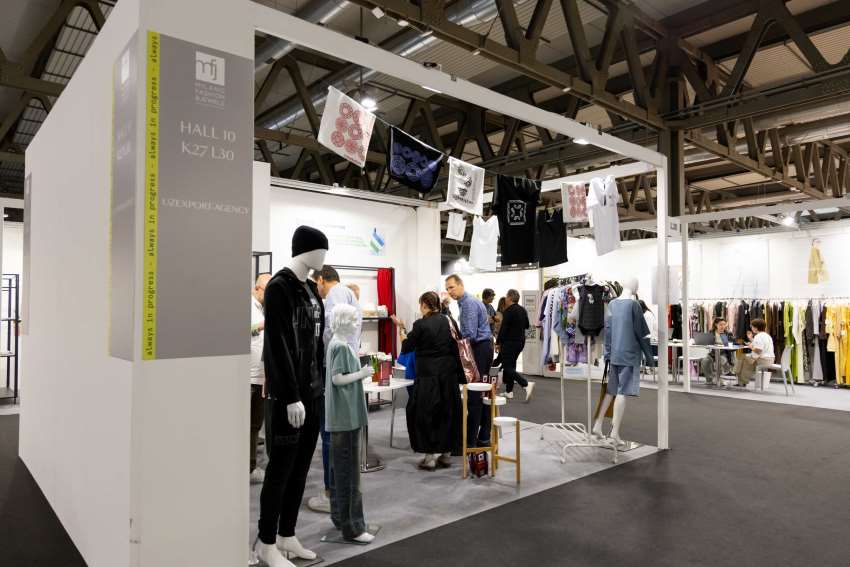
The autumn fashion event in Paris kicked off on Saturday, September 2, and drew hordes of visitors who eagerly explored the offerings of 1,200 clothing, footwear, accessories, and jewelry brands from the early morning hours.
This year's theme, "Back to School," added an extra layer of excitement. The venue was divided into distinct sections, with one side dedicated to jewelry, leather goods, and textile accessories, and the other side featuring footwear and clothing. Overlooking the scene were oversized paper airplanes.
The event also welcomed representatives from the Indian and Ethiopian embassies and featured a "Fashion China" area for the first time, showcasing Chinese brands in collaboration with the major Chinese clothing fair Chic. Turkey also had a strong presence, with exhibitors and manufacturers engaging with French brands and retailers.
Notable highlights included the 'Docteur Love' stand by 'l'Écosystème de la Mode,' which facilitated connections between brands and service providers, the iconic Smiley stand, and the Atelier Amelot area where visitors could witness custom motif printing on clothing items, a technique already in use at Galeries Lafayette on the Champs-Elysées.
Autumn Fair 2023: A feast for the senses
The leading wholesale marketplace for home, gift and fashion, Autumn Fair, opened today with a spectacle of newness and source of inspiration.
Buyers from across the UK, Ireland and across the globe flocked to the show enjoying a host of special features including the New Product Showcase, Connect Buyers Lounges, and captivating fashion brought to life on the Moda Catwalk.
The event saw the debut of the new connections programme Connect @ Autumn Fair which has created over 10,000 connections. Buyers were also inspired by the latest trends on the Moda Catwalk, from dopamine-infused colour-blocking to tailored black and denim looks.
Autumn Fair is the must-attend event for buyers looking to source the latest products and trends for the 2023 season.
Responsible Sourcing Show Source Home & Gift Thrives on Day 1
The new responsible sourcing show, Source Home & Gift, which opened today welcoming an international line-up of audited manufacturers championing responsibly and sustainably made products, has reported a very successful first day of trading.
The show, which is taking place at the NEC Birmingham and running parallel to Autumn Fair, has tripled in size from the first edition in February, with a diverse showcase of homewares, furniture, gifts, toys, textiles, packaging, and stationery and greetings producers and manufacturers from over 300 exhibitors from over 14 countries.
Suzanne Ellingham, Director of Sourcing, Source Home & Gift says, “It’s been an incredible first day showcasing of some of the best manufacturers and makers in the world – it’s been such a successful first day of trading.
The breadth and depth of product on show in Source Home & Gift is unparalleled for a responsible sourcing show, both in terms of product mix, and the diversity of artisan makers alongside large-scale manufacturers. It makes for a very compelling offering for our audience.”
The show also featured a line-up of internationally renowned industry professionals and experts discussing the latest trends and topics in responsible and sustainable manufacturing.
Overall, the first day of Source Home & Gift was a great success, and the show is well-positioned to become the leading platform for responsible sourcing in the UK and Europe.
Donear Group sets new men's fashion standard at AsiaTex'23
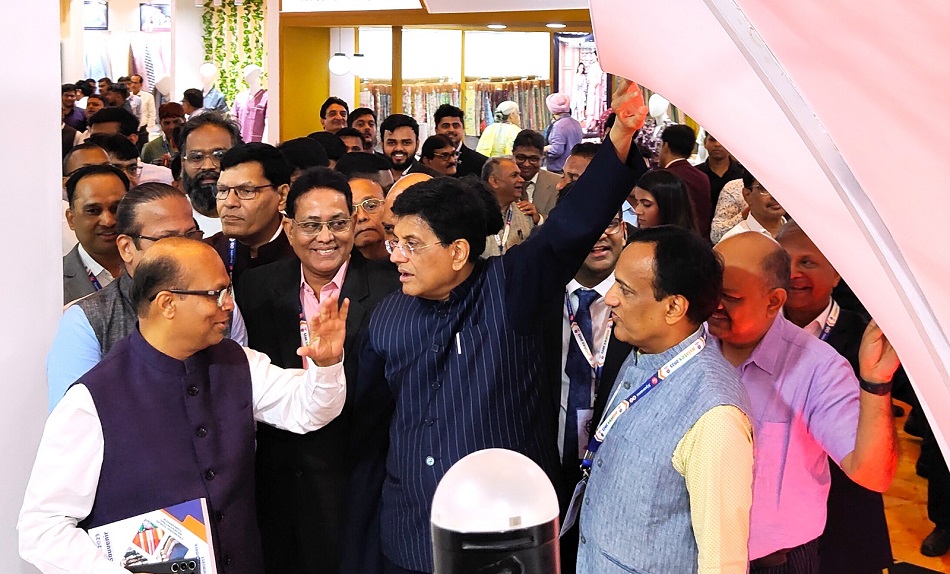
Donear Group, India's premier lifestyle and fashion house, has raised the bar for men's fashion by unveiling its acclaimed product line at AsiaTex'23, hosted at the JWCC (Jio World Convention Centre), BKC, from August 31st to September 2nd, 2023.
A prestigious showcase
AsiaTex'23, organized by the Hindustan Chambers of Commerce, saw a grand inauguration attended by notable figures including Piyush Goyal, Minister of Textile, Commerce & Industry, Rajendra Agarwal - MD & Mentor, Donear Industries Ltd., and Ramesh Poddar – CMD, Siyaram Silk Mills Ltd.
Epitome of style, luxury, and craftsmanship
At this exclusive event, Donear Group, renowned for its style, luxury, and craftsmanship, occupied the largest stall. They presented a wide spectrum of luxury to premium fabrics tailored for discerning Indian fashion enthusiasts.
State-of-the-art infrastructure
Behind this impressive showcase lies Donear Group's world-class infrastructure, featuring cutting-edge weaving and processing facilities in Surat, Silvassa, Bhiwani, and Amritsar, manned by a highly skilled workforce.
Innovation meets fashion trends
Donear Group's commitment to innovation has kept it in sync with evolving local and global fashion trends. The Group offers a diverse array of top-quality Woolen, Cotton, Linen, and PV fabrics, distinguished by their quality, comfort, versatility, lightness, and style.
A commitment to excellence
Rajendra Agarwal, Mentor of Donear Group, emphasized, "AsiaTex'23 underscores Donear Group's dedication to excellence and innovation in the textile and fashion industry." He highlighted the showcase of diverse fabrics under their Heritage and Premium brands, catering to the tastes of fashion connoisseurs.
Redefined fashion future
Agarwal further noted that Donear Group's expertise lies in customizing global trends to suit Indian traditional flavors, aiming to elevate fashion's luxury and craftsmanship standards within the industry.
Sino-US standoff is an advantage for Bangladeshi apparel exporters
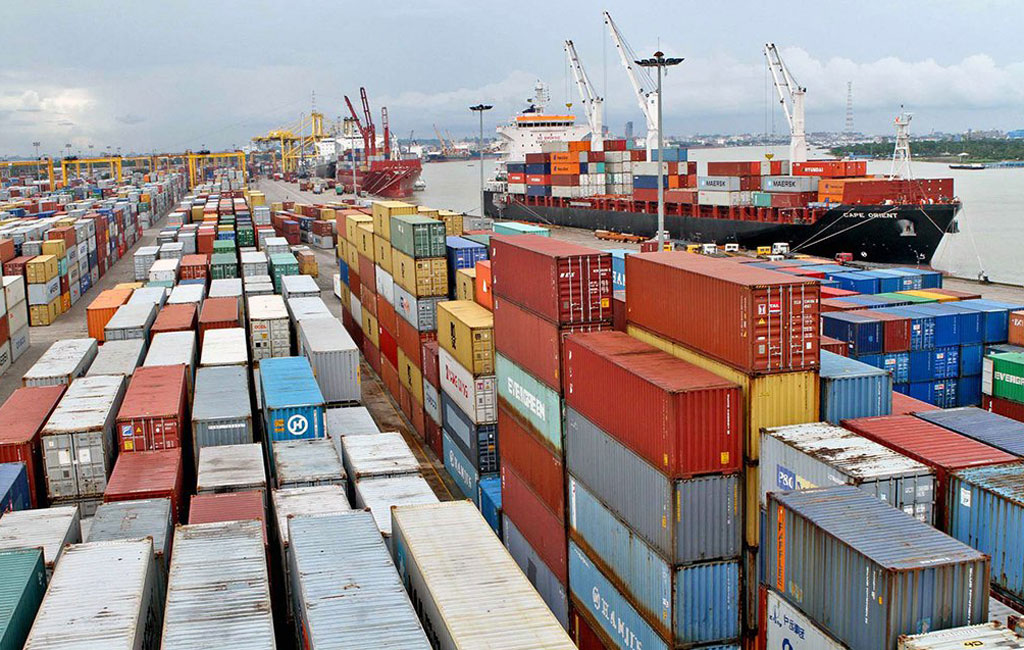
Since 2020, Bangladesh, despite its tremendous effort at trying to maintain a steady supply of apparel exports to client markets, is experiencing numerous setbacks and headwinds that are stressing out manufacturers and exporters alike. However, the country has continued retaining its position as the world’s second largest supplier of apparel, despite the devaluation of national currency that made raw materials and machinery imports expensive. And also the country has been facing energy crisis for sometime. Despite headwinds, it did get applauded by the World Trade Organisation for having earned $45 billion through apparel exports and more than tripled its market share in the global textile and apparel market – from 2.5 per cent in 2005 to 7.9 per cent 17 years later, despite the odds it battled on the way.
Good tidings for Bangladeshi exporters
A 15 per cent year-on-year growth compared to 2022 was reported at the beginning of the fiscal year in April 2023. Spearheading this growth was the US that has made a clear indication of dropping Chinese imports as much as possible and that Bangladesh was their preferred replacement. Bangladeshi exports give themselves a neat little pat on the back as they were absolutely right in investing in moving forward with not only portfolio diversification but also value-added items, which are performing well in Western markets. As Mohammed Khusro, Nipa Group stated in a recent interview with a Bangladesh-based textile trade journal these decisions saved the day as it helped the entire sector tide over decline in orders and being squeezed price-wise as much as 20 per cent.
The Sino-US standoff has made Bangladesh the biggest beneficiary – according to Mohammad Hatem, a knit garment exporter and executive president of Bangladesh Knitwear Manufacturers and Exporters Association, no other apparel exporting country is able to bridge the current gap of 3 per cent that the US has shed off China. However, Bangladesh is also aware that it isn’t the only flavor of the season amongst American importers who are also interested in sourcing from Mexico, Egypt, Cambodia and Indonesia. Into this mix are two other confident countries, India and Vietnam where 52 per cent of American buyers who like to increase their procurement quantities.
Bangladesh has remained dependable
When countries were shutting production lines due to pandemic-induced lockdown, Bangladesh took a brave decision and continued keeping its production line going, earning gratitude from worried importers who were then upping their e-commerce business. This was perhaps one of the best credibility-building steps undertaken by Bangladesh.
Additionally, the country has shown its capability to move away from basic to value-added garments as well as diversify its portfolio of products including premium clothing that was earlier not an ask from buyers and trying its best to respond to the sustainable standards being set up in the US and the EU.
Vice -President of BGMEA, Shahidullah Azim is optimistic Bangladesh’s hard work to prove its expertise in the global apparel market will yield dividends. When Western importers are talking about China Plus One to slowly reduce Chinese dependency, the Plus One being considered is actually Bangladesh.
Year 2023 may not live up to expectations
The good news of the buoyant orders and projected growth in orders may all be very well but the President of BGMEA is not quite convinced about how well 2023 will end as he expressed his doubts in a private circular to members of the association. Figures collated show that garment import by the US and the EU from around the world has declined by 22.92 per cent and 8.84 per cent respectively during the January-May period of 2023.
Giorgio Calculli Takes Helm at ACIMIT
Giorgio Calculli has assumed the role of the new Managing Director of ACIMIT, the Association of Italian Textile Machinery Manufacturers. With a background in law and a Master's degree in training and employment policies, Calculli has been part of the ACIMIT team since 2006, serving as the head of the Association's training, internal relations, and technical department.
He takes over the position previously held by Federico Pellegata, who, after 25 years at the helm of the Association, has been appointed as the CEO of ACIMIT Servizi srl. This company was established by ACIMIT to provide support services for its member companies in promoting the Italian textile machinery industry both in Italy and internationally.
Federico Pellegata expressed his gratitude for the enriching experience he had during his tenure, extending his thanks to ACIMIT's associated members, the Board, and past presidents of the Association.
He emphasized that his commitment to advancing the Italian textile machinery sector remains strong as CEO of ACIMIT Servizi. In this new role, he will continue to work tirelessly to ensure that ITMA, the world's leading textile machinery trade fair, continues to showcase the success of Italian manufacturers in the sector, as was evident in the 2015 and 2023 editions held in Italy.
Giorgio Calculli, the newly appointed ACIMIT Managing Director, expressed his appreciation to the ACIMIT Board for his appointment and the opportunity to carry on the work initiated by Federico Pellegata.
He acknowledged Pellegata's achievements, particularly at the recent ITMA event, and pledged to further expand the Association's membership base while providing maximum support to member companies in their business endeavors.
ITMF Annual Conference 2023: Digitalization & Circularity in Textiles
The ITMF Annual Conference 2023 will be held in Keqiao, China from November 4-6, 2023. The conference will feature international industry experts from around the world from along the entire textile value chain – from fibres to retail.
Under the general theme of "Digitalization & Circularity – Megatrends Shaping the Textile Industry", experts from the industry and academia will shed light on how the textile value chain is coping with these trends and will help better understand the underlying dynamics and identifying the risks and opportunities.
In the various sessions, experts will discuss topics such as:
• How the fibre markets will adapt to the increasing demand for recycled fibres
• How the textile industry can reduce its carbon footprint
• How new technologies will accelerate the industry's transition towards more circularity
• How upcoming regulation will impact production around the world
In addition, ITMF will once again recognize the winners of the:
• ITMF Start-up Awards 2023
• ITMF Sustainability & Innovation Awards 2023
• ITMF International Collaboration Awards 2023
In conjunction and coordination with the ITMF Annual Conference 2023, there will be two more events that will take place in Keqiao, namely:
• 10th Belt & Road Textile Conference 2023 (November 2-3)
• 6th World Textile Merchandising Conference (WTMC) 2023 (November 5-6)
The ITMF Annual Conference 2023 is a must-attend event for anyone involved in the textile industry. It is an opportunity to learn about the latest trends and developments, network with industry leaders, and gain insights into the future of the textile industry.
Bangladesh garment sector under fire
Amsterdam witnessed a powerful protest by Clean Clothes Campaign activists, who took a stand against the Bangladesh garment industry following the recent tragic murder of trade unionist Shahidul Islam.
The demonstrators gathered at a promotional exposition of the industry, sending a resounding message to the government of Bangladesh, employers' associations, and brands that source from Bangladesh.
They demanded immediate justice for Islam's grieving family, protection for the right to organize, and the establishment of a new minimum wage in alignment with workers' needs. Shahidul Islam's life was brutally cut short on June 25, 2023, as he was attacked and killed after advocating for workers' bonuses and wages in Tongi, Bangladesh.
His 25-year dedication to the Bangladesh Garment and Industrial Workers Federation (BGIWF) as an organizer speaks volumes about his commitment to workers' rights. His murder underscores the grave risks faced by unionists and workers standing up for their rights in Bangladesh, highlighting the urgent need for an environment where workers can freely organize and voice their concerns.
Clean Clothes Campaign activists voiced their concerns both outside and inside the Best of Bangladesh event in Amsterdam. They emphasized the importance of dialogue that includes independent trade union representatives and worker voices, stressing that such discussions are meaningless without the very people they affect. The protesters outlined crucial steps for progress: Justice for Shahidul Islam:
They called for a thorough and transparent investigation by the Bangladeshi government into the murder, including identifying all perpetrators and their connections to factory management. Compensation for Shahidul Islam's family, in line with ILO Convention 121, was also requested, along with additional compensation for emotional suffering.
Ensure Safeguards for Freedom of Association:
Brands sourcing from Bangladesh were urged to protect freedom of association and remain neutral during any independent organizing efforts. Those part of the International Accord for Health and Safety in the Textile and Garment Industry were urged to strengthen freedom of association provisions. The government of Bangladesh was encouraged to create an enabling environment for workers' right to organize through labor law reform.
Establish a Monthly Minimum Wage:
The demand for a monthly minimum wage of at least 23,000 BDT (ca. 195 EUR) was issued, along with a call for brands and the government of Bangladesh to support this wage and reflect it in product pricing. Without these measures, justice for Shahidul Islam's murder, which has far-reaching implications for Bangladeshi society and garment workers' rights, will remain elusive.
The organizers and participants of the exposition have the opportunity to take a stand by advocating for a 23,000 BDT minimum wage, showing their commitment to positive change in the industry. Upholding workers' rights and promoting decent jobs are essential for solidifying Bangladesh's position as a global sourcing destination.
EU apparel import from world declines 9.22% in Jan-Jun 2023
In the first six months of 2023, the European Union's (EU) apparel import from the world declined by 9.22% to US$ 43.60 billion from US$ 48.03 billion in the same period of 2022. The decline was seen in both value and quantity terms.
The top three apparel sourcing countries for the EU in January-June 2023 were Bangladesh, China, and Turkey. EU's import from Bangladesh declined by 13.65% in value terms to US$ 9.78 billion, while its import from China declined by 13.52% to US$ 10.54 billion. EU's import from Turkey declined by 11.12% in value terms to US$ 3.96 billion.
The unit price of EU's apparel import from the world increased by 8.52% in January-June 2023. This was due to a number of factors, including inflation and the increasing value of the euro.
• The decline in EU apparel import was driven by a number of factors, including the ongoing COVID-19 pandemic, the war in Ukraine, and rising inflation.
• The decline was most pronounced in the value of apparel imports from Bangladesh, China, and Turkey.
• The unit price of EU apparel import increased due to inflation and the increasing value of the euro.
• The decline in EU apparel import is likely to continue in the coming months.
India: SRTEPC, The dashboard will be launched
The dashboard will provide comprehensive information on technical textile products, including those experiencing increasing demand, the countries exporting each product, and the countries importing various technical textile products.
India's technical textile exports are currently primarily driven by package textile products (packatech), with the United States, Japan, and various West Asian countries being key buyers.
Mr. Dodhia reported a 6% growth in exports of technical textile products for the current year.
Manmade fiber and fabrics, excluding garments, are projected to experience a decline of 8-10% in the current financial year.
Mr. Dodhia attributed this drop in exports to shifting global consumption patterns.