FW
Eastman Naia propels sustainable fashion in Turkey's textile industry
In a pivotal move for Turkey's textile sector, Eastman Naia, a prominent player in the global textile industry, collaborates with key Turkish mills, including Abalıoğlu, Kipaş Textiles, and Pastel by Yılmazipek. Recognizing Turkey's significance, Eastman Naia proudly sponsors Sustainable Talks Istanbul, where Ana Costa, Head of Sales and Global Business Development, sheds light on Next Gen Fibers, showcasing Naia Renew fiber and its groundbreaking molecular recycling technology.
Naia Renew, derived from 60% sustainably sourced wood pulp and 40% certified waste materials, stands out for its scalability as both filament yarn and staple fiber. This innovative material, blended with other sustainable fibers, offers endless possibilities for luxurious and eco-conscious fabrics, boasting reduced carbon footprints over its life cycle.
Eastman Naia sets a high standard for transparency and responsibility, ensuring a traceable journey from tree to fiber. The company's commitment is evident through FSC and PEFC certifications, support for reforestation projects, and recent recognition with the Canopy Dark Green Shirt.
To address the environmental challenge, Eastman Naia employs molecular recycling technologies, transforming difficult-to-recycle waste materials into biodegradable resources. As a founding member of the Alliance of Chemical Textile Recycling, Eastman Naia actively contributes to Accelerating Circularity's mission to advance textile-to-textile recycling.
Turkey, poised for a sustainable fashion revolution, holds immense potential to embrace circular strategies. With Eastman's support, the Turkish textile industry is set to play a crucial role in shaping a greener future.
BTMA boosts Shelton Vision: Textile inspection revolution
Shelton Vision's WebSpector automated fabric inspection system has witnessed a surge in demand following a successful demonstration at ITMA 2023. The technology, capable of detecting faults on camouflage fabrics at speeds up to 100 meters per minute, has garnered an unprecedented number of orders across various textile sectors. In response to the heightened demand, Shelton Vision is expanding its workforce to meet delivery schedules and accommodate increased capacity.
Mark Shelton, CEO and Managing Director, notes a paradigm shift in the textile industry as a new generation of management embraces imaging technology and automated fabric inspection. The WebSpector, employing machine learning, boasts over 98% defect detection compared to 65% with manual inspection. The system's adaptability to complex patterns, even in distorted fabrics, positions it as a market leader.
Shelton's investment in a purpose-built, high-speed demonstration system underscores the growing interest. While automotive interiors and airbag sectors remain key markets, the technology finds application in performance wear, high-end fashion, denim, upholstery, sunscreen, mattress ticking, window dressings, and carbon fiber composites.
Supported by the British Textile Machinery Association (BTMA), Shelton Vision's technology is gaining traction globally. Jason Kent, BTMA CEO, emphasizes the industry's appetite for machine vision, predicting Shelton's technology to become the preferred solution for fault-free fabric manufacturing. The company, founded in 1940, has become a key player in automated textile inspection, benefitting from extensive research and development investment.
Bluesign launches New Public Sustainability GUIDE
Bluesign, a pioneering force in chemical management systems, announces a groundbreaking advancement in sustainability and transparency with the launch of the public bluesign GUIDE at www.bluesignGUIDE.com.
This move exemplifies their steadfast commitment to shaping a more sustainable future and empowering businesses and consumers alike. The open-access GUIDE requires no registration, encouraging widespread adoption of sustainable practices across industries.
Companies featured in the GUIDE gain heightened visibility, presenting a unique opportunity to showcase their commitment to sustainability. Notably, the GUIDE's integration of direct links facilitates seamless communication of sustainable achievements, emphasizing a dedication to responsible business practices.
With QR codes for effortless certification verification, the GUIDE fosters trust and transparency between companies and consumers. The platform promises real-time updates, ensuring users stay abreast of the latest sustainable knowledge.
As a catalyst for future innovations, the public GUIDE lays the foundation for transformative tools like the CUBE and the GUIDE, evolving from verification mechanisms to dynamic platforms for sustainable material sourcing.
Revitalizing Fashion: The surge of sports-inspired clothing in post-Covid era

With heightened awareness around health and wellness in the post-Covid era, sports-inspired clothing has injected new vitality into the fashion industry. Particularly, the youth segment seeks stylish attire not only for gym sessions but also for home workouts. The surge in global sports events and tournaments has further amplified the demand for athletic clothing styles.
A recent report on the ‘Sports-Inspired Clothing Market’ by Future Market Insights (FMI), a leading provider of custom and syndicated global market research states, this segment is currently experiencing a Compound Annual Growth Rate (CAGR) of 4.20 per cent. It is projected to reach a global valuation of $315,035.4 million in 2024 and is anticipated to soar to $475,689.7 million by 2034.
In response to this trend, various sports brand manufacturers are expanding their offerings to include a diverse portfolio of sustainable, versatile, and breathable sportswear. This caters specifically to the youth segment, which is keen on following clothing trends, celebrity-inspired styles, and supporting sustainability initiatives. The product portfolio of most athletic-wear brands encompass high-quality tops and T-shirts, hoodies and pullovers, jackets and vests, pants and tights, shorts, skirts and dresses, sports bras, and accessories, catering to a wide range of income levels.
Awareness and social media increase sales
Growing environmental consciousness among affluent consumers requires strategic measures to enhance sales. The impact of social media influencers, brand ambassadors, and celebrity endorsements is proving crucial in promoting eco-friendly features in sportswear products. Concurrently, the surge in online shopping platforms from various countries is saturating the sportswear market.
The FMI report underscored the prevailing trend of oversized essentials crafted from body-sculpting textured materials. Additionally, there is increasing demand for tennis dresses and complementary accessories, reshaping consumer preferences in the sportswear market and presenting new opportunities for industry players.
In this dynamic landscape, major players must consistently innovate their portfolios and navigate challenges to foster brand loyalty, a task made more intricate in a fluctuating economy. Prominent players like Nike are responding to this demand by introducing new products, such as plus-size activewear for sports activities. This range offers breathable wear with an expanded size scale from 0X to 4X. Similarly, niche clothing and accessories brands like Alo Yoga have recently launched muse hoodies and sweatpants featuring jogger-style silhouettes.
Need to address market challenges
FMI's country-specific insights indicate burgeoning sports activity is propelling the US market with a projected Compound Annual Growth Rate (CAGR) of 0.014 per cent in the global market during the forecast period. Increasing engagement in sports activities is fostering the adoption of sports-inspired clothing, driving the expansion of the US market. Similarly, the workout wear trend is boosting the French market which is expected to achieve a CAGR of 0.022 per cent. France's sportswear segment acts as a fashion hub, placing significant emphasis on recreational activities across all age groups and genders.
Despite the current popularity of sports-inspired clothing, this segment encounters several challenges in its highly fragmented landscape. Leading players must continually compete to offer more versatile and cost-effective designer sports apparel portfolios to stay ahead of fashion trends. Evolving consumer fashion preferences, especially among women, and escalating competition from other fashion apparel brands are factors diminishing the appeal of sports-inspired clothing due to its limited utility. Additionally, disruptions in the supply chain and cross-border tensions have led to a scarcity of materials needed for manufacturing specialized sportswear, presenting a significant limitation.
Nevertheless, the consumer segment inclined towards fitness-inspired purchases of sports-inspired clothing is experiencing rapid growth across all countries. This trend is expected to sustain the global market's revenue expansion in the coming years.
Sustaining the 1.5°C Goal: The corporate imperative of COP28
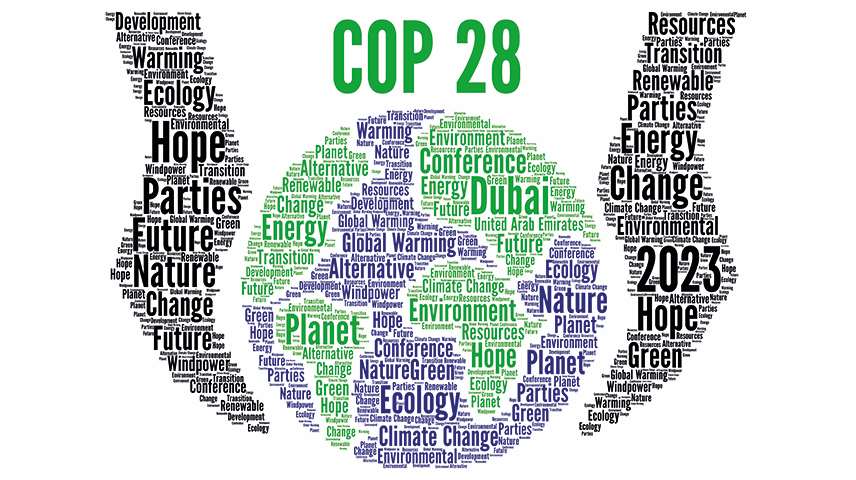
“COP28, coined as 'the financial focus COP,' will centre its discussions on vital financial and investment matters, highlighting the pivotal involvement of businesses in propelling climate action to preserve the target of limiting global temperature increase to 1.5°C”, says Dax Lovegrove, Head of Sustainability, Salterbaxter, a mission-driven creative consultancy at the service of sustainability. The forthcoming conference of the parties meeting remains committed to addressing challenges related to corrective climate measures. COP28 is set to conduct a global evaluation to provide guidance to governments on fortifying efforts to meet the goals outlined in the Paris Agreement.
Meeting targets as per defined time-table
Lovegrove points out, there is a global demand for a well-defined timetable to phase out unchecked use of fossil fuels permeating the conference discussions. The attention is also significantly directed towards the decarbonization of food and agricultural systems.
Regarding adaptation, there are persistent endeavors to establish a tangible loss and damage fund, articulate the global objective for adaptation within the Paris Agreement, and solidify commitments from developed nations to boost international financing for adaptation. The scrutiny on the progression of financial support from wealthier to more vulnerable nations will persist.
“The pressure remains on nations (especially rich ones) to do more” says Lovegrove. And businesses are expected to step up. They can drive corrective climate action from their side by managing extended impacts and providing financial support across global value chains.
Corporates failure to act
Over 2,300 corporations have obtained approval for science-based targets through the Science Based Target Initiative (SBTI). However, a significant number are falling short in addressing the major portion of their ecological footprint—Scope 3 emissions. These emissions do not directly emanate from the company's operations or activities involving owned or controlled assets. Instead, they arise from the broader supply chain, for which the company holds indirect responsibility, often representing the primary area of concern.
As per the CDP, emissions originating from the supply chain can be 11 times higher than operational emissions. Surprisingly, less than one-third of companies worldwide disclose meaningful Scope 3 data, as recommended by ISS Corporate Solutions. Notably, action on Scope 3 is also limited. A European report from Centrica Business Solutions indicates being proactive in Scope 3 management is not a top priority, with 68 per cent of surveyed businesses primarily prioritizing Scope 1 and 2 in their net-zero plans.
“Progress is slow and the challenge is on. According to PWC, the annual rate of global decarbonisation must increase by seven to twelve times to get on track with limiting warming to 1.5C. The bottom line is that while nations ratchet up, businesses must do the same,” explains Lovegrove.
Little initiatives go a long way
The key prospect is to achieve the essential carbon reduction levels within international supply chains. We Mean Business has initiated the 'Supplier Cascade' project to hasten the pace at which businesses cut down on their Scope 3 emissions. There are shining examples of leadership. Some companies have proactively taken steps to involve suppliers in setting targets and adopting sustainable practices, offering valuable lessons for others to emulate
For example, Ericsson requires suppliers to set a public target in line with halving greenhouse gas emissions by 2030. Similarly, Uniliver is providing guidance, tools and resources, for the 300 suppliers whose products have highest climate impact.
US Foods has pledged to achieve a 2027 target, wherein suppliers responsible for 67 percent of emissions from purchased goods and services are expected to establish science-based targets. Sodexo has set roadmap requirements for 2030 for suppliers covering 75 percent of supply chain emissions. Mars is actively engaged with major suppliers, representing a third of emissions, and has successfully reduced Scope 3 emissions by 6 percent from 2015 levels.
Taking a more ambitious stance, H&M Group has set a goal to reduce absolute emissions across the value chain by 56 percent by 2030, using a 2019 baseline. In addition to this, H&M has transparently allocated a significant budget to finance transitions for suppliers to adopt cleaner energy and materials.
The approach to engaging with suppliers is undergoing a significant transformation, says Lovegrove. This entails identifying and involving suppliers with the most substantial impact and influence, utilizing soft incentives such as granting preferred supplier status or offering favorable payment terms, and providing tangible support through financial assistance.
In the initial stage, the focus is on aiding suppliers in understanding and managing their carbon footprint, as well as setting targets based on guidance from the Science-Based Targets Initiative (SBTI) tailored for small and medium-sized enterprises (SMEs). This establishes accountability as suppliers take on the responsibility of achieving these set targets. Equally important is the subsequent phase, where collaboration with suppliers becomes pivotal, involving joint investment in new clean tech and energy management practices.
As the management of Scope 3 emissions becomes more widespread and suppliers receive support, it will play a crucial role in accelerating global decarbonization. This shift must occur within this decade to meet the required pace of emissions reduction and will contribute to increased investment in less affluent countries, where a substantial portion of supply chains is located. Additional financial support for climate resilience in the supply chain will unlock further funds.
“We are at the business end of keeping 1.5C alive, and business needs to play its part,” sums up Lovegrove
New policy could boost cheap wool imports in New Zealand
Greg Smith, CEO of Bremworth, suggests the recent New Zealand government directive mandating the use of woolen fibers in buildings might encourage the influx of inexpensive imports from the UK and other nations, potentially posing challenges for local sheep owners.
Smith believes, this shift could result in a doubling of wool prices in New Zealand, presenting both opportunities and risks. While addressing conflicts in global perceptions of New Zealand's sustainability practices, it may also contradict its established image as a major wool producer worldwide.
Moreover, the directive could instigate a transformative change in the farming landscape, attracting new participants to the market. This change could particularly benefit numerous tenants in New Zealand's public housing, facilitating the construction of their homes.
Smith also anticipates that this move could stimulate increased investments in research and development, fostering the production of sustainable construction materials. Additionally, the government policy is expected to significantly diminish the volume of plastic waste entering landfills, encouraging investments in the development of new materials and alternatives to synthetics.
Three CIEL textile companies join RR Platform to boost circular economy
Aquarelle, Tropic, and Laguna, three subsidiaries of CIEL Textile in India, have joined the Reverse Resources (RR) platform. This platform is dedicated to monitoring the journey of waste materials from their initial use to their transformation into new resources.
With a roster of over 600 stakeholders, including manufacturers, fashion brands, waste handlers, sorters, and recyclers, the RR platform facilitates collaboration for a more circular economy by sharing data and optimizing the textile waste supply chain.
Eric Dorchies, CEO, CIEL Textile, notes partnership with the platform aligns seamlessly with its sustainability strategy. CIEL Textile aims to divert 100 per cent of its waste towards recycling by 2030, and tracking materials will enhance efficiency throughout a product's lifecycle.
Nin Castle, Co-Founder, Lead-Recycling, and Chief Project Officer at Reverse Resources, appreciates forward-thinking manufacturing groups like CIEL Textile for actively supporting the emerging field of textile-to-textile recycling and advancing circular production processes.
Extend refinancing facility to textiles, BTMA urges Bangladesh Bank
Mohammad Ali Khokon, President of the Bangladesh Textile Mills Association (BTMA), has called on Bangladesh Bank to extend its refinancing facility to the textile industry, aiming to facilitate its modernization.
The Central Bank introduced a TK 10 billion refinancing scheme in 2021 to modernize and enhance the country's export-oriented sectors. This scheme offers loans at a rate of 5 to 6 percent for a period of three to ten years, with a grace period of one year.
BTMA has also urged the commerce ministry to include the country's textile sector in the new export policy for 2023-26. The current Export Policy for 2021-24 prioritizes denim, MMF, home textiles, décor, terry towels, and recycled products, overlooking crucial sectors like spinning, fabric manufacturing, dyeing, printing, and finishing.
The primary textile sector in Bangladesh has seen an investment of approximately $16.00 billion, contributing around 13 percent to the country's GDP. According to BTMA data, this sector generates over 84 percent of the country's export earnings. The export earnings for the fiscal years 2018-19, 2019-20, 2020-21, 2021-22, and 2022-23 amounted to $21.9 billion, $18 billion, $20.9 billion, $28.8 billion, and $31.03 billion, respectively.
Shein to launch IPO in the US in 2024
China-based fast fashion giant, Shein, is set to make its debut in US stock market with an IPO in 2024. The company has enlisted Goldman Sachs, JPMorgan Chase, and Morgan Stanley as lead underwriters for the IPO. Shein has previously conducted discreet roadshows in the US as part of its IPO preparations. Known for its budget-friendly offerings such as $10 tops and $5 biker shorts, Shein primarily ships products individually from China via air, enabling it to circumvent import taxes in the US. Additionally, the company benefits from the 'de-minimis' provision, exempting low-cost imports from tariffs.
Ongoing negotiations with three investment banks are in progress for the potential IPO, and Shein plans to collaborate with the New York Stock Exchange and Nasdaq for the venture. With a valuation surpassing $60 billion, Shein is on track to become the most valuable China-based company to launch an IPO in the US since Didi Global's $68 billion IPO in 2021.
In a strategic move, Shein has partnered with the SPARC Group to expand its market presence and capitalize on the increasing demand for its products.
Grand inauguration of CMAI’s ‘Brands of India’ trade show in Dubai
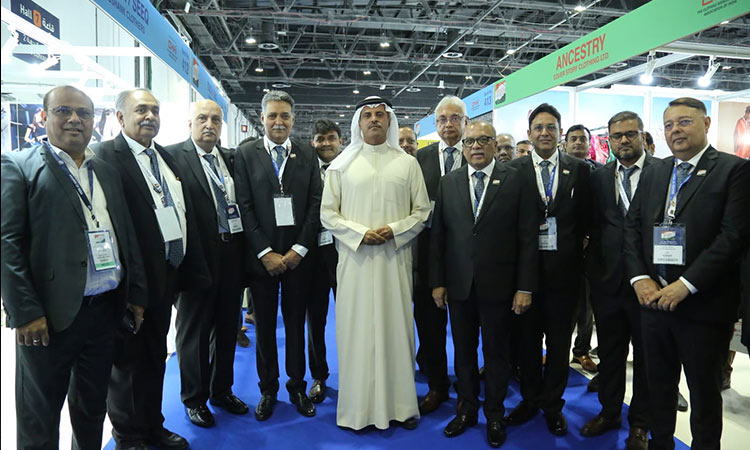
In a historic celebration of trade and cultural exchange, the inaugural Brands of India trade show, organized by the Clothing Manufacturers Association of India (CMAI), commenced at the Dubai World Trade Centre. Butti Saeed Al Ghandi, Vice-Chairman of the Dubai World Trade Centre, presided over the grand inauguration, setting the stage for a captivating showcase in Halls 6 & 7 from November 27th to 29th, 2023.
International collaboration on display
Supported by key entities such as the Embassy of India-UAE, TEXMAS, Dubai International Chamber, and the Readymade Garments Merchants Group Dubai, the event underscores the rapid expansion of Indian businesses in the UAE market. This surge is attributed to the positive momentum following the India-UAE Comprehensive Economic Partnership Agreement (CEPA) signed in 2022.
Government support and vision
Commending CMAI for Brands of India, Piyush Goyal, Minister of Commerce & Industry, highlighted the platform as an excellent opportunity for Indian brands to establish a global presence. Under the leadership of Prime Minister Narendra Modi, the Indian government is dedicated to fostering a world-class textile sector. The event aligns with the government's vision of promoting Indian brands globally.
Strengthening economic ties
Rajesh Masand, President of CMAI, emphasized the long-standing economic and cultural ties between India and the UAE. Brands of India serves as a catalyst, empowering Indian Apparel brands to strengthen their presence in the MENA region. Masand also highlighted the recent cooperation in digital currencies between the two countries, a development set to further boost business.
Fashion diplomacy
Butti Saeed Al Ghandi, Vice-Chairman of the Dubai World Trade Centre, as the Chief Guest, emphasized the power of fashion to transcend borders and create lasting connections. He expressed delight at witnessing an event that promotes diversity and showcases the vibrant tapestry of Indian brands.
Global recognition and participation
Jayesh Shah, Chairman of Brands of India, expressed excitement over the overwhelming response, with more than 350 brands participating instead of the initially envisioned 150. Renowned brands like Oxemberg, J. Hamstead, and Louis Philippe are among the 1500 buyers from over 30 countries who have pre-registered, affirming the show's potential to create exciting business prospects for Indian brands in the region.
Expanding global presence
Sunjay Sudhir, Ambassador of India to UAE, highlighted the global appeal of Indian brands and the immense scope for expansion in the Gulf, Middle East, Africa, and Europe under CEPA.
In conclusion, Brands of India is poised to be a key milestone in the international journey of Indian Apparel brands, showcasing a diverse collection spanning Western wear, Indian Ethnic wear, and Fusion wear.