FW
Fabrica-the Italian textile machinery exhibition launched in Vietnam
Celebrating the rich history and evolution of the Italian textile manufacturing industry, the ‘Fabrica-the Italian Textile and Innovation’ exhibition was launched at the HCM City Musuem in Vietnam yesterday.
Being held from June 13-16, the event is hosted by the Consulate General of Italy in HCM City, in collaboration with Harper’s Bazaar Vietnam.
A part of the 2024 Aquafina Viet Nam International Fashion Week, the exhibition marks the 10th anniversary of the establishment of the Consulate General, and is part of the 2024 Aquafina Việt Nam International Fashion Week in the city
Inaugurating the exhibition on June 13, Enrico Padula, Consul General-Italy said, “theFabrica exhibition speaks not only of Italian textiles, but also of a history and a vision of the future.
Promoted by the Ministry of Foreign Affairs and conceived by CorradoAnselmi and CMS Cultura, the exhibition gives visitors an opportunity to experience the history, technique and Italian vision of the textile industry.”
Comprising a series of panels set up by a network of 20 companies in the sector, the exhibition highlights the richness and variety of Italian production, from fashion fabrics, materials in interior design, and sportswear fibers to sustainable fibers.
The panels showcase the rich history and development of Italian textiles, wool production, the art of silk, yarn processing, and fabric production from the Middle Ages to the 18th century. The event introduces fabrics used in garments and interior design, and natural fibres made of organic cotton, generated nylon yarn from pre-and-post consumer waste, and textile waste.
The exhibition also highlights ‘technical’ fabrics characterised as high-performing and address specific needs. It also traces the development of the Italian textile machinery from the 15th century to the present.
Conceived by the CMS Cultura Agency, the ‘Fabrica-Italian Textile and Innovation” Exhibition was supported by the Italian Ministry of Foreign Affairs and International Cooperation, the Italian Fashion Industry Business Federation (SistemaModa Italia), the Italian Association of Textile Machinery Manufacturers (ACIMIT), and the Italian Organisation of Crafts and Small-Medium Enterprises (ConfartigianatoImprese).
First organised in Singapore in April, the exhibition will later be held across the world.
Source Fashion launches exclusive Retail Safari in London
Source Fashion, Europe’s premier responsible sourcing event, is launching a competition offering ten exclusive spots on a new Retail Safari. This immersive tour, led by Jack Stratten, Head of Trends at Inside Retail, will showcase London's best retail experiences on Monday, July 15th.
Winners will explore a variety of an innovative London stores, gaining valuable insights into the latest design and technology trends. The experience aims to inspire and inform participants, helping them enhance their own retail strategies.
Jack Stratten, a frequent speaker at Source Fashion, is renowned for his expertise in retail innovation and future trends. He has a knack for identifying emerging trends and often leads retail safaris to highlight innovative retail concepts. Stratten’s commentary provides businesses with a deep understanding of the evolving retail landscape.
Jack Stratten will guide us through a range of London's standout stores, showcasing the future of physical retail. From major global flagships to unique boutiques in Soho and the West End, the tour will delve into how stores are evolving in marketing, storytelling, and creating immersive experiences.
In today's digital age, stores are expected to offer more than just products for sale, and London provides an intriguing preview of what's on the horizon. Stratten's extensive network guarantees exclusive behind-the-scenes access, adding valuable insights to the experience.
Event Director Suzanne Ellingham highlights Source's focus on storytelling and customer connection. She emphasizes that exceptional retail seamlessly integrates digital and physical experiences, with London being a center of innovation. The Retail Safari provides visitors an opportunity to observe leading retailers in action and gain insights into achieving retail excellence.
Yarn Expo Autumn 2024: Focus on sustainable growth
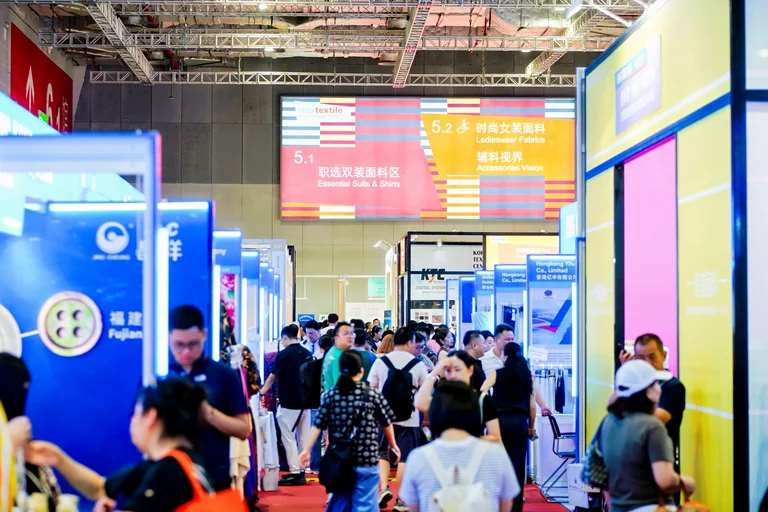
As the global demand for eco-friendly products continues to rise, the Yarn Expo Autumn 2024 is set to showcase innovative and sustainable yarns and fibres. Taking place from August 27-29 at the National Exhibition and Convention Center in Shanghai, this year's expo promises to build on the momentum from the successful 2024 spring show.
The expo, running concurrently with Intertextile Apparel, CHIC, and PH Value, will bring together the entire textile value chain. This comprehensive gathering fosters industry growth through active business exchanges and insights. The global textile yarn market, projected to reach US $17.87 billion by 2031 according to Verified Market Research, underscores the importance of events like Yarn Expo in driving industry advancements.
Exhibitors from China, France, Indonesia, the Netherlands, Pakistan, Singapore, Turkiye, Vietnam, and more have already confirmed their participation. Part of Messe Frankfurt’s Texpertise Network, the expo aligns with the ‘Econogy’ initiative, emphasizing eco-friendly practices across more than 50 global textile trade shows. The event will feature high-traffic areas like the Trend Forum, multiple fringe events, product showcases, and business matching sessions, all with a strong focus on sustainability.
Reflecting on last year's success, Mani Kant, Director of BishnuTexportPvt. Ltd., India, praised Yarn Expo as an excellent platform for sourcing sustainable and biodegradable products. He highlighted the expo's effectiveness in meeting potential suppliers and staying updated on new trends, noting that it saves both time and money.
The 2024 spring fair welcomed nearly 22,000 buyers from 107 countries and regions, with 515 exhibitors from 11 countries. Regenerated, cotton, and synthetic products were the top categories, highlighting the industry's shift towards sustainability.
Organised by Messe Frankfurt (HK) Ltd and the Sub-Council of Textile Industry, CCPIT, Yarn Expo Autumn 2024 aims to maximize business opportunities by integrating the fibre, yarn, apparel fabrics, fashion, and knitted garments industries under one roof.
Fashion brands collaborate to support decarbonisation of apparel suppliers
A number of major fashion brands are collaborating on a new initiative called the Future Supplier Initiative, aimed at supporting deep decarbonisation of apparel suppliers. Facilitated by The Fashion Pact in conjunction with the Apparel Impact Institute, Guidehouse, and DBS Bank, this initiative will combine financial incentives, such as de-risking loans, with technical support to encourage suppliers to adopt renewable energy solutions and electrification.
The program's pilot will launch in Bangladesh with the backing of leading brands including Bestseller, Gap Inc., H&M Group, and Mango. Additional brands are actively being recruited to expand the initiative to other regions. This initiative comes in response to the staggering statistic that 99 per cent of the emissions by fashion brands occur within the supply chain. It aims to share the financial risks and responsibilities of transitioning Tier I and Tier II garment and textile factories to renewable energy sources, thus accelerating the industry’s move towards net zero emissions.
A significant aspect of the Future Supplier Initiative is its brand-agnostic approach, developing and financing projects to help brands and suppliers meet their Science Based Targets (SBTs) and adhere to the 1.5-degree celsius climate trajectory. By providing both technical support and financial incentives, the initiative seeks to overcome the barriers that currently prevent many factories from implementing low-carbon technologies.
Emphasising on the urgency of this initiative, Eva von Alvensleben, Executive Director and Secretary General, The Fashion Pact, states, the cost of inaction on climate change is too high. She highlights the need for collective efforts to bridge the gap between climate ambition and actionable steps.
One of the primary challenges addressed by the initiative is the lengthy payback periods for suppliers adopting emission reduction measures, which often span decades. By decreasing the cost of capital for loans, the initiative aims to make decarbonisation more financially viable for suppliers. Additionally, technical support will help these suppliers identify and implement effective low-carbon solutions.
The Future Supplier Initiative also focuses on baselining and monitoring emission reductions to demonstrate the tangible impact of financed projects. This collaborative effort among fashion brands is designed to identify projects with the highest potential for impact and enable a coordinated global and regional effort towards measurable emission reductions.
Leaders from the participating brands, including Anders HolchPovlsen, Bestseller, Daniel Ervér, H&M Group, and Toni Ruiz, Mango, have expressed strong support for the initiative, highlighting its potential to drive significant progress in sustainability and decarbonisation across the fashion industry.
Denimsandjeans Vietnam to feature denim manufacturers from 10 countries
To be held from June 26-27, 2024 in the Ho Chi Minh City in Vietnam, the sixth edition of the Denimsandjeans nternational Exhibitionwill feature many big denim manufacturers from over 10 countries.
Based on the theme, Room to Roam,’ the show will be organisedby the Balaji Enterprises of India. It will showcase the latest fashion trends and innovations in the global denim industry, focusing on sustainable development.
Denimsandjeans will also introduce a ‘Denim Bazaar zone featuring Vietnamese fashion brands displaying their innovative denim products, including recycled ones.
One of the leading destinations for investors interested in the textile and garment industry, Vietnam exports over 70 million pieces of denims every year with the figure expected to increase in 2024 with the issue of new orders and investments facilitated by the Vietnam-EU Free Trade Agreement (EVFTA).
An opportunity for Vietnamese denim manufacturers to prove their ability, Denimsandjeans International Exhibition 2024 aims to meet the increasing demandfor supply of materials for sustainable denim production.
NCTO: US textile leaders discuss industry challenges with USTR Chief
Katherine White, the newly appointed Chief Textiles and Apparel Negotiator for the US Trade Representative, toured several North Carolina textile facilities hosted by National Council of Textile Organizations (NCTO) member companies. During her visit, White engaged with industry leaders who showcased advanced manufacturing innovations and discussed the impact of trade policies on the domestic supply chain and local communities.
The US textile industry, a vital contributor to the national economy and defense, produced $64.8 billion in output in 2023 and employed over 500,000 workers. It supplies over 8,000 products annually to the US military and provides critical PPE for national health and safety. Despite its significance, the industry faces challenges from economic headwinds, foreign predatory trade practices, and inadequate enforcement of trade laws and agreements.
White visited six textile plants, including American &Efird, Parkdale Mills/US Cotton, TSG Finishing, Shuford Yarns, Schneider Mills, and Unifi. She also attended an industry roundtable at Gaston College Textile Technology Center, where executives discussed the domestic industry's competitiveness and urgent issues in Washington.
Key industry priorities include increasing Section 301 China tariffs on textile imports, closing the de minimis loophole, expanding the Western Hemisphere co-production chain, enforcing trade agreements, and supporting domestic supply chains through Buy American and Berry Amendment policies.
White expressed her commitment to addressing industry challenges and enhancing the resilience of American industries. NCTO President Kim Glas emphasized the need for urgent government action against harmful foreign trade practices and praised White’s visit as a positive step toward securing the US textile supply chain’s future.
Fashion industry under scrutiny as Italian probe exposes labor abuses

In a move that could have major ramifications for the luxury fashion industry, Milan prosecutors and Italian police have launched an investigation into the supply chains of around a dozen fashion brands. This follows the court-mandated takeover of an LVMH unit in Italy that manufactures Dior handbags. The takeover stemmed from allegations of worker exploitation by the unit's subcontractors.
Italian authorities have been investigating recruitment firms suspected of supplying cheap labor to fashion brands for over a decade. This action comes after a probe into four of LVMH's suppliers near Milan uncovered concerning working conditions. These firms allegedly employed workers illegally, dodging taxes and social security contributions. Reports suggest employees faced long hours, with some even sleeping at their workplaces. Additionally, some workers may have lacked proper employment contracts. The recent LVMH case exposed a potential chink in the armor of luxury brands, raising concerns about their oversight of supplier practices.
Follow-up actions
The wider investigation signifies a more aggressive stance by Italian authorities towards potential labor abuses within the fashion industry. Prosecutors have reportedly been investigating recruitment firms suspected of supplying cheap labor through illegal means for over a decade. This investigation aims to uncover similar labor exploitation practices within the industry.
Uncertain future
The outcome of this investigation remains to be seen. It's possible that other fashion brands could face similar court-mandated interventions if evidence of worker exploitation is found. It could lead to significant changes within the fashion industry. Brands might be forced to implement stricter oversight of their supply chains to ensure ethical labor practices. Additionally, stricter regulations from the Italian government could be on the horizon. This case has the potential to spark a global conversation about ethical sourcing and worker rights in the fashion industry.
The lack of information regarding the other brands under investigation makes it difficult to predict the full scope of this situation. However, this probe serves as a stark warning to the entire fashion industry, highlighting the potential consequences of turning a blind eye to labor practices within their supply chains.
Vietnam to increase T&A exports to $44 billion this year
Vietnam aims to increase its textile and apparel (T&A) exports to $44 billion this year. According to Ta Hoang Linh, Director-European American Market Department, Ministry of Industry and Trade, T&A exports from the country increased by 7.4 per cent Y-o-Y to $12.8 billion during the first five months of this year. Exports in the footwear and handbag sector also increased by 7.3 per cent Y-o-Y to nearly $7.9 billion during this period alongwith the issue of new work orders.
However, a few businesses continued to face issues during this period due to changing new regulations regarding the environment, sustainability, circular production, raw material traceability, safety, business reporting, forest management regulations and chemical use.
How India stands in the apparel & textile industry's China + 1 strategy

The global apparel and textile industry is undergoing a significant shift. The dominance of China as the world's garment factory is facing a challenge – the China+1 strategy. This strategy sees companies diversifying their manufacturing bases beyond China to mitigate risks and capitalize on new opportunities. Several countries are vying for a piece of this growing pie, with India emerging as a strong contender.
In fact, several countries are vying for a larger piece of the apparel and textile pie. In Southeast Asia Vietnam, Bangladesh, and Cambodia are top contenders, leveraging their low labor costs and established manufacturing infrastructure. Other potential players include: Ethiopia, Mexico, and some Eastern European countries. For example, Raymond, a leading Indian textile and apparel company, exemplifies the China+1 strategy in action. The company has been diversifying its manufacturing base beyond China to countries like Vietnam to cater to the growing global demand for its products
India's opportunities
A report by India Brand Equity Foundation (IBEF) highlights, the Indian textile and apparel industry is expected to reach $223 billion by 2023. A large and growing domestic market of over 1.4 billion people makes India a lucrative destination for both domestic and export-oriented production. This demand surge presents a lucrative opportunity for Indian manufacturers. Coupled with this government initiatives like the Production Linked Incentive (PLI) scheme offer financial incentives to attract investments in the textile sector. Moreover, India is a major producer of cotton and other natural fibers, giving it a cost advantage in sourcing raw materials. Overall India boasts of a well-established textile industry with a strong presence across the entire value chain, from fiber production to finished garments.
Strengths to leverage
To its advantage, India has a strong position and many strengths. To begin with it offers cost competitiveness. Though labor costs in China are rising, India still offers a cost advantage, especially for labor-intensive segments of apparel production. India has a large pool of skilled labor in the textile and garment industry, with a strong vocational training system. And the government has implemented various initiatives like the Scheme for Integrated Textile Parks (SITP) to attract investments and modernize the industry.
India's core strength lies in textiles, particularly in fibers like cotton and man-made fibers (MMF) and yarn production. The country is the world's largest cotton producer and a major player in MMF. However, the apparel sector has immense potential for growth, with the government aiming to increase its share in global apparel exports to 10 per cent by 2030.
However there are numerous challenges also that need to be overcome.
Infrastructure bottlenecks: India needs to improve its infrastructure, including logistics and power supply, to ensure smooth and efficient production.
Policy inconsistencies: Frequent policy changes and a complex regulatory environment can deter investments.
Skill gaps: While there is a large workforce, skill gaps exist in specific areas like design and high-tech garment manufacturing
Indeed, the China+1 strategy presents a great opportunity for India's apparel and textile industry. By addressing infrastructure and skill development challenges, India can become a major player in the global textile landscape. With its strong textile base and growing domestic market, India is well-positioned to seize this opportunity and become a leading force in the ever-evolving apparel and textile industry.
China's apparel industry invests abroad weaving a global garment network

China's dominance in the apparel industry changing, while it remains a manufacturing powerhouse, Chinese companies are increasingly looking outward, investing in garment production facilities overseas.
Where is China investing?
Southeast Asia is a prime target for Chinese investments, with Vietnam, Cambodia, Thailand, Laos, and Myanmar attracting a significant chunk of Chinese investment, estimated at over $1.8 billion as per Shenglu Fashion, a textile industry information portal. This focus on neighboring countries makes logistical sense and leverages existing trade ties. Proximity offers logistical advantages and access to a young workforce. Additionally, reports suggest investments in Africa and North America, indicating a broader global strategy.
This outward investment is driven by several strategic motives. Rising labor costs and increasing competition within China are prompting companies to seek more cost-effective production bases. The ongoing trade war with the US has incentivized diversification into other markets. Additionally, the Belt and Road Initiative, a Chinese government project aimed at fostering global trade infrastructure, is facilitating these investments in some regions.
Benefits of investing abroad
By shifting production to countries with lower labor costs, and reducing reliance on a single location Chinese companies remain competitive in the global market. Moreover foreign investments allow Chinese companies to tap into new consumer bases and diversify their export markets. Investments can help secure access to raw materials and ensure a smooth flow of goods. These investments also create jobs in the host countries, fostering positive economic relationships.
Despite the potential benefits, there are challenges to consider. First, varying infrastructure levels and regulations across different countries can pose logistical hurdles. Additionally ensuring fair labor practices in overseas facilities is crucial for maintaining a positive brand image. However, the environmental impact of extended supply chains needs to be addressed by investors.
Chinese outward investment in the apparel sector is likely to continue. As domestic market matures and global competition intensifies, Chinese companies will seek new opportunities and production bases abroad. The success of this strategy will depend on navigating the challenges and ensuring sustainable practices throughout the global garment network.