FW
Garment’s fiber content influences consumer’s purchase decisions
"Apparel industry professionals believe consumers and manufacturers should focus as much on the fiber content and care labels of garments they buy as they do on cost, whether these clothes are being sold online or in-store. Timo Rissanen, Associate Dean for the School of Constructed Environments at the Parsons School of Design emphasizes consumers should be made aware about the clothes they’re buying, especially as the quality of the cloth matters. Low-grade fibers or apparel made without much fiber in the cloth leads to poor quality. This makes the garments lose their shape, fade quickly, given away as a donation or thrown into a landfill."
 Apparel industry professionals believe consumers and manufacturers should focus as much on the fiber content and care labels of garments they buy as they do on cost, whether these clothes are being sold online or in-store. Timo Rissanen, Associate Dean for the School of Constructed Environments at the Parsons School of Design emphasizes consumers should be made aware about the clothes they’re buying, especially as the quality of the cloth matters. Low-grade fibers or apparel made without much fiber in the cloth leads to poor quality. This makes the garments lose their shape, fade quickly, given away as a donation or thrown into a landfill.
Cotton emerges as the preferred material
The US, federal law mandates most textile and wool products to have a label listing the fiber content, country of origin, and the identity of the manufacturer or another business responsible for marketing or handling the item. According to the Cotton Incorported Lifestyle Monitor Survey, around 63 per cent consumers view fiber content as being important in their apparel purchase decisions. They feel that a product made of cotton is the most comfortable, sustainable, softest, of highest quality and more versatile. Shoppers also make a point of looking for cotton fiber when shopping for apparel gifts during the holidays due to its comfort and easy care.
Lesser after-care required leads to more sales
As per Monitor Research, around 28 per cent consumers prefer their garments to be made of a particular fiber, 24 per cent are interested in their laundering instructions, 18 per cent wish to gauge their quality and durability, 11 per cent wish to ascertain their comfort level while 10 per cent were curious about their shrink ability.
A study by Kelton Global in partnership with LG Electronics reveals, Americans are not very interested in investing their time or energy in caring for their garments. As a study by Kelton Global in partnership with LG discovers, around 80 per cent of Americans overload their washers past capacity. The Kelton study also found that most people (53 per cent) risked ruining their clothes by mixing clothes they knew should be separated, just to avoid doing another load of laundry.
Laundry aversion is a might factor why over 42 percent of consumers usually check labels before purchasing the garments. Around, 52 per cent of them purchase only after knowing fiber content when shopping online.
Curious about the fiber content
Even though 72 per cent of consumers still prefer to buy clothes in-store,61 per cent of them prefer to research about them online. Out of these, 22 per cent cyber shoppers are more concerned about not being able to know the fiber content of their clothes.
Consumers are also becoming aware of microplastics from synthetic clothes polluting water, from oceans and rivers to the tap water. These particles come from polyester, nylon, acrylic, and other synthetic fibers. Researchers at Plymouth University in the UK (2016 study) found that more than 700,000 of these plastic microfibers leach out with every load of laundry. Researchers are now concerned about microplastic particles being consumed by marine life and thus enter the food chain. As Rissanen says, the onus of discovering eco-friendly materials should not lie with designers and consumers alone.
India’s Shreejikrupa Spinners sets up polyester plant in Zimbabwe
Shreejikrupa Spinners is setting up a polyester plant in Zimbabwe. The plant will have latest technology of recycling plastic into polyester. It has a big capacity to fulfil the local demand for polyester. At the moment Zimbabwe relies on polyester imports. The project will benefit the community immensely not only in terms of employment creation but downstream industries as well.
A number of textile players in developed countries have resorted to recycling plastic bottles into soft polyester thread to make eco-friendly clothing. Plastic bottles are made of polyethylene (PET), a form of polyester that is mostly associated with a fabric used in clothing and interiors. However, both are actually polymers, a derivative of fossil fuels. The fabric made out of the PET fiber is basically polypropylene and is ten times stronger than a normal polyester fabric.
Zimbabwe’s special economic zones are attractive to foreign investors and cover a range of economic activities such as free trade zones, export processing zones, industrial parks, economic and technology development zones and science and innovation parks.
Textile company Shreejikrupa Spinners, based in Gujarat, was established in 2011. The company offers a wide assortment of products that includes surgical cotton, sewing thread, slub yarn, citra yarn, knitting yarn, mélange yarn, weaving yarn and multifilament twisted yarn.
FDI inflow into Vietnam’s RMG sector gives a huge boost to the sector
There has been FDI expansion in the textile and garment sector of Vietnam. The country has become appealing to large foreign investor groups in the textile and garment industry. German-based Amann Group is constructing a factory. At the new production site, the group will produce around 2,300 tons of sewing threads per year, mainly for the manufacture of apparel and shoes. Amann is one of the world’s top three leading producers of high-quality sewing and embroidery threads. The new facility will be added to Amann’s existing network of factories in various countries across Asia, including Bangladesh, China, India, and Indonesia.
Kraig Biocraft Laboratories plans to set up a center for research and development of silk as well as grow mulberry to support spider silk in the country. Kraig is an American developer of spider silk-based yarn. Kraig has chosen Vietnam to scale up its spider silk commercialisation efforts.
A total of nearly $15.9 billion in FDI was injected into more than 2,090 textile and garment projects in Vietnam by the end of last year. In the first half of 2018, the industry attracted another $2.8 billion in FDI. The domino effect created by FDI expansion in the textile and garment sector has also led to an increase in the number of foreign suppliers of machinery and equipment for the growing industry.
Levi’s gets top ranking for green supply chain
Green Supply Chain has ranked Levi’s as the world’s top apparel brand. Other apparel brands in the top 10 are: C&A, Nike, Primark, H&M, Inditex and Target. Leading global brands have been assessed based on their green supply chain practices in Asia. Green Supply Chain aims at using environmental big data to generate solutions to help leading multinational and local brands develop green procurement on a greater scale. In all, 306 brands were ranked, 76 in the textile and apparel sectors.
The apparel industry is pressing suppliers in Asia harder than ever on textile pollution information disclosure. Ten apparel retailers have joined the IPE Green Supply Chain Map, the only tool in the world to openly link leading multinational corporations to their suppliers’ environmental performance. These ten brands include Adidas, Esprit, Gap, Inditex, Levi’s, New Balance, Nike, Puma, Target and Tesco.
The latest report shows a huge spike in the number of apparel brands which are using the IPE’s database to screen their Chinese suppliers for environmental compliance and push them to disclose information. Levi’s based in the US has four brands – Levi’s, Signature by Levi Strauss & Co., Denizen and Dockers. The company now has RFID, or radio-frequency identification, in all its US stores.
The 28th Milano Unica to be held in February
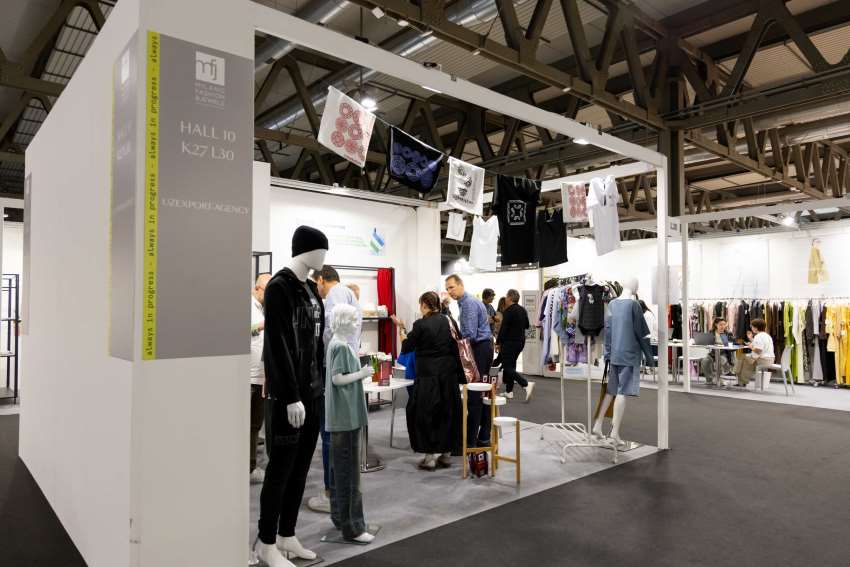
The 28th edition of Milano Unica will be held from February 5 to 7, 2019 at Fieramilano Rho in Italy. The show will focus on the textiles and the accessories for the Sprin/Summer 2020 season, with a selection that, as usual, will offer visitors only the very best of Italian and international high-end production.
The opening ceremony will be dedicated to the presentation of new projects of the Milano Unica digital innovation and Sustainability. The theme areas and the content projects will provide inspiration and insights for in-depth analysis. The Area Tendenze will display creations that exhibitors developed based on the Music Menu theme. The area dedicated to the Sustainability Project, evolving in quality and quantity of offering with a new approach, will particularly emphasise aspects regarding process sustainability implemented by exhibitors, and the Synthesis Areas will present the most representative samples produced by the participating companies.
The Vintage Area and the areas dedicated to Fashion Job, Woolmark, SMI – Sistema Moda Italia, Linen Dream Lab/Celc, Origin Passion and Beliefs First, and to the sponsors Banca Sella and Lauretana. Among the most significant initiatives targeted to emerging young talents, Milano Unica also presents Eyes on Me, a showcase for designers who have just graduated from fashion schools, and Back to School, an extraordinary appointment with a renowned name in the fashion industry.
Tamil Nadu tops textile exports followed by Gujarat
Tamil Nadu tops in overall textile exports from India. Second is Gujarat, which has prominent textile hubs like Surat, Ahmedabad and Vapi, and third is Maharashtra with hubs like Mumbai, Ichalkaranji, Solapur and Bhiwandi.
However all 29 states and seven union territories are known for their own strength and specialization in textile and clothing. Among the 1,399 operational textile mills, 752 were in Tamil Nadu, followed by Maharashtra (135) and Andhra Pradesh (112).
Under the Amended Technology Upgradation Fund Scheme (ATUFS), launched last year, there are benefits in terms of a one time capital subsidy of 15 per cent for the garmenting and technical textiles segments with a cap of Rs 30 crores.
Besides, there is a 10 per cent capital subsidy for segments like weaving, processing, jute, silk and handlooms with a subsidy cap of Rs 20 crores for setting up new textile units or for expansion of existing units with benchmarked technology.
Production of Tamil Nadu textile manufacturers is expected to reach Rs 75,000 crores by 2020. Right now it’s Rs 50,000 crores. Currently India is looking to add around 3 to 3.5 million spindles a year against an average number of 2.5 million spindles over the past five years. The southern region is expected to contribute to about one million and more spindles every year.
Pakistan: PHMA welcomes SNGPL subsidy for gas supply
The Pakistan Hosiery Manufacturers Association (PHMA) chairman Adil Butt has welcomed the approval of subsidy to the SNGPL for gas supply to the five zero-rated industrial sectors in Punjab. He expressed his deep gratitude to Prime Minister Imran Khan for keeping his words of reviving the export-oriented industry by announcing equal gas tariff across the country. He said the government in September had announced providing gas and electricity to the five zero-rated exporting sectors at regionally competitive rates, which was also endorsed by the Economic Coordination Committee (ECC). However, the long delay in implementation of this energy affordability initiative continued to panic the Punjab export-oriented industry.
The finance division has approved around Rs 26 billion for the financial year 2018-19 to be provided to the SNGPL for supply of gas to the export industry at $6.5/MMBTU while Rs 2.5 billion has been released for October and November in this regard. Butt also urged the government to rationalise the duties structures and minimise taxes and duties on import of raw materials and instead apply duties on import of finished/luxury goods in order to facilitate the domestic industry.
He also urged the ministry to discourage export of raw material and encourage export of value-added items. He reiterated the request of value-added textile exporters to the State Bank of Pakistan to facilitate exporters' authorised dealer to make import advance payments against irrevocable Letters of Credit (L/C) up to 100 percent of the value of the goods and up to $10,000 per invoice for the import of all eligible items without the requirement of L/C or Bank Guarantee from the supplier abroad.
North Korea’s textile exports ban to have ripple effect across the world
The UN has banned North Korea from exporting its textiles. The ban is expected to disrupt a business largely based in China and pose compliance headaches for clothing retailers around the world. More significantly it will hurt North Koreans, create difficulties for ordinary workers and their ability to make a livelihood.
Textiles are North Korea’s biggest exports after coal and other minerals. Nearly 80 per cent of these textile exports go to China. A lot of North Korean textile trade to Europe and other places goes via China. Despite tightening sanctions, trade in non-banned goods including food and other daily necessities continues between China and North Korea carried by hundreds of trucks crossing back and forth every day. But enforcing the textile ban along North Korea’s long border with China can be difficult. Goods are smuggled across, often on boats at night. Another challenge is that clothes can be partly made in China and partly in North Korea with a Made in China label attached to the finished product. Even if a label says Made in China, the buttons may come from Italy, the cotton may come from Australia or India, the labor may come from North Korea or China, the accessories may come from Bangladesh.
55 mills owners to shift out of Surat
Around 55 mills owners have agreed to shift their dyeing and printing mills located within Surat Municipal Corporation (SMC) areas out of the city limits to help reduce the problem of air and water pollution. This was decided at a meeting held under the leadership of South Textile Processors’ Association (SGTPA). A SGTPA delegation will meet chief minister Vijay Rupani and Industries Minister Saurabh Patel to demand allotment of land on the outskirts of the city for the mills.
About 65 mills operate in the city’s residential areas like Khatodara, Udhana, Ashwani Kumar Road, Ved Road, Bombay Market and Puna Kumbharia. Particulate Matter (PM10) level in these areas is exceedingly high than the national annual average at 184 per micrograms per cubic meter of air (UG/M3) per annum in these areas. In the past, diamond industry leaders and residents in Rustompura had organised protests to demand shifting of these polluting textile mills.
Three years ago when the original development plan of Surat Urban Development Authority (SUDA) was prepared, a plot of land in Pinjrat near Olpad was earmarked for relocation of the textile mills in the city. The plan was shelved due to CRZ and opposition from villagers. It is expected that new development plan of SUDA will have a specified area marked for the textile mills.
Minister urges Karnatka, TN textile units to invest in Maharashtra
Subhash Deshmukh, Textile Minister of Maharastra has urged textile chains in Karnataka and Tamil Nadu to invest in the state. Maharashtra textile units have been reeling under power cuts and frequent queries from the pollution control boards in the two southern states. In its new textile policy, the Maharashtra government announced a power tariff of Rs 3 per unit for co-operative cotton mills and Rs 2 per unit for power looms, cloth processing, and garment and hosiery units in the state.
Since its launch nearly three years ago, nearly 400 textile units have been set up in the Solapur textile hub, which the government of Maharashtra plans to raise to 2,000 by 2022. The state intends to invest Rs 46.49 billion between 2018 and 23, under various schemes to be implemented under its “Fiber to Fashion” mission. This will generate 1 million jobs by 2023 besides promoting cotton, silk and other raw materials processing in the state.