FW
EU apparel imports decline
The European Union's (EU) apparel import performance for the period of January to May 2023 has seen a decline of 8.84% in value, reaching US$36.31 billion compared to US$39.83 billion in the same period in 2022. The quantity of clothing imported by the EU has also decreased by 16.54%, from US$1.75 billion to US$1.46 billion.
Bangladesh continues to hold its position as the second-largest apparel import source for the EU, with a 23.32% share of the total import from 26 EU member countries. China remains the top supplier with a 23.67% share. Interestingly, in terms of quantity, Bangladesh has already surpassed China and maintained its leading position.
However, both Bangladesh and China experienced declines in their apparel exports to the EU during the mentioned months of 2023. Bangladesh's import value decreased by 11.59%, while China's declined by 15.25%.
The overall trend in EU's apparel imports shows negative growth for all top ten sourcing countries, indicating a challenging retail business and economic scenario. Despite the downturn, Bangladesh is making strides in diversifying its products and moving towards sophisticated items, reflected in the rise of unit prices.
As global cotton demand falls, Indian farmers switch to other crops
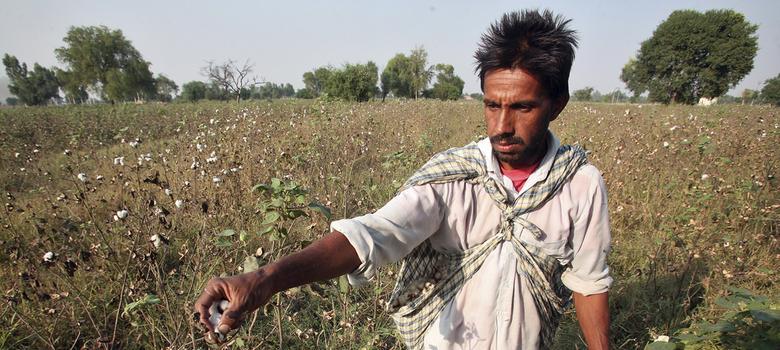
India, one of the largest cotton producers in the world, is going through a tough time with its current crop of the white fluff. It isn’t just the Ukrainian conflict as economic uncertainties have also created a sizeable slump in demand for clothing and therefore textile. A year ago things looked different as in FY 2022, Indian cotton yarn manufacturers achieved record-high profitability due to strong demand, lower domestic cotton prices compared to international prices and the US ban on cotton products from China’s Xinjiang region, which redirected some demand to India. FY 2023 has been a complete let down after so far. Experts opine, China used to be the number one and largest buyer of Indian cotton but now has reduced orders after its textile industry hit doldrums post-pandemic. Since FY 2022, Bangladesh is India's number one buyer of cotton yarn.
FY 2023 poses many challenges
If the country’s registered production continues its free fall, India will not only lose its status as one of the world’s largest cotton producers but also runs the risk of becoming a net importer. So what exactly is going on? The disparity between domestic and international cotton prices is a considerable one as Indian cotton is priced between 10 and 14 per cent higher than international price. When there is an overall decline in demand for cotton textile at a global level, the higher pricing is leading to rejection by international importers.
A catch-22 situation, the decline in sales volume and the forced contraction in operating profitability just to sell the produce is creating a big impact on the farming communities. While inflation in India is relatively under control but the slight levels it is at in terms of energy costs has made it hard for factories spinning yarns to lower their costs to compete. This year has been a record low for Indian cotton yarn exporters.
USDA red flag a bane
In this ongoing turmoil, USDA has stated that it expects India’s cotton exports to slip to its lowest levels in 19 years during the ongoing crop season between October 2022 and September 2023. The USDA expects farmers to shift to other profitable crops such as oilseeds and pulses leading to the dip. Indian cotton yarn exports had hit a decadal low of 664,000 tonnes in FY23, compared to the highest exports of 1.38 million tonnes in FY22.
Latest agriculture ministry stats show, cotton sowing across India remains 8.5 per cent lower on year at 7 million hectares due to a shrink in cultivation in some major growing states such as Maharashtra, Andhra Pradesh, and Telangana amid patchy rainfall. Many farmers say they are worried about producing a crop that is so reliant on water, of which there is no guarantee as climatic conditions have changed drastically and long periods of drought are playing havoc with the crop and soil. The only Indian state that saw a 4.6 per cent increase in crop production was Gujarat as it was blessed with a copious amount of rainfall last year.
In fact, at a recent Cotton Association of India press conference, former secretary of state for textile, UP Singh was not so optimistic about times ahead unlike many experts. While many experts are talking about a 5 to 7 per cent growth in cotton yarn production in India, Singh says unless productivity in cotton farming is addressed, India will soon be importing cotton instead of being the largest producer.
Fast fashion brand’s public disclosures reveal real picture about your clothes
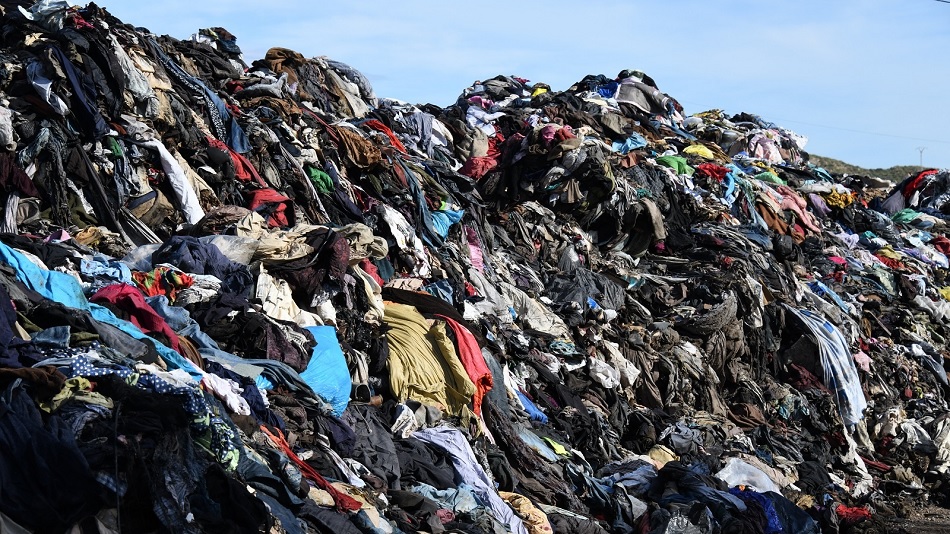
Fast fashion has been on the radar for a while now. From environment activists and watch-bodies to governments, there are a multitude of sources that are building up pressure on fashion’s black sheep – this has resulted in companies such as Shein, H&M and Inditex being forced to submit their performances based on the goals they’ve declared – the question is was all that green washing?
Polyester prolific in fast fashion
The rise of fast fashion has been heavily dependent on synthetic fibres such as polyester, nylon, acrylic and elastane, made from heavily processed petrochemicals. These materials are cheap to produce – polyester, for example, costs half as much per kilo compared to cotton – and therefore, allow brands to keep prices low, though with a high environmental price-tag.
Polyester is the most widely used synthetic fibre and is now found in over half of all textiles produced. It is generally produced from polyethylene terephthalate, better known as PET, a type of plastic derived from crude oil and natural gas – also used to make items such as plastic bottles. When usage data of different fibres are displayed, polyester outpaces all other fibres at 60.5 m tonnes per year and cotton a distant second with 24.7 m tonnes per year. The usage of other synthetic fibres stands at 11.7 m tonnes, man-made cellulosic fibres at 7.2 m tonnes, plant-based fibres at 6.7 m tonnes and animal-derived fibres at 1.8 m tonnes per year.
Shein, Inditex and H&M report card
Here is a look at public disclosures by some fast fashion brands. Shein’s 2022 Sustainability and Social Impact Report declared the brand’s textile portfolio – polyester is 64 per cent whereas recycled polyester is below 1 per cent. Other synthetics in Shein’s portfolio are viscose at 8 per cent, polyamide and Spandex at 3 per cent each. According to Shein, forest-safe viscose is less than 1 per cent. The Chinese fast fashion brand has set for itself a target of making the less than 1 per cent of recycled polyester to 31 per cent by 2030.
In terms of absolutely polyester, Inditex scores it at 27 per cent of its textile portfolio whilst H&M scores its usage as 21 per cent. These figures for Inditex and H&M were sourced from their last published annual reports. Inditex has a lofty target – 100 per cent recycled polyester by 2025. However, according to its annual report on 33.33 per cent of its winter 2022 collection was from recycled polyester. This then begets the question whether Inditex can reach its target at all?
H&M seems in a far better position as it too has targeted 100 per cent recycled by 2025 – it has already succeeded in converting its latest collection to 75 per cent recycled polyester.
Cotton, another natural fibre that is costing the earth’s resources heavily is only 10 per cent in Shein’s textile portfolio, even here Shein has been criticised for its dubious cotton sourcing practices which it of course vehemently denies. Shein says it has established robust traceability of its cotton supply chain, including a propriety system that integrates documentation, that is committed to respecting human rights and that has zero tolerance to forced labor. Inditex has nearly half of its portfolio as cotton at 41 per cent and at H&M cotton is 61 per cent of its portfolio.
Sustainable fashion consultant and founder of Clean & Unique, a supply chain information platform states that she appreciates that fashion brands are trying to be more green in their supply chain, but she fears consumers don’t really care enough to read labels.
Luxury apparel market projected for modest growth
The global luxury apparel market is projected to reach USD 139.2 billion by 2030, growing at a CAGR of 3.23% from 2023 to 2030,according to a report by Market Research Future.
Drivers
The increasing penetration of e-commerce has played a significant role in boosting market growth. Luxury brands have embraced online platforms to reach a broader audience, leading to increased sales.
Consumers prefer the convenience and vast product selection offered by online shopping, making luxury apparel more accessible to a larger customer base.
Opportunities
The desire for uniqueness and exclusivity presents robust opportunities for luxury apparel brands. By producing limited quantities, collaborating with renowned designers, and utilizing precious materials, luxury clothing companies cater to consumers who seek exclusive products that are not easily available to the general public.
The appeal lies in owning rare and sought-after fashion items, enabling consumers to showcase their refined taste and elevated status.
Restraints and Challenges
Limited accessibility to luxury apparel in low-income countries and rural areas, coupled with a lack of fashion awareness among consumers, may act as market restraints during the forecast period. COVID-19 Impact
The global pandemic caused by COVID-19 led to economic downturn and instability, affecting various industries, including luxury apparel.
Lockdowns and restrictions on social gatherings reduced the demand for luxury clothing. However, certain stimulus funds in industrialized nations led to a trend of luxury resale in the worldwide market, providing some cushion in personal budgets for luxury items.
Market Segmentation
The luxury apparel market is segmented based on distribution channel, gender, consumer group, and type. Clothing leads the market in terms of type, and Gen X dominates in terms of consumer group.
The female gender spearheads the market, while offline channels command the distribution. Regional Analysis
Asia-Pacific (APAC) holds the largest market share, with countries like China, India, and Japan driving growth due to rising incomes and increased preference for luxury products among millennials and Generation Z.
Europe follows closely, with several luxury fashion companies and tourists contributing to the region's growth in luxury apparel
Adidas and Manchester United seal £900M deal
Adidas AG, the renowned German sportswear manufacturer, and English football club Manchester United have inked an extraordinary 10-year contract extension, solidifying one of the most significant deals in Premier League history. The agreement ensures that Adidas's iconic stripes and logo will grace the players' jerseys until 2035, with the deal valued at a minimum of £900 million ($1.2 billion).
This remarkable renewal takes place amid Manchester United's ongoing efforts to find a new owner or investors while under the ownership of the Glazer family since 2005. Notably, UK-based billionaire Jim Ratcliffe and Sheikh Jassim Bin Hamad J.J. Al Thani, a member of Qatar's royal family, have presented bids surpassing $5 billion to acquire the esteemed club.
Although the team demonstrated improved on-field performance last season, it continues to grapple with replicating past glory under former manager Alex Ferguson, who retired in 2013—the year of Manchester United's last Premier League title.
This extended partnership with Adidas marks a notable move for the sportswear brand, especially after parting ways with rapper and designer Kanye West, formerly known as Ye, as it endeavors to bolster sales and pave the way for future growth.
BKMEA: Salim Osman re-elected as President
In a press release, it was announced that AKM Salim Osman has been re-elected as the President of the Bangladesh Knitwear Manufacturers and Exporters Association (BKMEA) for the term of 2023-2025. This marks his seventh consecutive term in office.
Salim Osman, the Managing Director of Wisdom Attires Ltd, is also a Jatiya Party lawmaker representing the Narayanganj-5 constituency. Notably, he is the brother of ruling Awami League lawmaker Shamim Osman.
The BKMEA election board declared the results on Tuesday, where Salim Osman and eight other office bearers were elected unopposed. No other candidates had submitted nomination papers for the election. Additionally, Mohammad Hatem, the Managing Director of MB Knit Fashions Ltd, has been elected as the Executive President of BKMEA, and Md Monsoor Ahmed, the Managing Director of MotaherColor Ltd, as the Senior Vice President.
Among the elected vice presidents are Fazle Ehsan Shamim, Amal Poddar, Gauhar Siraj Jamil, Akhter Hossain, and Ashikur Rahman. Morshed Sarwar (Sohel) has been elected as the Vice President (Finance).
Earlier, on July 20, the election board had announced that all 35 candidates for the directorship posts, under Salim Osman's panel, were elected unopposed, as there were no opponents, in accordance with the Trade Organisation Ordinance.
Lenzing Hosts Fiber Innovations Conclave in Coimbatore
The Lenzing Group, a world-leading provider of wood-based specialty fibers, organized 'The Lenzing Conclave' in Coimbatore, Tamil Nadu, bringing together over 60 experts from the region. The event focused on fostering knowledge exchange and exploring the applications of their TENCEL branded fibers and LENZING ECOVERO branded viscose fibers through an interactive seminar and product display.
Coimbatore, known as the 'Manchester of South India,' boasts a strong textile base, making it a strategic location for the conclave. With the rising demand for Lenzingfibers in South Asia and India over the last decade, the company has strengthened its presence in the regional market. The event provided a unique opportunity for Lenzing and local industry stakeholders to collaborate and integrate sustainable fibers like TENCEL and LENZING ECOVERO into their weaving processes, fostering new innovations.
Coimbatore is a significant center for weaving, made-ups, and apparel production. While 70% of the products developed in the region cater to the domestic market, the rest are exported to Western markets. As the market seeks alternatives to cotton fibers, there is a growing demand for wood-based cellulosic fibers. This presented an excellent opportunity to explore TENCEL lyocell and LENZING ECOVERO viscose fibers for creating superior quality, sustainable products.
Avinash Mane, Sr. Commercial Director - Textile Business, AMEA & NEA, Lenzing Group, South Asia, expressed delight at the response to the conclave, emphasizing the power of collaboration and innovation in the textile industry. Lenzing Group collaborates closely with weavers, providing technical expertise, bulk production support, and marketing tools, empowering weavers to introduce high-quality offerings to the market. The successful experiences in other hubs have inspired Lenzing and the weaving community to further enhance product quality for both domestic and international markets, bolstering the region's position in the global textile industry and supporting sustainability goals.
Eco-Friendly Polyester Resin Dispersion Market Surges
The global polyester resin dispersion market is set to achieve a valuation of US$ 7,635.4 million by 2023, with an estimated CAGR of 4.8% from 2023 to 2033, reaching around US$ 12,200.7 million by 2033. The rising demand for sustainable and eco-friendly materials, especially in construction and automotive industries, has propelled the popularity of water-based polyester resin dispersion due to its environmentally friendly nature. The construction industry, being one of the primary end-users, is expected to witness high demand, driven by infrastructure development worldwide.
Polyester resin dispersions offer versatility and excellent performance characteristics, making them suitable for various applications such as coatings, adhesives, and sealants. Additionally, the shift towards environmentally friendly products and stringent regulations related to emissions have further boosted the adoption of polyester resin dispersions. They also offer cost advantages over other resin systems, making them a preferred choice for various applications.
The United States stands out in polyester resin dispersion sales due to its easy product availability and robust supply chain. The construction industry's significant growth, driven by infrastructure development and residential and commercial projects, has contributed to strong sales in the country.
The building & construction and automotive & transportation segments are expected to dominate the market, driven by increasing investments in infrastructure and the need for lightweight and fuel-efficient vehicles. Leading players in the industry focus on product innovation, strategic partnerships, and collaborations to cater to evolving customer needs and expand their reach in emerging markets like China and India. Mergers and acquisitions are also common strategies to consolidate market positions and access new markets and technologies.
Overall, the polyester resin dispersion market is projected to witness substantial growth, driven by increasing demand for sustainable and eco-friendly solutions in various industries worldwide. Key players' proactive strategies to innovate and expand into emerging markets will play a crucial role in maintaining their competitive edge and meeting the evolving demands of customers.
Reviving Textile Industry: West Yorkshire's Groundbreaking Apprenticeship Course
Calderdale College is set to launch a groundbreaking apprenticeship training course for textile engineering technicians in West Yorkshire, marking a significant revival in the local and UK-wide textile industry.
Partnering with the Textile Centre of Excellence (TCoE) and the British Textile Machinery Association (BTMA), the college has developed a customized Level 3 apprenticeship course, commencing in September 2023. The program aims to equip Engineering Technician apprentices with the essential engineering maintenance skills required to bridge the skills gap prevalent in West Yorkshire's textile sector.
Despite its historical prominence in the 19th century, the region faces challenges today, including an aging workforce and high staff turnover. However, the industry is undergoing revitalization through digitalization and localized supply chains. To address the current demands of the industry, the apprenticeship course has been tailored to transfer vital knowledge and practices aligned with Industry 4.0 and automation.
The development of the program has been a collaborative effort involving Calderdale College, TCoE, BTMA, British heritage weaver AW Hainsworth, and several other local textile companies. This initiative follows the success of the Collaborative Apprenticeships project introduced in 2022, which has engaged over 100 local employers in promoting apprenticeships and their benefits.
Claire Williams, head of employer engagement at Calderdale College, emphasized the significance of tailored apprenticeships for industries, leading to a steady flow of skilled workers and enhanced staff retention. The unique course is expected to fill current and future skills gaps in the industry, bringing together textile and engineering expertise. It has garnered considerable interest from apprentices and employers alike.
Jason Kent, CEO of the British Textile Machinery Association, stressed the importance of collaboration, ensuring the course's success, and providing promising career paths for young individuals while bolstering the sector with technical expertise.
The launch of this pioneering apprenticeship program signifies a crucial step in resurging the local textile industry and serving as a model for other sectors to follow. The course aims to shape a new generation of skilled professionals to drive the industry forward amidst the challenges and opportunities presented by modernization and automation.
United States Tops Fashion Startup Rankings with $223 Billion Unicorn Valuations

With the global apparel market set to witness a substantial 11% revenue growth over the next four years, aspiring entrepreneurs are increasingly eyeing the fashion industry. To shed light on the most promising locations, JOOR, a wholesale expert company, conducted a comprehensive study evaluating several key factors, including country population, import and export figures, apparel market valuation, and the presence of 'unicorn companies' in the consumer and retail market. Unicorns are privately held startup companies valued at over $1 billion.
The study reveals that the United States ranks as the number one destination for fashion startups, boasting a high score of 9.27 out of 10. The "land of opportunity" houses unicorn startups valued at a staggering $223 billion, instilling hope in new entrepreneurs. Moreover, the export/import ratio of 6.99 indicates a flourishing market with a surplus of materials. The US apparel market also demonstrates a steady annual growth rate of 2.7%.
Securing the second position on the list is the United Kingdom, scoring 8.61. While the UK exhibits a higher annual growth rate in the apparel market (3%), the valuation of unicorn startups in the consumer and retail space is comparatively lower, standing at $4.4 billion. The country's export/import ratio of 5.57 further signals a thriving market.
Canada ranks third as an attractive location for fashion startups, earning a score of 8.48 out of 10. With unicorn startups valued at $12.4 billion and an annual apparel market growth rate of 3.5%, Canada offers a stable environment for fashion entrepreneurs. Additionally, the country maintains a healthy export/import ratio of 6.69.
Germany secures the fourth spot, with a score of 7.93 out of 10. The valuation of consumer and retail unicorn startups in Germany is an impressive $14.5 billion. Furthermore, the country's export/import ratio of 2.08 signifies favorable market conditions. Germany's apparel market demonstrates a steady annual growth rate of 2.20%.
China claims the fifth position as an appealing destination for fashion startups, scoring 7.88 out of 10. With unicorn startups valued at a massive $239 billion, China leads the pack in this category. Moreover, the country's apparel market boasts an astounding annual growth rate of 6.30%. However, the low export/import ratio of 0.12 poses a potential challenge for businesses.