FW
Vietnam faces rules of origin challenges
To take advantage of free trade agreements, Vietnam’s garment and textile sector has to comply to with rules of origin. The country expects a lot from the Comprehensive and Progressive Trans-Pacific Partnership (CPTPP) and the EU-Vietnam Free Trade Agreement (EVFTA). But Vietnam needs to invest in fabric production to meet origin requirements when exporting to CPTPP and EVFTA countries. This would not be easy because Vietnam must compete in designs, quality, prices and delivery time with other major fabric producers like China and India.
Investing in fabric production needs careful consideration in terms of production scale because Vietnam’s garment industry uses less than a billion meters of woven and knitted fabrics every year, or 18 per cent of global exports. If the fabric production targeted only Vietnam, production scale would be too small while investing in large-scale production. Instead Vietnamese garment firms have to work with global giants to establish value chains and invest in production to meet their demands and have to invest in raw material production to meet rules of origin in trade deals. Shortage of fabric resources is a big obstacle for the garment and textile industry of Vietnam. It has to speed up reforms with innovations in designs, management, fabric production and building brands.
M&S sales down three per cent
For the third quarter Marks & Spencer sales fell 3.7 per cent. Revenues were 0.7 per cent less than in the third quarter of 2018. Fashion sales generated through the online channel rose by 1.5 per cent though the increase was smaller than what the group had expected. The group continues to accelerate its closure plan intended for 2022 and has reorganized its fashion team by simplifying its structure and announcing 47 layoffs in the purchasing, marketing and logistics departments in 2019.
Performance in menswear and the gifting categories held the British group of department stores back from delivering a stronger result. But the changes made at the beginning of the year in the fashion division have arrested the worst of the issues of the first six months and the company is progressively building a much stronger team for the future. Marks & Spencer will incorporate a new supply chain director for the fashion division in spring. The chain’s fashion division employs a thousand people and has suffered stock ruptures throughout 2019.
The company is still at the early stages of far-reaching changes in range, in style, customer focus and channel mix. Its objective is to reshape its buy, deliver market leading value and focus on stylish and wearable wardrobe must-haves as it grows the business with family-aged customers seeking style, quality and value.
Fall in Chinese textile and apparel exports
China’s textile and apparel exports dropped 2.2 per cent between January and October 2019. Shipments to the US, the European Union and Japan declined 4.5 per cent, five per cent and 5.5 per cent.
To improve the product value and tackle climate change, green textile products have already become the new trend in the textile industry. Textile makers in China have begun to adopt renewable energy sources, environmentally-friendly textile materials including biomass fiber and recycled substances to make the whole production process pollution free, as well as cut dependence on crude oil when producing common synthetic materials such as nylon or polyester.
Domestic companies are having a rational attitude toward relatively advanced industrial applications like quantum computing and other emerging technologies, and deploying more resources in innovation and green development to better compete with their established global rivals. Crossover branding has become a hot term for many sectors. Brand collaboration arouses consumers’ curiosity, giving them a new reason to spend. It usually generates unexpected market feedback and decent sales both at home and abroad. Ningbo Peacebird Fashion, for instance, plans to expand its global presence with more flexible branding strategies, international designers and innovation. The firm will enter overseas markets, such as Vietnam and Malaysia, after learning of local consumers' higher purchasing power and changing lifestyles.
Bloomingdale’s reassesses underperforming stores
Bloomingdale’s is reassessing underperforming stores and making smart use of the ones they have. The company has begun heavily investing in rotating shop-in-shops, allowing it to fit a larger number of new concepts into a single store. Additionally, Bloomingdale’s is also one of the first high-end department stores to have its own rental service. Basically it is checking up on the health of the company, taking proactive action and ensuring it is not put in a situation where it can only be reactive.
While other luxury retailers in the US have faced issues due to over-expansion and high rent costs, leading to closures or bankruptcy, Bloomingdale’s has mostly avoided the same fate. The department store and other specialty retail categories that are selling commodity products and brands that are available at many retail chains have been hit hard with many store closings and bankruptcies in recent years. Macy’s is closing 28 stores, making it the latest in a long line of retailers and department stores suffering the effects of a volatile retail environment and downsizing. Macy’s has closed more than a dozen stores per year since 2015 — sometimes up to 40 in one year. Landlords don’t give struggling retailers much time to restructure and make good on their payments.
Bangladesh garment exports down seven per cent upto November
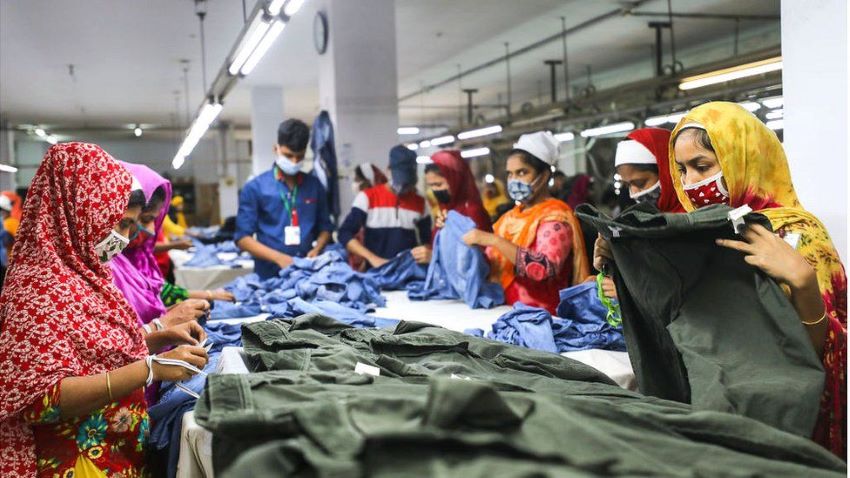
Exports of readymade garments from Bangladesh fell 7.7 per cent in the five months to November. Exports of knitwear dropped 6.7 per cent while woven garment exports fell 8.7 per cent in comparison to the same period last year.
Bangladesh is the world’s second largest clothing exporter. More than six per cent of world apparel exports originate from Bangladesh. The European Union is the largest customer of the fashion industry in Bangladesh. However, Bangladesh is expected to slow its fashion exports to Europe. In parallel, the Asian country is expected to enter the list of less developed regions in 2024, which will entail endangering the tariff benefits established with the European Union, Canada and Japan, among others. Bangladesh will give garment, terry towel and specialised textile exporters a one per cent special incentive. The aim is to help exporters remain competitive in the global market. Currently, Bangladesh garment exporters receive a four per cent cash incentive for shipment to non-traditional markets. The country considers all destinations as non-traditional markets except the EU, the US and Canada.
Bangladesh’s garment exports have been declining for the last five months because of the appreciation of the currency, the rising cost of production, the declining trend of spending by consumers for garment items and the free trade agreement between Vietnam and the EU.
Iluna Group introduce naturally-dyed Yoga Capsule collection
Iluna Group a selected firm among the protagonists of the Sustainable Thinking Exhibition of the Salvatore happening from January 18th to 20th, 2020 at Ferragamo Museum Paris is bringing to the Parisian leading trade show for lingerie its exclusive offer and a unique Yoga capsule collection.
The smart approach, selected materials, the know-how of the processes and its attentive look at the ecosystem are the leitmotiv throughout the collection and the key elements that distinguished the Cuggiono-based company placing it at the forefront. A pursuit of perfection that culminates in the exclusive Yoga Capsule a collection characterized by the inclusion of responsible premium ingredients such as GRS certified Q-NOVA, made for more than half by pre-consumption waste, and the GRS certified premium stretch yarn ROICA EF constructed out of more than 50 percent pre-consumer recycled content. Produced by Asahi Kasei, this yarn belongs to the ROICA Eco-Smart family, a range of the world's first responsibly made premium stretch fibers including ROICA smart yarns and its impressive certifications.
The unique added value of the capsule is that it is enriched by natural-based GOTS certified dyestuffs, a safe alternative to the chemical ones. A collection with a ten shades color offers strictly linked to the seasonality with high color fastness and durability respondent to the OEKO-TEX Standard 100 certification.
The excellence of Iluna Group is 100% built on responsible innovation, granted by certifications issued by the most authoritative control bodies in the sector. The creation of Smart lace, rigorously Made in Italy, is today certified Global Recycled Standard (GRS). There are many proposals and innovations the Group will present at the next edition of Interfiliere, all the precious elastic lace contains ROICA EF premium stretch.
Xaar Plc, makes Ian Tichias as Chief Finance Officer
Xaar plc, the digital inkjet printing, and 3D technology group, announces the appointment of Ian Tichias as Chief Finance Officer and Director of the Board from March 1, 2020.
Ian joins from Ibstock plc where he has been Group Finance Director and Deputy CFO, responsible for the Group’s Forticrete aesthetic clay business. Previously, Ian was Senior Director, Finance & Global Pricing Lead – Europe, Africa, and the Middle East for Zoetis and before that, Head of Finance for Pfizer Diversified Businesses (PDB) UK.
I am delighted that Ian will be joining Xaar as we lead the company into its next phase of development” commented John Mills, Xaar’s CEO. “His extensive financial experience, alongside a fresh new perspective will add significant value to the business.”
Xaar is a world leader in the development of digital inkjet technology. Our technology drives the conversion of analog printing and manufacturing methods to digital inkjet which is more efficient, more economical and more productive than the traditional methods which have been in use for years.
Maglificio Ripa brings in skin collection for spring/summer 2021
Maglificio Ripa, a leading knitting company, has developed a new Skin collection, designed to represent pure concentrated energy, a quite revised supply of new and original contents resulting from an original designs, and a touch of rare elegance for the finest fashion gourmets. The new collection could be summed up in three main themes, according to the European producer of lightweight, second skin fabrics.
The colour patterns are dense and full of energy, sometimes even extreme to enhance shapes and suntan, the company reports. Floral, dreamlike, geometric and optical prints are featured by a unique and exclusive definition that allows them jump from delicate watercolours to the strong and bright Chagall colour hues.
The development of a green collection is very important, and it is part of the Earth collection designed with Nilit where its offerings made with Sensil Ecocare are presented right alongside those made with the brand new Sensil Ecocare Breeze which, in addition to guaranteeing sure freshness, has an eco-responsible soul being it is made with preconsumer recycled nylon 6.6.
Offerings are also in modal/silk and cotton /silk and last but not least a dyed oxford thread for shirts, athleisure wear, and sportswear. An exceptionally well-made line of linen fabrics is also being studied.
Wrangler declares Winners of True Wanderer 8.0
Wrangler’s initiated True Wanderer started in 2012, it continues to be an increasingly popular annual event for the people who want to celebrate their love for the open road and the adventure of travelling.
Through public votes and the scores of an elite judging panel, Wrangler True Wanderer Season 8.0 announces the winners. The first prize has been won by Pranay Metta from Hyderabad who has won a fully paid trip to Switzerland. The second prize has been claimed by Mr. Ravi Rana from Delhi, the trip to Andaman & Nicobar. The third prize winner has been shared by Mr. Clifford D'costa from Mumbai and Ms. Saanjhi Rawat from Dehradun, trip to Leh.
In 2019, thousands applied to be a part of the eighth season and 12 True Wanderer finalists were selected to go on the trip around India to a destination of their choice. They could choose to travel by car, bike, foot or any mode of transportation of their choice whilst completing travel-related challenges set by Wrangler.
The 12 finalists, styled in Wrangler apparel, took wandering to a whole new level as they showcased the passions that drive their wanderlust. They captured the highlights of their epic road trips and shared it with the True Wanderer community with interesting and inspiring stories, photographs and videos.
Pranay Metta, winner of True wanderer 8.0 was accompanied by his fellow traveler Suryachaitanya Vanapalli and rode from Hyderabad to Vishakhapatnam. The First Runner up winner of True wanderer 8.0 Mr. Ravi Rana, was accompanied by his fellow traveler Rupesh Aka Sonu and travelled from Delhi to Meghalaya. The Third place winner of True wanderer 8.0, Mr. Clifford D'costa was accompanied by his fellow traveler Raunak Almeida who started his journey from Mumbai to Ganpatipule along the Malvan region - Goa - Hampi - Kolhapur and back to Mumbai via Pune and Ms. Saanjhi Rawat, the Third Place winner of True wanderer 8.0 was accompanied by her mother who explored the outskirts of Dehradun.
ROICA premium to upgrade level of sustainable innovation at Interfilière 2020
World's leading trade show for fabrics and accessories for lingerie, swimwear & activewear smart collaborations with leading players are protagonists.
January 18th to 20th, 2020 ROICA in Paris, the world’s leading sustainable premium stretch fibre by Asahi Kasei, is known for global success in the market with the very first sustainable premium stretch fibre.
ROICA Eco-Smart 58% of pre-consumer recycled content, the ROICA EF innovates with excellent dyeability and comes with the Global Recycled Standard (GRS)certification by the influential Textile Exchange - the Cradle to Cradle Material Health Gold Level certified ROICAV550 allows excellent and durable printability with relevant circular economy advantages. Both yarns are part of successful ROICA Eco-Smart family range.
The premium brand adoption 100% NATURE collection by CALIDA reflects a shared vision for sustainable fashion. A mission and a strong commitment combining comfort with technology, style and a responsible attitude. Manufactured in a closed, particularly energy-efficient cycle and sourced from sustainably managed forests, the man/woman underwear and loungewear collection by leading fashion brand CALIDA reaches the 100% of sustainability. Thanks to be a part of this collection, the premium stretch fiber ROICA™ delivers ultimate hyper-performance in both stretch and sustainability. “100% NATURE” is certified Cradle to Cradle, which means that raw materials can be used time and again in an ongoing biological cycle. CALIDA is also the first clothing brand worldwide to be awarded the ‘MADE IN GREEN by OEKO-TEX’ label, which is based on compliance with strict social responsibility and ecological criteria and certifies that the textiles carrying the label have been tested for harmful substances.