FW
Focus on priority sectors can help Nepal achieve LDC targets
 Despite being confronted by unfavorable conditions, Nepal, has made significant socio-economic progress in the last few years. However, it has demonstrated an absurd growth curve where below average economic growth is being supported by a sharp reduction in poverty. As per a report by Himalaya Times, in the last few years, Nepal has managed to meet its Millennium Development Goals (MDG). As per review by the United Nations Committee for Development, it met two of the three criteria for graduation from the group of least developed countries (LDCs) for the second consecutive time in 2018.
Need for consistency in growth
Yet, the Committee refrained from recommending the graduation of Nepal from the list of least development country until the 2021 triennial review due to the instability of its progress achieved.
To graduate from the Least Developed Country status, Nepal needs to consistently meet development goals under at least two of the three predefined criteria. A country can also graduate from LDC status under the 'income-only' graduation rule according to which it is considered eligible for graduation if its three-year average per capita national income has risen to a level at least double the graduation threshold.
Landlocked countries can boost their national income by trading with their other adjacent countries. In Nepal’s case, it is mainly dependent on India for its exports. Around 58 per cent of its exports are directed to India followed by 11 per cent to the United States, 4 per cent each to Turkey and Germany, 3 per cent to the United Kingdom and 2 per cent each to China and Singapore.
Currently, Nepal's export market concentration is estimated to be higher than Afghanistan and Lao People's Democratic Republic, while its export market penetration rate is lower at 2.4 percent. However, in recent decades, it has managed to make remarkable progress under the criteria of Human Asset Index (HAI) and the Economic Vulnerability Index (EVI).
This is quite surprising for a country that had a per capita income of $745 in 2018, as low as just 60 per cent of the graduation threshold level of per capita income of 1,230. Nepal is the only country that secured graduation requirements without fulfilling the per capita GNI threshold criterion.
Focus on priority sectors
To graduate from a LDC, a country needs to meet export targets despite facing high tariffs. However, 2026 exports of Nepal are likely to decline as around 22 per cent of its exports will face higher tariffs. The sectors that will be most affected include textile and clothing, especially, apparels, synthetic textile fabrics and carpets. Their exports to the European Union, Turkey and China will decline.
With several development challenges, Nepal’s graduation from LDC is likely to be difficult. To smoothen this transition, it needs introduce policies that boost growth in certain priority sectors like textiles and apparels.
Digitization in focus, demand for exclusive products to rise in 2022: Report

This year, more fashion brands will focus on digitization of operations, with NFTs gaining prominence. Digital-first creatives will be the new influencers with more brands adopting the metaverse and digital-first designs, says a new Vogue Business report.
Already, Tommy Hilfiger has tapped eight native Robtox designers to create digital designs for new collection. Similarly, Forever 21 has collaborated with a metaverse creation agency Virtual Brand Group to open a Shop City, for Roblox influencers to set up own stores. The brand will provide all available merchandize physically in its virtual shop.
The new membership badges will be profile pictures, or PFPs. Brands will dress PFPs or create their own. Inclusivity and diversity will be top focus for brands as they will aim for a purpose human experience, says Tamara Hoogeweegen, Strategist, Future Laboratory.
Eyewear retailers adopting augmented reality
To increase its use in fashion and retail, eyewear retailers Meta and Snap Inc are investing in augmented reality. Through this investment, these brands aim to make their smart glasses, called Ray Ban Stories and Spectacles, a must have hardware and software. Meta is also paving the way for future partnerships with additional luxury fashion eyewear brands by partnering with Ray-Ban owner EssilorLuxxotica on smart glasses.
Customized fashion to be back in demand
Customized garments took backseat this year with demand for more accessible options rising. In future, however, the demand for personalized products will resurge with brands and retailers embracing 3D and digital twins to create new products, says Goncalo Cruz, Co-Founder and CEO, PlatformE. According to him, tech and operational are getting more sophisticated and facilitating pilots, tests and first runs.
Stores to be more digitized
Stores will add more digital features as digital holdout get converted into online sales, predicts Forrester. They are already becoming more personalized with new features like an access to real-time reviews, AR try-on, etc being adopted, it adds.
Demand for NFTs to persist
NFTs will persist during the year thanks to the long-term loyalty or membership cards offering exclusive perks to customers. Both physical and digital purchases will increase with customers opting for unconventional brands, alternative ways to buy, and innovative systems of value like NFTs, adds Forrester.
Heeding to the legal and ethical issues, brands need to form metaverse teams to address trademark and copyright concerns, and future projects. This will also affect brand’s marketing strategies as they are still adapting from the iOS update that made Facebook and Instagram spend less successful.
This year, the access to both online and offline events will be limited with visitors granted NFTs or other tokens to participate. Luxury brands will need to redefine their offerings to fulfill customers’ desires for exclusivity.
Low-skilled workers, infrastructural facilities plague Bangladesh sweater makers
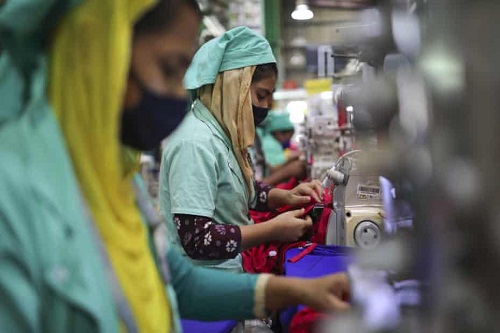
Growing from $3 million to more than $4 billion over time, Bangladesh sweater exports have expanded with the country gaining more access to international markets. Bangladesh currently has 400 automated sweater factories that have replaced its manual hand knitting devices with automated Jacquard machines. As per a Business Standard report, these factories have recorded over a 27 per cent growth in their sweaters in the past six year. Bangladesh Garment Manufacturers and Exporters Association (BGMEA) estimates, growth in this area is relatively higher compared to other items.
Sweater makers in Bangladesh are eying new investments and expansions in 2021 as factories have shaken off the COVID-19 fear and opened with full operations. In 2021, several sweater manufacturers expanded operations while five of them made fresh investments in production units, says Shahidullah Azim, Vice President, BGMEA.
Two other entrepreneurs including Shahidullah Azim and Mostafa Golam Quddus, Former President, BGMEA, plan more investments in their production units in the next two years. Quddus believes, training local workforce will help in boosting his Bangladesh business. He launched Dragon Sweater, knitting and spinning project in 1993 after training the local workforce.
China’s exit provides expansion opportunity
Worth around $104 billion, the international sweater market is currently dominated by China, Cambodia, Turkey and Myanmar. However, China plans to exit the market due to rise in production costs and sweaters being a basic export item. China’s exit will benefit Bangladeshi entrepreneurs like Rafiqul Islam, Owner, Designtex Knitwear, who will increase his investment in sweater unit by 2022-end.
Local manufacturers make only low-cost sweaters and export them for around $4-$6 per piece. They can boost exports by making high-value items like ‘cashmere wool sweaters’ for $100-$150 apiece. The raw materials for these items can be availed from India, China, and Mongolia.
Lack of infrastructure hampers growth
Currently, around 25 factories in Bangladesh make sweaters from acrylic fiber and other fashionable accessories. However, most of these factories lack in skilled workers, innovation and design centres and a strong backward linkage. Activities in these factories are also hampered due to complications related to the harmonized system code. This causes a struggle amongst sweater-makers to bag orders from big brands.
These factories also have low capital for investment. Setting up a small factory with 200 machines needs $1.6 million for machines alone, adds Romel. This makes investments difficult to get, he adds. Also finding workers has become difficult in the country, which is hampering production, he adds further.
Direct mills to bring down yarn prices: AEPC
The Apparel Export Promotion Council has requested the Ministry of Textiles to suggest the mills to bring down the yarn price by Rs 40 per kilogram. According to the Council, the increase of Rs 7,000 in the price of the cotton has caused yarn prices to reach Rs 401 in place of Rs 359
In its letter to the ministry, the council says, the cotton price per candy in October 2021 was Rs 67,000 and yarn price Rs 331. The cotton price was increased to Rs 74,000 this January -- a hike of ₹7,000, with the yarn price set at Rs 401 -- an increase of Rs 70.
The rise in the prices is not according to the formula adopted by the industry. According to its price increasing formula, for every Rs 1,000 increase in the cotton price, the yarn price will also be increased between Rs 3.50 and Rs 4. But now, with an increase of Rs 7,000 in the price of the cotton, the yarn price reached Rs, 401, says A Sakthivel, Chairman, AEPC.
The council has requested the ministry to suggest the mills to bring down the yarn price by ₹40 per kilogram.
LalitThukral, President, Noida Apparel Export Cluster (NAEC) and an executive member of AEPC, adds the total export value of the apparel sector in India is Rs 130,000 crore, of which Rs 40,000 crore revenues are generated in Uttar Pradesh alone.
Now, as the mills have been increasing the prices frequently and arbitrarily, the buyers or importers are not willing to increase the prices as well, he adds.
RIL emerges leading bidder for Sintex Industries
Reliance Industries (RIL) has emerged as one of the leading bidders to acquire bankrupt Sintex Industries. As per report, in partnership with Assets Care & Reconstruction Enterprise (ACRE), RIL has offered a Rs 2,863 crore resolution plan that includes 10 per cent equity to lenders. The RIL offer includes payment of Rs 2,280 crore to financial creditors, equity infusion of ₹500 crore for working capital requirements and a Rs 83 crore payment to employees and trade creditors.
RIL will hold 79 per cent share in the company while, ACRE will hold 11 per cent and the remaining 10 per ent will go to lenders after the acquisition. RIL will avail debt of Rs 2,349 crore and infuse Rs 500 crore as capital. ACRE, an Ares SSG-backed asset reconstruction company (ARC), will issue security receipts for Rs 14 crore to lenders. Details of the Welspun offer aren't available. Lenders to Sintex Industries got four firm resolution plans last month. Besides RIL, Welspun, GHCL and Himatsinka Ventures are the other three bidders.
Rieter to install a full system at Spinnova plant by 2022-end
Rieter plans to install a full system at its Spinnova plant in Jyväskylä, Finland, by the end of 2022. As per a Knitting Industry report, the industrial scale spinning facility will enable Spinnova to streamline commercial textile development, enhance brand collaborations and further improve market entry capabilities.
The spinning line comprises a complete system of Rieter machines. The UNIblend A 81 will start with an initial mix of 70 per cent cotton and 30 per cent wood-based fiber on its way to achieving a 100 per cent wood-based yarn. The proximity of a spinning facility will make a huge difference in the company’s commercial phase, says Janne Poranen, CEO and Co-Founder Spinnova. It will enable the company to make fast trials, not lose lead time, and test smaller batches than before. This will significantly improve the textile R&D with our wood-based Spinnova fibre.
In-house trials with the G 38 ring spinning machine already showed promising results. Thanks to its Compact drum compacting device, the G 38 is fully flexible in producing both high quality ring and compact yarns. It is linked to the Autoconer X6automatic winder and thanks to the compacting device, Spinnova can easily switch between ring yarn and compact yarn production. The fully automatic R 70 rotor spinning machine, known for its productivity, outstanding raw material utilization and low energy consumption, can produce up to four different yarn types at once, which will be important as the trials proceed.
Karl Mayer reorganizes support activities in India
Innovative world market leader Karl Mayer reorganized its support activities in India in 2O21. It transferred its service and spare parts support for customers in the warp knitting and technical textiles sectors from Ahmedabad to the Stoll site in Noida. The Indian subsidiary, now operating under the new name Karl Mayer Stoll India, began operations as early as April 1. The merger of the Group’s warp knitting and flat knitting activities resulted in a wide range of synergies in the service, care solutions and academy sectors, with benefits for the customers.
In the warp preparation market for weaving, Karl Mayer Textile Machinery India continues to offer the best support. It combines the know-how and experience of almost 70 service specialists, who are active from different offices in all the important industry centres. The decentralized structure under one roof enables
India: Rising COVID cases cause labor shortage for exporters
Rising COVID cases are causing labor shortage for garment exporters from Noida and leather goods exporters from Mumbai, Delhi and Kolkata. Around 3,000 garment export units are currently facing a shortage of around 3 lakh tailors. This is causing concerns amongst exporters having orders from US and Europe. Leather goods exporters flooded with orders from global markets are also worried over the shortage of manpower due to a spike in COVID cases. They have taken up the matter with the Uttar Pradesh government as well, informs Lalit Thukral, President, Noida Apparel Export Cluster.
Rising cotton prices is adding to the woes of these exporters.. Cotton prices which were at Rs 37,000 per candy of 335 kg in September 2020 have gone to up to Rs 70,000 in December 2021, adds Thukral. This may cause delay in delivery of orders leading to loss in business that may shift to other countries like Bangladesh and Vietnam, he adds further.
Leather exporters in Kolkata, Mumbai and Delhi are also witnessing a decline in workforce due to rising covid cases among them. The workers, who are double vaccinated, are falling prey to this new variant of COVID, impacting manpower, adds Ramesh Juneja, Regional Chairman, Council of Leather Exports.
India to meet $400 billion textile export target by 2022
India is on course to meet its export target of $400 billion by March 2022 as it exported $100 billion in the third quarter (Oct-Dec) of current fiscal 2021-22. Global demand for Indian goods has been improving since December, with exports hitting a monthly high of $37.29 billion. Anant Srivastava, Director, Home Textile Exporters Welfare Association (HEWA), says this is the highest ever export in a month so far and there is no doubt that exports will touch $ 400 billion in the next quarter.
As per Piyush Goyal, Commerce and Industry Minister, India’s exports of cotton yarn, fabrics, made-up, and handloom products are gaining more traction and have successfully registered a growth rate of 45.73 percent in the one year, December 2020 to December 2021. Vikas Singh Chauhan, Director, HEWA believes India’s export success story will continue this year as well. But to achieve the target of $1 trillion in 2022-23, efforts will have to be intensified.
Indian economy is showing positive signs as it has already crossed the $300 billion exports mark in three quarters. The increase in exports is also due to some favorable steps taken by the government, such as expansion of RoSCTL, facility of RoDTEP, payment of pending dues of Rs 56,000 crore in September for export promotion schemes, and relaxation to factories during the second wave of lockdown.
Industry leaders believe, high freight charges, raw material cost, lack of major FTAs, fully functional alternative routes like the International North-South Transport Corridor (INSTC) are some of the challenges to achieving $1 trillion exports and $5 trillion GDP in the next few years. India also needs to put in place a mechanism to control the rising cost of raw material in cotton to achieve the textile export target of $100 billion in the next few years, they say.
Apparel sales to fall 30 per cent on rising Omicron cases: CAIT
As per the Confederation of All India Traders (CAIT) India’s apparel sales are likely to decline by almost 30 per cent across various categories due to the rising Omicron cases. A survey conducted by the traders’ body, between January, 1 and 6, 2022 shows, India’s domestic trade declined 45 per cent in 36 cities. In some apparel manufacturing hubs like Delhi-NCR, majority of migratory workers failed to join factories and are still in villages.
Lalit Thukral, President, Noida Apparel Export Cluster (NAEC) says, the cluster is in touch with the workers and have assured them not to worry about anything. Few PPEs manufacturers are again witnessing increasing orders from the domestic market and enquiries from overseas. At the same time, new order booking for garments is expected to be a little slow as buyers, as well as Indian suppliers, are doubtful about the way things will shape up in next one or two months.
Rajeev Bansal, Managing Director, Celestial Knits & Fabs, Noida and National Vice President, Indian Industries Association (IIA),says, orders booking has been a little slow since last few days as buyers are also very careful about the overall situation in their countries as well as in suppliers’ countries.