FW
Hong Fu Industrial Group to invest Rs 1,000 crore in Tamil Nadu factory
Taiwanese footwear manufacturer Hong Fu Industrial Group will invest Rs 1,000 crore over the next five years to set up a factory in Tamil Nadu. As per the memorandum of understanding (MoU) signed with the Tamil Nadu government, the plant will employ 20,000, mostly women, and manufacture non-leather-based footwear that does not require much water.
The unit will export footwear from global brands like Nike, Puma, Converse and Vans. It also has plants in China and Vietnam. The investments would be made in phases over the next three to five years and the unit would also boost footwear exports from the State.
It will give a major impetus to the footwear production and export in the State. Hong Fu serves a host of global footwear brands such as Nike, Puma and Converse, among others
Bangladesh emerges a hub for sewing thread manufacturers
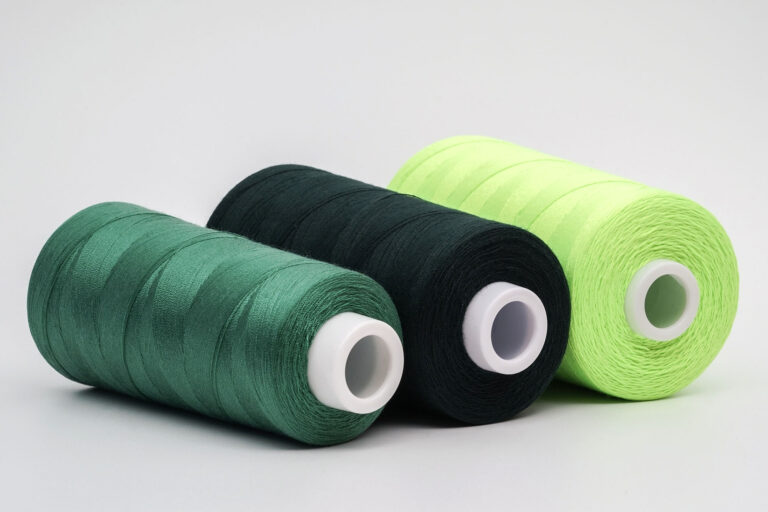
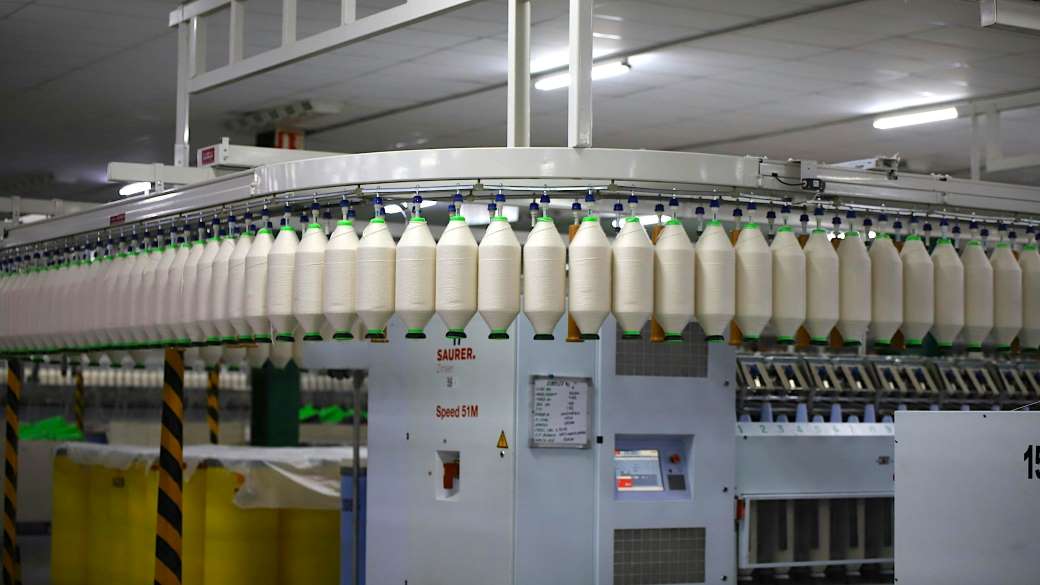
With hundreds of units springing up in the country, Bangladesh has emerged a major hub for sewing thread manufacturers in recent years. These units enable Bangladesh to attain self-sufficiency in the major garment accessory, says a Daily Star report. They also enable apparel manufacturers to reduce dependence on imported raw materials, and maintain strict lead time.
Around 10 years ago, Bangladesh imported sewing thread used to stitch garments. However, now the country not only meets local demand but also exports it. Around 20 local and multinational sewing thread mills in Bangladesh produce more than 100 tons of sewing thread a day.
Attracts investments worth Tk 100 crore
Though it contributes less than 1 per cent to the total garment export of $36 billion, sewing thread is vital to manufacture a finished garment item. In the past decade, the accessory attracted investments worth Tk 100 crore in Bangladesh
Kalurghat-based Sanzi Textile Mills invested Tk 100 crore in sewing thread manufacturing in 1995. Today, the company produces 30 tons of thread per day for domestic and international markets, says Syed Nurul Islam, Chairman, Well Group, Owner, Sanzi Textile Mills. It plans to launch another factory to produce leather sewing thread in Bangladesh. The company currently owns 30 per cent share in the sewing thread segment and rakes in $20 million annually. It also ships more than $6 million worth of the accessory a year. Achieving self-sufficiency in sewing thread manufacturing
Earlier dependent on China and Hong Kong for sewing threads, local manufacturers now supply 95 per cent of the accessory. The rest is imported owing to special requirements from international retailers and brands. DBL Group, a garment exporter, produces 10 tons of sewing thread a day at its Kashimpur factory in Gazipur. Of this, the group consumes 20 per cent while the remaining 80 per cent is sold to other garment manufacturers, says MA Jabbar, Managing Director. DBL Group plans to set up a sewing thread unit in Vietnam within two to three years. The company produces sewing thread of international quality, adds Jabbar.
Synthetic threads’ output remains low
Although Bangladesh has become self-reliant in sewing thread, it still imports associated raw materials, says Abdul Kader Khan, Managing Director, Khan Accessories and Packaging. The country has nearly 200 sewing thread manufacturers supplying to export-oriented garment factories. But, only a few of these cater to the needs of the market, adds Abul Quasem Haider, President, Bangladesh Sewing Thread Manufacturers and Exporters Association.
Local manufacturers cater to around 90 per cent of the demand for cotton-made sewing threads. However, these manufacturers cater to only 70 per cent of the demand for synthetic-made threads. The rest 30 per cent are imported, mainly from China. Over all, Bangladesh has over 100 small and medium-sized mills in the local sewing thread market.
The US textile industry continues to grow with investments across sectors
The apparel, bedding, floorcovering, traditional textiles, nonwovens and technical textiles sectors in the US are booming with new investments and expansions. Most investments are focused on sustainability and development of Central America, says a Textile World report.
One of the first investments is Eastman Chemical Co putting in$1 billion in a material-to-material molecular recycling facility in France. The facility will recycle upto 160,000 metric tons annually of hard-to-recycle plastic waste currently being incinerated. West Sacramento, Calif.-based Origin Materials Inc plans to invest at least $750 million to develop a biomass manufacturing facility in Ascension Parish, La. The plant will produce plant-based polyethylene terephthalate (PET) with sustainable wood residue for use in packaging, textiles, apparel and other applications.
Floor covering companies expand operations
Floor covering companies are also expanding their operations. Dalton, Ga.-based Shaw Industries Group, a global flooring provider, is expanding its operations in Aiken County, SC with $400 million investment. Sherrill Furniture, a manufacturer of high-end furniture, plans to invest $2.9 million to open a new custom upholstery production facility in Conover, NC. The company manufactures high-quality custom furniture for nine furniture brands, retailers and interior designers in 50 states of the US.
Focus on Central America
In December 2021, Vice President Kamala Harris announced significant multimillion-dollar investments by Parkdale Mills and six other companies into Central America. The most prominent amongst these is over $100 million investment by Intradeco Holdings in Central America, part of which will be used to expand the company’s solar energy power. Miami-based Intradeco Holdings also plans to invest $100 million in Central America to make the most of the CAFTA-DR and nearshoring opportunities.
Rise in investments in sleep products
Investments in sleep products have also been growing in recent past. Manufacturer of hybrid memory foam mattresses, Somnus Mattress International LLC announced a $13 million investment plan to establish operations in Blacksburg, S.C. The company will manufacture mattresses to serve clients across the US. Oremium manufacturer and supplier of bedding products BRN Sleep Products AS announced an investment of more than $4.3 million to establish operations in Orangeburg County, SC. The company manufactures and assembles mattresses and bases; besides marketing, distribution and sale of bed products.
Delivering non-wovens and technical textiles
Indorama Venutures company Avgol® America Inc has partnered YanJan USA LLC to deliver exclusive nonwoven product offerings to the North American market. Va-based Verdex has secured financing to scale its proprietary nanofiber technology and complete a commercial manufacturing facility in Richmond, Va. Damien Deehan, Co-CEO, Verdex, says, the investment allows Verdex to target specific challenges and problems in multiple industries to create game-changing products.
Investments in apparel sector
Through one of its wholly-owned subsidiaries, Montreal-based Gildan Activewear acquired 100 percent stake in Phoenix Sanford LLC for approximately $168 million. The acquisition will allow Gildan to build on its global vertically integrated supply chain by further internalizing yarn production.
Charlotte, NC-based clothing and apparel company Citadel Brands LLC announced an investment of more than $7.5 million to establish operations in Kingstree, The new operations will increase the company’s distribution capacity and promote future growth for new products and brands. Though these investments are very large in terms of capital but they enable these companies to participate in the growth story of the US textile industry.
Scotch & Soda to expand with 20 new stores globally
Dutch brand Scotch & Soda plans to expand by opening 20 new stores across the world in the next six months. The brand will open a flagship at London’s Long Acre in Covent Garden and one on Milan’s via Manzoni. They will be the label’s biggest European stores outside of its domestic market. Slated to open in early June, the Milan store will have szales area of 186 sq m. And the London store will be its third in the city, covering 250 sq m.
Other cities where the brand will open directly-owned and franchised stores include Washington DC and Boston in the US, Shanghai and Beijing in China as the firm builds on its direct debut in the country last year, Frankfurt in Germany, and Dubai, Doha, Tel Aviv, Johannesburg and Cairo. Last year, Scotch & Soda opened 16 stores. It opened new stores in France and Germany with a number of new locations targeted for store opening. By September this year, the brand will have a portfolio of 31 stores in France and 42 in Germany.
The company also continues to roll out its rebranding strategy. This year, it refitted existing stores with new Free Spirit design concept in Amsterdam, Paris, Lyon, Madrid, Barcelona and Luxembourg City.
Scotch & Soda’s global retail expansion will be combined with its omnichannel and unified commerce’s ambition. The brand will intregrate RFID technology in partnership with Nedap for stock level optimisation, as well as the opening due in September of a new 27,500 sq m warehouse on the outskirts of Amsterdam. The new warehouse will include a roof fitted with solar panels and automatically irrigated vertical gardens.
EU pledges strict actions against perpetrators of waste in fashion
As a part of their broader aim to make sustainable products the norm in fashion industry, the European Union has pledged to take strict actions action the waste problem created by fast fashion. As per a Textile Focus report, the European Commission announced new rules to boost clothing quality, reduce toxic chemicals and waste. The most prominent amongst these rules include: a fee on brands like H&M, Primark and C&A for creating huge amounts of textile waste. The fee aims to encourage textile reuse, recycling and reduce waste amongst brands.
Environmental Group, Changing Markets Foundation welcomed the textile strategy, saying, they will drive positive change worldwide. However, the industry lacks measures to improve supply chain traceability, a problem because most textile impacts are felt outside Europe, the foundation said. The waste fee must be set high enough to make a difference, it added.
According to Changing Markets Foundation, clothing production doubled between 2000 and 2014 with the average consumer buying 60 per cent more clothing compared to 15 years ago. The average European creates 11 kilos of textile waste a year, but less than 1 per cent of clothes are recycled into new clothes. The rest are either burned or buried at a global rate of one rubbish truck per second. To curb this, 11 EU member states are calling for ambitious and comprehensive action on textiles.
Off-price retail to foresee faster growth in fashion sector: McKinsey study
With inflation hitting a new high post-pandemic, off-price retail is increasingly becoming a growth avenue for the fashion sector, says a new McKinsey study titled ‘Mastering off-price fashion in an omnichannel world.’ The segment is growing faster than the fashion market, indicates the survey done on 11,000 consumers in 10 European countries.
The market is estimated to grow five times faster than regular apparel market between 2025 and 2030. Most of the growth will be pushed by the increasingly strong online presence of off-price retailers like TK Maxx, the European arm of TJ Maxx, as per a Women’s Wear Daily report. Katharina Schumacher, Digital Expert and Co-author adds, accounting for 40 per cent of the off-price market, online sales are growing at around 13 per cent annually. To add new customers, brands need to master off-price fashion in an omnichannel world, adds Schumacher.
The study also reveals, off-price shoppers, interested in luxury, affordable luxury and premium categories and active on specialized platforms like Dress-for-less, BestSecret, Brands4friends or Scarce, spend 2.3 times more on their purchases than other groups of fashion customers. For example, around 30 per cent customers in Germany spend more than €1,000 year on off-price fashion. These buyers are willing to pay the full price for premium and luxury brands, explains Achim Berg, Global Leader-Apparel, Fashion and Luxury, McKinsey & Company. Fashion companies should therefore, carefully weigh which products they offer off-price, he adds.
Felix Rölkens, Co-author, McKinsey says, shoppers’ expectations from off-price outlets are also growing. They now expect amenities like sales staff who speak several languages, restaurants and a good customer experience, from these stores, he adds. To fully capitalize on this growing opportunity, brands must adopt a multipronged strategy to maximize revenues for both channels, and secure their brand equity, Rolkens says.
Project to train designers in sustainable fashion launched in Kenya
A project to train designers to reduce the impact of textiles on environment and adopt new techniques to transform this material into ecological clothing has been launched in Kenya. The project has been launched under the aegis of CXP Africa and funded by the Estonian Centre for International Development, co-financed by the European Regional Development Fund (ERDF). CXP Africa is a specialist in design and implementation of sustainable development projects in Kenya.
The project aims to teach designers to adopt recycling to reduce textiles and create new pieces from textile waste, says Robin Mugani Njuno, Project Leader. The Kenyan designer herself presented her recycled collections made entirely from post-consumer textile waste at the “Completely Out of Fashion” show recently in Nairobi. The designers are trained by Estonian fashion designer Reet Aus, an expert in recycling. They are accompanied by three fashion design students from the Estonian Academy of Arts who are visiting Kenya as part of an exchange program with Moi University in Eldoret.
Project to train designers in sustainable fashion launched in Kenya
A project to train designers to reduce the impact of textiles on environment and adopt new techniques to transform this material into ecological clothing has been launched in Kenya. The project has been launched under the aegis of CXP Africa and funded by the Estonian Centre for International Development, co-financed by the European Regional Development Fund (ERDF). CXP Africa is a specialist in design and implementation of sustainable development projects in Kenya.
The project aims to teach designers to adopt recycling to reduce textiles and create new pieces from textile waste, says Robin Mugani Njuno, Project Leader. The Kenyan designer herself presented her recycled collections made entirely from post-consumer textile waste at the “Completely Out of Fashion” show recently in Nairobi. The designers are trained by Estonian fashion designer Reet Aus, an expert in recycling. They are accompanied by three fashion design students from the Estonian Academy of Arts who are visiting Kenya as part of an exchange program with Moi University in Eldoret.
US’ apparel imports from Sub-Sahara region grow 32.54 % in Jan-Feb’22
US’ apparel imports from the Sub-Sahara African region grew by 32.54 per cent Y-o-Y to $258.03 during the January-February ’22 period. OTEXA stats reveals, imports from Ethiopia surpassed those from Kenya as the country emerged as the top African apparel exporter to the US market in the first two months’ period. The US imported apparels worth $68.05 million from Ethiopia during the January-February ’22 period, whereas it imports from Kenya totaled $65.10 million during the first two months of 2022.
Imports from Madagascar grew 42.87 per cent Y-o-Y to $51.62 million. Markedly, the country surpassed Lesotho – from where US buyers sourced $47.60 million worth of apparels in the mentioned period. A lot of movement is happening in the African manufacturing landscape, despite US’ sanctions on Ethiopia last year that led to the suspension of AGOA benefits for the country, adds the report.
Act on Fashion Coalition announces new sustainability bill
The Act on Fashion Coalition along with designer Stella McCartney announced a new bill in New York on January, this year. Known as the Fashion Sustainability and Social Accountability Act S7428/A8352, the bill was sponsored by Senator Alessandra Biaggi and introduced by Assembly member Anna Kelles. As per Apparel Resources, it aims to address the social and environmental toll taken by the global fashion industry.
The New York Fashion Act is likely to impact several manufacturing destinations including Bangladesh. The bill aims to compel apparel retailers and makers to be transparent about their environmental and social practices, including workers’ wage and carbon emissions, at all levels of the global supply chains. However, the new regulations may increase hassles and costs for the garment makers in Bangladesh, says Faruque Hassan, President, BGMEA. Further such pressure tactics by buyers often lead to unhealthy competition between suppliers, he adds.