FW
Trousers, Shorts remain China’s top exports
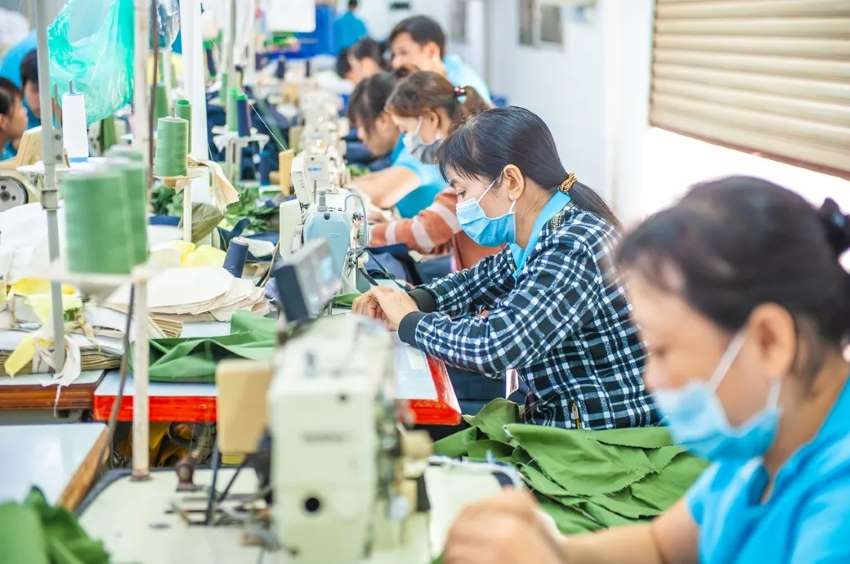
Trousers and shorts are China’s top apparel export products.
From January 2022 to June 2022 they accounted for 20 per cent of China’s apparel exports. The share of coats, sportswear and suits is less than one per cent each.The contribution of jerseys was 12 per cent in China’s total apparel exports for the first half of the year. Jackets and blazers contributed nine per cent, dresses seven per cent, T-shirts seven per cent, accessories four per cent, socks four per cent, shirts four per cent, nightwear two per cent and skirts two per cent. The share of swimwear, babywear and ensemble was less than two per cent each.
China’s apparel exports remained mostly steady despite the US ban on cotton and cotton products originating from Xinjian region.
China’s textile industry posted stable revenue growth of four per cent in the first seven months of the year. The total value-added output of these companies rose 0.3 percent year-on-year during the period. Combined sales of primary retailers were up one percent from a year earlier.The country’s garment exports increased 12 percent year-on-year.Exports of textiles, apparel and clothing accessories increased by 17 per cent in the first seven months of 2022.
UK Textile Forum in October
Textile Forum will be held in the UK, October 12 to 13, 2022.
The event will highlight a number of British mills and suppliers so buyers can source more locally as the focus on sustainability gains momentum.
Exhibitors will include wool specialists and silk experts and there will be more collections incorporating sustainable yarns.This Textile Forum is the 40th show. Exhibitors will promote their creativity alongside their green credentials as well as their low minimum order quantities and stock holdings so they can respond quickly to designers’ requirements.
Textile Forum is not just an important event for fashion designers but also for those creating costumes for the entertainment industry, such as historical dramas for the leading streaming broadcasters, who are looking for fabrics and specialist skills, such as embroidery. Additionally, the event has been attracting more interiors specialists, an area that is beginning to cross over into more retail apparel businesses.Alongside the fabrics, Textile Forum also provides the essential trimmings such as buttons, linings and packaging, as well as garment manufacturing contacts.
Textile Forum is a boutique event that brings together a broad spectrum of the industry in one place so that buyers can easily find what is on their sourcing shopping list and discover new suppliers.
Wool yarn faces good demand
The global wool yarn market is growing by four per cent a year. The increasing preference for upholstery fabrics among consumers to enhance the appearance of their home interiors is creating a lucrative impact on the wool yarn market, as wool yarn is used in the manufacturing of curtains, carpets etc. Owing to this, textile manufacturers are demanding raw materials such as wool yarn. Thus the growing textile industry is acting as an influencing factor for the global wool yarn market.
Increasing disposable income and per capita consumer spending on clothing and other textiles, coupled with the growing youth inclination toward fashion trends, has escalated the consumption of wool yarn.
Growing retail sales infrastructure, such as malls, is creating a positive influence on the wool yarn market, while the increased penetration of online retailing in the clothing sector is indirectly driving market growth.
Easy availability of raw wool in countries such as Australia and New Zealand is driving wool yarn production in these regions.
India is working on persuading growers to focus on wool production than meat production. Production in such countries is further backed by the availability of cheap labor. Hence a considerable amount of wool yarn produced in India is exported to international markets.
Workout clothes have global appeal
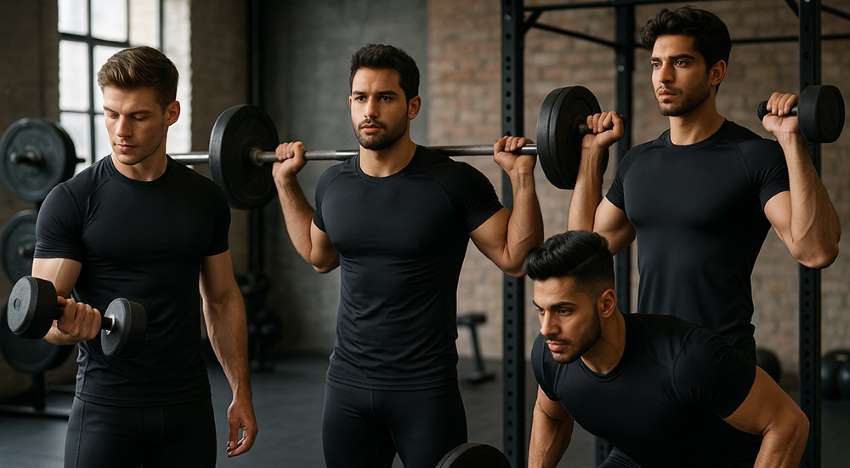
The workout clothes market is growing at six per cent a year. Workout clothes are a type of utility clothing that improves athletes’ performance during sports or fitness physical activities by enhancing body movement compared to ordinary clothing.
Market growth has been helped by the unique benefits of sportswear such as breathability, rapid drying, static resistance, heat resistance and chemical resistance. Key trends and opportunities are buyers’ rising disposable income and fitness consciousness.There is the growing popularity of smart sportswear. This improves training routines, monitors performance, and offers real-time feedback.
There is a significant demand for workout clothes like shorts, sweatshirts and hoodies, tanktops with which to engage in fitness or sports activities. The workout clothes market is predicted to rise rapidly as the trend of athleisure as casual wear among the world’s youth population grows. Polyester workout clothes have several benefits like fastdrying, stretch, easy wash, wrinkle resistance and chemical resistance and so are having a strong demand. The United States is predicted to emerge as a significant region in the workout clothes market.
The coronavirus epidemic had had a detrimental influence on the workout clothes market. Lockdowns and limitations on store occupancy resulted in a decrease in the sales of workout clothes.
James Heal makes textile testing simple and fast
James Heal is UK’s leading testing equipment manufacturer for textiles and nonwovens. The 150 year old companycontinues to expand its range, with a focus on making testing simple, fast and intuitive – most notably with the introduction of its Performance Testing collection of instruments, most recently the AirPro and the HydroView systems.
The James Heal AirPro air permeability tester is used to test the resistance of the flow of air through woven, knitted and nonwoven textiles. Its software offers flexibility with standards and comprehensive reporting options, and different test head sizes are available, making it suitable for a range of applications and standards. The HydroView hydrostatic head tester is designed to measure the penetration of water in materials which have an end use that requires water resistance, such as those in the medical, geotextiles and nonwovens sectors. It is also proving essential in the testing of end-use applications for technical textiles, such as in protective gloves, diving dry suits and winter sports apparel, to fishing waders, roofing, tenting, ground sheets and more.
James Heal’s testing instruments are trusted and valued by manufacturers of textiles and nonwovens around the world. The company has made a solid contribution over many decades to the quality and performance properties of today’s textile products.
Lee and Wrangler combo store in Germany
Lee and Wrangler have opened a dual-concept joint denim store in Germany. The dual-branded retail concept has been created to provide customers with the ultimate denim experience through a carefully curated retail space that brings to life the unique features of each brand.
The store, which is over 1,600 square feet in size, has individual windows and frontages for each company and will always display each brand’s most recent advertising campaigns. Lee Jeans has a luxury archive-driven aesthetic, which also includes a capsule section for its exclusive Lee 101 line. A bold, youthful aesthetic has been employed to capture the essence of Wrangler, the visuals being a combination of brilliant red and indigo blue.
In the store’s main area, customers will be able to find jeans from both companies merchandised by gender and fit categories, along with a variety of clothing options that pair well with the jeans.The store also has fitting rooms aligning with the company’s brand image and a dedicated denim room that displays a larger selection of denim on a seven-shelf stack.
Europe continues to be a key market for expansion for the Lee and Wrangler brands. The plan is to have more such Lee plus Wrangler stores in key retail destinations across Europe in the coming months.
Sorting for Circularity, a new research by fashion for Good on post consumer textiles
A total of 4,94,000 tons of low-value, post-consumer textiles is readily available for fiber-to-fiber recycling in six European countries.
So says a study ‘The Sorting for Circularity undertaken by Fashion for Good. The European countries are Belgium, Germany, Netherlands, Poland, Spain, and United Kingdom. The study was undertaken to explore post-consumer textiles in depth, provide meaningful information on which to base investment decisions, policy developments and next steps towards circularity.
Fashion for Good aims at increasing harmonisation between the sorting and recycling industry, stimulating a recycling market for unwanted textiles that can generate new revenue streams for sorters and unlocking demand for recyclers and brands.Using innovative near infrared technology to determine garment composition, traditionally a task performed manually, the project analysed a total of 21 tons of post-consumer garments.
The findings provide the most comprehensive and representative snapshot of textile waste composition in Europe to date. The results point to promising opportunities for recapturing value while diverting textiles from downcycling and incineration. The results also inform brands of the best circular design practises to adopt, as well as textile collection agencies and organisations to build the necessary infrastructure and better educate and engage consumers on proper sorting and disposal practices. Currently only two per cent of post consumer textiles are diverted to fiber-to-fiber recycling.
EcoVadis awards Lenzing platinum
Lenzing has been awarded platinum status by EcoVadis.
This comprehensive assessment covers the four key practices of corporate social responsibility: the environment, fair working conditions and human rights, ethics and sustainable procurement.
Lenzing has set ambitious targets in each of its core strategic areas, aimed at bolstering its capacity to move from a linear to a circular model. Lenzing reports the corresponding implementation measures and the progress it has made in its annual sustainability report. This high level of accountability and transparency was particularly praised by EcoVadis. The rating provider also highlighted Lenzing’s comprehensive measures to reduce air pollution, wastewater and greenhouse gases, in addition to its provision of skills development training and health care programs for staff members.
Lenzing provides sustainably produced specialty fibersand is a partner of global textile and nonwoven manufacturers and drives many new technological developments. Lenzing’s high-quality fibers form the basis for a variety of textile applications ranging from elegant clothing to versatile denims and high-performance sports clothing. EcoVadis founded in 2007 has become the world’s largest and most trusted provider of sustainability ratings for businesses and has created a global network of more than 90,000 rated companies in over 175 countries around the world. The organization also offers information and tools to enhance transparency in global supply chains.
Reliance Retail poised to challenge international fast fashion giants

Internally nicknamed Regalia, the fast fashion label from Reliance Retail is gearing up to take on international fast fashion brands like Zara and H&M.
In India, fast fashion is the fastest growing segment in the apparel and lifestyle sector, the proof being the enormous success Zara, H&M and other international brands have profited from. Devangshu Dutta, founder of retail consulting firm Third Eyesight said, "International brands have the advantage of a certain cachet, which has allowed them to gain disproportionate visibility, both in terms of share of mind and share of space in prime locations in the larger cities, which has allowed them to grow rapidly. However, the market can certainly accommodate more fashion brands. Reliance will need to not only create a viable product-retail mix but connect with the aspirational aspects in the consumer's mind to compete with the international brands."
Biggest retailer hunts for suitable space, positioning for the new model
Taking on this challenge, Reliance Retail is confident of making its presence felt. It is currently the largest fashion and lifestyle retailer in the country with a network of nearly 4,000 stores across segments from ethnic and value fashion to luxury brands. It also runs Marks & Spencer stores in India and recently partnered with Gap. Additionally, talks are underway with LVMH for its beauty chain Sephora.
The label hasn’t been officially named yet as its brick-and-mortar presence is being finalized. Finishing touches are on at the selected outlets in Mumbai and Gurugram in High Street Phoenix and Airia Mall respectively. Delhi, Hyderabad and Bengaluru are also a part of the initial launch with 20,000 to 30,000 square feet planned for the debut. It has been acknowledged by Reliance Retail that it is finding the availability of large retail spaces at shopping destinations a bit challenging with malls running on full capacity.
The new brand is expected to have mid-premium pricing and will bank on young consumers’ segment. Zudio, the partnership between Tata and Zara has already been launched and will be the direct local competitor. Perhaps Zudio’s success was the inspiration Reliance Retail was looking for. Since the announcement that Reliance Retail was entering the tough FMCG market earlier this year, it is not a surprise that the retail giant would enter the fast fashion market. And why not as the market value of textile and apparel across India in the financial year 2021 was USD 80 billion and this value was estimated to reach USD 190 billion by 2026.
Gold Collar defines India’s new high income group
In the world of fast fashion, India is increasingly a focal point for the industry. A rapidly growing middle class and an increasingly powerful manufacturing sector are two key elements that combined together with strong economic fundamentals and growing tech savvy, make India too important for international brands to ignore. According to Sanjay Kapoor, founder of Genesis Luxury, an Indian luxury retail conglomerate, higher incomes are likely to create a whole new class of consumer: “We are moving on toward the ‘gold collar’ worker. It’s a term that defines the well-paid, highly paid professionals, who are happy to look good, happy to feel good, and are expanding the consumption of today.”
VTG hosts more than 200 companies
Vietnam Textile and Garment (VTG) exhibition was held September 21 to 24, 2022.
The four-day exhibition attracted the participation of more than 200 domestic and overseas businesses from 15 countries and territories worldwide.
It showcased a wide range of products in textile machinery, apparel, fibers, filaments, yarn fabrics, footwear machinery, and materials at 800 booths. It provided an ideal opportunity for Vietnamese textile and garment manufacturers to gain access to advanced technologies and the latest market information, and connect with leading enterprises globally.
A series of seminars were held within the framework of the exhibition, during which speakers shared their expertise.
Since 2001, VTG has been deeply involved in Vietnam’s textile and garment industry, bringing groundbreaking technologies and leading machinery to the local market.VTG is also a bridge between local and international industry players in the post-pandemic period.
Vietnam plays an increasingly large role in the world’s textile and garment value chain, with garment products exported to over 180 countries and territories. Major garment makers are continuing to explore expansion and production opportunities in the country. For the first six months of 2022, Vietnam’s exports of textile and garment products increased by 17 per cent compared to the same period last year.