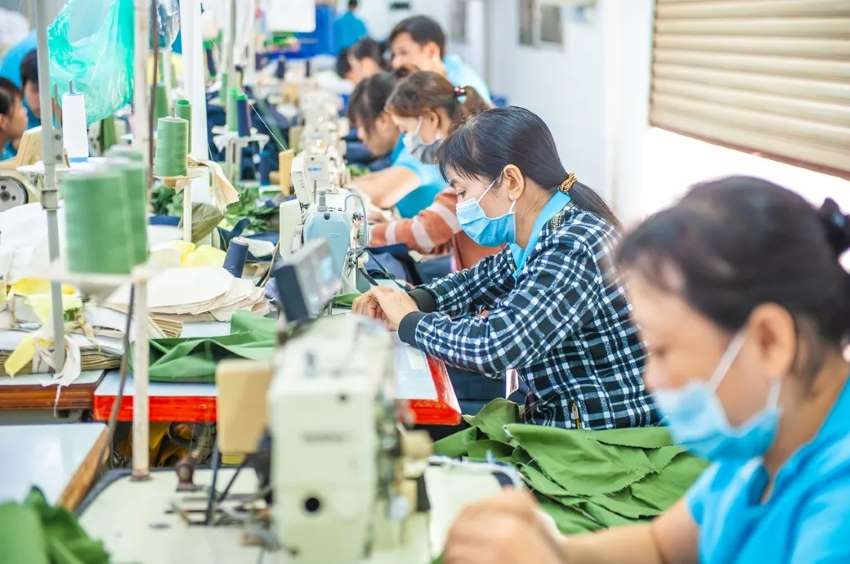
Declining cotton prices leave exporters unmoved
Falling cotton prices in the international futures markets haven’t been reason enough for Bangladesh spinners and apparel exporters to cheer up.
They can’t take advantage of lower cotton prices for two reasons: the dollar crisis and the lower gas pressure. Production in some units has fallen by as much as 50 per cent in the last three months owing to low gas pressure. Also, rising inflation in major apparel export strongholds has resulted in a decline in demand for apparel from the end users, which is manifesting in fewer orders from global buyers. This is because of the unfavorable exchange rate, the energy crisis and the fall in demand for finished goods.
Apparel manufacturers are also receiving fewer orders from international buyers amid the slide in demand from consumers buckling under deep inflationary pains caused by the Russia-Ukraine war.Usually, millers, spinners, traders and users brim with joy when the cotton price drops even by a few cents in the international markets since Bangladesh is a net cotton-importing country. And less than two per cent of the country’s total cotton requirement is met through domestic production. Spinners in Bangladesh are sitting on piles of unsold yarn made from cotton imported earlier at a higher price.
GOTS cuts fraud in organic cotton supply chain, introduces stringent rules
The Global Organic Textile Standard (GOTS) which was set up by leading standard setters to define worldwide recognized requirements for organic textiles is now forming many new rules to increase its credible assurance and protect the integrity of the organic cotton supply chain.
The GOTS certification ensures that only textile products that contain a minimum of 70 percent organic fibers are accepted and all chemical inputs such as dyestuffs and auxiliaries used meet the required toxicological criteria. So, it is now ensuring there is no fraud within the system and it can maintain more transparent and traceable processing for its organic textiles. The focus is on retaining the high standard of the whole system of processing, manufacturing, packaging, labeling and trading of textiles.
New, stricter rules for GOTS-certified gins
More stringent requirements for GOTS-certified gins have been introduced recently, adding to the already numerous checks and balances of every processing stage. India will be the first country required to comply with this new scrutiny as GOTS goes all out to keep up the required standard of organic textiles in all ways.
GOTS-certified gins will have to make three key changes to ensure better transparent and traceable processing for organic textiles. First, GOTS is now starting a compulsory farm-gin registry for all farms and farm groups whose certified raw material enters the GOTS system which will include information on farm yields. This registry will be introduced globally, starting with India as there have been questions about the credibility of inspection agencies in the country. Second, raw cotton will not be allowed to be transferred more than 500 km from the farm where it is grown to a government-certified gin as the shorter trade route will cut out chances of fraud and optimize the process for buyers. Third, GOTS will increase the number of sudden audits at cotton gins where there is a high perception of fraud risk in the organic cotton sector.
Focus on strengthening integrity in organic cotton
Meanwhile, the Textile Exchange, a global non-profit organization that is driving positive action on climate change across the fashion and textile industry has recently released a report on integrity issues. This states “Challenges in integrity are neither new nor unique to organic cotton, and they often evolve. Strengthening integrity in organic cotton aims to provide more guidance on ways the industry can act to improve integrity, recommending that brands and supply chain partners proactively adopt an integrity system that tackles fraud by building compliance through standards and certification, achieving traceability for organic content, improving incentives for supply chain partners, and reviewing, improving, and collaborating with others.’’
As per the new rules, Organic Content Standard (OCS) from December 1, 2022 will mandatorily require that site inputs from GOTS will provide traceability of all transaction certificate data back to the original farm source and will also include full transaction certificate data such as product and input product and also farm input data like farm capacity. To prevent further fraud, all first processors, which include cotton gins that ultimately provide GOTS inputs into an OCS product down supply chain needs to be certified to the OCS and provide evidence of all inputs from farms. It will soon become mandatory for all certification bodies and standards users to supply this additional data from now on. All this will help to minimize fraud and provide a better quality product to the end-consumer.
GSP plus underutilised yet Uzbekistan fosters industrial growth
For the first nine months this year, the volume of industrial production in Uzbekistan increased by five per cent.
Small-scale production is also increasing in the country. Carpet production will be encouraged. The textile industry will be developed with new dynamics. A programme will be launched next year to export industry products worth more than $5 billion.
Raw materials will be provided to manufacturers of household appliances, carpets and furniture to assist enterprises that cannot operate at full capacity. Uzbekistan will deepen reforms in the textile industry to fully reprocess raw cotton domestically and increase the export potential of the country.
Traditionally, cotton has been Uzbekistan's most important cash crop. But in recent years the country has been taking serious steps to develop its textile industry to produce value-added products rather than exporting raw cotton. However, the European Union’s Generalised Scheme of Preference Plus is not fully utilised by exporters.
The state provides 70 per cent of transportation costs for the export of fabrics and knitwear to European countries, Turkey, Egypt and Morocco. But Europe still accounts for only six per cent of textiles, three per cent of electrical goods and one per cent of silk and food products exported from Uzbekistan.
Sri Lanka nine month garment exports up 18 per cent
Sri Lanka’s garment exports grew by 18 per cent during January 2022 to September 2022. During the same period, textile exports from the island nation increased by six per cent year-on-year. Textiles, garment, and other made-up textile articles’ exports together accounted for 57 per cent of all industrial exports from Sri Lanka during the period under review.
On the other hand, imports of textiles and textile articles rose by nine per cent while clothing and accessories imports were up by eight per cent during January 2022 to September 2022.
During the month of September 2022, garment and textile exports from the South Asian nation grew by five per cent year-on-year. Category-wise, garment exports increased by five per cent while textile exports rose by eight per cent. But exports of other made-up textile articles were down by three per cent.
Sri Lanka is attempting to finalise free trade agreements with countries like China, India, Japan and Australia. These are expected to help boost exports and strengthen the industry’s resilience.August 2022 saw a 20 per cent increase in export turnover generated by the apparel sector but at present Sri Lanka is not competing on a level playing field. Its main competitor countries like Bangladesh, Vietnam and some African nations have duty concessions in global markets, which it does not have.
US September jeans imports up 27 per cent
American jeans imports in September 2022 increased 27 percent compared to September 2021.This was a fall off from a 31 percent year-to-date rise in the first eight months of the year.
Sell-in was adversely impacted and global revenue tempered as US retailer inventory rebalancing efforts continued. Ongoing inventory reduction actions will pressure near-term margins.
US imports of blue denim apparel continued to slide in September as a slowdown in consumer demand has caused merchants to take stock of their inventory positions. US denim imports from Bangladesh in September 2022 rose 42 percent year over year. This was down slightly from August’s 46 percent hike.Imports from second-place supplier Mexico slipped to 18 percent compared to the prior month’s 20 percent gain. Shipments from Pakistan were up 36 percent from a year earlier while imports from Vietnam rose 25 percent and shipments from Cambodia increased 47 percent. China’s jeans shipments to the US grew a meager six percent as China’s production faces competition from ongoing tariff costs and diversification strategies. US jeans imports during the same period increased 60 percent from Egypt, 25 percent from Nicaragua, 21 percent from Turkey and 24 percent from Sri Lanka.
Indonesian Q3 T&A grows by 8%, stares underproduction, layoffs
In the third quarter of 2022, Indonesia’s textile industry grew by eight per cent year on year.
The footwear, leather and leather goods industry grew 13 per cent during this period. Cumulatively, footwear exports up to September 2022 also continued to increase by 35 per cent compared to the same period the previous year.
The growth performance of this sub-sector is still quite high, due to the diversion of orders from China and Vietnam to Indonesia. So Indonesia is trying to find new markets for exports for the industrial sector and is exploring markets like Latin and South America, Africa, Middle Eastand Asia.
However the textile and textile products and the footwear industry have experienced a slowdown in performance. This has been due to decreased utilization in the fiber industry by 20 per cent, spinning (30 per cent), weaving and knitting (50 per cent), garments (50 per cent), baby clothes (20 per cent to 30 per cent), and footwear (49 per cent). Some of these companies are said to have cut their working time to three or four days.
Meanwhile, some 92,000 workers have been affected by layoffs from the textile and garment industry and some 22,000 workers from the footwear industry.
China rallies around demand supply volatility of cotton
The Chinese cotton crop is expected to be larger than last year. Global export prices are not attractive in China. Higher external prices should be a headwind for Chinese cotton fiber and yarn imports.
Lower Chinese yarn imports imply lower mill demand for yarn exporters like Vietnam. In turn, Vietnam is a major importer of cotton fiber and lower Vietnamese spinning demand suggests lower fiber import demand from that important market. Lower import demand from China may eventually weigh on global export prices.
Chinese prices decreased in late October and into November.Indian spot prices (Shankar-6 quality) decreased in a comparatively uniform fashion over the past month. Pakistani prices also decreased in a relatively linear manner. The recent volatility in NY/ICE futures has been attributed to various factors, including short covering in the futures market and import interest from China.
The steep increases in early November can also be interpreted as sensitivity to potential increases in demand for US exports. US stocks are low this crop year, and US shipments will have to be rationed by prices if the appetite exists from the demand side.However there are questions whether there will be enough demand to sustain prices at higher levels.
Gas gets new avatar, ready to get going
Italian jeans brand Gas is now Gas Milano 1984. It is ready to start a new life under a new owner, a new management and a new name.
The challenge is to speed up as much as possible–from the internal reorganization to the implementation of processes. The historic values of the company will be rebuilt. Denim has always been important for Gas, and it will continue to be so. But if denim counted for 80 per cent of its offer, the aim is now to reposition and offer 60 per cent denim and 40 per cent fashion products in order to make the brand more lifestyle oriented.
The woman’s offer, which was not very strong, will be reinforced. The aim is to stay focused on the quality of the product, but along with that also on sustainability.
So the product will be based upon a select choice of fabrics, starting from denim made, for instance, with organic cotton and by choosing manufacturing companies that produce according to low consumption levels of water, no chemicals, and, for instance, use laser to treatments. Today Gas produces mostly in the Mediterranean basin and in the Far East but some product categories will be brought back to Italy. In terms of fabrics, for instance, Candiani Denim will be used.
Jeanologia and Bangladesh work on sustainable goals
Jeanologia has a commitment to turning Bangladesh’s textile industry into one of the most advanced and cleanest on the planet.
Jeanologia has been promoting the development of its textile industry with comprehensive technologies and innovative processes that provide greater efficiency, sustainability and competitiveness.
Laundry5.Zero is a jeans finishing plant that guarantees zero contamination. Laundry5.Zero guarantees 85 per cent savings in water use as well as zero discharges and zero contamination, thanks to the perfect integration of Jeanologia technologies. With a sustainable production capacity of between 5,000 and 25,000 garments a day, this garment finishing plant enablesa digital, automated and environmentally-friendly production model that reduces time, costs and simplifies processes.
And all without compromising the authenticity of the product while staying adapted to the new needs of the market. The aim is to eliminate the use of water from the production of jeans.
Jeanologia, based in Spain, is a leader in the development of eco-efficient technologies. Jeanologia currently has ten subsidiaries and exports its products and services to 72 countries on five continents.More than 35 per cent of the five billion jeans produced worldwide each year are made with its technologies, and it has become a trusted partner of the market’s main brands.
Fall in garment orders affects B’desh accessory makers
Bangladesh’s accessories and packaging industry has started to feel the pinch of the fall in garment orders.
The accessories industry which meets over 90 per cent of the demand from the export-oriented readymade garment sector has been grappling with different issues, including delayed payment, deferred shipments of ready goods and banking complexities.
The drop in work orders for the readymade garment sector means the local accessories and packaging industry will see a decline in work orders too.With the growth in the readymade garment sector, the demand for accessories and packaging products also increased, encouraging many to invest in the industry.
Currently, there are at least 1800 accessories and packaging companies producing more than 25 products including corrugated cartons, poly bags, hangers, elastic buttons, buttons, labels, zippers, hang tags, gum tapes, twill tapes, embroidery and quilting.
The majority of the companies are small and medium in capacity - only some dozens are big in size. Work orders for garment exporters of Bangladesh have decreased by 30 per cent to 40 per cent in recent months. Buyers want shipments to be deferred citing huge inventory as demand has declined in western markets mainly because of high inflation and fuel prices induced by the Russia-Ukraine war.
More...
Biodegradable polo shirts made from yarn scraps
An American brand is producing polo shirts made from natural and recycled materials.
HyperNatural’s unique fabric is crafted from organic cotton, recycled yarn scraps, mother of pearl buttons, and waste crab shells and jade stone — resulting in a garment that’s soft, cool to the touch, sweat- and odor-absorbing.
Currently 95 percent of HyperNatural material is biodegradable and the brand is working toward 100 percent natural and regenerative materials within the next two years. Though sustainability isn’t HyperNatural’s main value proposition, the company promotes natural materials over polyester.The startup flipped the typical design-first approach in the garment industry and started from the material up — developing a yarn blend of waste materials including jade stone, chitin derived from crab shells, and scrap cotton from mill floors. HyperNatural will also work closely with cotton farmers to use regenerative farming techniques.
HyperNatural is a part of a growing movement of brands aiming to redefine luxury through a sustainability lens. A lot of sustainable products focus on marketing and what stories to tell but the product too often is not differentiated from what’s in the market. Polyester is the most widely used clothing fiber in the world but it has health effects and takes decades to decompose.
Santis joins ITMF
Santis Textiles has joined ITMFas a corporate member. Säntis Textiles is based in Singapore and specializes in material, fiber, yarns, and fabric development and sourcing for the global garment and technical textiles market.
Säntis Textiles has offices in Singapore, Switzerland, Turkey, China, Pakistan, Indonesia, Vietnam, Egypt, UK and the US. In 2016, Säntis launched the proprietary technology RCO100, the world’s first mechanical recycling machinery, designed with the forward-thinking customer in mind. With RCO100 the company is actively improving and strengthening the circular economy.
Founded in 1904, ITMF (International Textile Manufacturers Federation) is the international forum of the global textile value chain for producers of fiber to finished products. Its members are from textile and apparel-producing countries representing approximately 90 per cent of global production.In addition, ITMF offers its members information that helps better understand the dynamics of the industry.
By joining ITMF,Santis Textiles can get to know producers of fiber, textiles, garments, home textiles, textile machinery, or textile chemicals as well as other organizations and companies affiliated with the textile industry. In turn ITMF and all ITMF members can benefit from Santis Textiles’ unique expertise and experience in developing and sourcing textile products around the world.
Renewcell opens textile to textile mill
The world’s first commercial textile-to-textile pulp mill has opened in Sweden.
Renewcell’s facility that will repurpose over 1,20,000 metric tons of textile waste next year, otherwise destined for landfills, and turn it into new viscose for fashion.
Over 200 million trees, many from the world’s most vital forests, are currently cut down every year to make fabrics like viscose and rayon. Renewcell’s new mill uses textile waste rather than trees to make these fabrics, sourcing from worn-out jeans and production scraps. Renewcell is the first mill in the world that is dedicated to circular manufacturing for the viscose fashion sector. The commissioning of this facility marks the dawn of a new circular era for global fashion. Such a low-impact mill is aimed at replacing unsustainable forest-based viscose production. Clear market signals of support and offtake agreements from brands and conventional viscose producers helped Renewcell unlock their financing for this first commercial-scale facility.
Renewcell’s vision is to make fashion circular.Through its patented process, Renewcell is able to upcycle cellulosic textile waste, such as cotton clothes, transforming it into a pristine new material called Circulose. As the global effort to combat climate change and environmental degradation accelerates there is a growing need to make fashion circular and preserve critical forest ecosystems.
Indian cotton Kasturi to be certified
Efforts are on toward branding and certifying the Indian cotton Kasturi.
The cotton industry will be supported with funds matching the industry contribution. Supply of good quality seeds in order to increase India's cotton productivity is an issue given serious thought. Advanced technologies related to high-yielding cotton seeds and innovative agronomy, such as high-density planting systems, to enhance the productivity of cottonare also being considered.
Since testing facilities need to be strengthened adequate modern testing facilities would be created through the Bureau of Indian Standards and Textile Research Associations.
The quality of Indian cotton fiber is paramount, therefore implementation of cotton bales quality control order under the BIS Act 2016 will be a must for the standardisation of cotton bales. A holistic plan for increasing cotton productivity has been presented by Central Institute for Cotton Research, Nagpur, including improving cotton productivity through a farmer awareness program, HDPS and global best farm practices.
The textile industry and industry associations have been urged to join hands to promote handheld kapas plucker machines. The Confederation of Indian Textile Industry will take up this project in mission mode with distribution support from Cotton Corporation of India. Industry associations and industry leaders have together agreed to fund 75,000 handheld kapas plucker machines.