Soorty boosts sustainable denim with new Regenagri initiative
A leader in sustainable denim manufacturing, Soorty is tackling environmental challenges head-on with their innovative Regenagri Initiative. Launched in collaboration with the Rural Education & Economic Development Society (REEDS) in Pakistan, this project aims to revitalise agricultural ecosystems through regenerative farming practices.
Highlighting the essence of regenerative agriculture, Muhammad Yousaf, Project Head-SRI, Soorty, emphasises that it goes beyond maintaining the status quo. According to him, regenerative agriculture is about actively enhancing soil health and biodiversity. Through SRI, Soorty seeks to demonstrate that ecological restoration and premium cotton production can coexist harmoniously.
The primary objective of the initiative is to bolster climate resilience, thereby safeguarding the livelihoods of farmers associated with the textile industry. By promoting biodiversity conservation, reducing chemical reliance, and advocating water conservation, Soorty aims to enhance sustainability and traceability within the cotton industry.
Shahid Saleem, Executive Director, REEDS, expressed alignment between SRI's commitment to empowering farmers and sustainable practices with REEDS' mission. He states, together, the two organisations nurture a future where vibrant ecosystems and prosperous communities thrive hand-in-hand.
Soorty has engaged with 1,100 small-scale farmers to impart sustainable practices through educational campaigns. It is anticipated that the SRI initiative will yield approximately 1,225 metric tons of cotton this year, paving the way towards a sustainable future.
Ebru Debbag, Executive Director, Soorty, underscores the holistic impact of SRI, emphasising that it extends beyond sourcing better cotton. She remarks, with SRI, Soorty invests in the well-being of entire communities. This ethical stance resonates with customers who recognise that genuine sustainability transcends the product itself.
France Cracks Down on Fast Fashion: A step forward or a symbolic gesture?

France's recent bill targeting ultra-fast fashion with penalties and advertising bans has sparked debate on its effectiveness in tackling environmental concerns within the clothing industry. Here's a deeper look at the issue, considering various perspective.
The regulation to curb environmental impact
The proposed law aims to curb the environmental impact of fast fashion, particularly from companies like Shein, known for its trendy, low-cost clothing. The penalties will gradually increase to €10 per garment by 2030, and advertising for such products will be banned. Shein argues their model generates less waste, claiming their unsold items remain in the "low single digits," compared to traditional retailers' 40 per cent waste. According to a McKinsey & Company report fashion contributes 3-5 per cent of global carbon emissions, with a significant portion coming from the production of synthetic fibers like polyester. The French bill seeks to address this by:
Implementing and gradually increasing fines (up to €10 per item by 2030) on ultra-fast fashion products.
Banning advertising for such products.
France's repair scheme with consumer reimbursements promotes extending clothing life and reducing waste.
While the French bill represents a proactive approach, its effectiveness remains to be seen. Because of its limited scope as the bill primarily targets French companies or those selling within France. The global nature of the fast-fashion industry demands international cooperation for a more impactful solution. Critics argue the fines might be negligible for large corporations, potentially rendering the bill a symbolic act. In fact, the €10 per garment might not significantly impact large companies like Shein. The effectiveness hinges on strong enforcement and potential expansion to other EU countries. Targeting advertising might have limited impact if consumers still seek out these products online.
The ideal solution is a multi-pronged approach
Experts suggest a combination of measures:
Stronger legislation: Global regulations targeting production practices, material usage, and waste reduction are needed.
Consumer awareness: Educating consumers about the environmental impact of fast fashion and promoting sustainable alternatives like buying second-hand or repairing clothes are key.
Producer responsibility: Holding brands accountable for the lifecycle of their products, including take-back programs for used clothing, could incentivize more sustainable practices.
A global approach to regulating the fashion industry is likely more effective than individual efforts. The EU ban on used clothes exports suggests a growing international awareness of the issue, potentially paving the way for broader.
Indeed, France's bill is a step towards tackling fast fashion's environmental impact. However, its effectiveness remains to be seen. Long-term solutions require a global shift towards sustainable production, responsible consumption, and robust regulations.
Coats Digital’s FastReactPlan revolutionizes production efficiency at Hojeon
Coats Digital proudly announces that Hojeon Limited Corp., a leading sportswear manufacturer, has achieved a remarkable 90 percent improvement in capacity scheduling accuracy across its Indonesian factories following the implementation of FastReactPlan. This transformative solution has seamlessly connected and consolidated information from diverse sources, fostering enhanced efficiency and unified operations.
FastReactPlan has emerged as a strategic asset for both Hojeon's headquarters in Seoul and its Indonesian factories, delivering a single, clear overview of the production plan. This enhancement has resulted in a noteworthy ten percent increase in line-scheduling accuracy per factory and a substantial five percent reduction in overtime costs. Moreover, Hojeon now boasts a planning horizon of six months, a significant extension from its previous three-month outlook.
Headquartered in Seoul, South Korea, Hojeon specializes in Original Equipment Manufacturing (OEM) of sportswear apparel for renowned multinational brands. With revolutionary seam-attachment technology and operations spanning seven factories across Indonesia and Vietnam, Hojeon employs over 15,000 workers and achieves an annual turnover exceeding $ 370 million.
Prior to adopting FastReactPlan, Hojeon faced challenges due to fragmented capacity planning and production information across its Indonesian sites. This decentralized approach hindered efficient scheduling, leading to issues such as underutilization of machinery, slow production rates, and unnecessary overtime costs. Eric Kim, General Manager of Hojeon Limited Corp., emphasized the imperative need for a solution to streamline planning processes and address multi-level planning complexities.
FastReactPlan swiftly provided Hojeon with access to critical planning and production data from a unified digital source, enabling holistic visibility into production capacity and standardized information formats. This integration facilitated seamless collaboration across Hojeon's production facilities, empowering master planners to optimize job assignments and enhance overall efficiency.
The implementation of FastReactPlan resulted in a notable 90 percent improvement in production scheduling accuracy rates across Indonesia, alongside a ten percent increase in line-scheduling accuracy per factory. Hojeon also realized significant cost savings with a five percent reduction in unnecessary overtime expenses.
Looking ahead, Hojeon has expanded its partnership with Coats Digital by adopting the GSDCost solution, aimed at establishing accurate method-time-cost benchmarks. Irene Won, Customer Success Manager at Coats Digital, expressed enthusiasm for Hojeon's digital transformation journey, anticipating further enhancements in production efficiencies and financial growth through continued collaboration.
Karl Mayer to showcase latest sustainable technologies at SaigonTex 2024
The Karl Mayer Group is ready to participate in upcoming SaigonTex, from April 10-13, 2024, at the Saigon Exhibition and Convention Center in Ho Chi Minh City. The group aims to showcase its commitment to sustainability and pioneering technology.
Central to their exhibition is the unveiling of Bluedye, a machine poised to revolutionize indigo dyeing processes. This innovative technology significantly reduces water and chemical usage while minimizing yarn wastage, thus striking a balance between environmental preservation and cost efficiency. Additionally, Cascade, an inventive steam and condensation system, promises reduced steam consumption in drying processes, further bolstering sustainability efforts.
In the warp knitting sphere, the Karl Mayer Group unveils its latest technological advancements, including KM.ON's digital solution for production management optimization (DPM), enhancements in the HKS segment, and a double raschel machine facilitating intricate multi-color designs in spacer textiles, catering particularly to the sportswear and sports shoe industries.
Eddy Ho, Senior Sales Manager at Karl Mayer, underscores Vietnam's growing status as a key textile production market, particularly for international sports brands. Anticipating a significant turnout, especially from Vietnam, China, Taiwan, and South Korea, Ho highlights SaigonTex's pivotal role as a premier textile machinery exhibition in East Asia, strategically situated near major production hubs.
Given Vietnam's prominence as Karl Mayer Group's second most vital market after China, the company's enduring participation in SaigonTex underscores its commitment to engaging with customers, understanding their evolving needs, and staying abreast of market trends in warp knitting, technical textiles, and warp preparation sectors.
YKK achieves top sustainability ratings for second year
YKK Corporation has achieved the highest Leaderboard status in the FY2023 Supplier Engagement Rating (SER) by CDP, an international non-profit organization. YKK has achieved this honour for the second consecutive year
This recognition underscores YKK's commitment to reducing greenhouse gas (GHG) emissions across its supply chain. With over 450 companies globally selected for the SER Leaderboard, YKK's governance, targets, and collaborative initiatives with suppliers exemplify leadership in sustainability.
In addition, YKK received its inaugural "A List" rating in the CDP Climate Change 2023 Questionnaire, marking a significant milestone. This acknowledgment reflects YKK's dedication to combatting climate change and aligning with the Paris Agreement's objectives through transparent information disclosure.
Takayuki Aoki, Vice President of the Procurement and Logistics Department, emphasized YKK's steadfast commitment to sustainability goals since the establishment of the YKK Sustainability Vision 2050 in October 2020.
Aoki highlighted the importance of partnerships with customers and suppliers, rooted in the YKK philosophy - the Cycle of Goodness, in achieving remarkable progress in GHG emissions reduction. Looking ahead, YKK remains dedicated to collaborative efforts with suppliers, aiming to address GHG emissions comprehensively and pave the way towards a decarbonized society.
Ted Baker seeks new owner as UK business enters administration
Iconic British fashion brand Ted Baker is undergoing a restructuring as its UK arm enters administration. However, stores will remain open and fulfill orders.
Owned by American firm Authentic Brands Group (ABG) since 2022, the company is looking for a new buyer after facing financial difficulties. This move aims to save the brand and its nearly 1,000 jobs.
Administration allows companies to make organisational changes in an attempt to avoid closure and asset liquidation. With approximately 975 employees and 46 stores across the UK and Europe, Ted Baker along with its e-commerce platform and concession stores, is currently navigating this process. Additionally, the company holds licensing agreements for stores in Asian and Middle Eastern cities.
ABG blames a previous partnership with a Dutch company, AARC, for causing ‘significant financial damage.’ AARC managed Ted Baker's UK and European operations, but the collaboration resulted in substantial debts. Despite ABG's efforts, these issues proved too difficult to resolve independently.
Currently, Ted Baker's UK and European holding company, No Ordinary Designer Label (NODL), is in administration. This process allows for reorganisation to potentially avoid closure and asset sales.
ABG is actively seeking a new owner for the Ted Baker brand while ensuring stores continue operating and fulfilling customer orders.
H&M’s new CEO under pressure to revive growth
H&M's new CEO, Daniel Erver, is under scrutiny as the company reports its first quarterly earnings under his leadership. Investors are eager for a plan to reignite revenue growth, especially after H&M shares dropped following the unexpected departure of the previous CEO.
H&M is struggling to keep pace with rivals like Zara and the fast-rising Shein. The company is caught in a squeeze, with some consumers favoring established brands while others seek out budget-friendly options. H&M is expected to report its weakest quarterly sales in two years.
Despite the sales slump, H&M is prioritising profitability over volume. They aim to reach a 10 per cent operating margin this year. The company is also investing heavily in stores and logistics, aiming to improve the customer experience and compete more effectively.
Analysts suggest H&M should follow competitor Inditex's example by investing in store upgrades and logistics, even if it impacts short-term profits.
H&M is creating a more upscale shopping experience in some stores, with a curated product selection and improved amenities.
A key advantage for clothing companies is the ability to quickly adapt to changing consumer preferences. H&M is taking steps to shorten production times and improve inventory management.
H&M has closed hundreds of stores in recent years, reflecting the changing retail landscape. However, the company still boasts a healthy cash position.
Investors are closely watching Erver's performance as he steers H&M through a competitive and evolving market. His ability to deliver a clear strategy for growth and profitability will be crucial for the company's future success.
GOTS applauds European parliament’s crackdown on textile greenwashing
The Global Organic Textile Standard (GOTS) has applauded a new European Parliament vote to fight misleading ‘green’ labels on textiles.
This initiative enforces stricter rules for companies making environmental claims, ensuring they provide evidence to support their assertions of sustainability. By requiring transparency and accountability in labeling practices, consumers will be empowered to make more informed choices about the environmental impact of their purchases.
With its latest iteration, GOTS Version 7.0, the standard sets forth rigorous criteria to safeguard human rights, labor conditions, and environmental sustainability throughout the textile supply chain.
Companies adhering to GOTS guidelines and obtaining certification demonstrate their dedication to sustainability and ethical business practices.
For over twenty years, overseen by the non-profit Global Standard, GOTS has been at the forefront of promoting responsible textile processing methods. Through its comprehensive approach, GOTS provides businesses with the tools and guidelines necessary to comply with both domestic and international regulations. Consumers who purchase GOTS-certified products can trust that stringent sustainability standards have been met during production.
Furthermore, GOTS welcomes the directive's focus on private environmental labels, urging for reliability, transparency, independent verification, and regular review processes. As the proposal moves into the 'trilogue' phase, where European Union institutions finalise regulations, GOTS advocates for continued progress in this direction.
The organisation remains vigilant in monitoring the implementation of these requirements, ensuring that environmental claims in the textile industry are substantiated and trustworthy.
Nike appoints Tim Hamilton new Vice President-Men’s Apparel Design
Nike hs appointed Tim Hamilton as the new Vice President - Men's Apparel Design. Hamilton now leads the design team, reporting to the men's creative director.
With experience spanning over 25 years in fashion design, Hamilton transitions to the sportswear giant from The North Face, where he served as head of global creative since 2017. During his tenure at the VF Corp.-owned brand, he played a pivotal role in shaping the creative direction and products for international markets.
Before The North Face, he had founded his own successful clothing line, known for its minimalist aesthetic. His designs were so well-received that he earned three CFDA Award nominations.
Hamilton's resume also includes design roles at major US fashion companies like Madewell, J Crew, Gap Inc, and Polo Ralph Lauren. This news comes on the heels of a strong financial performance for Nike. Despite softer demand for footwear and apparel, the company's cost-cutting measures have led to higher-than-expected sales. In its latest quarter, ending February 29, 2024, the brand’s revenues grew to $12.4 billion, driven by strong sales in North America and Greater China. Sales in China grew by 4.5 per cent, while North America saw a 3.2 per cent revenue increase to $5.07 billion.
USTR's Tai visits Glen Raven, seeks textile input with NCTO
United States Trade Representative (USTR) Ambassador Katherine Tai embarked on a crucial visit to Glen Raven's advanced yarn spinning manufacturing plant and Sunbrella flagship brand headquarters in Burlington, N.C. The visit was accompanied by an industry supply chain roundtable, emphasizing the significance of domestic textiles in the supply chain.
Ambassador Tai’s presence aligns with USTR's call for public input, aiming to inform the administration's trade and investment policy initiatives regarding domestic supply chain resilience. Specifically, the office is focusing on the textile sector, encompassing yarns, fabrics, apparel, and other finished goods, for its fact-finding investigation to shape policy tools enhancing supply chain resilience.
Glen Raven CEO Leib Oehmig expressed deep gratitude for hosting Ambassador Tai, emphasizing the pivotal role of trade policies in supporting domestic manufacturing, employment, and sectoral growth. The company, renowned for its contributions to local communities and the U.S. economy, underscored the necessity for robust trade policies amidst challenging economic and global trade conditions.
NCTO President and CEO Kim Glas echoed appreciation for Ambassador Tai's visit, recognizing USTR’s efforts in developing supply chain resilience policies crucial for securing the U.S. textile supply chain's future.
Ambassador Tai’s tour of Glen Raven's facilities included an exploration of the Sunbrella facilities, a design and innovation center, and a roundtable discussion with textile executives. The visit highlighted the sector's substantial impact on the U.S. economy.
Glen Raven, with a rich history dating back to 1880, operates five manufacturing facilities in North and South Carolina, employing 2,500 individuals. The company is in the midst of a $250 million multi-phase U.S. capacity expansion plan to meet escalating customer demand, underscoring its commitment to strengthening domestic manufacturing capabilities.
More...
HMS International: Tailoring to a shifting fabric landscape
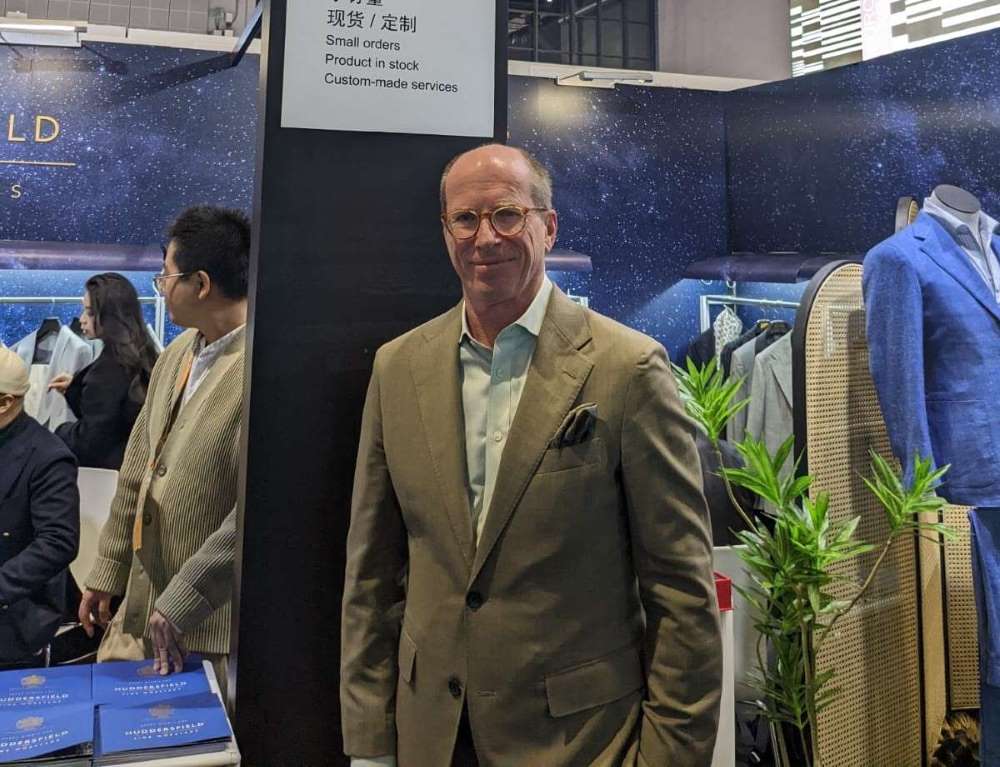
HMS International, a leading company in the global fabric market with renowned brands like Gladson New York & Huddersfield Fine Worsteds, is adjusting its approach to cater to changing customer preferences. In an interview with Bob McAuley, President, HMS International , Sanjay Chawla, Global Convener, FashionatingWorld delves into the evolving trends shaping the textile industry during Intertextile Shanghai Apparel Fabrics Spring Edition 2024.
Q: Bob, how has the fabric market changed in recent years?
A: We're seeing a big shift towards casual and performance fabrics. People are looking for clothes that are comfortable and versatile, with features like stretch and moisture-wicking. This is happening all over the world, but the US market seems to be leading the charge.
Q: What about the Chinese market? They're known for luxury goods.
A: That's true, there's still a strong demand for high-end fabrics in China. However, the trend towards casualization is reaching China as well. Interestingly, there's also a growing interest in heavier fabrics, which goes against the global trend a bit.
Q: So, what are some of the hottest trends in fabric right now?
A: Definitely heavier fabrics, like gabardine, are making a comeback in some regions. But overall, it's casual and performance fabrics with stretch that are really dominating the market. We're also seeing a rise in women's tailored clothing and sportswear options.
Q: How do these trends differ across the US, Europe, and China?
A: In the US, it's all about casual wear with stretch fabrics. They prefer simpler designs, like small patterns and tone-on-tone colors. Europe leans towards those heavier fabrics and a more classic, "English Feeling" style. China, like I mentioned, is a mix of casualization and a preference for heavier, performance fabrics.
Q: You mentioned India is a big market for HMS. Can you tell us more about that?
A: India is actually our biggest market! We've had a presence there since 2012, with a large team of over 100 people, including a dedicated design department that caters specifically to Indian tastes. We sell directly to retailers, with around 2500 accounts across the country. It's important to note that India isn't just an "all wool" market. We offer a variety of fabrics based on what sells best there, and production happens in Europe, China, and India itself.
Renewed international interest, resurgent domestic demand mark success of Intertextile Shanghai Spring Edition 2024
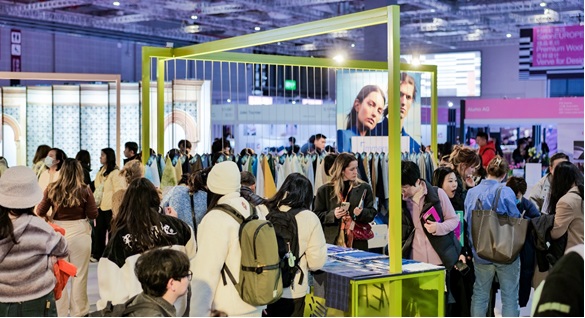
The Intertextile Shanghai Apparel Fabrics Spring Edition, a leading global trade fair for apparel textiles and accessories, concluded its three-day run on March 8th with a resounding success. The spring edition served as a testament to the industry's resilience and its bright future, particularly with the China market showing signs of growth and a shift in consumer preferences. The event witnessed a significant increase in both exhibitors and visitors compared to the previous edition, highlighting the industry's strong recovery and renewed optimism.
Surge in international participation and visitation
Following the government's visa relaxation measures, the fair saw a remarkable 22.9% increase in international exhibitors. International visitor numbers skyrocketed by 99%, with a particularly high 87% returning on days two and three, signifying a serious intent to source. "The exceptional return rate of overseas buyers... speaks to the multitude of sourcing options at our comprehensive platform", commented Wilmet Shea, General Manager of Messe Frankfurt (HK) Ltd, emphatically.
China Market Insights: Shifting market preferences
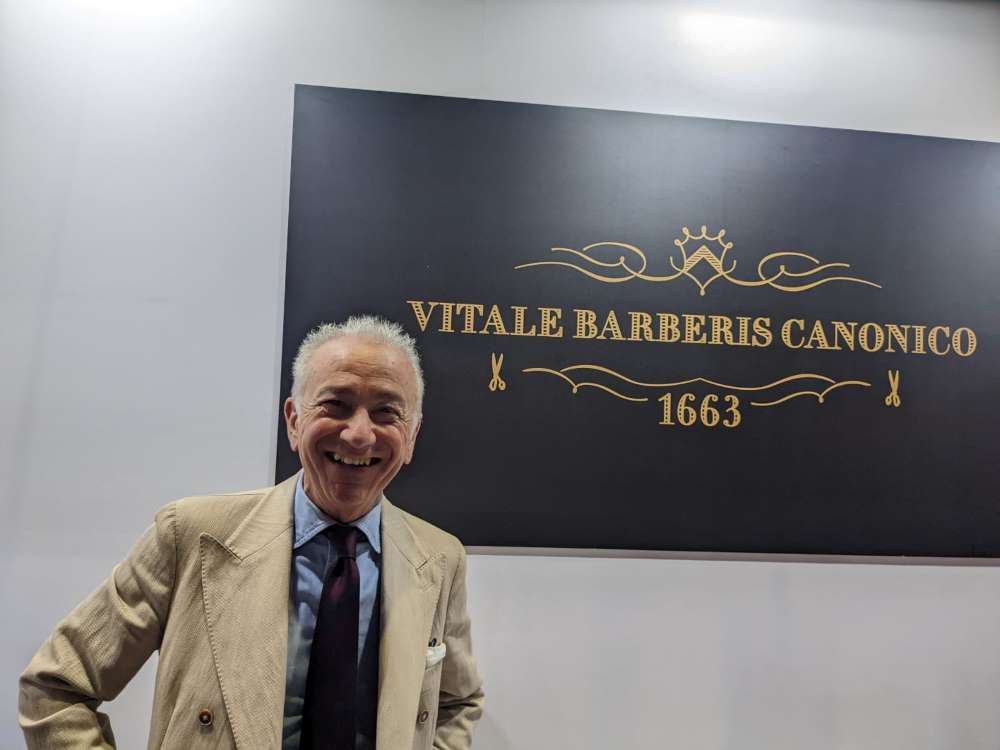
Alessandro Barberis Canonico, CEO of Vitale Barberis Canonico, observes , “The major changes in the China market over the years have included a shift from buying high-quality, high-priced products to more price- conscious options, a transition from formal wear to leisure and outdoor products, and a slowdown in the market due to economic challenges such as high unemployment rates and real estate issues. Additionally, there has been a shift towards functional leisure products, with a small percentage of formal production transitioning to this new trend. Adds Bob HMS, “A global trend towards casual and performance fabrics. This shift is evident in China as well, with a growing demand for these fabrics alongside a continued interest in higher-end options.”
Domestic demand remains strong
The domestic market also displayed robust demand, with a high number of Chinese buyers seeking textiles with luxury, sustainable, and functional elements. "It seems we are back to the fairs of 2016 – 2018, where it was really profitable. It’s a good sign for the Chinese luxury market", observed Andrea Rossi, Sales Manager of Lanificio Luigi Colombo S.p.A (Italy Pavilion)
Exhibitors laud renewed business potential
Kurabo Textiles, Japan, is entering the China market for the first time. “Kurabo produces mainly woven fabrics, including specialty fabrics in cotton made with compact yarn. The company is new in China, was not selling into China market so far, as they were selling to the USA and the Europe market. Kurabo is focused on promoting ecology and sustainability in their products. Kurabo is strong in finishing of their products, particularly about their facility in Japan. We aim to leverage our expertise in Japanese finishing techniques to gain a foothold,” says Takashi Mitani, General Manager, Kurabo.
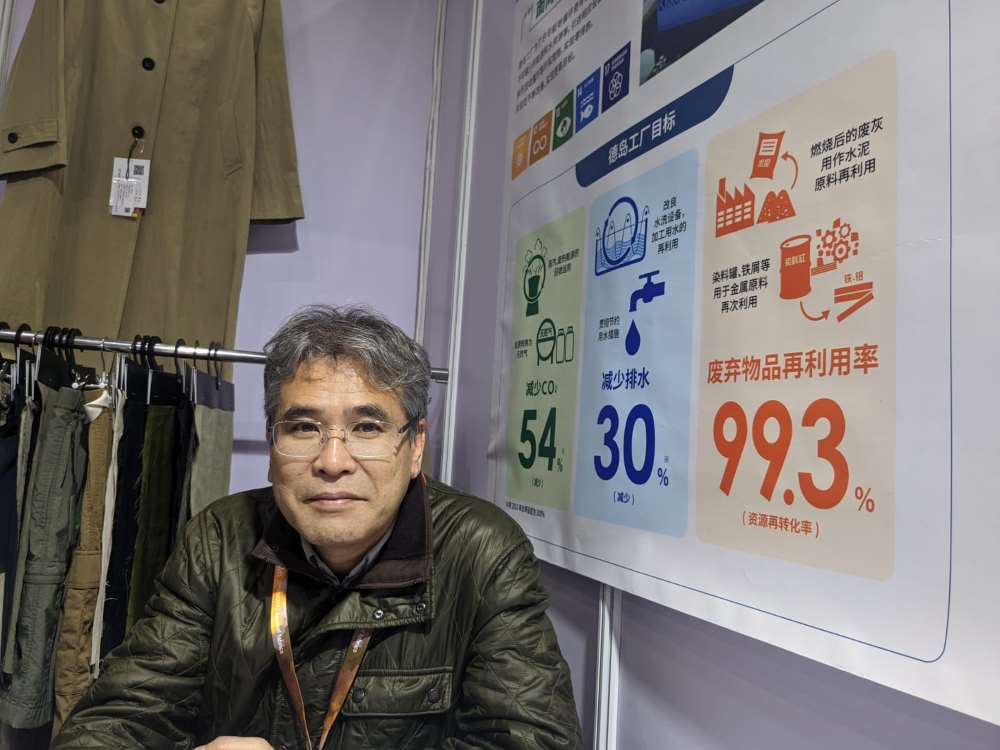
Exhibitors across the textile spectrum expressed their satisfaction with the renewed ease of doing business and the strength of the domestic market. Chen Yu Jyun of Shibaya (Japan Pavilion) highlighted the effectiveness of the WeChat sample ordering system, leading to a surge in customer details. Jeanie Hu, Marketing Director for HeiQ (China) Material Tech Co Ltd, emphasized the importance of such comprehensive platforms to reach diverse target sectors.
Buyers find inspiration and sourcing solutions
Buyers like Cao Yunfeng, Senior Fabric Purchasing Manager of JNBY Finery Co Ltd, lauded the fair's vast offerings, allowing them to source fabrics for various categories. Hong Sajun, Purchasing Manager of YoungHW Textile Trading Co Ltd, found several potential suppliers in the Trend Forum, particularly for eco-friendly fabrics. Rebecca Sales of Jonathan Simkai Inc., USA, appreciated the opportunity to discover new fabrics and collaborate with a global audience.
Fringe programme enhances knowledge sharing
The fringe program, encompassing seminars, forums, and product presentations, provided valuable insights on design trends, market information, sustainability, and technological advancements. Clara Tse of HKRITA, Hong Kong, emphasized the collaborative nature of the discussions surrounding sustainability. Mr. Kai Chow of DONEGER | TOBE, USA, commended the Trend Forum's realistic approach to showcasing commercially viable fabrics.
Co-located synergies
The co-location of the fair with other textile-related events like Intertextile Shanghai Home Textiles and Yarn Expo Spring offered a one-stop platform for exploring the entire textile value chain, fostering further networking opportunities.
D’décor to elevate daily fabric output to 200,000 m in next 4 years: Sanjay Arora, Managing Director
India's leading manufacturer of curtains and upholstery, D’décor is on a trajectory of significant expansion, says Sanjay Arora, Managing Director. The company plans to elevate its daily fabric output from 140,000 m to exceed 200,000 m within the next four years, driven by a steadfast commitment to meeting burgeoning consumer demands while maintaining a competitive edge.
Currently operating at 93 per cent capacity, D’Decor's facilities are equipped with cutting-edge technology, including robotic systems, across its manufacturing plants in Tarapur, Maharashtra, and warehouses in Noida and Bengaluru. With a workforce of around 6,000 employees, D’Decor dominates the market with a 30 per cent share of the organised segment, holding the distinction of being the largest global producer of curtains and upholstery, evenly split between domestic and export markets. While curtains constitute the majority of their business, D’Decor also excels in beddings, blinds, rugs, and other complementary products.
Experiencing a Compound Annual Growth Rate (CAGR) of 13-15 per cent in recent years, the company has consistently achieved a 50 per cent revenue increase every four years, partially attributed to the unexpected surge in demand during the COVID-19 pandemic. Looking forward, Arora anticipates a further 50 per cent growth over the next four years.
In addition to expanding manufacturing capabilities, D’Decor is poised to introduce a new brand next month and intensify efforts to penetrate deeper into the domestic market.
GFA, H&M Foundation partner to expand GCFF operations
Global Fashion Agenda (GFA) and H&M Foundation have formed a new collaboration to bolster the efforts of the Global Circular Fashion Forum (GCFF).
Over the next three years, this partnership will inject substantial funding into GFA's circularity impact initiatives while also acting as a catalyst for expanding the National Circular Fashion Partnership programs. These programs are currently active in Bangladesh, with plans for development in Cambodia, Vietnam, Türkiye, and Indonesia.
Since its launch in 2022, GCFF, a global initiative established by GFA and supported by Deutsche Gesellschaft für Internationale Zusammenarbeit GmbH (GIZ), has been instrumental in driving global and local action in textile manufacturing countries to accelerate and scale the recycling of post-industrial textile waste. By November 2023, GCFF and its National Circular Fashion Partnerships had successfully recycled 10,685 tonnes of textile waste, equivalent to approximately 60 million t-shirts. This was achieved by building a collaborative community comprising 179 manufacturers, 15 waste handlers, and 22 recyclers.
With the invaluable support of H&M Foundation, continued partnership with GIZ, and collaboration with project partners Circle Economy, Closed Loop Fashion, Reverse Resources, and local stakeholders in targeted regions, GFA is poised to extend the reach and amplify the influence and impact of GCFF. Together, these organizations aim to establish an effective ecosystem for scaling circularity within the fashion industry.
The ultimate vision of GCFF is to spearhead a long-term, scalable, and just transition towards a fully circular fashion industry. This will be accomplished through a strategic blend of knowledge exchange, multistakeholder facilitation, and mobilising industry commitment.