Vietnam’s garment companies report significant rise in exports during Q1 FY24
Vietnamese garment companies including Saigon 3 and Garco 10 have reported significant year-on-year increases in exports during the first quarter. This has led to key garment players expressing confidence in their order books and ability to sustain operations well into the third quarter.
The rise in revenues is a result of recovery of demand from the US, says a spokesperson from Saigon 3. Similarly, noting a 15 per cent Y-o-Y rise in the company’s revenue, Than Duc Viet, CEO, Garco 10, outlines ambitious targets for the year to further boost the company’s revenues and profit.
After a challenging 2023 marked by declining exports, particularly in major markets like the US and EU, the outlook for 2024 for these companies appears promising. Their exports during the first quarter showed a significant uptick, bringing them closer to the annual export target of $44 billion.
Despite this optimism, the industry still remains concerned about geopolitical tensions and their potential impact on shipping costs. Additionally, pressure from global fashion brands to adhere to sustainability standards and embrace digital transformation poses challenges for Vietnamese garment businesses.
Vu Duc Giang, Chairman, Vietnam Garment and Apparel Association, has urged businesses to adopt green transformation initiatives and invest in technology to maintain competitiveness and meet evolving global supply chain requirements. He particularly raised concerns about the potential decline in exports from the country to the EU due to stringent emissions standards set by initiatives like the European Green Deal.
Ted Baker undergoes restructuring amidst financial struggles
Established in 1987, renowned fashion brand Ted Baker is undergoing significant restructuring amidst financial challenges. Owned by the entity, No Ordinary Designer Label (NODL), the brand is restructuring its operations under the leadership of administrators from Teneo. It aims to close approximately 15 stores across the UK besides eliminating around 245 jobs.
By the end of the following week, Ted Baker plans to close 11 of its stores, resulting in around 120 job losses. These include stores in prominent locations such as Birmingham Bullring, Bristol, and London Bridge, among others.
Additionally, the company will terminate around 25 head office positions to reduce central costs.
Further exacerbating the situation, four additional stores are slated for closure in the coming weeks due to landlords terminating leases. This move will lead to approximately 100 more job losses. These stores, including locations like Bicester and London's Brompton Road, are deemed unprofitable, even with potential rent reductions.
The decision to undergo such restructuring was partially attributed to difficulties stemming from a partnership with the Dutch company AARC Group, which resulted in significant financial arrears. NODL terminated this partnership in January after AARC failed to fulfill its commitments to inject capital into the business.
Despite the challenges, Authentic Brands, the owner of Ted Baker's intellectual property, remains committed to revitalising the brand. They are actively seeking new partners to manage Ted Baker's retail and online operations in the UK and Europe. Prior to the restructuring, Ted Baker operated 46 stores in the UK and employed approximately 975 individuals.
France passes new law to make fast fashion industry more sustainable
To address mounting concerns over the environmental impact of fast fashion, France has passed a new legislation that aims to regulate the industry and promote eco-friendly practices.
The law mandates that companies producing a large volume of low-cost garments
must disclose the environmental impact of their products and prominently display recycling messages on their websites. Failure to comply could result in fines of up to $16,000. Additionally, a new eco-scoring system will evaluate fashion brands based on sustainability criteria, with poor performers facing penalties of up to $10 per item by 2030. Advertising of fast fashion will be banned starting in 2025.
Applauded by advocates of sustainable fashion, the new legislation is being seen as a crucial measure to tackle the excessive waste generated by rapid trends. It would mainly benefit local designers who adhere to responsible production practices.
However, some experts argue that the threshold for defining fast fashion may be too lenient, and there are differing opinions on the proposed penalties, with calls for stricter compliance measures.
Given France's influence on global fashion trends, these regulations could have significant implications for purchasing behaviors if adopted across Europe.
Moving forward, the industry needs to find a balance between business interests and environmental responsibilities to meet its climate commitments, opine experts.
Groz-Beckert & Santoni launch Innotas knitting system
Italian circular knitting machine giant, Santoni, in collaboration with Groz-Beckert, has pioneered an innovative self-cleaning knitting system, Innotas, set to redefine efficiency and sustainability in textile manufacturing. This innovative system features the SAN DUO needle and SNK DUO-OL sinker, promising a paradigm shift in circular knitting technology.
Motivated by the industry's increasing sustainability demands and the quest for heightened efficiency, Groz-Beckert initiated the project, aiming to create an energy-efficient knitting solution. The collaboration, sanctioned in January 2015, birthed a revolutionary design integrating self-cleaning mechanisms within the needle area, boasting side-by-side needles and a low shank configuration.
Field trials conducted in 2016 showcased promising results, with the double filling in the needle channel drastically reducing soiling, while the enhanced design facilitated automatic removal of yarn lint during the knitting process, elongating cleaning intervals and boosting productivity.
Noteworthy features include the low shaft of both the SAN DUO needle and SNK DUO-OL sinker, minimizing contamination, and a predetermined breaking notch ensuring controlled needle breakage, minimizing errors and downtimes.
Groz-Beckert extends collaborative opportunities to machine builders for product enhancement through its Technology and Development Center (TEZ), yielding joint patents, exemplified by the fruitful partnership with Santoni. This collaborative venture stands as a testament to industry leaders' commitment to innovation and sustainability, heralding a new era in circular knitting technology.
Portland's Functional Fabric Fair features Circular Design panel
The urgency for sustainable practices in the textile industry intensifies as Portland’s Functional Fabric Fair prepares to host the Designing for Circularity panel. Set for Wednesday, April 17th at 2:00 pm, this event, spearheaded by Formidable Media, aims to decode the complexities of circular design amidst regulatory pressures and market dynamics.
With fashion ranking among the globe’s top polluters, industry experts recognize the imperative to revolutionize design paradigms. Scott Kaier, Founder of Formidable Media, underscores the pivotal role of informed design in forging a sustainable trajectory. "Today's designers wield the power to pioneer cleaner, more sustainable practices," he asserts.
Handpicked from leading outdoor, fashion, lifestyle, and footwear sectors, the panelists represent a cross-section of expertise crucial for navigating the circularity landscape. Among them are Daniel Uretsky of Allied Feather + Down, Martin Flora of Green Theme Technologies, Sarah Schlinger of Woolmark, Sharon Perez of Lenzing Group, Brian La Plante of YKK, Theresa McKenney of Nemo Equipment, showcasing a spectrum of perspectives encompassing materials, sustainability, and innovation.
By convening key stakeholders, the panel aims to equip designers, product developers, and brand representatives with actionable insights to steer their ventures towards sustainability. From sourcing to recycling, the discourse promises to illuminate pathways towards a greener future.
As the textile industry navigates a pivotal juncture, the Designing for Circularity panel emerges as a beacon of guidance, propelling the sector towards a more sustainable tomorrow.
India's textile ambition: $600b exports by 2047
India is charting an ambitious trajectory in the textile sector, targeting a substantial leap in exports to $600 billion by 2047, up from $44 billion in FY22, while concurrently envisioning a domestic market expansion to $1.8 trillion from $110 billion in 2022.
This bold endeavor, articulated through the Textiles Ministry's Vision 2047, rests on five strategic pillars: research and innovation, infrastructure, trade and investment, marketing and brand promotion, skilling and quality, and sustainability.
Initial deliberations hint at an export landscape dominated by apparel and made-ups, poised to surpass $350 billion, with technical textiles contributing around $85 billion. Domestically, the apparel sector is anticipated to burgeon to $1.2 trillion, while technical textiles could amass around $460 billion in market value.
However, the industry confronts significant hurdles, including sourcing raw materials to meet export targets, necessitating robust investment policies and supply augmentation strategies. Notably, the vision underscores the elevation of domestic brands into global champions and a renewed emphasis on quality enhancement and indigenous manufacturing, particularly in machinery and high-value exports.
Crucially, the roadmap envisions milestones for 2030, foreseeing a domestic market worth $250 billion and exports reaching $100 billion. Moreover, India aspires to carve a niche as a sustainable manufacturing leader, targeting a 30 per cent share of global recycled fibers and pioneering innovations in textiles recycling and waste management.
As India gears up to commemorate its 100th year of Independence in 2047, stakeholders anticipate a comprehensive strategy, spanning short-term initiatives and a long-term vision, to propel the textile sector toward unprecedented growth and global prominence.
SaigonTex and SaigonFabric 2024 to attract over 1,000 exhibitors
To be held from Apr 10-13, 2024 in the Ho Chi Minh City, the Vietnam Saigon Textile & Garment Industry Expo (SaigonTex & SaigonFabric 2024) is anticipated to attract over 1,000 exhibitors.
This year, the event will attract exhibitors from 20 countries and territories including Belgium, China, Germany, Hong Kong (China), India, Italy, Japan, the Republic of Korea, Malaysia, the Netherlands, Pakistan, Portugal, Singapore, and Switzerland.
These exhibitors will showcase an exhaustive range of products including textile machinery, equipment, spare parts, textile materials, and fabric products, from renowned global brands.
One of the major attractions of this expo will be the launch of the Product Presentation Program (PPP), incorporating static displays and catwalk performances. The program will launch fashion-forward products integrating the latest technologies from both Vietnamese and international exhibitors.
Vietnam Textile and Apparel Association (VITAS) will host a trade exchange at the expo to foster future collaborations between exhibitors and buyers.
The exhibition will also organise a series of seminars offering insights from industry experts on policy implementation, circular economy practices, and the transition towards greener initiatives within the garment and textile sector.
FY25 outlook brightens for Indian textiles sector: Systematix
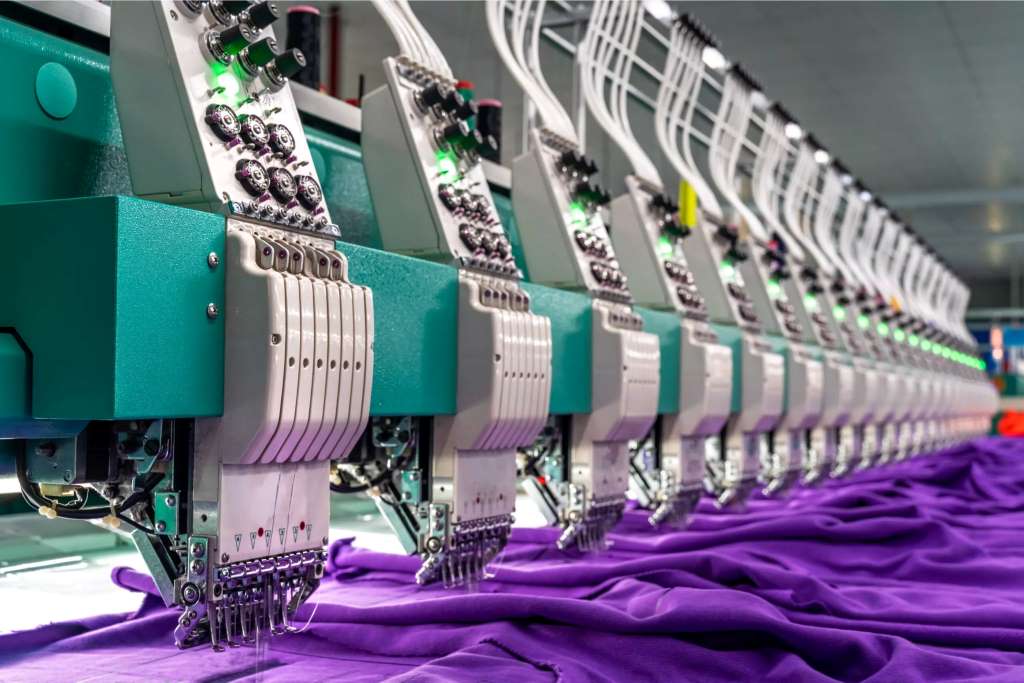
In a recent panel discussion organized by Crisil, titled 'Upstream textiles sector: Threads of promise', industry experts provided insights into the outlook for the cotton yarn and polyester yarn segments of the upstream textiles industry for the fiscal year 2025 (FY25). Crisil anticipates moderate revenue growth of 4-6 per cent year-on-year (YoY) for the cotton yarn segment, attributed to expected improvements in downstream demand, stable yarn prices, and enhanced availability of cotton. Meanwhile, the polyester yarn segment is forecasted to achieve 2-4 per cent YoY growth, despite an export slowdown, thanks to the introduction of a quality control order (QCO) aimed at curbing the influx of cheap polyester yarn into India.
Profitability to witness improvement
Profitability in both segments is expected to see an uptick, with cotton yarn projected to reach 10-10.5 per cent and polyester yarn to achieve 6.5-7.5 per cent margins, respectively. This improvement is attributed to lower raw material prices, which are anticipated to bolster spreads in both sectors.
Moderate capex is expected in the cotton yarn industry for FY25, following a major halt in the previous fiscal year. Conversely, no significant capex plans are on the horizon for the polyester yarn industry as it focuses on ramping up existing capacities. Despite the moderate capex, the credit outlook remains stable across both segments.
The discussion also addressed key risks, including adverse movements between domestic and international cotton prices, volatility in crude oil and raw material prices affecting polyester yarn imports, and the potential increase in the dumping of cheap polyester fabric in Indian markets.
Outlook for cotton yarn industry
The panel highlighted expectations of a decline in cotton production in the upcoming Cotton Season (CS) 2024, which could impact acreage due to recent declines in cotton prices. Despite stable consumption projections, improved cotton-yarn spreads are anticipated, driven by benign raw material prices. Capacity utilization levels are also expected to improve, particularly in downstream industries such as knitwear and home textiles.
Outlook for polyester yarn industry
The polyester yarn industry dynamics were analyzed, with China's dominance in global trade highlighted. The implementation of the QCO, aimed at curbing the dumping of cheap polyester yarn, is expected to benefit Indian manufacturers. Despite challenges such as inventory buildup and the delayed implementation of QCOs, moderate revenue growth is expected in FY25, supported by government regulations and gradual improvements in volumes.
Operating margins for both segments are anticipated to recover gradually, with cotton yarn margins expected to rebound from decadal lows. Limited capex plans are foreseen for both industries, with the cotton yarn sector awaiting major export demand for a potential revival.
Export growth prospects are limited, particularly for polyester yarn, due to challenges such as continued dumping by China and currency devaluations in key export markets. Despite these challenges, credit profiles for both segments are expected to remain stable, backed by deleveraged balance sheets and improved cash accruals.
Working capital outlook
Crisil expects working capital to normalize in the near-medium term for the cotton yarn segment, supported by a regular supply of cotton and lower cotton prices. Conversely, no significant movements are anticipated in working capital requirements for the polyester yarn segment.
In conclusion, while challenges and risks persist, the Crisil panel remains cautiously optimistic about the outlook for the upstream textiles sector, foreseeing steady growth and stable credit profiles in FY25.
Bangladesh poised for growth in Man-Made Fiber garments: PwC study

A new study by Price Waterhouse Cooper (PwC), titled ‘From Shirts to Shores: Blueprint for Bangladesh RMG Industry’ paints a promising picture for Bangladesh's garment industry, with a focus on man-made fiber (MMF) apparel. Here are the key takeaways:
Rising demand for MMF apparels
The global garment export market is expected to reach $1.121 trillion by 2030, a significant increase from $953 billion in 2022.
PwC says, MMF and MMF-rich garments are projected to capture a whopping 60 per cent of the market share by 2030, up from 50 per cent in 2022. This suggests a growing consumer preference for these textiles. Cotton and cotton-rich garments are expected to hold a 35 per cent share, while other fibers will make up the remaining 5 per cent.
Opportunity for Bangladesh
The report highlights Bangladesh's potential to capitalize on this shift. Currently, Bangladesh has only a small portion of the high-value MMF garment market segments like brassieres and activewear. That is, a 6 per cent share in the $14 billion global brassiere market and a 5.4 per cent share in the activewear segment, both dominated by MMF-based products. Faruque Hassan, President of the Bangladesh Garment Manufacturers and Exporters Association (BGMEA) opines, "This study provides valuable insights for our industry. We need to focus on diversifying our product portfolio and building capacity for MMF garments to achieve our target of $100 billion in apparel exports by 2030."
The report showcases China's dominance in the MMF garment space, with $320 billion of the total export value in 2022. This demonstrates the potential rewards for countries that invest in MMF production capabilities.
Table: Projected Global Garment Export Market Share by Fiber Type (2022 vs. 2030)
|
Fiber Type |
Share in 2022 |
Share in 2030 |
|
MMF & MMF-rich |
50% |
60% |
|
Cotton & Cotton-rich |
37% |
35% |
|
Others |
13% |
5% |
The report highlights Bangladesh's potential to capitalize on this shift. Currently, China leads the MMF garment export market with a $320 billion share, followed by Vietnam at $41 billion. PwC cites Vietnam's success in MMF garments as a potential model for Bangladesh. Vietnam has invested heavily in MMF production capacity and diversified its product offerings. This strategic approach has allowed them to capture a significant share of the growing MMF market.
Bangladesh has a chance to increase its market share, particularly in high-growth categories like brassieres, technical garments, activewear, swimwear, jackets, suits, and blazers, where MMF dominates at 73 per cent.
Challenges for Bangladesh
The study acknowledges challenges for Bangladesh, including a limited domestic MMF production capacity and competition from established players.
PwC recommends that Bangladesh focus on:
• Developing a strong domestic MMF supply chain to reduce reliance on imports.
• Investing in innovation and technology to improve product quality and efficiency.
• Upskilling the workforce to handle MMF production effectively.
Sameer Sattar, Partner and Leader, Sustainable Business Services, PwC Bangladesh points out, "By embracing MMF and focusing on innovation, Bangladesh can solidify its position as a global leader in the garment industry." And by implementing these strategies, Bangladesh can position itself as a major player in the global MMF garment market and achieve its ambitious export targets.
39th Milano Unica to launch new zone for beachwear fabrics-MarediModa
The 39th edition of Milano Unica will launch a new special area dedicated to fabrics and accessories for beachwear, lingerie and athleisure- MarediModa. The trade show will feature a few select specialist companies in this dedicated area, allowing visitors to discover the high level of specialisation and creativity of Made-in-Europe fabrics besides giving them a preview of the Summer 2026 collections.
This year, Milano Unica will be held from July 09-11, 2024 at Fiera Milano (Rho). The trade show will provide attendees an exclusive opportunity to make business connections, discover latest trends and innovations, and be inspired by the Fall/Winter 2025-26 collections. The exhibition will surprise visitors with the number of participating companies, manufacturing quality, and product array. It will offer them excellent services to ensure the best and unparalleled experience.
To supplement the creative offerings of different countries, Milano Unica will also feature separate exhibition areas including the Japan Observatory, Korea Observatory, and the Special Areas: Innovation, Start-Up Textile Connection, MU Vintage, MU Info&Style, MU Trade Press, and MU Designers.
More...
Espirit Holdings files for insolvency of Belgium subsidiary
As a part of its ongoing comprehensive reogranisation of the company’s operations, Hong Kong-based Esprit Holdings has filed for insolvency of its Belgium subsidiary, Esprit Belgie Retail (BEBR).
A wholly-owned subsidiary primarily involved in retailing apparel and accessories, BEBR filed for the insolvency in a Belgian court, resulting in the closure of all its stores.
The company attributed its decision to various challenges including economic slowdown, significant increases in energy and logistics costs, negative consumer sentiment in Europe, and the burden of high legacy rents. As of December 31, 2022, BEBR reported total assets of HK$88.9 million (US$11.3 million) and total liabilities of HK$80 million (US$10.2 million).
To deal with these challenges, Esprit aims to partner with wholesale and franchise entities besides revitalising its e-commerce initiatives. The company reported a net loss of $300 million for FY23, accompanied by a 16 per cent decrease in revenue. However, it is actively strategising to navigate these challenges and position itself for future growth.
UK fashion buyers on the hunt for new sourcing destinations

Fashion buyers are actively exploring new sourcing destinations that offer a combination of ethical production, unique materials, and cost-effectiveness. Fashion buyers are increasingly looking beyond traditional sourcing hubs like China and India for their garment needs. This shift is driven by a desire for greater supply chain resilience with ethical production practices.
Emerging markets gain traction
Market is witnessing a rise in interest from buyers for products from countries like Ethiopia, Madagascar, and Nepal. These emerging markets offer potential for ethical production and unique materials. Additionally, trade agreements can make sourcing from these destinations cost-effective.
Central Europe emerges as a "Super Interesting" option
Beyond Asia, Central European nations like Poland are attracting attention from UK buyers seeking geographically closer options. This trend is fueled by ongoing supply chain disruptions and a desire for shorter lead times.
Recycled fabrics gaining momentum
The fashion industry's growing focus on sustainability is reflected in the increasing use of recycled fabrics by suppliers. Exhibitions are seeing a significant rise in exhibitors showcasing recycled materials like cashmere and cotton, indicating a potential shift led by manufacturers themselves.
Buyers seek transparency
With ethical sourcing becoming a priority, buyers are demanding greater transparency from suppliers. This trend is likely to lead to a future where clear labeling of recycled content becomes the norm.
PlatformE leads sustainable fashion as B Corp
Fashion innovator PlatformE achieves B Corp certification, marking a pivotal moment in its commitment to sustainability and ethical business practices. This certification underscores PlatformE's dedication to leveraging its influence for positive change.
Luís Cabral, Head of Finance and People, emphasizes the transformative power of strategic product development, shaping the fashion landscape while promoting environmental consciousness.
As a Certified B Corporation, PlatformE joins a global cohort of companies dedicated to societal and environmental well-being, prioritizing people and planet alongside profit.
PlatformE pledges to inspire others in the fashion and technology sectors to embrace sustainability and social impact, fostering collaboration and innovation.
Looking ahead, PlatformE reaffirms its leadership in fashion innovation, aiming to revolutionize production and consumption practices while upholding the highest standards of environmental stewardship and corporate transparency.
This milestone highlights the fashion industry's growing recognition of the importance of responsible business practices in shaping a more equitable and sustainable future.
Kraig Labs inks deal in Vietnam's silk hub
Kraig Biocraft Laboratories, Inc. has entered an agreement with the Vietnam Sericulture Association (VSA), marking a significant leap forward for the company's production ambitions. The agreement, disclosed today, unveils Kraig Labs' production plans for the next twenty-four months to the VSA, fostering a collaborative effort aimed at meeting production targets.
Central to the agreement is the VSA's commitment to aid Kraig Labs in securing formal intellectual property registration of its BAM-1 hybrid silkworm strain in Vietnam, reinforcing the partnership established in the Memorandum of Understanding earlier this year.
"This agreement signifies years of concerted efforts with various agencies to showcase our technology and its potential," stated Kim K. Thompson, Founder and CEO of Kraig Biocraft Laboratories. Thompson emphasized the strategic significance of the partnership with the VSA in advancing production goals and strengthening the company's foothold in Southeast Asia.
Le Quang Tu, President of the Vietnamese Sericulture Association, expressed optimism about the collaboration, citing Kraig's technology as a potential game-changer for the industry.
With CEO Kim K. Thompson on-site in Vietnam to oversee operations, Kraig Labs anticipates forthcoming updates on its accelerating progress in the weeks ahead. This landmark agreement underscores the company's commitment to innovation and strategic partnerships in revolutionizing the sericulture industry.