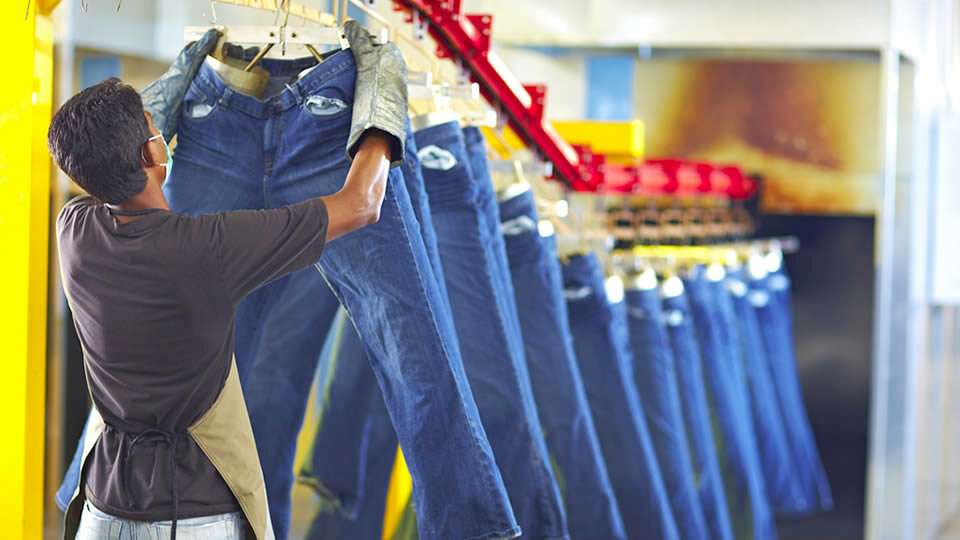
US textile industry urges stronger action against Chinese trade practices
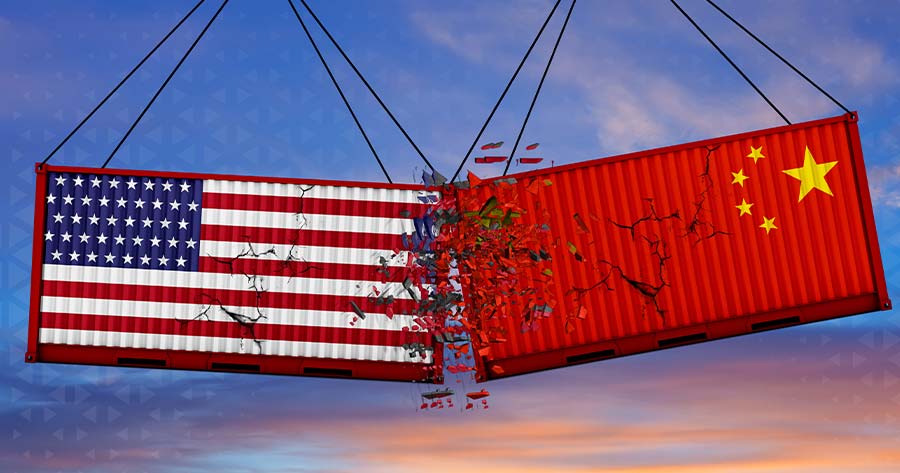
In response to the Biden administration's announcement on the U.S. Trade Representative Office's review of Section 301 tariffs, Kim Glas, President and CEO of the National Council of Textile Organizations (NCTO), emphasized the urgent need for stronger measures against China's trade practices. The administration's decision to uphold penalty tariffs on finished textiles and apparel imports from China and to escalate tariffs on specific personal protective equipment (PPE) imports was deemed a necessary step by Glas.
However, Glas lamented the missed opportunity to address China's continued dominance in the US textile market and its detrimental impact on domestic manufacturers and workers. With market conditions rapidly deteriorating due to China's dumping practices, Glas urged the administration to take action to level the playing field. This includes further increasing tariffs on finished textile and apparel imports and certain inputs to counter China's unfair advantages.
The statement highlighted the critical role of the domestic textile industry in national security, particularly as a supplier of essential PPE items. Glas warned that unchecked Chinese trade practices, coupled with ineffective enforcement and trade policies, are jeopardizing the future of domestic manufacturing.
Glas underscored the alarming trend of increased Chinese textile and apparel shipments to the US, compared to significant declines from key trade partners in the Western Hemisphere. This trend signals China's growing dominance in global markets through subsidized and illegal exports.
While acknowledging the administration's efforts to increase tariffs on various Chinese imports, Glas urged for similar action on finished textile and apparel imports to safeguard the American textile industry. The statement emphasized the need for meaningful measures to address China's predatory behavior and protect critical jobs in the industry.
In conclusion, the NCTO called for decisive action to ramp up tariffs on finished textile and apparel imports from China to restore competitiveness and counteract China's destructive trade practices.
Mexico imposes temporary tariffs on textiles, apparel, and footwear
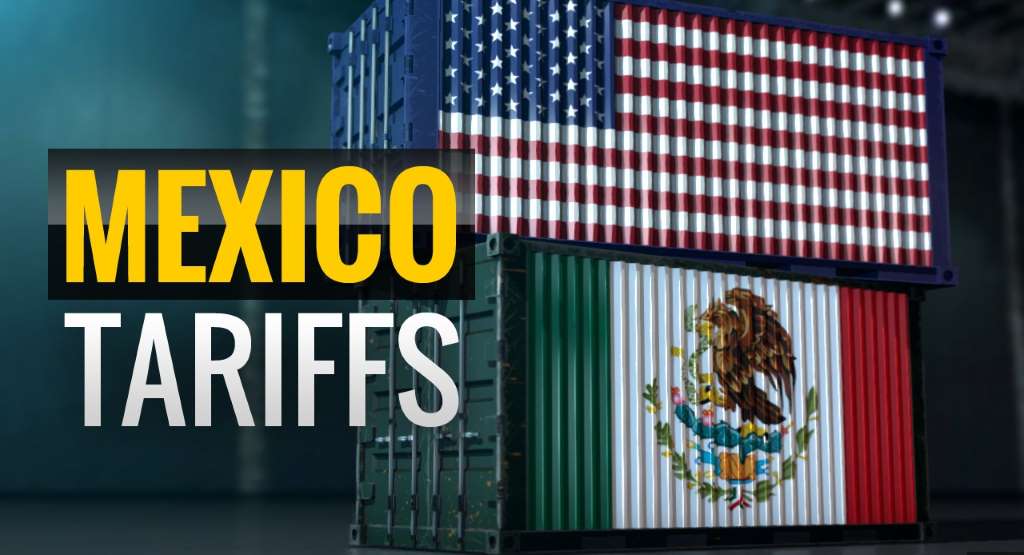
In a move aimed at bolstering domestic industries, the Mexican President signed a decree on April 22, 2024, establishing temporary import tariffs on textiles, apparel, and footwear. These tariffs, ranging from 5per cent to 35per cent, are intended to level the playing field for Mexican manufacturers facing competition from cheaper imports. This decision comes after the Mexican government expressed concerns about unfair competition faced by domestic manufacturers in these sectors.
The decree applies to a total of 544 tariff item. The specific tariff rates vary depending on the product category. For textiles, apparel and footwear 35per cent tariff have been imposed. Other products (including wood, plastics, steel, aluminum) it varies between 5per cent and 50per cent. The temporary tariffs will be in effect for two years, expiring on April 22, 2026. This timeframe aims to provide domestic producers with a window of opportunity to strengthen their competitive edge. The new tariffs are essential to create a level playing field for our textile, apparel, and footwear industries, say industry experts.
Impact on consumers and trade relations
The increased tariffs are likely to lead to higher prices for consumers who purchase imported textiles, apparel, and footwear. Additionally, this move could strain trade relations with countries that export these goods to Mexico, particularly those without existing free trade agreements.
The decree also offers some exemptions. Goods imported from countries with free trade agreements with Mexico, such as the US and Canada, will not be subject to the new tariffs provided they meet the agreements' stipulations. Proponents of the tariffs believe they will stimulate domestic production, create jobs, and foster the growth of the targeted industries. However, critics argue that the tariffs could ultimately harm consumers and lead to higher inflation.
Table: Tariff rates
|
Industry |
Tariff rate |
Valid until |
|
Textiles |
35% |
April 22, 2026 |
|
Apparel |
35% |
April 22, 2026 |
|
Footwear |
35% |
April 22, 2026 |
Mexican textile, apparel, and footwear manufacturers have welcomed the move. “This is a positive step towards protecting Mexican jobs and revitalizing our domestic industries,” says Gabriela Martinez, President of the Mexican Textile and Apparel Association. “The temporary tariffs will provide us with the breathing room we need to invest in innovation and improve our competitiveness.” However, concerns have been raised by importers and foreign businesses. They argue that the tariffs will ultimately lead to higher prices for consumers and potentially disrupt established supply chains. “These tariffs will create uncertainty and make it more difficult for businesses to plan,” said David Hernandez, a spokesperson for the National Chamber of Importers. “The increased costs will likely be passed on to consumers, putting a strain on household budgets.”
The Mexican government maintains that the tariffs are a necessary measure to protect strategic domestic industries and create a fairer trade environment. The two-year timeframe is intended to provide a temporary boost while allowing domestic producers to invest in long-term competitiveness. The ultimate impact of the tariffs on the Mexican economy and its trading partners remains to be seen.
Outlet malls sees resurgence in the age of inflation and value-conscious consumers

The world of luxury fashion has long held a complex relationship with outlet stores and malls. While some high-end brands like Louis Vuitton, Hermès, Chanel remain fiercely independent, others have embraced the outlet model with varying degrees of success. Coach and Ralph Lauren serve as cautionary tales, their over-reliance on outlet discounts tarnishing their brand image.
However, the tides are turning. The pandemic, coupled with growing inflation and supply chain disruptions, has forced a re-evaluation. Luxury brands, both established and emerging, are finding a renewed purpose for outlets within the luxury retail landscape.
Outlet sales surge, bright spot in luxury retail
Bain & Company data shows since 2021, luxury outlet sales have skyrocketed 35 per cent, reaching a staggering $50 billion. This meteoric rise makes it the fastest-growing segment within the $387 billion global personal luxury goods market.
While outlets still represent a smaller slice of the pie compared to dominant channels like monobrand stores and online sales (13 per cent vs. 56 per cent combined), their growth trajectory is undeniable. Notably, monobrand/online channels, though significant, grew at a slower pace (27).However, outlet malls have emerged as a solution, allowing budget-conscious consumers to access coveted brands at discounted prices.
Meanwhile, outlet mall traffic has grown steadily, rising 11 per cent year-on-year in March 2023 reveals Placer.ai. Notably, this outpaces the growth observed in traditional indoor malls (10 per cent) and open-air shopping centers (10 per cent). Interestingly, outlet malls attract a broader audience, including "Promising Families" - young couples with rising incomes - according to Placer.ai.
A Bank of America survey highlights Gen Z's (aged 18-26) growing budget consciousness due to inflation. This generation prioritizes value without compromising on quality, making outlet malls a compelling destination for acquiring coveted brands at discounted prices.
The driving force behind this resurgence lies in changing consumer behavior. Today's shoppers crave the thrill of a luxury purchase, but with a healthy dose of financial prudence. Inflation has pushed prices upwards by 15 per cent since 2021, prompting a strategic shift. The Wall Street Journal even suggests luxury goods have witnessed price hikes far exceeding average inflation rates.
While outlet malls traditionally attracted lower-income shoppers compared to traditional malls, Placer.ai identifies a new demographic driving the trend: ‘Promising Families’. These young couples, on the cusp of higher earning potential, are strategically utilizing outlets to access quality brands at a discount.
Adapting to the evolving retail landscape
"Coming out of Covid, the customer shops completely different than they did before," observes Stephen Yalof, CEO of Tanger Outlets, a leading player in the premium outlet mall space. Yalof recognizes the need for a holistic shopping experience. He acknowledges the drawbacks of traditional outlet locations and the importance of catering to the entire family.
Tanger's solution, Introducing experiential amenities typically found in open-air shopping centers, like restaurants and cafes. Their newly opened Nashville outlet in the US boasts of a Shake Shack, a brewery, and a coffee shop, alongside the usual shopping options. This strategy goes beyond mere discounts, creating a destination experience that attracts a wider audience.
The jury is still out on whether this is a permanent trend. However, data suggests a clear opportunity for luxury brands to reach new customers and boost sales through strategic outlet partnerships. As the retail landscape continues to evolve, outlet malls could become a more prominent fixture in the luxury fashion ecosystem, offering a unique blend of affordability and brand aspiration.
Dior Men collaborates with apparel brand Stone Island for new collection
Dior Men has collaborated with the nautical-inspired apparel brand Stone Island to launch a new collection that merges British-born Jones' signature chic with typical Stone Island materials.
Highlights of this collection include an oversized, faded beige cotton suit paired with Dior cannage matelassé waistcoats and pale gray jerkins embroidered with couture-like, garment-dyed flowers. Inspired by Dior’s own couture archives, these designs are particularly reminiscent of Dior’s autumn/winter 1952 and spring/summer 2013 collections.
Jones also experiments with colors for this collection and introduces a novel palette comprising mustard, pale Confederate gray, faded strawberry, and a minty green reminiscent of Prada. This palette is used throughout the 74-item collection.
The collection’s oversized and casual cuts reflect Stone Island’s association with middle-class Italian youths and British football hooligans or ‘casuals.’ Despite this, with jackets priced around €5,000, the collection is beyond the reach of most traditional Stone Island fans.
Jones also incorporates cannage leather into the patch pockets of several navy blue four-pocket parkas, echoing a 1988 Stone Island jacket and likely to become bestsellers. Most pieces feature blended logos, with Dior’s name placed above Stone Island’s emblem in black and white. Notable accessories include gray Dior Oblique pattern sneakers and a circular bag finished with a four-pointed compass-style star.
Acquired by Remo Ruffini’s Moncler group in 2021, Stone Island is known for its collaborations, having previously partnered with brands like Nike, Adidas, New Balance, and Supreme. Kim Jones also collaborated with Supreme during his tenure as menswear designer at Louis Vuitton.
The collection will be available exclusively in Dior boutiques from June 14 in Milan, June 18 in London, June 27 in the US, and July 4 worldwide.
Amazon Seller Services invests Rs 1.660 crore in Indian entity
The US-based parent company of Amazon Seller Services has made a fresh investment of Rs 1,660 crore ($199 million) into the company that operates the Amazon marketplace in India
To expand its operations in India, Amazon has invested around Rs 1,000 crore into its local entities this year. The market company received Rs 830 crore, while in January it invested Rs 350 crore in the entity running its fintech unit, Amazon Pay.
Amazon India has also launched a new vertical featuring low-priced, unbranded fashion and lifestyle products called Amazon Bazaar. The low-priced e-commerce space has been placing greater focus on its cloud services arm, Amazon Web Services, than the core ecommerce business. In June last year, Andy Jassy, CEO, revealed the firm’s plans to invest a further $15 billion into the India market, boosting its total investments in the country to over $26 billion by 2030.
In FY’23, Amazon Seller Services recorded a 3.4 per cent rise in revenues to Rs 22,198 crore in the financial year ended March 31, 2023, while net loss widened by about a third to Rs 4,854 crore.
CITI aims for a flourishing textile sector by 2047
Coinciding with ‘New India’s ‘ achievement of its aspirations, the Confederation of Indian Textile Industry (CITI) envisions a flourishing textile sector by 2047.
Emphasising the industry’s long-term vision, Rakesh Mehra, Chairman, CITI, states, the action plan formulated by the textile industry aims for a sustained growth till 2047. The confederation is dedicated to fostering innovation, sustainability and inclusive growth within the sector.
Emphasising on the urgent need for collaborative efforts, Mehra avers, there is a collective determination to steer the industry towards a prosperous future.
CITI welcomed facilitation measures designed to ease the burden on exporters, such as exemptions from mandatory Quality Control Orders (QCOs) for inputs. According to Mehra, these exemptions will provide much-needed relief to exporters, establishing a strong foundation to achieve the target of US$ 100 billion in textile and apparel exports by 2030."
Highlighting the critical role of trade agreements in expanding the industry's global presence, Mehra says, the recent India-European Free Trade Association (EFTA) Agreement offers enhanced market access and fosters growth opportunities. CITI’s partnership with Swiss Textiles further reinforces its commitment to bilateral trade and collaboration."
Reiterating CITI’s commitment to drive transformative change within the Indian textile industry, Mehra states, the organisation remains steadfast in its commitment to innovation, sustainability and inclusive.
Global athleisure market to grow to $3.2 billion by 2032
Currently worth $2 billion, the global athleisure market is projected to reach $3.2 billion by 2032 growing at a CAGR of 5.2 per cent from 2023-32. According to a new report by the Allied Market Research, with the largest market share, the female segment dominated the global athleisure market in 2023.
The US Census Bureau predicts, millennials will soon outnumber baby boomers in the global athleisure market. This trend is also evident in the Asia-Pacific region, where millennials constitute a larger proportion of the population, particularly in countries like China, India, and Australia. This demographic is highly active and health-conscious, significantly influencing product and service developments across various global sectors. Millennials are known for trying new products to meet their needs and are the primary consumers in the global athleisure market due to their active lifestyles.
The high cost and popularity of authentic athleisure brands have led to the emergence of knockoff businesses. Counterfeit brands are prevalent in price-sensitive markets, particularly in poorer countries, limiting the sales of genuine athleisure brands. These counterfeit goods are typically of low quality, leading to customer dissatisfaction and safety concerns. Online distribution channels often conceal the sale of counterfeit products, posing a challenge to the expansion of the athleisure market.
Innovative marketing strategies are driving global market penetration for athleisure products, with rising demand. Key tactics include advertising campaigns, sponsoring sporting events, and athlete endorsements. Social media, with its extensive user base, is shifting athleisure marketing away from traditional methods like television toward online advertising, boosting sales through social media promotions.
In 2022, the female segment dominated the market, while the male segment is expected to grow with the highest CAGR during the forecast period. Products such as bomber jackets, casual trousers, crew-neck sweaters, and polo shirts are gaining traction among men. The sneakers segment held the highest market share in 2022, while hoodies are expected to see the highest growth, driven by a wide variety of options available. Offline channels were the most popular purchase mode in 2022, but online sales are expected to grow significantly due to ease of purchase and product variety.
In 2022, North America accounted for the largest market share by revenue, and Asia-Pacific is expected to experience the fastest growth from 2022 to 2031, driven by increasing adoption of various athleisure products.
Offline channels accounted for the highest share of the market in 2022 with North America holding a significant market share and expected to grow at a CAGR of 6.2 per cent during the forecast period.
Key players in the athleisure market include Adidas AG, ASICS Corporation, Columbia Sportswear Company, PVH Corp., Puma SE, VF Corporation, The Gap, Inc., Nike, Inc., Under Armour, Inc., and Lululemon Athletica Inc.
Burberry to record sales decline in Q4, FY24
Struggling with weak demand from Chinese and US consumers, Burberry Plc is projected to report another quarter of declining sales.
As per an estimate by Bloomberg, the fourth quarter is likely to be worst quarter of the year for the British fashion house as its shares dropped in January following a profit warning, and the company now needs to demonstrate progress with its brand elevation strategy under new chief creative officer
Deborah Aitken, Bloomberg Intelligence expressed limited faith in Burberry’s ability to rejuvenate its brand in the next fiscal year. Adam Cochrane, Analyst, Deutsche Bank notes, while a tougher luxury market and evolving trends might be contributing to the company’s struggles, the reasons for Burberry's under-performance are not easily identifiable. According to him, the timing of Daniel Lee’s ‘big, bold new Burberry’ may have unfortunately coincided with a market shift towards ‘quiet luxury’ and a decline in aspirational luxury.
Burberry sales in China, a critical yet challenging market for the brand, are expected to drop by 17.5 per cent this quarter, the steepest decline among all regions. Deborah Aitken, Bloomsberg Intelligence anticipates, Chinese spending on luxury goods will recover later this year.
Karl Mayer's warp knitting breakthroughs at ITM 2024
Turkish warp knitting enterprises are poised for a surge in business prospects, courtesy of cutting-edge innovations showcased by industry leader Karl Mayer at the ITM exhibition in Istanbul. With a keen eye on market demands, Karl Mayer unveils solutions tailored to enhance efficiency and market diversity, positioning itself as a pivotal partner for warp knitting businesses navigating a challenging landscape.
Christof Naier, President of Karl Mayer's Warp Knitting division, emphasizes the company's commitment to customer-centric innovation, epitomized by the recent establishment of a local branch in Bursa. At ITM, Karl Mayer underscores its market proximity and technological prowess through an array of offerings designed to confer competitive advantages, including a highly flexible tricot machine boasting unprecedented speed and a digital energy management solution.
Among the highlights is a showcase of textile novelties aimed at expanding business horizons, such as the debut of a seersucker fabric from the TM 4 EL line and warp-knitted fabrics featuring weft insertion for a woven-like aesthetic. The exhibition also spotlights Karl Mayer's prowess in pattern versatility and production speed, exemplified by the HKS 3-M ON PLUS machine's ability to swiftly adapt to complex pattern changes while maintaining peak efficiency.
In addition to home textiles and semi-technical items, the exhibition unveils trendy offerings for the fashion and sportswear sectors, including a pioneering 4-way stretch fabric and elastic woven-like articles catering to diverse consumer preferences. Lingerie aficionados are treated to an exquisite collection of lace products crafted with intricate designs and unparalleled transparency.
Furthermore, Karl Mayer's foray into the footwear sector is underscored by exclusive fabric selections and innovative multicolor spacers, signaling a paradigm shift in spacer fabric applications beyond traditional domains.
The exhibition also marks the launch of Karl Mayer's Energy Efficiency Solution (EES), a cloud-based platform aimed at reducing energy consumption and enhancing sustainability in warp knitting operations.
As Karl Mayer sets its sights on a successful ITM, Naier expresses anticipation for fruitful discussions with visitors, aiming to glean valuable market insights to further fuel the company's innovation agenda.
Indo Count Industries bags three Gold Trophies at Texprocil Export Awards
A prominent figure in the Indian textile sector, Indo Count Industries has bagged three Gold Trophies at the Texprocil Export Awards ceremony for its exceptional contributions to the export of cotton made-ups from India.
Hosted by The Cotton Textiles Export Promotion Council (TEXPROCIL), the Texprocil Export Awards celebrate excellence and innovation in exports. These awards acknowledge the pivotal role of exporters in enhancing and diversifying India’s cotton textile exports.
Indo Count Industries received the Gold Trophy for the Highest Exports of Bed Linen/Bed Sheet/Quilts for the years 2021-2022 and 2022-2023. This marks the fifth consecutive year the company has achieved this distinction, reaffirming its commitment to quality and innovation in the global marketplace. Additionally, the company was honored with the Gold Trophy for the Special Achievement Award in cotton made-ups for the year 2022-2023, underscoring its exceptional performance and dedication to product excellence.
KK Lalpuria, Executive Director and CEO, Indo Count Industries, says, this achievement is a testament to the company’s relentless efforts and its unwavering commitment to excellence in the global textile industry. Driving positive change, the company sets new benchmarks in the global textile landscape. It continues to lead the way as an innovator in the Indian textile industry, setting new standards of excellence in the global market.
More...
FIMAST 2024: Hosiery, seamless, sports unite in Vicenza
FIMAST, the renowned B2B event spotlighting cutting-edge advancements in hosiery, 3D footwear, seamless, technical, and sports clothing, is poised for a triumphant return. The event, slated from November 6th to 8th at Fiera di Vicenza, Italy, will witness a strategic convergence of Italy’s textile industry districts, notably Brescia and Mantua, with the esteemed manufacturing excellence of the Veneto region.
Organized by the Italian Exhibition Group (IEG), FIMAST 2024 is not just a showcase but a pivotal platform for industry titans to unveil their latest innovations. This year's edition marks a pioneering synergy with A&T Nordest, held concurrently in Vicenza, promising a comprehensive display of state-of-the-art manufacturing technologies, from artificial intelligence to smart manufacturing.
Matteo Pollini, Exhibition Manager of FIMAST, underscores the strategic significance of the relocation, aimed at fostering collaboration and propelling industry evolution. The event promises to catalyze fresh business opportunities while facilitating knowledge exchange and innovation among participants.
FIMAST 2024 is not merely an exhibition; it's a dynamic arena for professionals to engage, learn, and anticipate future trends. With partnerships with industry associations like ADICI and Assosport, the event ensures a holistic approach to addressing the challenges of an ever-evolving market.
Alessandro Gallesi, President of Adici, expresses enthusiasm for the event's potential to foster innovation and collaboration. FIMAST's rich history of showcasing the latest in textile machinery, yarns, and finished products positions it as an indispensable rendezvous for industry leaders and innovators alike.
As FIMAST emerges as a beacon of innovation and collaboration, it not only signifies the resilience of Italy's textile industry but also its commitment to driving global excellence in textile innovation.
Vilebrequin unveils innovative customization boutique in Paris
Vilebrequin, nestled within the G-III group's array of brands, including DKNY and Karl Lagerfeld, is blazing new trails with the inauguration of an innovatice distribution concept store, spotlighting customization as its focal point.
Recently debuting a boutique on Paris's Rue de la Paix, Vilebrequin is revolutionizing swimwear with bespoke designs adorned with precious stones on silver accents. Embracing an artistic narrative, the boutique showcases limited edition embroidered swimsuits from the esteemed "Mistral" series, akin to museum exhibits.
Roland Herlory, Vilebrequin's CEO with a rich background including a stint at Hermes, expressed pride in pioneering this 'couture' venture. He elaborated on plans to tour these unique pieces across prominent European boutiques throughout the summer.
Concurrently, Vilebrequin is broadening its horizons, venturing into lifestyle diversification with the launch of "Vilebrequin Beach" destinations. Herlory envisions these locales as idyllic settings where patrons can embody the brand's ethos of vacation elegance.
The brand's sustainable ethos remains unwavering, collaborating with partners such as Woolmark and Reda Active to reintroduce natural fibers like wool and silk into their repertoire. Herlory envisions a future where synthetic fibers are entirely supplanted by their natural counterparts, aligning with principles of sustainability and durability.
Additionally, Vilebrequin is meticulous in adapting its aesthetic to resonate with each locale, as exemplified by collaborations with renowned designer Vincent Darré for the Cannes and Abu Dhabi beach locales, with plans underway for a Miami rooftop pool concept infused with the city's iconic Art Deco palette.
Vilebrequin's avant-garde approach, blending customization, sustainability, and locale-specific design, propels it to the vanguard of haute swimwear innovation, promising a future where luxury meets conscience in sun-soaked elegance.
Born Living Yoga targets revenues worth €25 million in 2024
A Spanish activewear and athleisure brand, Born Living Yoga plans to generate revenues worth €25 million in 2024. The company’s achieved revenues worth €18 million in 2023 as distribution strategies enhanced. The brand launched its first flagship store and initial in-store corners during the year. This year, the brand plans to drive growth through expansion in the international markets.
According to Alvaro Roca, Ariaane Puig, Co-founders, 2023 was a transformative year for the company as it adjusted its goals mid-year by reducing discounts and increasing wholesale activities, which raised our average e-commerce ticket by 11 per cent.
Venturing into retail, last year, the brand opened its first store in Barcelona’s L’Illa Diagonal, establishing corners in El Corte Inglés centers in Pozuelo de Alarcón (Madrid) and Málaga, and joining the WOW center on Madrid’s Serrano Street.
This year, Born Living Yoga aims to not only establish 10 to 12 physical points of sale but also open more standalone stores. Internationally, the brand plans launch its first proprietary retail space in Mexico this summer, in collaboration with El Palacio de Hierro.
The United Kingdom is another key market where Born Living Yoga will be featured in six John Lewis stores and on their e-commerce platform starting from the 2024 fall/winter season.
Founded in 2017, Born Living Yoga employs 40 people and has its headquarters and operations in Spain. Upcoming initiatives include launching a global version of its online store, currently available in Europe and Mexico.
Women’s ready-to-wear label Plan C to launch first menswear collection at Pitti Uomo
Italian women's ready-to-wear label Plan C is gearing up to launch its first menswear collection at the Pitti Uomo show, scheduled to take place in Florence from June 11-14.
The new menswear collection for Spring/Summer 2025 offers easily matched items, including bags, backpacks, and sandals.
The collection combines tailored looks with sportswear and workwear-inspired pieces, all distinguished by a vibrant palette and textural fabrics. It features garments with special finishings and sophisticated materials such as cotton poplin, light textured cotton, high-tech textiles, and various wools. Additionally, Plan C will preview several looks from its upcoming womenswear collection at Pitti Uomo.
In just a few years, the Italian women's ready-to-wear label Plan C has carved out a significant niche in the designer fashion market. Since its inception in 2018 by Carolina Castiglioni and her family—who were also behind Marni—the brand has captivated nearly 200 top multibrand retailers worldwide and has opened four monobrand stores.
In recent seasons, Plan C has seen steady revenue growth and has expanded its focus on accessories. Japan remains the brand's primary market, contributing to 30 per cent of its total revenue, with three stores in Tokyo at Isetan Shinjuku, Ginza Six, and Hankyu. The label also has a store in Seoul, South Korea, at the Galleria department store, and operates its own e-shop.