Strait of Hormuz closure raises synthetic fiber production costs by 15%
The recent closure of the Strait of Hormuz has sent shockwaves through the global textile value chain, forcing a drastic reappraisal of lean manufacturing models. With nearly 20 per cent of the world’s liquefied natural gas and oil transit compromised, energy-intensive textile hubs in South Asia and Turkey are reporting a 15 per cent to 22 per cent spike in synthetic fiber production costs. This external shock arrives at a delicate moment for the $1.7 trillion apparel market, which is already grappling with inflationary pressures and a 4 per cent dip in consumer sentiment across the Eurozone. Industry federations are now advocating for a ‘resilience-first’ strategy, urging manufacturers to transition from high-risk, long-haul logistics to near-shoring and regionalized sourcing to buffer against such geopolitical volatility.
Operational efficiency as a strategic buffer against capital waste
To mitigate the impact of rising overheads, leading apparel conglomerates are intensifying investments in ‘Just-in-Case’ inventory management and high-precision automation. Data from the International Apparel Federation suggests, firms utilizing advanced AI-driven demand forecasting have reduced material waste by 18 per cent, effectively offsetting the rise in fuel-related freight surcharges. The sector cannot control the Gulf hostilities, but we can eliminate the structural inefficiencies that drain capital during periods of high volatility, notes a senior textile trade analyst. This crisis serves as a case study for the industry’s shift toward responsible purchasing practices, where long-term supplier partnerships are favored over transactional cost-cutting. By optimizing human and material resources, the sector aims to maintain price stability even as brent crude benchmarks fluctuate, ensuring that the burden of energy costs is not passed entirely to the end consumer.
Stabilizing the global textile value chain
The International Apparel Federation (IAF) serves as the primary global body for apparel manufacturers and brands, representing over 40 national associations. Historically focused on trade advocacy, the federation now prioritizes digital transformation and ESG compliance. Its growth strategy involves standardizing responsible purchasing practices to ensure long-term sector profitability.
Levi Strauss & Co expands presence in luxury ‘archival’ denim segment
The upcoming release of the Levi’s x Bode ‘Barrel Racer Jean’ marks a sophisticated move by Levi Strauss & Co to strengthen presence in the luxury ‘archival’ denim segment. By partnering with Emily Adams Bode Aujla, a designer synonymous with personal narrative and historical craft, Levi’s is moving beyond mass-market retail toward a scarcity-based luxury model. The 14 oz selvedge denim collection, which debuts exclusively in Tokyo before hitting New York and Paris, targets a high-net-worth demographic that currently drives the global luxury denim market, projected to grow at a CAGR of 5.8 per cent through 2027. This initiative reflects a broader retail trend where heritage brands utilize artisanal collaborations to justify premium price points—often exceeding $500 for limited runs - while insulating themselves from the general slowdown in the apparel sector.
Global distribution and the high-value resale ecosystem
Retail analysts view this staggered international rollout as a calculated attempt to stimulate the secondary market and enhance brand ‘halo’ effects. In an era where ‘quiet luxury’ and ‘Americana’ are converging, the inclusion of antique copper details and 19th-century-inspired silver rivets serves as a technical differentiator against fast-fashion imitations. However, the challenge for Levi’s remains balancing these high-concept artistic ventures with the logistical pressures of a global supply chain. As the brand eyes a total revenue target of $7 billion by 2027, such hyper-localized drops in fashion capitals like Tokyo act as critical marketing levers to maintain cultural relevance among Gen Z and Millennial consumers who prioritize "investment pieces" over disposable trends. This case study in "memory-based" retail demonstrates how emotional connectivity can be quantified into significant retail performance.
The global authority in denim innovation
Levi Strauss & Co designs and markets iconic jeans, casual wear, and accessories under the Levi's, Dockers, and Beyond Yoga brands. Operating across 110 countries, the company focuses on direct-to-consumer expansion and premiumization. Founded in 1853, it recently reported sustained growth in its international and e-commerce divisions.
Stäubli orchestrates technical textile revolution with launch of advanced weaving machines
As the global technical textiles market accelerates toward an estimated $270 billion valuation by 2027, Stäubli is positioning itself as the primary enabler for manufacturers servicing high-stakes sectors like aerospace and defense. At the upcoming Techtextil 2026 in Frankfurt, the Swiss technology leader will demonstrate how its latest shedding solutions - specifically designed for heavy-duty and 3D weaving - address the increasing demand for carbon-fiber composites and ballistic-grade fabrics. By integrating precision motion control into their machinery, Stäubli allows mills to handle sensitive high-tenacity yarns without compromising structural integrity, a critical requirement for aerospace components where a 1 per cent deviation in weave density can lead to catastrophic failure.
Digital Integration and the future of smart manufacturing
Beyond mechanical prowess, the 2026 showcase highlights a transition toward autonomous weaving rooms. Stäubli’s latest systems feature real-time data synchronization that aligns with the ‘Industry 4.0’ mandates of European and North American textile giants. This digital infrastructure is vital for the mobility and energy sectors, which now require end-to-end traceability for every meter of fabric used in air-bag systems or wind turbine blades. The challenge for modern mills is no longer just speed, but the repeatable precision required for multi-layered technical structures, notes a lead engineer from a prominent German textile research institute. By bridging the gap between traditional weaving and advanced material science, Stäubli is effectively lowering the barrier to entry for conventional mills looking to diversify into the lucrative, high-margin technical fabric segment.
Pioneering precision in textile engineering
Stäubli provides high-speed shedding systems and weaving preparation solutions for global textile manufacturers. Specializing in Jacquard and dobby technologies, the company is currently expanding its digital service footprint to enhance machine uptime. Since its 1892 founding, Stäubli has maintained a dominant market share in technical weaving, reporting steady mid-single-digit annual growth.
Authentic Brands Group enters operational phase for Dockers brand
Authentic Brands Group has entered a decisive operational phase for its Dockers brand by cementing a long-term partnership with International Apparel Corporation (IAC). This move focuses on neutralizing the logistical and fiscal challenges inherent in the Latin American market, where import duties in nations like Argentina can escalate costs by $20 per unit. By utilizing IAC’s regional manufacturing infrastructure, Authentic aims to maintain price competitiveness in a sector that is increasingly sensitive to inflationary shifts. This collaboration grants IAC the rights to manufacture and distribute Dockers’ apparel across the Caribbean, Ecuador, and the broader Andean region, ensuring that the brand’s supply chain remains agile and shielded from the volatility of international shipping and cross-border trade restrictions.
Exploiting the $100 billion lifestyle apparel upswing
The expansion coincides with a period of robust growth for the Latin American fashion industry, which is on track to hit a valuation of $106.69 billion by the end of 2026. As regional professional cultures move toward ‘casualization,’ there is a heightened demand for versatile, durable basics - a category where Dockers maintains significant heritage. Denis Abadi, CEO, IAC, notes, the firm is deploying extensive resources to scale the brand's presence across both wholesale and direct-to-consumer channels. By combining Authentic’s digital-first marketing prowess with IAC’s two decades of localized retail intelligence, the partnership is positioned to capture a dominant share of the discretionary spend from the burgeoning urban middle class across Central and South America.
Authentic Brands Group is a global development platform managing over 50 iconic brands, including Reebok and Nautica, generating $38 billion in annual systemwide sales. The firm utilizes an asset-light licensing model to scale brands across 150 countries. Since its 2010 inception, Authentic has specialized in transforming heritage brands through high-performance regional partnerships.
Saurer engineers high-performance entry into $138 billion technical yarn market
The launch of the Saurer TechnoCorder TC2plus marks a decisive shift in the technical textile landscape, moving away from mass-volume commodity production toward highly specialized, small-batch engineering. As global demand for technical yarns is forecasted to hit $138 billion by the end of 2026, Saurer is utilizing its ‘FlexiPly’ architecture to allow manufacturers to fuse disparate yarn counts into high-performance hybrid structures. This precision is essential for segments like tire reinforcement and mechanical rubber goods, where the physical architecture of the yarn determines the safety and durability of the final industrial application. By enabling the seamless integration of carbon, aramid, and glass fibers, the TC2plus addresses the 6.5 per cent annual growth in the ‘Mobiltech’ and ‘Indutech’ categories, providing a critical competitive edge to spinners navigating the current volatility of natural fiber markets.
Process stability and fine-count precision for medical textiles
Beyond heavy industrial use, the TC2plus introduces a dedicated spindle system designed for ultra-fine filaments starting at 110 dtex, a range previously difficult to manage at high speeds.
This advancement opens significant opportunities in the high-margin medical and protective apparel sectors, where material integrity is non-negotiable. To combat rising overheads, Saurer has integrated a precision winding system that increases package density by 13 per cent, effectively lowering downstream logistics and inventory costs for exporters. The ability to switch from high-volume orders to custom, high-specification batches in minutes is no longer a luxury but a fundamental survival requirement, states Technical Lead, Saurer As the industry gathers for Techtextil 2026 in Frankfurt, this technology serves as a benchmark for the ‘performance-first’ apparel manufacturing model, where speed-to-market is coupled with absolute technical reliability.
Advanced machinery and global textile innovation
Founded in 1853, Swiss-heritage technology leader Saurer specializes in high-end spinning, twisting, and cabling systems for natural and technical fibers. Listed on the Shanghai Stock Exchange, the group focuses on digitalized automation and energy-efficient manufacturing. Its current roadmap prioritizes the expansion of technical textile solutions across European and Asian industrial hubs
Asos diversifies brand portfolio with expansion in modest fashion segment
Asos is aggressively diversifying its brand portfolio with expansion in the modest fasion segment. The brand has launched a dedicated modest-wear label-IYAL, as it navigates a critical phase of its 2026 strategic relaunch. This move targets a global modest clothing market projected to reach $101.93 billion by the FY26-end, expanding at a CAGR of 5.3 per cent. By launching IYAL across the UK and Europe, ASOS is moving beyond reactive ‘edits’ to provide a fashion-forward, 64-piece debut collection featuring ruffles, sculptural capes, and matching hijabs.
This initiative addresses a high-demand retail gap where consumers - particularly the Gen Z and Millennial demographics - seek trend-led coverage without the logistical burden of layering. Shazmeen Malik, Brands Director, Asos, characterized the launch as a pivotal move to strengthen our global brand mix and capitalize on the significant purchasing power of the fashion-conscious modest community.
Operational rebound and full-price sales strategy
The launch follows a FY25 performance that saw Asos report a 60 per cent growth in adjusted EBITDA despite a 15 per cent revenue contraction. This improved profitability stems from a rigorous commercial model focused on ‘stock freshness’ and full-price sales over deep discounting. By integrating IYAL, Asos aims to bolster its gross margins, which are targeted to reach 50 per cent in FY26. The brand is utilizing its refined inventory discipline - having reduced stock levels by over 60 per cent since 2022 - to ensure that high-velocity niche categories like IYAL remain profitable and agile. Industry analysts note that this targeted expansion into culturally inclusive categories is essential for Asos to re-engage its core 18–34-year-old customer base and offset the ‘soft consumer backdrop’ currently impacting the broader European e-commerce landscape.
Founded in 2000, Asos is a UK-based online fashion giant serving 200+ markets with over 80,000 products. Currently in the final stage of its ‘Back to Fashion’ strategy, the firm is targeting an adjusted EBITDA of £180 million for 2026. Key growth plans include deepening customer engagement through exclusive house brands and influencer-led digital experiences.
Primark accelerates French expansion to counter Europe’s ‘aspiration fatigue’
Primark is significantly intensifying its investment in the French retail landscape, confirming the opening of three new flagship locations in 2026 as a part of a broader nine-store expansion over the next three years. This strategic push into shopping centers in Annecy, Béziers, and Meurthe-et-Moselle represents a €30 million immediate capital injection, adding 6,650 sq m of retail space to its portfolio. While many high-street competitors are retreating to digital-only models, Primark is doubling down on ‘experiential discount’ bricks-and-mortar. With France now serving as one of its most resilient global territories, the retailer aims to leverage its 30-store network and 7,000-strong workforce to capture the 12 per cent of French consumers currently shifting toward low-cost apparel amidst persistent inflationary pressures.
Value-driven competition and the ‘Cares’ sustainability spin
The expansion serves as a calculated defense against the rapid market share gains of ultra-fast fashion entities like Shein and Temu. To differentiate itself, Primark is integrating its "Primark Cares" sustainability framework directly into its French operations, with 74 per cent of its 2026 collections now manufactured from recycled or sustainably sourced fibers - up from 66 per cent in the previous cycle. This focus on ‘aspirational durability,’ where garments are tested to maintain quality for 45+ washes, addresses the evolving EU regulations on textile longevity. Our 13-year journey in France is built on a promise of accessible fashion without compromising on scale or ethics, notes Christine Loizy, General Manager, Primark France. By maintaining an 11.7 per cent operating margin despite rising logistics costs, the brand remains a formidable anchor tenant for French developers.
Established in 1969 and a subsidiary of Associated British Foods, Primark is a global leader in value-driven fashion, beauty, and homeware. France represents a primary growth pillar within its 470-store global estate. The brand targets mid-single-digit sales growth for 2026, supported by an aggressive €100 million-plus regional investment cycle.
Tamil Nadu consolidates national leadership with textile export landmark
Tamil Nadu has solidified its position as India’s primary textile and apparel powerhouse, recording exports valued at $7,997.17 million for the FY24-25. This performance represents a robust 29.12 per cent increase over the last four years, effectively outpacing traditional manufacturing rivals Gujarat and Maharashtra. According to the National Import-Export Record for Yearly Analysis of Trade (NIRYAT), the state now commands a 21.84 per cent share of India’s total textile export basket.
This leadership is anchored by a highly integrated value chain where spinning, knitting, and garmenting units are co-located in specialized hubs like Tiruppur and Coimbatore. This geographic concentration significantly reduces lead times and logistics costs, a critical advantage as global retailers increasingly demand "speed-to-market" agility to counter the rise of ultra-fast fashion competitors.
Policy modernization and the 2026 sustainability pivot
To sustain this momentum, the state government launched the ‘New Integrated Textile Policy 2025–26’ in late January, earmarking Rs 1,943 crore for the sector. The roadmap prioritizes a transition toward technical textiles and Man-Made Fibers (MMF) through 20 per cent capital subsidies for advanced machinery. A significant development includes the allotment of 190 acre at the PM MITRA Park in Virudhunagar to 23 investors, projected to generate 15,000 jobs. Our strategy focuses on technology-led modernization to meet evolving ESG (Environmental, Social, and Governance) standards, noted a senior official from the Ministry of Handlooms and Textiles. With the US recently removing 25 per cent ad valorem tariffs on certain Indian exports in February 2026, Tamil Nadu’s MSME-heavy clusters are well-positioned to capture a larger share of the $100 billion national export target set for 2030.
Tamil Nadu is India’s leading textile state, accounting for 1/3rd of the nation’s textile business and 60 per cent of its spinning mill capacity. Operating through world-renowned clusters like Tiruppur (Knitwear Capital), it targets a $1 trillion state economy by 2030. The state currently drives 21.8 per cent of India's $36.6 billion textile export market.
Lanvin Group targets 2026 transformation following strategic portfolio pruning
Lanvin Group is entering the final phase of its comprehensive structural overhaul, reporting preliminary FY25 revenues of €240.5 million. While the 17.6 per cent Y-o-Y decline reflects a turbulent global luxury climate, the Group has successfully narrowed its revenue contraction in the H2, FY25. This relative stabilization follows the aggressive ‘carve-out’ of the Caruso menswear business in February 2026 and a deliberate reduction in underperforming physical storefronts, particularly in Greater China where demand dipped by 42 per cent. By streamlining its focus towards four core ‘maisons,’ the Group is mitigating the deleveraging effects that have hampered its peers, aiming for a leaner, asset-light distribution model that prioritizes high-margin direct-to-consumer (DTC) channels.
Regional performance divergence and creative rebirth
The American market remains a critical fortress for the Group, with St John delivering a resilient 8 per cent local currency growth in North America. This outperformance stands in stark contrast to the broader luxury sector's ‘aspiration fatigue,’ proving, heritage-led, loyal client bases offer a necessary hedge against macroeconomic volatility. Simultaneously, the flagship Lanvin brand is betting on creative renewal under Peter Copping, Artistic Director, whose debut collections have generated significant wholesale momentum despite a 30 per cent topline slide during the transition. The brand’s priority for 2026 is the localized deepening of their brands in home markets, noted the Group leadership, emphasizing,the completion of the current transformation program will lay the foundation for a return to profitability as global supply chains and consumer sentiment normalize.
Headquartered in Shanghai and Milan, Lanvin Group manages iconic heritage brands including Lanvin, Wolford, Sergio Rossi, and St John. The Group focuses on high-end apparel, hosiery, and luxury footwear. With FY2025 revenue at €240.5 million, it is currently executing a 2026 strategic reset to optimize retail footprints and enhance digital-first clientele.
Lululemon navigates regional divergence via international market capture
Lululemon Athletica Inc is currently undergoing a significant geographic rebalancing as its international operations increasingly compensate for a decelerating North American market. Following a FY25 revenue increase of 5 per cent to $11.1 billion, the retailer is intensifying its ‘Power of Three x2’ strategy to quadruple international turnover by FY26-end. While the Americas segment saw a marginal 1 per cent decline - pressured by rising competitors such as Vuori and Alo Yoga - overseas markets delivered a robust 22 per cent revenue rise. Mainland China remains the standout performer, achieving a 28 per cent growth rate in the final quarter of the fiscal year. This shift reflects a broader retail trend where premium activewear brands are seeking high-growth ‘whitespace’ in Asian and European hubs to offset mature domestic demand and intense domestic price competition.
Strategic retail investments and category growth
To sustain this momentum, management has authorized the opening of 45 new physical stores in 2026, targeting high-traffic urban centers across APAC and EMEA. Beyond store expansion, Lululemon is diversifying its product mix to include high-performance men's apparel and specialized gear for tennis and golf, which are gaining significant traction in emerging markets. Despite achieving top-line gains, the company faces persistent headwinds from gross margin compression and elevated tariff costs, resulting in a 9 per cent decline in full-year diluted earnings per share. To protect profitability, the brand is prioritizing full-price sales and a ‘digital-first’ distribution model. Industry analysts suggest, Lululemon’s ability to successfully scale its community-led marketing model globally will be the primary determinant of its goal to reach $11.5 billion in revenue by 2027.
Founded in 1998, Lululemon is a premium technical apparel retailer specializing in yoga, running, and training gear. Currently operating over 800 stores, the company is prioritizing expansion into India and Austria to diversify its $11.1 billion revenue stream. Long-term goals include quadrupling international sales through localized retail and digital platforms.
More...
Mori leverages ‘Kidly’ acquisition to disrupt US premium childrenswear market
The strategic integration of Kidly into the Mori ecosystem has enabled the London-based retailer to transcend the saturated infant sleepwear category, specifically targeting the higher-margin ‘big kid’ demographic. As the brand enters its second decade, it is successfully deploying a multi-category daywear and swimwear range designed for children up to age eight. This transition addresses a critical gap in the US retail landscape, where eco-conscious parents increasingly seek ‘investment dressing’ - high-durability garments that withstand the rigors of active childhood while maintaining the softness of infant apparel. By broadening its SKU count beyond bedtime essentials, Mori is effectively extending the customer lifecycle, ensuring that brand loyalty established at birth persists through the early school years.
Wholesale momentum and operational scalability
Financial performance for FY25 underscores a robust expansion trajectory, with a 17 per cent revenue increase to £16.1 million and a substantial 160 per cent rise in EBITDA. This fiscal strength has facilitated a high-profile wholesale offensive, placing Mori and Kidly collections in premier retail institutions such as Nordstrom and Bloomingdale’s. This omnichannel approach provides a necessary hedge against fluctuating digital marketing costs. Industry analysts suggest, by securing these premium shelf spaces, Mori is positioning itself to capture a significant portion of the projected growth in the $40 billion US children’s apparel sector. The launch of specialized daywear represents a concerted effort to scale North American operations, which currently serve as a primary engine for the brand’s global revenue growth.
Established in 2015, Mori specializes in sustainable children’s apparel crafted from signature bamboo and organic cotton blends. With a strong presence in the UK and North America, the brand is expanding into daywear and swimwear. FY25 saw revenues reach £16.1 million, supported by a 160 per cent EBITDA increase and key retail partnerships.
India targets $40 billion apparel export milestone through strategic FTA utilization
The Apparel Export Promotion Council (AEPC) has initiated a high-level strategic realignment to propel India’s garment exports from a decade-long stagnation of $17 billion toward a projected $40 billion by 2030.
Central to this objective is the aggressive utilization of recently inked Free Trade Agreements (FTAs) that now provide duty-free access to markets representing 60 per cent of the global population. Government leadership, including the Director General of Foreign Trade, emphasizes, while India possesses a massive numerical workforce, the industry must transition from its traditional cotton-heavy dominance toward Man-Made Fibers (MMF) and technical textiles. This shift is essential to capture high-value orders from global retailers like Primark, who are increasingly diversifying supply chains away from competing manufacturing hubs in favor of India’s enhanced vertical integration and policy stability.
Quality compliance and the global ‘Brand India’ mandate
To secure a foothold in rigorous markets such as Europe and Japan, the Ministry of Textiles is mandating a dual focus on ESG (Environmental, Social, and Governance) compliance and superior quality standards. Industry stakeholders noted during recent high-level deliberations in New Delhi that sustainability is no longer an optional attribute but a prerequisite for international trade. The government is facilitating this through the PM MITRA Parks and Samarth 2.0 skilling initiatives, which aim to consolidate the fragmented textile value chain and provide the scale required by global buyers. By addressing bottlenecks in polyester supply chains and upgrading machinery through dedicated schemes, India seeks to establish itself as a transparent, high-speed, and reliable alternative to traditional sourcing destinations.
Incorporated in 1978, AEPC is the official body promoting Indian apparel exports globally. It assists over 8,000 members by exploring new markets, influencing textile policy, and managing trade delegations. Currently focused on hitting a $40 billion export target by 2030, AEPC specializes in bridging the gap between domestic manufacturers and international high-volume buyers.
The Hormuz Effect: Why a distant war is shaking Bangladesh’s garment exports
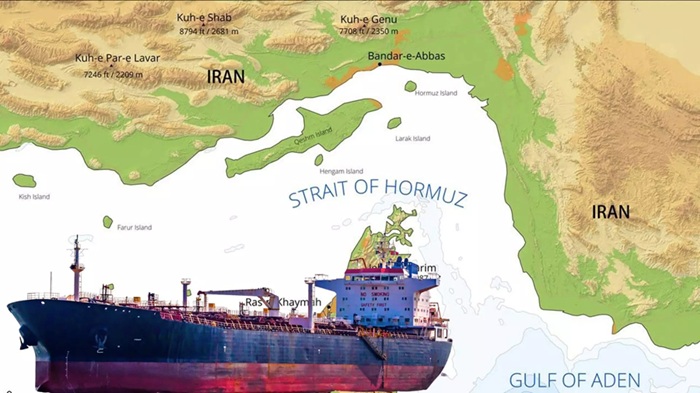
The immediate impact of the Iran- Isarel-US conflict is being felt in the logistics arteries that connect Bangladesh’s factories with global retail markets. The Strait of Hormuz, one of the world’s most strategic shipping corridors, has effectively become a choke point for international trade. Major carriers, including Mediterranean Shipping Company, have begun suspending bookings through the Gulf region. For Bangladesh’s garment exporters, whose competitiveness relies heavily on rapid turnaround times, the disruption means business loss.
The first consequence is the rerouting of cargo vessels. Ships that previously crossed the Persian Gulf are now diverting around the Cape of Good Hope, adding thousands of kilometers to already complex shipping journeys. The additional distance translates into weeks of delay, disrupting delivery schedules for European and North American buyers who demand fast-fashion turnaround cycles.
A second bottleneck has emerged in the air cargo sector. At Hazrat Shahjalal International Airport in Dhaka, shipments of high-value apparel products have begun piling up following the suspension of cargo flights by several Gulf airlines. Carriers from Qatar, Kuwait, Oman, and the United Arab Emirates have curtailed operations amid security concerns.
By early March, over 1,200 tons of export-ready garments were reportedly stranded at the airport. For an industry built on tight contractual delivery deadlines, even minor delays can trigger costly order cancellations or price renegotiations. The magnitude of the logistics disruption can be understood through the rapid escalation of transportation costs and timelines.
Table: Global logistics & energy impact report
|
Metric |
Pre-conflict (Feb 2025) |
Current (March 2026) |
Change |
|
Brent Crude Oil |
$72/barrel |
$119/barrel |
+65% |
|
Shipping Lead Time (EU) |
30 Days |
50 Days |
+20 Days |
|
Air Freight Cost (per kg) |
$2.50 |
$6.50 |
+160% |
|
War Insurance Premium |
0.05% of cargo |
0.75% of cargo |
15x Increase |
The increase in Brent Crude Oil prices reflects the energy shock unleashed by the conflict. As fuel costs rise, shipping companies pass those increases down the supply chain. Longer routes and rising marine insurance premiums have compounded the pressure.
For garment exporters operating on razor-thin margins, these cost increases are eroding profits almost overnight. The apparel trade, already passing through post-pandemic consumer slowdowns, now faces the prospect of a logistics environment where speed is no longer guaranteed.
Factories facing power shortages
Beyond logistics, the second layer of crisis lies within Bangladesh’s industrial energy system. The country’s garment manufacturing cluster, stretching across Gazipur, Narayanganj, and Chattogram is facing acute pressure as global energy markets tighten.
To conserve fuel, the government has introduced rationing that limit truck fuel allocations and reduce electricity consumption across public institutions. Economists warn such measures risk undermining the industrial ecosystem that sustains the garment sector.
According to Zahid Hussain, former lead economist of the World Bank office in Dhaka, the crisis is comparable to a structural shock. The industrial energy infrastructure supporting Bangladesh’s manufacturing base is under stress. The impact is particularly visible in spinning mills, the most energy-intensive segment of the textile supply chain.
The spinning mill slowdown
Across Bangladesh’s spinning sector, gas pressure has reportedly fallen below five PSI, far beneath the levels required for efficient industrial operation. The result has been an immediate slowdown in production. Industry associations report that yarn output has fallen 30 per cent in several facilities. Some mills have attempted to compensate by shifting to diesel-powered generators, but the rising cost of fuel has increased operating expenses.
Within just 16 days, the cost of producing yarn has risen by almost 12 per cent. The price increase is particularly alarming because it undermines one of Bangladesh’s key competitive advantages: low-cost textile inputs.
If this continues, locally produced yarn could become more expensive than imports from regional competitors such as India and China. Such a shift would weaken domestic supply chains and push garment manufacturers toward imported materials, further straining foreign exchange reserves.
Currency pressure and the remittance lifeline
The third dimension of the crisis lies in the financial system. As geopolitical uncertainty drives investors toward safe-haven currencies, the US dollar has strengthened sharply. For Bangladesh, which relies heavily on imported fuel and industrial inputs, a stronger dollar translates directly into higher import costs.
Economists often illustrate the sensitivity of Bangladesh’s energy bill with a simple calculation. Every $10 increase in oil prices adds approximately $900 million to the country’s annual import expenditure. With oil prices approaching $120 per barrel, Bangladesh faces the prospect of an additional $4 billion in energy costs over the course of a year. For an economy already managing limited foreign currency reserves, the financial burden is significant.
Yet the most critical variable may be the country’s remittance pipeline. Millions of Bangladeshi workers are employed in Middle Eastern economies, and their earnings constitute a major source of forex. Roughly three-quarters of Bangladesh’s migrant workforce is based in the Gulf region. A further escalation of conflict, particularly if it spreads to Saudi Arabia, which hosts a large share of these workers could disrupt remittance flows.
Such a disruption would create a dangerous feedback loop. Without remittance inflows, banks may struggle to supply the dollars needed by garment manufacturers to open Letters of Credit for raw cotton and synthetic fibers. The entire textile supply chain could slow as financial liquidity tightens.
The cost of green production
Bangladesh’s garment industry over the past decade
has emerged as a global leader in environmentally certified textile facilities, boasting one of the highest concentrations of LEED-certified factories in the world. Many manufacturers have also invested heavily in recycled polyester and circular production systems.
However, the current energy crisis threatens to reverse those gains.
Producing recycled fibers is a highly energy-intensive process that involves cleaning, shredding, and reprocessing discarded textiles or plastic waste. With global energy costs soaring, the economics of recycled materials are shifting rapidly.
As per estimates recycled polyester is approximately 35 per cent more expensive than virgin polyester derived directly from petroleum. For international fashion brands already confronting slowing consumer demand, the price differential is proving difficult to justify.
The result is a subtle retreat from sustainability commitments. Some brands are reportedly returning to cheaper synthetic materials, prioritizing short-term cost savings over long-term environmental goals. For Bangladesh, which has positioned itself as a sustainable manufacturing hub, the shift is both a commercial and reputational challenge.
Policy crossroads for the new parliament
The crisis has placed the newly elected parliament in a difficult position. Having campaigned on promises of modernization and economic reform, the government now faces the urgent task of stabilizing the country’s most important export sector.
Analysts at the Centre for Policy Dialogue and the Policy Research Institute of Bangladesh have outlined several emergency strategies that could help reduce the impact. First, establishing dedicated industrial energy corridors that prioritize gas and electricity supply for export-oriented garment factories. By shielding production from power shortages, the government could prevent large-scale order cancellations.
Second focusing on securing emergency import financing. Negotiating credit facilities with the Islamic Development Bank could help Bangladesh finance energy imports without placing additional pressure on dollar reserves.
A third strategy centers on expanding the domestic recycling ecosystem for jhut, the textile waste generated by garment production. Strengthening this circular supply chain could reduce dependence on imported synthetic materials and create a buffer against global oil price volatility.
The garment industry has long functioned as the economic backbone of Bangladesh, employing millions of workers and generating the forex needed to sustain development. Any prolonged disruption to the sector carries far-reaching implications.
For Bangladesh, the challenge is not merely to manage a temporary disruption but to rethink the resilience of the country’s industrial strategy. Diversifying energy sources, strengthening domestic textile inputs, and building financial buffers may prove essential in an era of increasing geopolitical volatility.
The rise of localized luxury, MEA, North America, and India lead growth

The global luxury industry is no longer defined by relentless expansion. The ‘2025 Global Luxury Brandwatch Report’ highlights a sector readjusting in response to geopolitical uncertainty, inflationary pressures, and a more selective consumer base. Despite projections indicating a modest fall in the personal luxury goods market to €358 billion, a 2 per cent decline at current exchange rates, the pace of brand activity suggests an industry that is increasing its fight for consumer attention rather than retreating. Brand activations rose by 21 per cent year-on-year, showcasing that luxury houses are investing in visibility and engagement even in a cautious market.
From broad strokes to surgical focus
The most striking shift in 2025 is what analysts describe as the operational focus on localized initiatives. Global campaigns, once the mainstay of brand storytelling, have ceded prominence to market-specific activations tailored to local tastes, behaviors, and cultural nuances. This change became most pronounced in the second half of the year, when activation intensity accelerated sharply. The brandwatch data illustrates this clearly.
Table: Activation growth performance (2025-26)
|
Activation type |
Annual growth (YoY) |
H2 2025 growth (vs H2 2024) |
|
Localized Activations |
+40% |
+65% |
|
Global Initiatives |
-1% |
+21% |
|
Total Monitored Activations |
+21% |
+46% |
The table underlines a dual trend. While overall activations grew 21 per cent across the year, the acceleration in H2 2025, up 46 per cent compared to the same period in 2024 underscores brands’ strategic urgency. Localized activations, in particular, demonstrated explosive growth, rising 65 per cent in the latter half of the year. In contrast, global initiatives saw negligible annual growth, revealing that large-scale global campaigns are no longer the primary lever of engagement. Brands are increasingly betting on precision: tailoring content, partnerships, and experiences to resonate within individual markets.
Emerging regional leaders
Geography has become a defining factor in luxury growth, with momentum shifting away from traditional strongholds toward emerging and revitalized hubs. While China remains the largest single market by activation volume, posting a moderate 16 per cent increase, it is no longer the sole engine of growth.
The Middle East & Africa (MEA) emerged as the standout performer. Brand activations in the region more than doubled, climbing 105 per cent, led by sustained expansion in Gulf countries and accelerated activity in South Africa. North America, a mature market, rebounded significantly, particularly in watches and jewelry, with activations up 102 per cent. Canada contributed meaningfully, highlighting renewed investment in hard luxury. Latin America continued its move ahead as a rising luxury destination, posting robust growth that narrows the gap with mature Asian markets. Meanwhile, Asia-Pacific beyond China saw Japan increase activations by 23 per cent and South Korea by 12 per cent, demonstrating that secondary Asian markets are increasingly critical to regional strategies.
Divergence across segments
The luxury scenario in 2025 was marked by uneven performance across sectors. Perfume and cosmetics emerged as the most dynamic category, driven by retail-based activations that emphasized in-store experiences and consumer education. By contrast, product-linked activations, campaigns tied directly to specific SKUs slowed, suggesting a recalibration of marketing spend toward holistic brand engagement rather than transactional pushes.
Fashion and leather goods, in contrast, experienced the largest decline in activation volume. Given the high operational and geopolitical complexity, brands in this category prioritized recalibration over expansion, focusing on inventory management, pricing discipline, and selective market targeting. Watches and jewelry adhered to market discipline, refining distribution channels and reassessing pricing structures in response to rising production costs and uncertain macro conditions.
Cultural capital becomes currency
A defining trend in 2025 is the expansion of luxury into cultural territories. Brands are increasingly positioning themselves as arbiters of lifestyle, taste, and longevity to strengthen emotional resonance with consumers. In beauty, firms shifted toward longevity-focused positioning, integrating scientific research and preventive health narratives to capture sustained demand, particularly from younger audiences in the US and China.
India has emerged as a strategic hub for global beauty groups, consolidating local capabilities and reinforcing the country’s importance in the global innovation and value chain. Jewelry brands, meanwhile, intensified experiential engagement through music partnerships and immersive events, elevating brand interaction beyond the product itself and embedding lifestyle associations into consumer perception.
Execution outweighs expansion
In 2026 the industry is expecting a gradual resumption of growth, particularly in the latter half of the year. However, the Brandwatch report emphasizes that the next cycle will be defined less by geographic reach and more by execution. In a climate of lower consumer confidence, luxury brands are expected to compete on the basis of precision, cultural leverage, and operational discipline. Expansion alone will no longer suffice; it is the brands that can balance local relevance with global prestige, and craft culturally resonant experiences, that will secure sustainable competitive advantage.