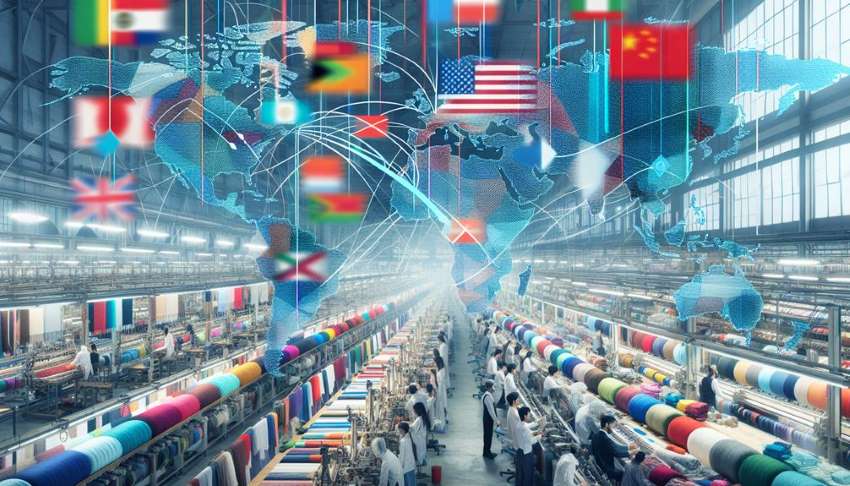
The immediate impact of the Iran- Isarel-US conflict is being felt in the logistics arteries that connect Bangladesh’s factories with global retail markets. The Strait of Hormuz, one of the world’s most strategic shipping corridors, has effectively become a choke point for international trade. Major carriers, including Mediterranean Shipping Company, have begun suspending bookings through the Gulf region. For Bangladesh’s garment exporters, whose competitiveness relies heavily on rapid turnaround times, the disruption means business loss.
The first consequence is the rerouting of cargo vessels. Ships that previously crossed the Persian Gulf are now diverting around the Cape of Good Hope, adding thousands of kilometers to already complex shipping journeys. The additional distance translates into weeks of delay, disrupting delivery schedules for European and North American buyers who demand fast-fashion turnaround cycles.
A second bottleneck has emerged in the air cargo sector. At Hazrat Shahjalal International Airport in Dhaka, shipments of high-value apparel products have begun piling up following the suspension of cargo flights by several Gulf airlines. Carriers from Qatar, Kuwait, Oman, and the United Arab Emirates have curtailed operations amid security concerns.
By early March, over 1,200 tons of export-ready garments were reportedly stranded at the airport. For an industry built on tight contractual delivery deadlines, even minor delays can trigger costly order cancellations or price renegotiations. The magnitude of the logistics disruption can be understood through the rapid escalation of transportation costs and timelines.
Table: Global logistics & energy impact report
|
Metric |
Pre-conflict (Feb 2025) |
Current (March 2026) |
Change |
|
Brent Crude Oil |
$72/barrel |
$119/barrel |
+65% |
|
Shipping Lead Time (EU) |
30 Days |
50 Days |
+20 Days |
|
Air Freight Cost (per kg) |
$2.50 |
$6.50 |
+160% |
|
War Insurance Premium |
0.05% of cargo |
0.75% of cargo |
15x Increase |
The increase in Brent Crude Oil prices reflects the energy shock unleashed by the conflict. As fuel costs rise, shipping companies pass those increases down the supply chain. Longer routes and rising marine insurance premiums have compounded the pressure.
For garment exporters operating on razor-thin margins, these cost increases are eroding profits almost overnight. The apparel trade, already passing through post-pandemic consumer slowdowns, now faces the prospect of a logistics environment where speed is no longer guaranteed.
Factories facing power shortages
Beyond logistics, the second layer of crisis lies within Bangladesh’s industrial energy system. The country’s garment manufacturing cluster, stretching across Gazipur, Narayanganj, and Chattogram is facing acute pressure as global energy markets tighten.
To conserve fuel, the government has introduced rationing that limit truck fuel allocations and reduce electricity consumption across public institutions. Economists warn such measures risk undermining the industrial ecosystem that sustains the garment sector.
According to Zahid Hussain, former lead economist of the World Bank office in Dhaka, the crisis is comparable to a structural shock. The industrial energy infrastructure supporting Bangladesh’s manufacturing base is under stress. The impact is particularly visible in spinning mills, the most energy-intensive segment of the textile supply chain.
The spinning mill slowdown
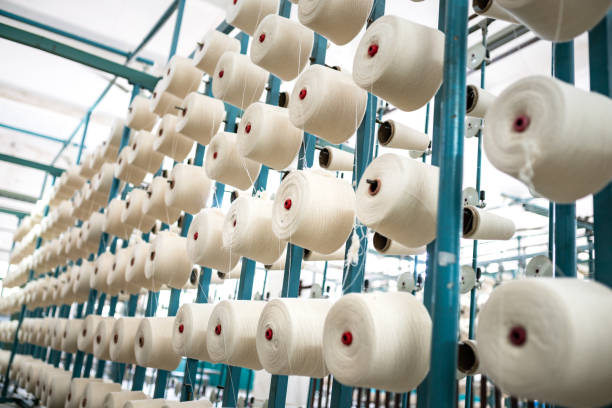
Across Bangladesh’s spinning sector, gas pressure has reportedly fallen below five PSI, far beneath the levels required for efficient industrial operation. The result has been an immediate slowdown in production. Industry associations report that yarn output has fallen 30 per cent in several facilities. Some mills have attempted to compensate by shifting to diesel-powered generators, but the rising cost of fuel has increased operating expenses.
Within just 16 days, the cost of producing yarn has risen by almost 12 per cent. The price increase is particularly alarming because it undermines one of Bangladesh’s key competitive advantages: low-cost textile inputs.
If this continues, locally produced yarn could become more expensive than imports from regional competitors such as India and China. Such a shift would weaken domestic supply chains and push garment manufacturers toward imported materials, further straining foreign exchange reserves.
Currency pressure and the remittance lifeline
The third dimension of the crisis lies in the financial system. As geopolitical uncertainty drives investors toward safe-haven currencies, the US dollar has strengthened sharply. For Bangladesh, which relies heavily on imported fuel and industrial inputs, a stronger dollar translates directly into higher import costs.
Economists often illustrate the sensitivity of Bangladesh’s energy bill with a simple calculation. Every $10 increase in oil prices adds approximately $900 million to the country’s annual import expenditure. With oil prices approaching $120 per barrel, Bangladesh faces the prospect of an additional $4 billion in energy costs over the course of a year. For an economy already managing limited foreign currency reserves, the financial burden is significant.
Yet the most critical variable may be the country’s remittance pipeline. Millions of Bangladeshi workers are employed in Middle Eastern economies, and their earnings constitute a major source of forex. Roughly three-quarters of Bangladesh’s migrant workforce is based in the Gulf region. A further escalation of conflict, particularly if it spreads to Saudi Arabia, which hosts a large share of these workers could disrupt remittance flows.
Such a disruption would create a dangerous feedback loop. Without remittance inflows, banks may struggle to supply the dollars needed by garment manufacturers to open Letters of Credit for raw cotton and synthetic fibers. The entire textile supply chain could slow as financial liquidity tightens.
The cost of green production
Bangladesh’s garment industry over the past decade
has emerged as a global leader in environmentally certified textile facilities, boasting one of the highest concentrations of LEED-certified factories in the world. Many manufacturers have also invested heavily in recycled polyester and circular production systems.
However, the current energy crisis threatens to reverse those gains.
Producing recycled fibers is a highly energy-intensive process that involves cleaning, shredding, and reprocessing discarded textiles or plastic waste. With global energy costs soaring, the economics of recycled materials are shifting rapidly.
As per estimates recycled polyester is approximately 35 per cent more expensive than virgin polyester derived directly from petroleum. For international fashion brands already confronting slowing consumer demand, the price differential is proving difficult to justify.
The result is a subtle retreat from sustainability commitments. Some brands are reportedly returning to cheaper synthetic materials, prioritizing short-term cost savings over long-term environmental goals. For Bangladesh, which has positioned itself as a sustainable manufacturing hub, the shift is both a commercial and reputational challenge.
Policy crossroads for the new parliament
The crisis has placed the newly elected parliament in a difficult position. Having campaigned on promises of modernization and economic reform, the government now faces the urgent task of stabilizing the country’s most important export sector.
Analysts at the Centre for Policy Dialogue and the Policy Research Institute of Bangladesh have outlined several emergency strategies that could help reduce the impact. First, establishing dedicated industrial energy corridors that prioritize gas and electricity supply for export-oriented garment factories. By shielding production from power shortages, the government could prevent large-scale order cancellations.
Second focusing on securing emergency import financing. Negotiating credit facilities with the Islamic Development Bank could help Bangladesh finance energy imports without placing additional pressure on dollar reserves.
A third strategy centers on expanding the domestic recycling ecosystem for jhut, the textile waste generated by garment production. Strengthening this circular supply chain could reduce dependence on imported synthetic materials and create a buffer against global oil price volatility.
The garment industry has long functioned as the economic backbone of Bangladesh, employing millions of workers and generating the forex needed to sustain development. Any prolonged disruption to the sector carries far-reaching implications.
For Bangladesh, the challenge is not merely to manage a temporary disruption but to rethink the resilience of the country’s industrial strategy. Diversifying energy sources, strengthening domestic textile inputs, and building financial buffers may prove essential in an era of increasing geopolitical volatility.