Bangladesh's RMG Sector: Facing challenges, seeking resilience
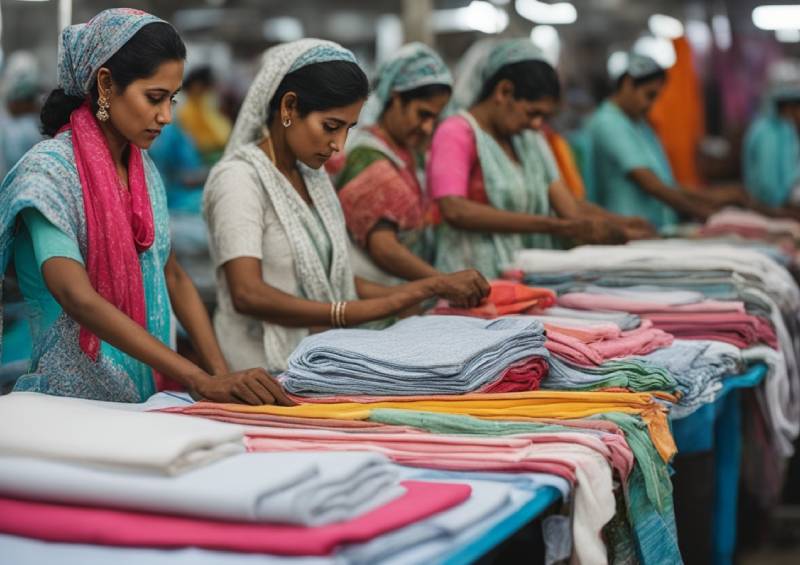
A new White Paper on the state of the Bangladesh economy has shed light on the challenges and opportunities facing the nation's crucial readymade garment (RMG) sector. While the RMG industry has been a cornerstone of Bangladesh's economic growth, the report emphasizes the need for diversification and enhanced resilience to maintain its competitive edge in the global market.
The RMG sector currently accounts for over 80 per cent of Bangladesh's total exports. It employs approximately 4 million people, mostly women. What’s more, Bangladesh is the second-largest exporter of readymade garments in the world, after China.
The White Paper, presented to Chief Adviser Muhammad Yunus, identifies several key challenges hindering the RMG sector's growth and competitiveness:
|
Challenge |
Description |
|
Inadequate infrastructure |
Poor transportation, inadequate port facilities, and power shortages lead to increased logistics costs and delays. |
|
High logistics costs |
Limited shipping options and expensive transportation reduce competitiveness in the global market. |
|
Limited access to finance |
Entrepreneurs face difficulties securing loans, high interest rates, and limited access to financial instruments. |
|
Bureaucratic red tape |
Lengthy administrative processes, excessive paperwork, and delays in obtaining necessary permits hinder business operations. |
|
Exchange rate instability |
Fluctuations in exchange rates impact export earnings and make it difficult to plan and price products competitively. |
|
Stringent regulatory compliance |
Compliance with international standards and regulations can be challenging and costly for businesses. |
|
Insufficient support for SMEs in marketing and branding |
Small and medium enterprises struggle with limited resources and insufficient government support in marketing and branding their products. |
To address these challenges and enhance the RMG sector's resilience, the White Paper proposes a range of policy interventions:
Diversification: Promoting diversification into non-cotton and man-made fibre (MMF) textiles to reduce reliance on cotton-based products.
Financial incentives: Providing financial incentives for compliance with international standards to encourage ethical and sustainable practices.
Technology upgrades: Investing in technology upgrades to improve productivity and efficiency.
Green finance fund: Establishing a green finance fund to support sustainable practices in the RMG sector.
Labor standards: Enforcing labor standards and collaborating with global organizations to ensure ethical practices and improve buyer confidence.
One of the key challenges highlighted in the White Paper is the difficulty faced by RMG factories in adopting sustainable practices. Many factories struggle to meet the environmental and social compliance standards demanded by international buyers.
For instance, Karim, a small factory owner in Dhaka shared his experience. "We want to improve our environmental footprint," he explained, "but the cost of upgrading our dyeing and washing facilities to meet international standards is prohibitive. We need access to affordable financing and technical support to make these changes."
The White Paper's recommendation for a green finance fund could provide crucial support to businesses like Karim's, enabling them to invest in sustainable technologies and practices.
The findings underscore the need for a comprehensive and coordinated approach to strengthen the RMG sector's resilience. By addressing the challenges and implementing the recommendations outlined in the report, Bangladesh can ensure the continued growth and competitiveness of this vital industry. The government, industry stakeholders, and international partners must work together to create a sustainable and ethical RMG sector that benefits both the economy and the people of Bangladesh.
Bharat Tex 2025: India’s textile industry leads global innovation and sustainability

India's textile industry is a cornerstone of the economy, contributing 2.3 per cent to GDP and employing over 100 million people directly and indirectly. From handwoven heritage fabrics like khadi and silk to high-performance technical textiles, the sector marries tradition with modernity. Its alignment with the ‘5F Vision’ farm, fibre, fabric, fashion, and foreign markets underpins a robust supply chain that spans production to retail while preserving India’s cultural legacy.
Shaping global competitiveness beyond cost
While cost efficiency has long been India’s competitive edge, the industry is evolving to meet the demands of fast fashion and technical textiles. Diversifying from its cotton dependency, India is expanding synthetic fibre production, boosted by initiatives like the National Technical Textiles Mission (NTTM). Indian manufacturers are focusing on innovative designs and global trend adaptation, driving competitiveness in sectors like healthcare, automotive, and agriculture.
The government has played a pivotal role in advancing India’s textile sector through key initiatives. The PM MITRA Textile Parks aim to create an integrated production ecosystem, while the PLI Scheme boosts investment in man-made fibres (MMF) and technical textiles. The National Technical Textiles Mission (NTTM) focuses on R&D to strengthen global leadership in technical textiles, and the Samarth Scheme enhances workforce skills to improve productivity and quality across the industry.
Sustainability as a strategic imperative
India’s textile industry is leading the global shift toward sustainability, embracing renewable energy, ethical labor standards, and water-efficient processes. These efforts are part of a national decarbonization agenda, positioning India as a global leader in sustainable textile production. Initiatives in solar energy adoption and waste reduction are standardizing eco-friendly practices, meeting both environmental goals and market demand.
The sector’s reliance on a vast workforce presents an opportunity to blend traditional skills with modern technologies like automation and CAD. Skill development initiatives targeting rural areas and underrepresented groups, including women, are fostering an inclusive workforce, essential for global competitiveness.
Bharat Tex 2025: Catalyzing India’s textile future
Bharat Tex 2025, scheduled from February 12-17, 2025, in New Delhi, will showcase India’s textile leadership on the global stage. Covering 2.2 million square feet, the event will feature 5,000 exhibitors and attract over 18,000 buyers from 110 countries. Highlights include the Sustainability Pavilion, emphasizing eco-friendly practices; the Start-Up Innovation Pavilion, showcasing cutting-edge textile technologies; and the Craft Museum – Indi Bhaat, celebrating India’s rich tradition of arts and weaves.
Supported by major players like Reliance Industries, Aditya Birla, and Welspun, the event also features knowledge sessions and masterclasses focusing on ESG strategies, circularity, and cutting-edge innovations in textiles.
Driving global innovation and collaboration
Bharat Tex 2025 will foster dialogue between global leaders, industry experts, and government entities, including partnerships with UN agencies and think tanks like NITI Aayog. With a strong focus on sustainability, technological modernization, and strategic collaborations, the event aims to set new benchmarks for India’s textile industry.
With projections of the sector reaching $350 billion by 2030 and generating 35 million jobs, India’s textile industry is on a transformative path. By integrating innovation, sustainability, and tradition, India is poised to lead the global textile market, shaping an era of inclusive and sustainable growth.
Neelam Shami Rao appointed as the new Textile Secretary
Replacing Rachna Shah, Neelam Shami Rao has been appointed as the new Textile Secretary.
A 1992-batch Indian Administrative Service (IAS) officer from the Madhya Pradesh cadre, Rao previously served as the secretary of the National Commission for Minorities under the Ministry of Minority Affairs. She has extensive experience in multiple roles including Central Provident Fund Commissioner, Director General of Training in the Ministry of Skill Development and Entrepreneurship, and District Collector in Madhya Pradesh's Guna and Koria districts. An alumna of Motilal Nehru National Institute of Technology, Allahabad, she holds a B.Tech. degree in Electronics.
Additionally, from her previous role as Special Secretary in the Ministry of Information and Broadcasting, Neerja Sekhar has been transferred as the new Director General of the National Productivity Council under the Department for Promotion of Industry and Internal Trade.
Tichao Techslide (Cambodia) Co to develop textile and garment factories in the country
Yuming Pan, President, Tichao Techslide (Cambodia) Co, revealed the company plans to establish textile and garment factories in the Kampot province.
These factories will be set up in two phases. The first of these phases will involve setting up of a garment factory while the second phase will follow with a fabric manufacturing factory with an estimated workforce of over 25,000 people, as per reports by the Cambodian media.
These projects were announced as foreign direct investment (FDI) inflows into Cambodia increased to $8.1 billion between September 2023 and September 2024, according to a report by the ministry of economy and finance (MEF). Most of this FDI was received from China, South Korea, Singapore, Japan, Vietnam, Malaysia, Thailand, Canada and the United Kingdom.
In the first nine months this year, the Council for the Development of Cambodia (CDC) announced 315 projects with a total investment of $5.3 billion. These projects are expected to generate over 252 000 jobs and further enhance Cambodia’s appeal as a competitive manufacturing hub in Southeast Asia.
Better Cotton renews ICPS with ICB for one more year
Better Cotton has renewed its standard recognition agreement, Israel Cotton Production Standard System (ICPS) with the Israel Cotton Production and Marketing Board (ICB) for another year. This farmer-owned cooperative represents cotton growers across Israel, supporting the nation’s cotton industry.
Since 2020, ICPSS has been recognised as equivalent to the Better Cotton Standard System (BCSS). This equivalency enables Israeli farmers to market their cotton internationally under the ‘Better Cotton’ label.
In the 2022-23 cotton season, 80 farmers certified under the ICPSS produced over 17,300 metric tons of Better Cotton, comprising 99 per cent of Israel’s total cotton production. Despite its relatively small scale, Israel’s cotton industry has gained global recognition for its pioneering research and development. A few of its key advancements include innovative seed and plant varieties, cutting-edge technologies, and improvements in crop quality and yield.
Looking ahead, the ICPSS will align with Better Cotton’s updated Principles & Criteria (P&C) version 3.0, with full implementation targeted for the 2025/26 season. Better Cotton conducts regular reassessments of partner standards to ensure alignment with its mission of supporting farmers and advancing sustainable practices globally.
SCZone plans $8.8 million RMG facility in partnership with Denim Rise
The General Authority for the Suez Canal Economic Zone (SCZone) plans to develop a $8.8 million RMG facility in partnership with Turkiye’s Denim Rise.
To create 1,000 direct jobs, the facility will span 26,000 sq m and export 70 per cent of its production. It will open in H2, FY25, coinciding with the launch of similar projects in the industrial zone.
Highlighting the strategic advantages of the Qantara West Industrial Zone, Walid Gamal El-Din, Chairman, SCZone, says, the zone’s proximity to Canal and Delta governorates makes it ideal for labor-intensive projects.
Reflecting robust economic times, the Denim Rise project marks the fourth Turkish investment in the zone which is set to also host facilities for garment accessories, textile printing and dyeing, and the manufacturing of bags and travel goods.
This project is a part of the Phase I of the nine-project deal signed by the SCZone with a combined investment of $317.8 million. Together, these projects are expected to generate over 15,000 jobs across the country.
Vietnam’s T&A exports to rise to $44 billion in 2024: Vinatex
Consolidating its position as the world’s second-largest exporter, Vietnam’s textile and apparel (T&A) exports are projected to rise to $44 billion in 2024, says Cao Huu Hieu, General Director, Vietnam National Textile and Garment Group (Vinatex).
To achieve these goals, Vinatex aims to enhance its management processes through digital transformation, integrate automation technology, and adopt artificial intelligence to reduce reliance on labor. These initiatives are a part of the group’s broader commitment to modernise operations and promote sustainability.
Noting encouraging signs form key markets such as the US and the EU, Hoang Manh Cam, Deputy Chief, Vinatex, says, economic recovery from these two markets and rising consumer demand are boosting opportunities for Vietnam’s textile exporters. A shift in orders from Bangladesh due to political instability further strengthens Vietnam’s prospects.
Despite a slow start in the first half of 2024, Vinatex’s consolidated revenues increased by 2.8 per cent Y-o-Y to 18.1 trillion VND ($724 million) in H2, FY24. The group’s consolidated profit increased by 37.5 per cent to 740 billion VND during the period.
Vinatex’s success stems from its focus on niche markets and high-tech products like fire-resistant fabrics developed with the UK’s Coats Group, along with innovations in filament core yarns and blended fibers. The group has also adopted an enterprise resource planning (ERP) system to streamline operations.
In its push for sustainability, Vinatex is expanding its wastewater treatment facilities at Pho Noi Textile and Garment Industrial Park, Hung Yen province, aiming to create a model green industrial park. With these initiatives, Vietnam’s textile and garment sector is poised for continued growth, supported by a strategic focus on innovation and environmental stewardship.
Trident Group presented with TBD Textile Connect Award for exceptional HR practices
A multinational company worth over $2 million, Trident Group was honored by the renowned with the TBD Textile Connect – Textile & Apparel Industry HR Summit Excellence Award for its exceptional HR practices This award was presented to the Group by the Ministry of Textiles in several important categories including Best Employer Manufacturing, Best HR Practice, Excellence in Campus Hiring and Recruitment and Workforce Safety.
The awards were presented by Gririraj Singh Union Textiles Minister who hailed the group’s commitment to promote HR innovation and cultivate a diverse and inclusive workforce. The honor demonstrates the company’s steadfast dedication to create an environment where people from all backgrounds can succeed, says Pooja B Luthra CHRO, Trident Group.
To diversify its personnel, the Trident Group has launched the ‘Takshashila’ program. This innovative program empowers children from a variety of educational backgrounds, including ITI, diplomas, and 10+2. The program currently earns Rs 12 lakh annually and offers people worthwhile job options in the textile sector, enabling them to earn money and knowledge.
The company’s ongoing expansion, involving an investment of Rs 3,000 crore in Madhya, also impacts the state’s local economy in Madhya Pradesh. The expansion also generates 3,000 new employment opportunities, increasing it’s the state’s total workforce to over 15,000 people.
India-IOCL to set up Rs 4,382 crore textile park in Odisha
Indian Oil Corporation (IOCL) plans to set up a textile park in the Bhadrak district, Odisha with an investment of Rs 4,382 crore.
To be executed in 50:50 joint venture with MCPI, the textile park will be established on 56 acre at Dhamnagar. The park will also house a 900 tons per day textile plant to be built with an investment of Rs 1,971 crore, as per Dhananjay Sahoo, Head-Business Development (Petrochemicals), IOCL.
The establishment of this yarn manufacturing unit aligns with IOCL's strategy to diversify into value-added products and supports the development of a robust textile ecosystem in Odisha.
This project is poised to enhance Odisha’s industrial landscape, contributing to economic growth and creating numerous employment opportunities in the region.
Additionally, the project is anticipated to bolster the state's position in the textile industry, attracting further investments and fostering industrial growth.
Peter Ackroyd succeeds Sir Nicolas Coleridge as new Chairman, The Campaign for Wool
Peter Ackroyd has succeeded Sir Nicolas Coleridge as the new Chairman of The Campaign for Wool with immediate effect.
A former COO of the non-profit orgnaisation, Ackroyd has been engaged with it since 2009 following a successful career in the textile industry spanning around 50 years.
During his stint in the textile industry, Ackroyd served as the President of the International Wool Textile Organisation, and Global Strategic Advisor for Australian Wool Innovation/Woolmark Company.
In the The Campaign for Wool, Ackroyd will be responsible for navigating the complex issues facing the international wool sector. In close collaboration with ITWO, he will work towards resolving the challenge facing the wool industry with respect to the Environmental Footprint legislation of the European Union.
According to Ackroyd, the new framework fails to address critical environmental factors, including microplastic pollution, the renewability and biodegradability of natural fibers and the full environmental footprint of fossil fuel-based fibers.
More...
India’s mall vacancy rates decline to 8.3% in H1, FY25: Anarock Group
From 15.5 per cent in 2021, India’s mall vacancy rates declined to 8.3 per cent in H1, FY25, according to a report by Anarock. This decline highlights the growing demand for retail spaces, which has consistently outpaced supply for the third consecutive year. In H1, 2024, over 3.1 million square feet of retail space was leased across the country.
Anuj Kejriwal, CEO and MD – Retail, Industrial & Logistics, Anarock Group, highlights, retailers and brands continue to prefer smaller spaces, with nearly 70 per cent of leases being for spaces measuring up to 2,500 sq ft, he says. However, as new supply enters the market in the coming years, larger spaces are expected to account for a greater share of the total leased area, he notes.
The next few years are set to see substantial supply additions, with the National Capital Region (NCR), Mumbai Metropolitan Region (MMR), and Hyderabad leading the charge. These three regions are projected to account for over 85 per cent of the total incoming supply over the next four to five years.
While the leasing momentum remains robust, rental values across prominent high streets are climbing steadily. The upward trend is expected to persist until fresh, quality retail supply enters the market.
The leasing activity in H1 FY25 mirrored the robust momentum of the past two years, with over 3 million sq ft of retail space leased across major cities. As demand continues to thrive, the retail sector remains poised for steady growth, driven by both increasing retailer interest and new supply pipelines in key markets.
Global textile machinery and material usage trends: ITMF 2023 Report
The International Textile Manufacturers Federation (ITMF) has released its latest International Textile Industry Statistics (ITIS) for 2023, featuring updates on global spinning mill capacity and raw material consumption. The data reflects a comprehensive review with a new calculation method applied to historical series.
Globally, installed short-staple spindles reached 232 million units, with open-end rotors growing to 9.7 million. Air-jet spindle installations saw a sharp rise, hitting 637,000 units. Asia remains the dominant region for capacity expansion, while Turkiye led growth outside the continent. Installed shuttle-less looms globally increased to 1.7 million units.
Raw material consumption in the short-staple sector slightly declined to 43 million tons. Cotton and cellulosic fiber usage dropped by 4.4 per cent and 2.9 per cent, respectively. Conversely, synthetic fiber consumption rose marginally by 0.5 per cent, indicating a shift in material preferences.
The ITMF report underscores Asia's continued prominence in textile capacity building and highlights evolving trends in raw material utilization. These shifts reflect broader changes in global textile manufacturing and resource dynamics.
Athleisure's New Guard: Vuori challenges Lululemon's reign

The athleisure market, a fashion phenomenon born from the fusion of athletic wear and leisurewear, is experiencing a seismic shift. While Lululemon has long reigned supreme, a new breed of challenger brands, led by the California-based Vuori, is vying for dominance. This feature delves into the competitive landscape of this dynamic industry, examining the distinct positioning of key players, their retail strategies, financial performance, and the overall market outlook.
The athleisure boom, a macro perspective
The global athleisure market is experiencing explosive growth. Driven by increasing health consciousness, a desire for comfortable clothing and the blurring lines between work and leisure, the market is projected to reach $547.01 billion by 2024, growing at a CAGR of 8.6 per cent from 2023 to 2028, as per Allied Market Research. This presents a lucrative opportunity for both established giants and emerging contenders.
Table: Global athleisure market
|
Region |
2023 market size ($ bn) |
Projected 2028 market size ($ bn) |
CAGR (%) |
|
North America |
181.28 |
275.47 |
8.7 |
|
Europe |
125.35 |
185.21 |
8.2 |
|
Asia-Pacific |
108.52 |
162.48 |
8.5 |
|
LAMEA |
31.86 |
47.85 |
8.6 |
|
Global |
447.01 |
671.01 |
8.6 |
Lululemon, the legacy leader
Luluemon is positioned as a premium athleisure brand with a focus on performance and style, primarily targeting women. It has an extensive global store network (700+ locations), strong online presence, and community-building initiatives like yoga classes. As of 2023 its revenue was $9.6 billion, and as of January it has a market cap of $65.44 billion. Its key strengths are brand recognition, loyal customer base, and robust supply chain. However, it faces several challenges like maintaining growth momentum, competition from emerging brands, and potential impact of economic slowdown.
Vuori, the rising challenger
Vurori has emerged as ‘Everyday performance apparel’ with an emphasis on comfort, versatility, and a relaxed aesthetic, initially targeting men. Its retail is focused on direct-to-consumer sales, expanding retail footprint with 79 stores in six countries, strategic partnerships with wholesalers like REI and Nordstrom.
As of 2023 Vuori revenue was $32.8 million (estimated) and its valuation as of November 2024 was $5.5 billion. The brand’s key strengths are strong product differentiation focus on profits, and effective social media marketing. However, scaling-up production and maintaining quality, building brand awareness, and competing with Lululemon's scale are some of its biggest challenges.
The athleisure boom has attracted a plethora of competitors. There is well established Nike which is expanding its dominance in sportswear into the athleisure segment. And Adidas, following a similar trajectory as Nike, leveraging performance-oriented roots. Under Armour on the other hand is transitioning into lifestyle and athleisure to diversify its offerings. And Alo Yoga is specializing in yoga-inspired apparel with a growing retail presence of over 100 stores.
The athleisure industry is expected to for continued growing with evolving consumer preferences and a focus on wellness. While Lululemon remains a dominant force, challenger brands like Vuori are disrupting the market with innovative products, strategic retail expansion, and a strong digital presence. The battle for market share will intensify, with brands needing to constantly adapt and innovate to capture the attention of increasingly discerning consumers.
Turkiye urged to relocate textile production to Syria for cost benefits
Ahmet Oksuz, Chairman of the Istanbul Textile and Raw Materials Exporters Association (ITHIB), has proposed relocating Turkish textile production facilities to Syria, citing lower costs and strategic advantages. In an interview with Anadolu Agency, Oksuz emphasized Syria's potential as a promising investment destination, especially in the textile sector.
Ahmet Oksuz noted that many Syrians who settled in Turkiye have contributed to various industries and suggested that establishing production facilities in Syria as they return home could be advantageous for both countries. He pointed out that Turkiye is facing increasing labor costs and shortages in labor-intensive sectors, making Syria a more cost-effective option for production.
Currently, many Turkish textile firms are investing in Egypt, but Oksuz suggested that shifting focus to Syria would provide greater strategic benefits, particularly in regions close to Turkiye. He added that such investments could enhance Turkiye's production capacity while creating employment opportunities for Syrians.
Sinan Oncel, president of the United Brands Association (BMD), acknowledged the gradual pace of normalization in Syria but expressed optimism about future opportunities for Turkish retail expansion, including franchising.
As Syria’s reconstruction progresses following the collapse of its Baath regime, Turkiye’s textile and retail sectors are poised to play a pivotal role in boosting employment and rebuilding efforts in the region.