Africa wants benefits retained
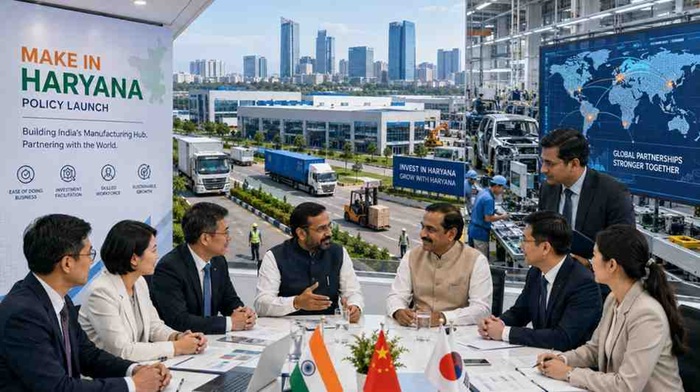
Fashion goods from Africa currently benefit from tariff free access to the UK market as a part of the EU trade policy, which makes them significantly cheaper than products imported from Asia. African goods have a 12 per cent advantage over Chinese items. As China transitions towards higher value-adds in manufacturing and services, the African textile industry has a chance to take a share.
However, the zero tariffs and zero quotas regimes are now at risk with Brexit. African countries want the UK to maintain the tariff free market access for their fashion products. As UK and European retailers and brands seek to innovate and strengthen their market position by diversifying existing supply chains, Africa provides a new source for ready-to-wear garments, shoes and fashion accessories.
The rapid growth in many African economies offers them opportunities for greater sustainability in their value chains. For retailers this can render value chains shorter, more manageable and more transparent, and will create new business opportunities.
Africa has a creative industries sector that adds value to natural resources rather than exporting them raw. This creates job, skills and livelihoods in African countries so that the benefits of production are shared among all those involved.
Textile machinery industry to touch Rs 35,000 cr in five years
"On the back of government initiatives like 'Make in India', the size of domestic textile machinery industry is poised to touch around Rs 32,000 to Rs 35,000 crores in the next five years from the present Rs 22,000 crores. India International Textile Machinery Exhibitions Society (IITMES) Chairman Sanjiv Lathia says the textile machinery manufacturing section is one of the important segments of the industry in India."
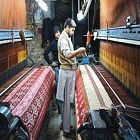
On the back of government initiatives like 'Make in India', the size of domestic textile machinery industry is poised to touch around Rs 32,000 to Rs 35,000 crores in the next five years from the present Rs 22,000 crores. India International Textile Machinery Exhibitions Society (IITMES) Chairman Sanjiv Lathia says the textile machinery manufacturing section is one of the important segments of the industry in India. With government's initiatives like 'Make in India' and incentives for manufacturing sector, the IITMES expects the size of India's textile machinery industry to touch Rs 32,000-35,000 crore in the next five years from the present Rs 22,000 crore.
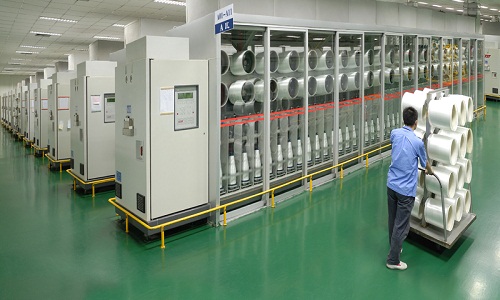
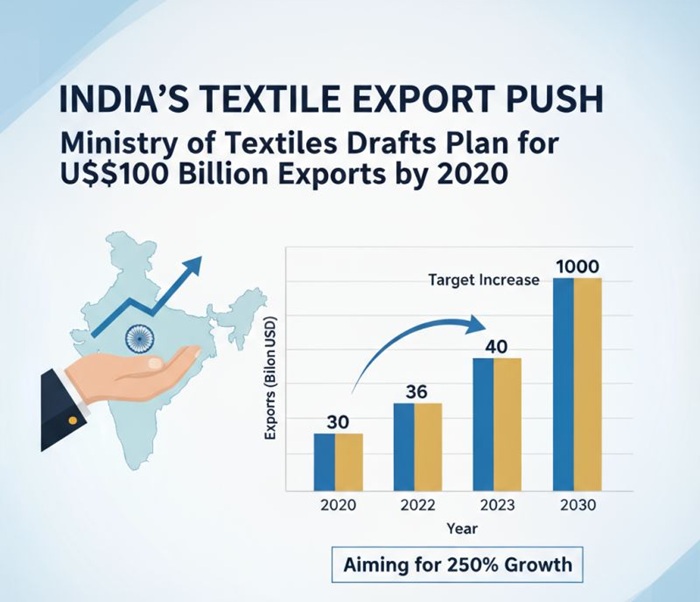
Accounting for approximately 11 per cent of the total outbound shipments, the textile sector is one of the largest contributors to India's exports. India's overall textile exports during FY16 stood at $40 billion and is expected to reach $223 billion by 2021, Lathia added.
After agriculture, the textile industry is the second largest employer in India. Hence it is utmost necessary that the machine manufacturing industry strengthens its base for quality output and efficiency through innovations, he observed. Meanwhile, the Society is organising the 10th edition of its exhibition 'India ITME 2016' in Mumbai from December 3 to 8. The event is expected to attract over 1,050 exhibitors from 38 nations, 13 delegations and nearly 1.50 lakh visitors. Through the event, India ITME Society will provide a global platform for exhibitors to showcase their products and disseminate information on innovative technologies.
Taiwan looks to increase business ties with India
Bilateral trade between India and Taiwan has grown from $1.19 billion in 2001 to $6 billion in 2014. Taiwanese textile companies are offering a range of innovative, trendy and high performance textile products with an aim to establish long-term business associations and tie-ups in the field of textiles. Some of their offerings are value-added yarns, fabrics, trimmings and clothing accessories.
For over 10 years, the Taiwan Textile Federation (TTF) has been organising buyer-seller meets in India and has been successful in connecting and supplying innovative and trendy textiles to leading fashion garment exporters as well domestic brands in India. It aims to export around $500 million worth of functional textiles in the next five years to India.
Some leading exporters and brands in India that source from Taiwan are: Shahi Exports, Gokaldas Images, Madura Garments, Wildcraft, Moxi Sports, and Proline India. Taiwan textiles are world renowned for their innovative and high quality textile products and are sourced by leading global brands for sports and active wear, outdoor wear, functional wear, formal wear, suitings and shirtings by leading global brands.
Textiles produced by Taiwanese companies add value to the brand image with unique properties like coolmax, heat transfer, water resistant, breathable, fire-proof etc.
Sutlej Textiles on Rs 270-crore expansion on schedule
Sutlej Textiles is working on a brownfield project to expand capacity of value-added products at Bhawani Mandi, Rajasthan. Work on the expansion project for adding 35,280 spindles at a project cost of Rs 270 crores is progressing satisfactorily.
Presently, a trial run is going on 33,840 spindles and the project is likely to commence commercial production in Q4 FY 2017 as per schedule. The company will also install 17 circular knitting machines by June 2017. The project, being funded by a mix of internal accruals and term loans sanctioned under TUFS, aims at producing value-added cotton and cotton-blended dyed and mélange yarn.
Sutlej has also been investing in expanding capacity for manufacturing home textiles. The expansion project to increase the installed annual capacity to 9.6 million is progressing as per schedule and is likely to be complete by Q4 FY 2017. Out of 54 looms to be installed, the company has installed 36 and has placed an order for 18 looms. The present installed annual capacity has reached 8.4 million metres.
The total project costs Rs 88.5 crores and is being funded by a mix of internal accruals and term loans sanctioned under TUFS. The increased presence in the home textile segment will result in further strengthening of the company’s end-to-end operations – Yarn to Home Textile.
Sutlej is one of India’s largest spun dyed yarn manufacturers. Over the years, Sutlej has also successfully carved out a niche for itself and is holding leadership position in the dyed yarn and cotton mélange yarn segment. The total spinning capacity of the company currently stands at 377,688 spindles.
Retailers to be briefed on GST
The Associated Chambers of Commerce and Industry of India (ASSOCHAM) along with Tally Solutions, a software product company, will brief the retail community on GST and clarify doubts. ASSOCHAM and Tally will conduct a series of conferences for the retail community across the nation over the next few months. The conferences are designed to help businesses shift from the existing taxation method and adapt to the new technology with ease. They can understand the significance of this new taxation policy and make an easy transition towards it. Tax experts from government bodies will also be participating in these conferences.
These camps will be held across 15 cities in India including Mumbai, Chennai, Delhi, Hyderabad, Pune, Indore, Cochin, Goa, Coimbatore, Jaipur, Lucknow, Dehradun, Bhubaneswar, Jammu and Guwahati. They will be held from November 29 and will continue till March 23, 2017.
The Goods and Service Tax has created a lot of clamor in the business community given the technological changes required to comply with the law. The lack of clear knowledge at the grassroots level about the draft bill is another reason for resistance by smaller businesses. These GST sessions will allow these businesses to continue their functions comfortably post the roll out as well.
Sangam bags export orders worth Rs 35 cr for denim and PV fabrics
Leading integrated textile conglomerate, Sangam (India) has bagged fresh export orders amounting to Rs 35 crores for polyester-viscose fabrics and denim. These have come from Egypt, Saudi Arabia, Latin American and Afghanistan, are to be executed in the next four months. Denim exports contribute have grown from five per cent to 30 per cent in the last 18 months at Sangam.
Commenting on the development, R P Soni, Chairman, says the company has received an encouraging response to its denim and seamless products in the international market. And what has excited them is that this response is despite tough competition from other leading international players as it could offer better value proposition. The company is hopeful of a much higher revenue contribution and better operating margin from exports going forward.
As on date, Sangam’s pending order book position stands at Rs 238.22 crores. Of this Rs 125.60 crores pertain to exports. The company is targeting exports revenue worth R. 450 crores in the current financial year.
Started in 1984, the Sangam Group has been promoted by first-generation entrepreneurs R P Soni and S N Modani. Sangam is a leading business conglomerate known for its strong business values and principles. The group has an extensive domestic presence and also has been exporting to more than 50 countries for over 15 years and enjoys a three star trading house status.
The company happens to be one of the largest manufacturers of polyester dyed yarn in the country. At present, it has 211,296 spindles of PV dyed yarn and cotton yarn installed in Bhilwara and 437 weaving machines and a 32 million meters of denim fabric capacity.
Huntsman ties up with Jihua
Huntsman Textile Effects and China’s Jihua Group have entered a strategic partnership. The two companies will co-operate on a wide range of areas to jointly capitalize on the growing need for dye and chemical solutions for China’s textile sector. The partnership will help the two companies speed up their supply chains to react more quickly to customers’ demand and increase the cost efficiency for customers.
The strategic alliance will help further strengthen the two companies’ capabilities of serving their customers in China and speed up their expansion in the country while raising standards for the whole industry.
Huntsman Textile Effects is a major innovator with more than 700 patents. It is the leading global provider of high quality dyes and chemicals to the textile and related industries, with six primary manufacturing facilities around the world. It has granted a sole license to Jihua for manufacturing, sales and marketing of Huntsman’s patented reactive Super Black dyes in China. The alliance will help to pave the way for Huntsman to enter into further discussions with the Jihua Group to broaden co-operation to include other reactive dyes and intermediates in the future.
Jihua Group is a market leader in China for the manufacture of dyes and intermediates with state-of-the-art facilities. Its products are marketed to almost 86 countries globally.
Goose feathers safe for use, says trade
The down and feather used in bedding, apparel and outdoor gear comes from ducks and geese raised for human consumption. This is what the International Down and Feather Bureau says. It adds that from 2009 to 2013 approximately 2.7 billion ducks and 653 million geese were raised for consumption globally, resulting in an estimated 410 million pounds of excess down and feathers each year. These materials would otherwise have been dumped at landfills but have instead been treated, cleaned and then traded for use in products like pillows, comforters, duvets, mattress toppers, winter jackets and outdoor sports gear.
IDFB says the down and feather industry is highly regulated and that any unlawful methods of down and feather procurement are neither supported nor condoned. It says unlawful methods are less than one per cent of the industry.
Down and feather products are supposed to be highly sustainable, making them superior to synthetic materials, since they have a lower carbon footprint.
IDFB has visited more than 2,000 geese and duck farms across the world and conducted approximately 400 traceability audits since 2008. IDFB, based in Austria, was founded in 1953. It is an international association of processors and producers of feather and down material and finished products, and traders and testing institutes.
Even without the US, TPP is worth it
The US is very likely to pull out of the Trans-Pacific Partnership trade deal.
But the deal is worth it. The other eleven signatories should try to make a go of it.
A TPP without the US is still a lot better for Japan and the other partners than no TPP at all. A TPP would establish rules and standards that would benefit its members, including protections for labor, the environment, intellectual property and digital commerce. The reforms required under the deal would make their economies more competitive and efficient. Their export industries will still gain from expanded trade; their consumers will still gain from cheaper goods.
Even without the US, the TPP would put allies such as Japan, Singapore and Australia, rather than China, at the forefront of trade liberalization, giving other nations an alternative to which they can aspire. By deepening the integration of Asia’s economies, the pact would promote stability in a critical and volatile region.
Eventually, as the benefits of a TPP become evident, the US might have second thoughts and come back into the fold. The best way for the US to maintain its decades of influence in the Asia-Pacific region is to integrate the world’s biggest economy with the world’s fastest-growing markets.
Digital Textile Micro Factory to debut at Heimtextil textile fair
For the first time ever, Messe Frankfurt will present the Digital Textile Micro Factory in the digital print technology segment at the upcoming Heimtextil, a leading trade fair for home and contract textiles to be held from January 10-13 next year. As a part of this, the presentation that has been set up in collaboration with the German Institute for Textile and Fibre Research and in partnership with renowned representatives from the industry, a digital production chain will be showcased live on site.
With its new location in hall 6.0, the digital print technology segment will be given more space in a central area of the exhibition site, organisers said. Leading printer manufacturers from across the world will present their innovations and technologies for the textile segment here. With more exhibitors and more surface area than last year, this segment will grow for the fifth time in a row at the upcoming Heimtextil.
From design and digital printing to cutting and confection, visitors will experience completely networked production of textiles. The digital networking of the production steps within the Micro Factory ensures optimal material consumption, quicker processing time for orders and the highest level of flexibility to enable producers to react to market needs in a short space of time.
Following a specified path with various different stations portraying the manufacturing steps undertaken in textile production, visitors can walk through the Micro Factory. Experts would be on hand to explain technical details and answer questions.
More...
Pakistan’s cotton imports suspension to not affect Indian exports
Amidst tensions across the border, Pakistan’s undeclared suspension of cotton imports from India is not likely to affect shipment of the fibre from India. Exporters see cotton shipments to be in the range of 5.5-6 million bales (of 170 kg each) in 2016-17.
Further, as local cotton prices provide parity with international prices, Indian cotton exporters see brighter opportunities in China and other promising markets such as Vietnam, Indonesia and Brazil. Ahmedabad-based cotton expert Arun Dalal maintained that in spite of Pakistan’s suspension of imports of cotton, the exports of this commodity would remain in the range of 5.5-6 million bales this year. There is good demand from other importing countries such as Vietnam, Indonesia and Brazil, besides China. Therefore, we do not see a significant drop in exports, he maintained.
Currently, international prices are been seen hovering in the range of 73-75 cents per pound which works out to about Rs. 38,500 per candy (of 356 kg each). Right now, domestic cotton prices are in the range of Rs. 38,100-39,100 a candy.
Present cotton prices are almost at par with international prices. There was a short-term spike in prices recently but that is coming back to normal and it is expected that there would be a downward trend as supplies increase.
Pakistan, which consumed close to 40 per cent or about 2.7 million bales of India’s total 6.8 million bales of cotton exports last year, was expected to import about 1.5 million bales this year. India’s cotton crop is estimated to come in at 34.5 million bales, a little higher than last year’s 33.7 million bales. Considering the higher crop, prices are likely to be range-bound as arrivals hit the markets.
Cotton USA to establish business links at Heimtextil at Frankfurt
Cotton USA, that promotes US. cotton fiber and manufactured cotton products around the globe, is gearing up to promote US cotton’s quality, responsible production and innovation at leading trade show for home textiles ‘Heimtextil’ in Frankfurt, from January 9 to 13 next year. It will seize the opportunity to offer sourcing support to the global home textile industry.
As an added incentive to the hospitality industry, Cotton USA will also introduce its new hotel and travel initiative that connects its licensed manufacturers with the hotel sector to provide U.S. cotton-rich bedding and towels. This new initiative Cotton USA will allow hotel partners to specify and highlight their use of US cotton-rich products so that, in turn, their guests can enjoy the safe and comfortable feeling of ‘home away from home’ when staying at a hotel.
For four days, Cotton USA pavilion at Heimtextil will serve as an international meeting point for the entire cotton trade including merchants, mills, manufacturers, brands, retailers and the press. Cotton USA, Cotton Inc and Supima will provide comprehensive information about the global cotton market, sourcing, consumer research, and the marketing/promotional services the US cotton industry offers.
Visitors can learn about the Cotton USA sourcing, marketing and licensing programs and Cotton USA’s collaboration with leading brands and retailers worldwide. Visitors will be able to view innovative product samples from the new collections of international Cotton USA licensees.
As an added boost to Cotton USA, US cotton producers are leading the way in responsible cotton production practices. US cotton is grown under the strongest, mandatory, enforceable and sustainable farming regulations that include long-term land conservation and lower water usage. The US system’s transparency allows for constant monitoring and improvement.
ATDC conducts workshop on life and soft interpersonal skills
Intense competition has brought the focus on soft and life skills not only for professional careers but also for personal advancement. This view was expressed by Shalini Sharma, Principal, Apparel Training & Design Centre (ATDC), while addressing the ‘Life &Soft-skills’ workshop conducted by Deloitte professionals in Gurgaon. More than 150 students of ATDC Gurgaon, Rohini, Dilshad Garden centres attended the workshop.
In order to get a winning edge over competitors, people are left with no choice but to add value to their hard skills with soft skills to realise one's true potential, she observed. Keeping the need of the hour in mind, ATDC organized a special workshop on ‘Interpersonal & Soft Skills’ for the students, she added. ATDC is India’s largest vocational training provider for the apparel sector.
The objective of conducting this workshop was to develop and strengthen especially the communication skills of students. Deloitte professionals worked towards providing guidance and direction to students of ATDC for a successful career by leveraging their potential for better career prospects. The highlights of the workshop were time management, interpersonal skills, and resume preparation and interview skills under their ‘counselor’ thread.
‘The industry should think big and create an efficient cost structure’

India is second only to China in textiles and apparel industry. But most of the textiles produced in the country is channeled towards garmenting and only 10 per cent is for other applications including home textile. To boost the industry further, India has to improve applications of different fibers. In an exclusive interview, R D Udeshi, President, Polyester Value Chain, Reliance Industries, speaks to Fashionatingworld about the issues confronting the textile sector today and what is the way ahead.
Do you think India’s textile production targets are feasible?
The total textile production is $110 billion. The government’s target is to touch $650 billion by 2025. However, 10 years is too long a period. Let’s look at a realistic target. We don’t know what will happen in 10 years. Maybe it’s better to aim for $300 billion in five or seven years. Out of this, domestic should be $200 to $210 billion and exports $100 or $110 billion. To achieve this target, we should spend on R&D, develop product application centers, create skill development programs, build new design institutes which will provide innovative fabrics, improve automation, improve the weaving capacity, have better technology looms, improve processing capabilities, have a center of excellence for knowledge sharing. The industry should think big and create an efficient cost structure.
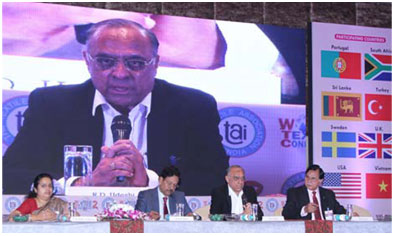
Exporters should participate in trade fairs, have buyer seller meets. We need a fiber neutrality policy. Textile parks should be encouraged. Buyers should have all products under one roof. Infrastructure facilities should be created. Finance should be made available at international interest cost.
What are the thrust areas?
In India, 90 per cent textiles are for garmenting and 10 per cent for other applications including home textiles. Globally, it is divided half and half, 50 per cent for apparels and 50 per cent home textiles. Since India has to reach this level overall fabric production is likely to be better than what it is today. India has to improve applications of different fibers. This includes geo textiles, currency note applications, wallpaper applications. Once this happens there, will be a spurt in fiber consumption, non woven applications, non apparel applications.
Our per capita consumption is very low. So there is scope. The lower income group is entering the middle income. The median age is 26, purchasing power is improving. Clothing needs have grown. This incremental consumption will drive the domestic market. India’s annual fabric imports are almost $850 million assuming they are under invoiced. The real value is about two to three times more. So that’s a huge number. That comes to $2.5 billion. Cheap imports of fabrics should be prevented. Also fabrics are cleared at lower customs duties. This should be stopped. In India manmade fiber has always been treated as a rich man’s fiber and cotton a poor man’s fiber. Manmade fiber is seen as a revenue earner.
Is China a formidable competitor?
India used to compete with China. Now India is competing with Sri Lanka, China, Bangladesh, Vietnam. China is the biggest competitor. But labor cost in China is three times that of India’s and power cost is ten cents a unit in China. So, India is competitive in power and labor. The market is evolved. India has skills, a strong legal structure, financial capability, technical expertise, raw materials like cotton and manmade fiber.
China imported a lot of cotton yarn because they created a floor price for raw cotton. Raw cotton was more expensive than cotton yarn. That gave opportunities to Indian manufacturers and the spinning industry to export cotton yarn. They thought there was a big market. For the Chinese, it was a make or buy decision. Buy was cheaper than make. But then the floor price was removed. In future, I don’t think they will buy as they Chinese have enough spinning capacity. If they get cotton at international prices, without an artificial floor price, they would be quite efficient at production. Cotton prices in India are lower than international cotton prices. I feel that with the new cost structure in China, India has the chance to take a big portion of Chinese exports. People don’t see much stability in Vietnam or Bangladesh. We have a language advantage. But we should meet quality standards, meet the supply chain capability.
Will GST streamline procedures?
Once GST comes in, all fibers may be treated equally. The duty will be the same, whether cotton, viscose or filament based. Customers can select the appropriate fiber. GST will place fabrics on an equal footing. There is no bias in terms of duty. We have excise on polyester raw material and on polyester. We have exemption on spun yarn and on fabric. So the chain is broken. With GST, exemptions will be withdrawn. So you keep paying tax on the value you add.
What significant changes will FDI bring in?
I think 100 percent FDI will also help. It’s not so much about money. Someone will bring in innovative fabrics, marketing expertise. Once you have a financial commitment through FDI, the rest of the things will follow. In India most of us sell products through a trader. I don’t think we understand the market. Once you interact with the customer you know about design and pattern changes. So the production cycle changes based on that. Today everything is based on hearsay. India should first become a manufacturing hub of a commodity product. The next stage is to improve through innovation. The third stage is to brand your product. The fourth step is to go global.