Global Sourcing Expo returns to Sydney in June 2025
The Global Sourcing Expo, recognized as one of the Top Global Fashion Expos by Forbes, is set to return to Sydney from June 17-19, 2025, before heading to Melbourne in November. This highly anticipated event continues to build on its 15-year legacy, attracting thousands of leading global suppliers in apparel, footwear, textiles, and homewares.
Last year’s Sydney expo saw a 48 per cent year-on-year rise in attendance, with over 4,450 visitors attending the three-day event. Marie Kinsella, CEO of International Expo Group, says this growth reflects the increasing need for a centralized sourcing hub.
“The show was designed to solve a major challenge for Australian trade buyers eliminating the need to travel abroad to connect with global suppliers. Here, they can engage with hundreds of manufacturers, brands, and industry experts, all under one roof,” she said.
The 2025 edition promises an enhanced experience with a dynamic exhibitor lineup, insightful seminars, and key industry partnerships. The Sourcing Seminar Series will return, featuring experts discussing the latest trends, eCommerce strategies, AI in marketing, sustainability, and supplier management.
“With an outstanding speaker lineup and pressing industry topics, this year’s seminar series is set to be our best yet,” Kinsella added.
Once again, the event will feature the China Clothing Textile Accessories Expo, showcasing high-quality products from diverse global brands.
Exhibitor registration is now open, and booths are filling fast. “With just four months to go, we encourage exhibitors to secure their stands and stay updated via our social media channels,” said Kinsella.
The Global Sourcing Expo Sydney is a must-attend event for fashion buyers, retailers, and sourcing professionals looking to connect, collaborate, and stay ahead of industry trends.
British Wool prices rise 25% amid strong demand
British Wool has reported a nearly 25 per cent rise in auction prices, driven by strong demand from buyers. The buoyant market comes as sheep and beef sectors face rising costs.
The organisation, which holds 18 online auctions annually, typically offers between 1,000 and 1,500 tonnes per sale. So far in the 2024/25 season, 57 per cent of the year’s wool has been sold, with some key types exceeding 60 per cent. Most of the 10 auctions held to date have seen full clearances.
British Wool Chairman Jim Robertson highlighted the positive trend, urging farmers to send in their remaining wool. “We appreciate prices are not at the level we’d like, but they are improving. This is encouraging, and we need more farmers to return their wool to maximise returns,” he said.
British Wool continues to push for greater use of British fleece in manufacturing, working with retailers and brands. Recent initiatives include a partnership with Shaun the Sheep to promote wool carpets.
“As a collective, we focus on adding value for our members,” Robertson added. “Our efforts to create demand translate into more competitive auctions and help move British wool beyond being just a commodity.”
The organisation remains committed to supporting UK sheep farmers, ensuring wool collection services and sustainable demand. Robertson urged members to send in any remaining wool, emphasizing ongoing market interest.
“With demand still strong, now is the time to act,” he said. “If you have wool on-farm, contact us to arrange delivery or collection.”
NGOs warn of weakening safety standards in Bangladesh’s garment industry
Leading labour rights groups warn that factory owner influence in Bangladesh is undermining the garment industry’s top workplace safety programme, endangering workers. In a memorandum to global apparel brands, the Clean Clothes Campaign (CCC), Worker Rights Consortium (WRC), and Maquila Solidarity Network (MSN) call for urgent reforms to restore the programme’s integrity.
The International Accord for Health and Safety in the Textile and Garment Industry, a binding agreement between brands and unions, has saved thousands of lives. However, in 2020, its Bangladesh operations were transferred to the Ready-Made-Garment Sustainability Council (RSC), where employers gained influence, weakening enforcement and sidelining worker representatives.
New research reveals employer interference has weakened safety enforcement, allowed non-compliant factories to keep exporting, and delayed a crucial boiler safety programme.
The RSC emerged after resistance from factory owners backed by the Sheikh Hasina government. With Bangladesh’s political shift, NGOs urge brands to push for restructuring the RSC to remove employer control, ensuring it can protect garment workers without obstruction.
The memorandum stresses that brands must uphold safety commitments, pay fair prices to suppliers, and support reforms. The Accord remains the strongest model for workplace safety, but its governance must remain free from corporate interference.
The issue will also be a key topic at this week’s OECD Forum on Due Diligence in the Garment and Footwear Sector, highlighting global interest in binding agreements for human rights compliance.
“A governance reset is crucial to safeguard workers’ rights and maintain alignment with due diligence laws,” said Ineke Zeldenrust of CCC. NGOs urge brands to act swiftly to protect workers and sustain Bangladesh’s position in global apparel production.
Karl Mayer sees strong demand for Max Glass Eco, TM Weft 2
Karl Mayer Technical Textiles is celebrating the strong market response to its latest innovations, the Max Glass Eco and TM Weft 2. Launched last year, both machines saw above-average demand in 2024, with double-digit sales in key markets like China and India.
The momentum continues in 2025. “In the first week of January alone, we received eight inquiries from China for our TM Weft 2,” said Jan Stahr, Regional Sales Manager. The rise in interest follows successful installations in a Chinese textile hub, where the machine is reducing wastewater impact and boosting efficiency for traditional waterjet weaving mills. The TM Weft 2 also appeals to warp knitting customers seeking new applications.
Offering a 20 per cent performance boost over its predecessor, the TM Weft 2 stands out with its improved crankcase system, ease of use, and durability. Meanwhile, the Max Glass Eco is gaining traction in the wind power industry, producing high-output glass fiber fabrics at speeds of up to 1,800 rpm. With optional modifications available, it meets diverse production needs while offering a shorter amortization period.
With strong market alignment and cost-effective advantages, Karl Mayer’s latest machines are driving increased adoption across key textile sectors.
Global custom apparel market to grow by 8.4 % CAGR from 2025-2029: Technavio
Poised for a significant expansion, the global custom apparel market is projected to grow by 8.4 per cent CAGR or 2.45 billion from 2025-29, according to a Technavio report.
Representing a CAGR of 8.4 per cent, this growth will be driven by factors such as an increasing prevalence of internet and smartphone usage alongwith rising popularity of the DIY culture and maker movement.
Despite this positive outlook, the market faces challenges like counterfeit products, particularly prevalent in the Asia-Pacific region, especially China. This widespread sale of fake custom apparel undercuts legitimate brands, as these counterfeit items are often sold at significantly lower prices, disrupting the market and harming brand reputation.
Growth in the global custom apparel market is being shaped by technological advancements and evolving consumer preferences. The market adopts popular customization techniques including embroidery, screen printing, sublimation, and heat transfer. Personalized designs, such as graphic t-shirts and custom logos, remain highly sought-after, fueled by innovations in digital printing and direct-to-garment technology.
Another crucial trend gaining momentum is sustainability. Eco-conscious consumers continue to demand custom apparel made from sustainable fabrics like organic cotton and lyocell. Beyond individual consumers, businesses across various sectors, including hospitality, logistics, and fashion, are leveraging customized apparel as a powerful branding tool.
The DIY culture is further influencing market dynamics. The demand for tools and equipment that enable at-home customization, such as sewing machines and screen-printing kits, is on the rise. This trend empowers individuals to create their own personalized apparel, contributing to the overall market growth.
CMAI to showcase 49 retail labels in ‘Brands of India’ pavilion at Bharat Tex 2025
As a key member of the Bharat Tex Trade Federation, the Clothing Manufacturers Association of India (CMAI) will showcase India's growing prominence in the global textile and apparel sector at the upcoming Bharat Tex 2025, held in New Delhi from February 14-17, 2025.
CMAI's ‘Brands of India’ pavilion will feature over 40 leading Indian retail brands, highlighting the strength of domestic apparel manufacturers and retailers. This showcase will include prominent names across the fashion spectrum, from established players to emerging designers.
CMAI will also host key panel discussions. Its panel discussion titled, ‘India Size: No More Misfits’ will address the country's first standardized size chart initiative, discussing its potential to improve garment fit and boost e-commerce. Another panel, ‘Value Retail: Consumer's Delight, Industry's Opportunity,’ will explore the booming value retail segment and its impact on the apparel landscape.
Furthermore, CMAI will launch the website and Sustainable Supply Chain Directory for SU.RE (Sustainable Resolution), an initiative focused on promoting ethical and transparent practices within the Indian fashion industry.
For this event, CMAI will collaborate with Reliance Brands Limited, the United Nations in India, and the Ministry of Textiles to establish new benchmarks for sustainability.
Emphasizing the importance of Bharat Tex 2025 for India’s textile and apparel industry, Santosh Katariya, President, CMAI, highlights the growing demand for sustainable textiles. Rahul Mehta, Chief Mentor, CMAI notes, the industry transformation is being driven by consumer preferences for sustainability, inclusivity, and innovation.
In addition to these initiatives, CMAI will facilitate the participation of over 100 MSME exhibitors in specialized sections for apparel, textiles, and startups. Bharat Tex 2025 is expected to attract over 5,000 exhibitors, 6,000 international buyers, and 10,000 domestic visitors, solidifying India's position in the global textile market.
DyeChem World debuts at Bharat Tex 2025 with sustainable dyes & chemicals
The Dyes and Chemicals industry will be a key participant at Bharat Tex 2025, aligning with the Prime Minister’s 5F vision for the textile sector’s holistic growth. The event will take place at the India Expo Centre and Mart in Greater Noida, opening its doors to visitors on February 12, 2025.
Around 50 leading companies will showcase sustainable products, services, and technologies for textile dyeing, printing, and processing, including natural dyes. The event will host knowledge sessions on Colour Science, covering measurement, automation, and AI, and Natural Dyes & Bio-Based Solutions, focusing on industry challenges.
DyeChem World is the only dedicated exhibition for the textile dyes and chemicals industry. It aims to promote sustainable chemical solutions, processes, and technologies that minimize environmental impact while enhancing efficiency and productivity. Organized by Textile Excellence, this exhibition provides a platform for industry players to engage with customers and explore the latest advancements.
Dyes and chemicals are vital to the textile and apparel industry, playing a crucial role in sustainability. With growing regulations on eco-friendly manufacturing, the industry is shifting towards sustainable raw materials, processing techniques, and finishing technologies. Textile dyeing, printing, and finishing are among the most polluting stages in production, increasing the need for environmentally friendly solutions.
In 2022, India produced approximately 398,000 metric tons of dyes and pigments, with about 80 per cent consumed by the domestic textile industry. India manufactures around 700 varieties of dyes, pigments, and intermediates, supplying other sectors like paper, plastics, and printing ink. Maharashtra and Gujarat account for 90 per cent of India’s dyestuff production, with over 1,200 factories.
India exported dyes worth $2.25 billion in 2023-24, while imports stood at $297.63 million. The overall chemicals industry exported $20.38 billion and imported $27.11 billion during the same period.
The exhibition will showcase textile dyes, pigments, inks, and colorants, along with textile chemicals, enzymes, and auxiliaries. It will also feature special textile finishes like anti-odor, antimicrobial, wrinkle-free, moisture-wicking, and flame-retardant treatments, as well as water-treatment chemicals for ETP, WTP, and ZLD processes.
Skechers expects FY25 sales to rise to $9.70 billion
US footwear firm Skechers expects FY25 sales to rise to $9.70 billion with sales in Q1,FY25 rising to $2.40 billion.
The brand registered a 12.8 per cent increase in sales during Q4, FY24. This was a result of 18 per cent rise in domestic sales and 9.8 per cent rise in international sales.
The brand’s sales from the wholesale business also increased by 17.5 per cent while its direct-to-consumer sales increased 8.4 per cent during the quarter
Regionally, the brand’s sales in Asia Pacific grew by 3.3 per cent while sales in the Americas increased by 14.2 per cent during the quarter. Sales in Europe, Middle East and Africa expanded by 24.8 per cent, said the Los Angeles-based company.
During the quarter, the company’s revenues increased to $99.3 million as against revenues of $87.2 million in the corresponding quarter last year.
According to Robert Greenberg, CEO, Skechers, the record sales growth achieved by Skechers during the quarter can be attributed to the strong response to the brand’s focus on comfort technology products, and the outstanding contribution of their dedicated team in developing, marketing and managing the strategic allocation of footwear, apparel and accessories worldwide. The brand’s innovative business closely aligns with the needs of consumers of all ages, genders, activities and professions embrace their performance products, he adds.
Scoop opens with a buzz, showcasing top designers
Scoop kicked off at Olympia West today, setting a vibrant tone for the Autumn/Winter '25 season. Visitors flocked to the dynamic showroom, eager to explore over 250 designer collections, including Fabienne Chapot, Isabelle Blanche, Sophie + Lucie, and Sitting Suits.
Independent retailers such as Young Ideas, Pamela Shiffer, Anne Furbank, and Cream joined Irish stockists like Nu Chic, Rococo, Macbees, and Sybil in browsing the curated selection of brands.
Exhibiting designers were thrilled with the turnout. Laura Robertshaw from Stand Studio, attending for the first time, said: “We’ve had an excellent first day, meeting many independent boutiques. We are currently stocked in Selfridges and looking to expand.”
Sinead Ormiston from Oldstrom, representing Isabelle Blanche, noted: “We’ve welcomed many new buyers, especially from Ireland. Our statement pieces have been a hit.”
Maria Alvarez from Sophie + Lucie added: “It’s been a busy day with great energy. We’ve had interest from buyers in the UK, Ireland, and Japan.”
Retailers also shared positive feedback. Bernie Dunleavey of The Front Room, Merseyside, said: “The atmosphere is fantastic. I’ve found exciting new designers and topped up orders.”
Pamela Shiffer called this season’s event the best yet. “The buzz, energy, and selection have been outstanding. I’ve placed three orders already.”
Rosie Wild of Moda Rosa, New Alresford, enjoyed the showcase: “There’s been a great atmosphere, and the live band was a wonderful touch.”
Karen Radley, Scoop’s Founder and Managing Director, reflected on the opening day: “The energy has been incredible. We’re thrilled to see retailers discovering new brands and placing orders. With two more days to go, we’re excited for what’s ahead.”
The show continues at Olympia West, Kensington, until Tuesday, 11 February 2025.
Jack & Jones launches first skiwear collection
Foraying into the skiwear segment, Bestseller-owned Jack & Jones has launched its first Fall/Winter collection.
Offering an extensive range comprising 50 apparel items, the new Jack & Jones Ski collection features five pairs of trousers, six jackets, performance underwear, sweatshirts, fleeces and t-shirts, as well as accessories like hats, gloves, skiing goggles, etc.
Having a margin coefficient of 2.8, the collection will be retailed across Jack & Jones traditional stores, especially retail chains like Intersport or Sport 2000. However, it will also be sold to independent retailers in cities and resort. The collection was recently showcased at the Sport Achat trade show in Grenoble, in the French Alps.
Bestseller plans to sell this France-inspired skiwear collection in 15 markets, including Italy, Spain and Greece. It will also be available at Jack & Jones monobrand stores from the next winter season. In France, Jack & Jones is distributed via 1,200 independent retailers and around 50 monobrand stores. The brand plans to expand its network of monobrand stores to 80 by FY25-end.
More...
Welspun World to focus on domestic textile market
A conglomerate with a historically strong export focus, Welspun World is strategically pivoting towards the domestic Indian market.
Announcing this shift, BK Goenka, Chairman, cited India's rapidly growing economy and the company's ambitious expansion plans. Previously, the company’s textile exports accounted for a significant portion of Welspun's revenue. Now, the company aims to capitalize on India's projected $10 trillion economy within the next five years.
Welspun has set a target to triple its revenue from Rs 35,000 crore to Rs 1 lakh crore in the next 3-5 years. This growth will be driven by expansion across all its segments, including textiles, infrastructure, and warehousing. The company has earmarked approximately Rs 1,000-1,200 crore investment for expansion in the textile sector. It aims to replicate its dominant US market share in home textiles within India, targeting a 25 per cent domestic market share.
Sustainability and technology are central to Welspun's strategy. Recognizing the growing importance of eco-friendly practices, the company plans to generate 80 per cent of its power from green sources within two years and increase the use of recycled fiber in its products. Welspun is also investing heavily in AI and machine learning to optimize operations, with its Global Capability Centre in Ahmedabad leading its digital transformation.
DHS adds 37 Chinese companies to the UFLPA Entity list for alleged use of forced labor
The US Department of Homeland Security (DHS) has added 37 Chinese companies to the Uyghur Forced Labor Prevention Act (UFLPA) Entity List, citing their alleged use of forced labor. A significant portion of these, around 26 companies, operate within the cotton sector.
Among those listed is Huafu Fashion Co, and 25 of its subsidiaries, identified by DHS as being involved in cotton production linked to the Xinjiang Uyghur Autonomous Region (XUAR). Huafu's vertically integrated supply chain, from cotton cultivation to textile manufacturing, and the location of its subsidiaries (22 in XUAR, 3 in Zhejiang Province) pose substantial compliance risks for apparel companies sourcing from China. Businesses associated with these entities could face shipment detentions under UFLPA enforcement.
In December 2024, US Customs and Border Protection (CBP) processed over 2.8 million entry summaries, valued at more than $290 billion. During this period, CBP targeted 1,404 entries (over $18.7 million) due to suspected forced labor links. These targets include goods subject to both UFLPA and Withhold Release Orders (WROs).
UFLPA enforcement statistics for the apparel, footwear, and textiles sector reveal it received 1,996 shipments in December 2024. Of these, it released only 649 shipments while 1,996 shipments were detained.
The industry's complex global supply chains necessitate increased compliance. Importers face risks like delays, penalties, and reputational damage if they cannot prove their products are free of forced labor. As UFLPA enforcement intensifies, apparel and textile importers are advised to seek expert guidance on navigating these regulations.
According to DHS, this largest-ever addition to the UFLPA Entity List demonstrates the full force of the law, highlighting impactful updates and enhanced CBP enforcement capabilities.
Krygyzstan plans new testing lab for textile and clothing products
Kyrgyzstan plans to establish a testing lab for textile and clothing products, according to Trend News Agency, citing the Kyrgyz Ministry of Economy and Commerce.
The Ministry of Economy and Commerce signed a three-party agreement regarding this with the Kyrgyz company KrygSert and Chinese firm Xinjiang Tianyu Engineering Testing.
Formalized through a Memorandum of Understanding (MoU), this partnership is designed to be a long-term collaboration that benefits all parties involved. The core objective is to launch an investment project focused on creating a testing laboratory that meets international standards for textile and apparel products.
The lab will be used for several functions including quality assurance, where all textile products will be tested to ensure they meet both international and national quality standards. The lab will also issue certificates verifying the safety of products for consumers and the environment.
Further, it will provide expert advice to the apparel industry on maintaining product quality and safety. Lastly, the lab will encourage the adoption of international certification standards among manufacturing companies.
This initiative is expected to create new opportunities for Kyrgyzstan's textile and apparel sectors. By ensuring quality and safety, the lab will help domestic products compete more effectively in the global market, ultimately boosting exports.
Brexit's Ripple Effect: How a UK-India FTA could reshape British apparel retail
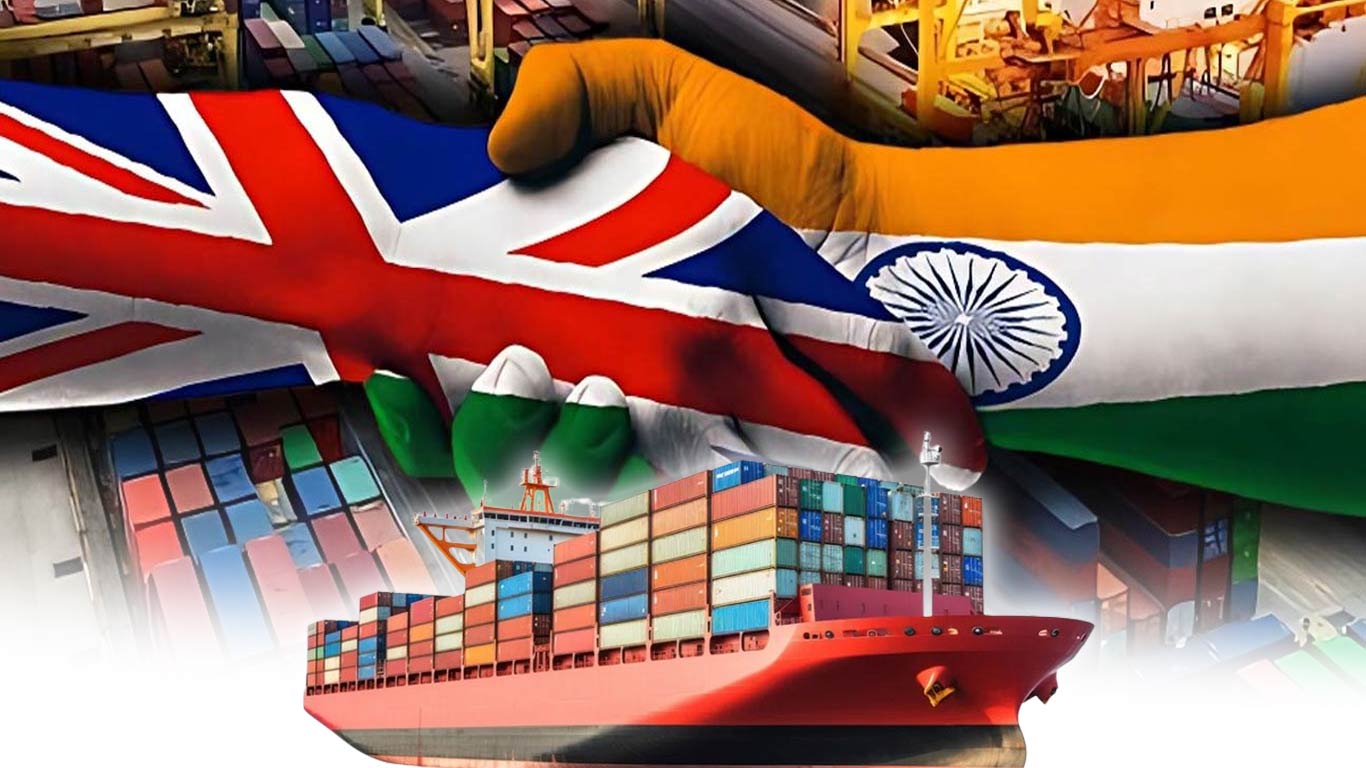
Brexit has prompted the UK to seek new trade partnerships globally, and a potential Free Trade Agreement (FTA) with India holds significant implications for the British apparel retail sector. While the primary focus of Brexit's impact has been on trade with the EU, this new dynamic with India could reshape sourcing, pricing, and sales for UK brands.
UK’s current market landscape
The UK apparel retail market is substantial. As per Statista in 2023, revenue was estimated at £64.5 billion, projected to reach nearly £79 billion by 2029. Pre-Brexit, a significant portion of the UK's apparel sourcing was from within the EU and other established manufacturing hubs. Brexit has disrupted these supply chains. However, increased import costs and logistical challenges post-Brexit have put upward pressure on apparel prices in the UK. While the market has grown overall, shifts in consumer behavior and inflationary pressures are influencing sales patterns.
Post-Brexit changes
Brexit has brought about significant changes in the UK apparel retail landscape, affecting trade, supply chains, and consumer behavior.
Trade barriers: The UK's departure from the EU has led to new trade barriers, including customs procedures, tariffs, and increased operational costs. These barriers have particularly impacted small and medium-sized enterprises (SMEs), which comprise a significant portion of the UK fashion industry.
Export challenges: UK exports to the EU, historically the largest export market, have fallen sharply due to increased logistical costs and customs delays. The value of clothing exports from the UK dropped dramatically in 2021 and continued to decline in 2023. SMEs have faced greater challenges due to Brexit, with many struggling to navigate the new trade barriers and increased costs. Some have had to reduce their exports to the EU or focus on the domestic market. Many smaller designers and independent brands have found the paperwork and costs associated with EU trade prohibitive.
Supply chain disruptions: Uncertainties surrounding border procedures, customs checks, and regulatory compliance have disrupted supply chains, leading to delays, shortages, and increased transportation costs for UK brands sourcing materials or products from EU suppliers.
Labor shortages: Brexit has led to an exodus of EU fashion professionals from the UK workforce, creating labor shortages and limiting collaborative opportunities that once fueled innovation.
Shifting consumer behavior: While the overall market has grown, Brexit has contributed to shifts in consumer behavior, with some consumers expressing concerns about the impact on prices and availability of goods.
Despite the challenges, Brexit has also presented some opportunities for the UK apparel retail industry. The focus more on domestic market now as UK brands can capitalize on the growing domestic market by offering unique and high-quality products. In fact, large retailers like Next have been able to absorb some of the increased costs associated with Brexit and have continued to perform well in the market. Exports are more diversified as businesses can explore new export opportunities in non-EU markets to reduce reliance on the EU. The industry can focus more on innovation and sustainability to attract environmentally conscious consumers. And the continued growth of e-commerce provides opportunities for UK brands to reach customers both domestically and internationally. In fact, online marketplaces like ASOS and Boohoo have emerged as important platforms for UK brands to reach EU customers, mitigating some of the challenges associated with direct exports. However, even online retailers face increased logistical complexities.
Potential impact of a UK-India FTA
A UK-India FTA could significantly alter the landscape for British apparel retailers in several ways. It could lead to sourcing revolution. India is a global textile and garment manufacturing powerhouse an FTA could drastically reduce or eliminate tariffs on apparel imports from India, offering UK brands access to a vast and potentially more cost-effective sourcing base. This could lead to lower input costs for UK retailers, potentially leading to more competitive pricing for consumers. India offers an alternative to traditional sourcing hubs, reducing reliance on specific regions and mitigating risks associated with geopolitical instability or supply chain disruptions elsewhere. Moreover, India possesses expertise in various textile crafts and manufacturing processes, potentially offering UK brands access to unique and high-quality products.
Lower sourcing costs from India would enable UK retailers to offer more competitive prices, potentially boosting sales and market share. This could also help mitigate the inflationary pressures currently facing the UK market. Access to competitively priced, high-quality apparel sourced from India could make UK brands more attractive to consumers. This could lead to increased sales both domestically and potentially in export markets. While beneficial for UK brands sourcing from India, an FTA could also increase competition within the UK market from Indian apparel brands directly exporting to the UK.
Challenges and considerations
The specific rules of origin within the FTA will be crucial. They will determine how much of the value addition needs to occur in India for goods to qualify for preferential tariff treatment. Moreover UK brands will need to ensure that their sourcing from India adheres to ethical labor practices and environmental standards. Establishing efficient and reliable supply chains between India and the UK will be essential for realizing the full benefits of the FTA. What’s most important is the final terms of the FTA will determine the extent of the benefits for both sides.
Thus a UK-India FTA has the potential to significantly reshape the British apparel retail scenairo. While challenges exist, the opportunities for sourcing diversification, cost reduction, and sales growth are substantial. UK apparel brands need to proactively assess the potential impact of such an agreement and develop strategies to leverage its benefits while mitigating potential risks. The evolving global trade landscape demands agility and adaptability, and a well-negotiated FTA with India could offer a significant competitive advantage to UK apparel retailers.