Gymboree goes bankrupt
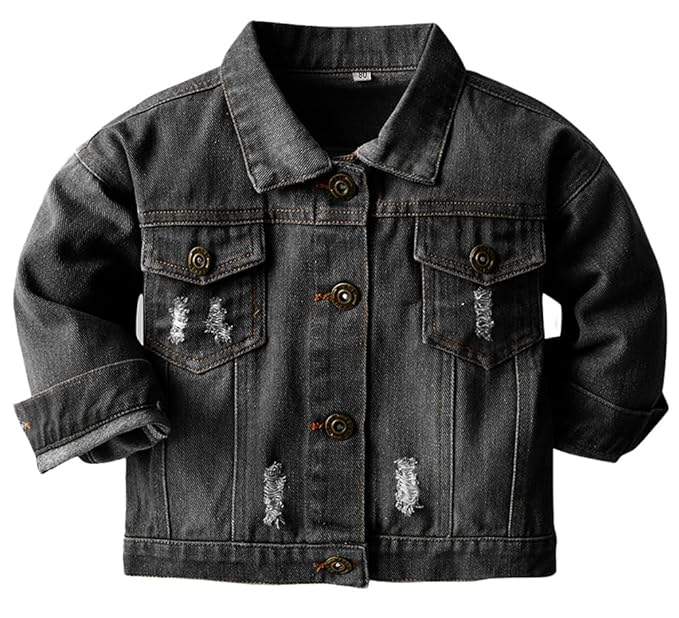
American children's apparel retailer Gymboree has filed for bankruptcy. The company was hurt by lower-cost competition from rival brick-and-mortar chains. It plans to cut its debt by around a billion dollars and close 375 stores.
Gymboree joins a growing list of specialty retailers and department stores that have closed thousands of locations or filed for bankruptcy this year as consumers shift toward online shopping. San Francisco-based Gymboree opened its first store in 1986 and expanded rapidly, going public in 1993. The chain failed to achieve the levels of growth it had anticipated.
Gymboree's lenders agreed to provide a 35 million dollar loan to finance the company's operations and will invest 80 million dollars in the company when it emerges from bankruptcy. Gymboree expects to move through this process quickly and emerge as a stronger organization that is better positioned in today’s evolving retail landscape. The bankruptcy was widely expected after Gymboree refused to pay some of its bills in recent months, placing the retailer on a collision course with creditors.
In the past year, Sears and Macy's have closed scores of department stores while chains such as The Limited Stores, The Wet Seal and shoe retailer Payless Holdings have filed for bankruptcy.
Women shop seasonally, men perennially
The speed of fashion retail these days is boosting apparel sales, especially among women’s clothing purchased online. Of the more than 7,000 new apparel products that appear online every day, nearly half are aimed at women, while only 1,750 are geared toward men, with the rest children’s, babies’ and footwear. More than half of all online women’s apparel purchases are items that have just hit the market in the previous three months, compared with 38.8 per cent of spending on the newest men’s items.
There are other gender-based shopping differences. Women tend to shop seasonally while men buy shirts and underwear all year long. Women, meanwhile, look for dresses in the spring and sweaters in the fall.
Women’s apparel sees much more turnover in response to a quicker fashion cycle than other categories of clothing. Moreover, women’s clothes purchased online span a wide range of items of clothing than men’s or children’s apparel and women’s clothes are sold in the same ratio at the high and low end.
Online apparel consumers at all levels are keen on finding deals. There has been a 4.3 per cent year-over-year price deflation in online apparel sales compared to relatively flat apparel inflation in stores.
Exporters worry about duty drawbacks
GST may necessitate a significant tweaking of the duty drawback schemes that have helped Indian exports compete in an increasingly adverse global market. The major concern of the textile exports industry is what would happen to the various drawback benefits, and particularly how the refund mechanism would play out. Today the industry is surviving because of drawbacks.
To illustrate, the recently launched policy of refunding state levies to exporters called Remission of State Levies can't exist in the new tax regime as there would be no state taxes. If the duty drawback policy is not tweaked to accommodate GST, the textile industry is set to lose close to Rs 1,500 crores in refunds.
The Remission of State Levies scheme is being studied to make it compatible with the GST regime. It will probably undergo some changes because value added tax is being subsumed under GST. Exporters had been getting duty drawback on the central levies imposed during the process of manufacturing of goods for exports. And, beginning December, they started to get reimbursement of state levies as well.
While there would be input tax credits under GST, there are many costs which were being taken care of under the various duty drawback schemes. There are many hidden costs as well. Unless they are addressed under GST, India would lose out to neighboring countries, particularly while exporting to the European Union.
US textile makers want stronger NAFTA
The National Council of Textile Organizations (NCTO) has filed public comments with the Office of the US Trade Representative (USTR) outlining the US textile industry’s priorities in the forthcoming renegotiation of the North American Free Trade Agreement (NAFTA).
The US textile industry welcomes President Trump’s decision to renegotiate NAFTA. It feels NAFTA is vital to the prosperity of the US textile industry. But it also feels NAFTA can be improved to incentivize more textile and apparel jobs and production in the United States, Canada, and Mexico.
NCTO says eliminating loopholes that shift production to third-party countries like China and devoting more customs enforcement resources to stop illegal third-country transshipments are two changes that would make the agreement better.
In 1994, the North American Free Trade Agreement came into effect, creating one of the world’s largest free trade zones and laying the foundations for strong economic growth and rising prosperity for Canada, the United States, and Mexico. It aims at demonstrating how free trade increases wealth and competitiveness, delivering real benefits to families, farmers, workers, manufacturers, and consumers. It has set a valuable example of the benefits of trade liberalization for the rest of the world.
NCTO is a Washington-based trade association that represents domestic textile manufacturers.
Technology and functional properties boost activewear market
"Activewear have gained popularity because of comfort, looks, and functional properties like keeping cool, dry, and odor free. According to the Cotton Incorporated Lifestyle Monitor™ Survey, half of all consumers (50 per cent) are willing to pay more for water repellent apparels, followed by thermal regulating (48 per cent), and moisture management (46 per cent) apparel. Such features are becoming more attractive to consumers."

Activewear have gained popularity because of comfort, looks, and functional properties like keeping cool, dry, and odor free. According to the Cotton Incorporated Lifestyle Monitor™ Survey, half of all consumers (50 per cent) are willing to pay more for water repellent apparels, followed by thermal regulating (48 per cent), and moisture management (46 per cent) apparel. Such features are becoming more attractive to consumers. In fact, research shows activewear shoppers are ‘very or somewhat likely’ to seek odour resistant features (63 per cent), moisture management features (60 per cent), thermal regulating and sweat hiding properties (both 59 per cent), water repellency (53 per cent), and antimicrobial features (42 per cent).

As Lacey Johnson, Global Brand Director, Bemis points out, many brands are looking to elevate more traditional silhouettes such as the T-shirt, classic crewneck sweatshirt, etc. “These classic silhouettes have been around forever but now Bemisss is helping brand partners reevaluate them to add a more technical aspect to the designs. Bemis Associates recently developed a line of Sewfree Bonding solutions specifically for natural fibres like cotton.
Johnson says the sewfree bonding offered by Bemis would be appreciated by consumers who workout both indoors and outside. The clothes one wears should never get in the way of performance when being active. Bemis’ technology helps clothes become a second — or third or fourth — skin. Whether this means avoiding chaffing, eliminating bulk, offering greater stretch, moisture-wicking capabilities, visibility with reflective adhesive applications, or protecting fabrics themselves with waterproofing, etc, sewfree bonding helps the wearer feel less restricted and worry less about the elements around them.
The Terra Collection allows designers to reinvent active and outerwear pieces by allowing a new level of breathability, lightweight versatility, and performance – all while maintaining the aesthetic of a soft fabric look, says Johnson. Such solutions are important as the industry is seeing an increased use of natural fibres.
L2 Digital Index
The L2 Digital IQ Index for activewear says the category is one of the fastest growing segments in apparel, and is expected to reach $117 billion in North America by the end of 2020. While Nike, Under Armour and Adidas are the top brands, L2 points out, activewear has seen an influx of new players looking to capitalize on the trend. Fashion apparel companies like Topshop and Victoria’s Secret have also joined the athleisure movement. In this increasingly competitive market, brands and retailers continue to search for growth opportunities and points of differentiation. As per L2 consumers are spending more time than ever researching their purchases online, often beginning days ahead of actually buying an item.
Activewear brands have always relied on athletes and celebrities to market their products to larger audiences, as per L2 reports. As street style and athleisure infiltrate high fashion, brands are coming full circle by turning to high fashion designers to collaborate on new lines. Whether it’s hardcore gym wear or designer athleisure, Johnson says consumers want activewear that works for them.
Textile policy in three months
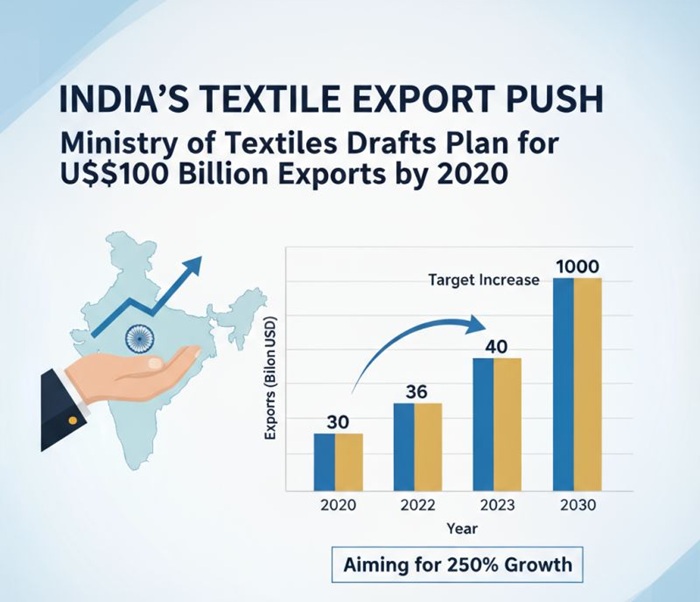
India will have a textile policy in three months. The draft has been finalized after consultation with stakeholders. The policy aims to achieve over Rs 20 lakh crores (USD 300billion) of textile exports by 2024-25 and create an additional 35 million jobs.
Responses from foreign players at the forthcoming Textiles India 2017 conference will also serve as inputs. A Textiles India conclave and exhibition is being organized in Gujarat from June 30 to July 2 for the Indian textile and handicraft sectors which will showcase the entire range of textile products from fiber to fashion.
The event will have over 1,000 stalls and will witness the presence of over 2,500 discerning international buyers, agents, designers, retail chains from across the world, and 15,000 domestic buyers. The three day event will include a global conference with six themes.
Textiles India 2017 is the first ever global B2B textile and handicrafts event in India. It holds the promise of becoming a landmark annual trade event for the Indian textile and apparel industry at the global level. It is celebrating the significant achievements of India's textile industry and the enormous promise of spectacular growth over the next few years.
India’s textile sector is a major contributor to overall industrial production, exports and employment. The textile sector is also rising on the new digital wave with players vying with each other to grab a higher share of online fashion.
S. African retailers struggle for profits
Apparel retailers in South Africa like Mr Price, Edcon and TFG are facing falling sales. Shoppers are reluctant to spend in an economy fraught with uncertainty. Mr Price had a fall of 10.4 per cent in diluted headline earnings per share in the year to April 2017. Retail sales eased 0.5 per cent while comparable store sales fell 3.6 per cent.
Mr Price’s share price has decreased 21.04 per cent over the past year but is up 3.31 per cent so far in 2017. For the year to end March 2017, turnover growth for TFG Africa was eight per cent with a comparable sales growth of 2.8 per cent. In the last quarter, TFG Africa’s like-for-like sales were 0.2 per cent.
In the past year, TFG’s share price has shed 5.38 per cent and has declined 11.06 per cent in the year to date. For the 52 weeks to March, Edcon group sales decreased 6.7 per cent while adjusted earnings before interest, tax, depreciation and amortisation fell 45 per cent. Edcon is South Africa’s largest nonfood retailer.
Retailers’ revenues are likely to come under more pressure due to low consumer confidence and economic factors. South African consumers are unlikely to see a cyclical recovery in 2017 and even if this does materialise, it’s unlikely to be of the magnitude required to offset the structural headwinds facing the sector.
Downward price risk for US cotton
Cotton producers should consider forward sales of the fiber while they still can at elevated values as investors mulled the impact to price prospects from raised US stocks prospects. The forecast US cotton balance sheet for 2017-18 suggests a lot of downside price risk for this year's crop.
While futures touched 55.66 cents a pound last year, on a spot contract basis, they have not been below that level since 2009. Farmers have been urged to consider forward contracting while they still can at higher values, or as a second-best alternative, to use put options to hedge against price falls.
The cut to US export hopes, on ideas of less global import demand given strong and improving crop forecasts in many import partners, fed through into an idea of US cotton imports hitting a nine-year high of 5.5 million bales at the close of 2017-18.
Higher global production mainly in consumer countries like Pakistan and Mexico is lowering their import demand. It is thought likely that 2017-18 cotton ending stocks-to-use will be at least ten percentage points higher than the level for the 2016-17 marketing year.< br/>
History shows that an increase in ending stocks and stocks-to-use is typically associated with price weakness.
EU insists on labor reforms
The EU will suspend trading terms for Bangladesh and disqualify it for trade privileges if it finds evidence of labor rights abuses or systematic repression of trade union rights. Bangladesh has a long history of trade union repression.
But recent months have been characterised by a significant upturn in violent repression. In December 2016, spontaneous wage strikes were met with mass dismissals, raids on trade union offices and the arrest of over 30 labor leaders.
While an agreement in February 2017 brought about the end of detentions, labor leaders continue to face charges and thereby a possible prison sentence and workers have still not been reinstated following their dismissals six months ago. Moreover, recent examples of violence and even death threats against labor activists demonstrate that the climate for labor advocates’ work remains extremely dangerous.
Clean Clothes Campaign is highly concerned about recent physical attacks, threats and criminal charges against leaders and members of trade unions in Bangladesh. The European Union has warned Bangladesh that continued non-compliance might harm the trade benefits that Bangladesh currently enjoys under the Everything but Arms category.
Bangladesh has been repeatedly given deadlines for honoring commitments but is yet to formulate a clear plan for labor law reform.
Assam prepares textile policy
Assam will soon formulate a textile policy to boost the handloom and textile sector. The proposed policy will focus on integrating production and marketing of handloom and textile products, empowering weavers and making a niche for handicrafts of the state in the global market.
A state of the art emporium will be set up showcasing the unique and attractive fabrics of all communities of the state. Pragmatic strategies will be formulated to empower rural weavers, marketing of products as well as motivating young entrepreneurs to take up the trade.
A chain-linked exhibition system is being planned covering all districts of Assam for proper marketing of the handicrafts. Assam’s handloom industry is basically silk oriented. Four varieties of silk worms and their host-plants, mulberry, Eri, Muga and Oak Tassar, are popular and important for economic and commercial purposes. Nearly 90 per cent of the silk produced is from the mulberry sector only.
Fabrics from Assam include the hand-woven fabrics of cotton, muga, pat (mulberry silk) and eri (endi). Muga has a natural golden texture, mildly warm and is particularly suited for winters. Zari work on Muga silk fabrics were woven for royalty, but today zari has been replaced by multi-colored cotton threads. Cotton textiles include bedspreads, furnishing material, mekhala, chaddars, shawls and saris.
More...
CITI hails revision, raises many apprehensions
J Thulasidharan, chairman, CITI welcomed the announcement and revision of GST rates on job work of textile yarn and fabric manufacturing activity from 18 to 5 per cent, but raised plenty of concerns and apprehensions on GST rates applicable on various sectors of textile industry.
This will reduce service tax on job work and bringing relief to the textile industry from the extra burden as majority of the work of textile manufacturing is with SMEs and is carried on through job works especially in the power loom, knitting, processing and garment manufacturing sectors. This would now help SMEs of power loom, knitting and processing sectors not to face much financial burden. Job work under textile sector after producing grey fabric or after producing yarn are taken as services and were subjected to 18 per cent GST.
“Under such situation, the manufacturer who does not have integrated composite units to complete the process of embroidery, doubling, printing and finishing as per the market requirements would have been in great loss as high taxed would have added to their cost and dented their profitability” said CITI chairman.
Chairman CITI also thanked the Government and GST Council on behalf of textile industry for increasing turnover from Rs. 50 Lakh to Rs. 75 Lakh under composition scheme for traders and manufacturers which will help MSME to grow their business and carry out their activities efficiently.
Concerns for the other sectors
But he expressed his apprehensiveness about the made-up and garment sector as the job work related to these still come under 18 per cent service tax slab. This will have a serious implication on the cost escalation of the final goods of made-up and garments and will be uncompetitive in the domestic and international market. CITI requested GST Council to reconsider this on urgent basis and bring them also under the 5 per cent GST slab.
With regard to some of the speciality textile fabrics like impregnated, coated, covered or laminated of cotton still remain under 12 per cent GST slab which is unsustainable and will be having huge bearing on the final cost. The Micro dot coating that is done only sustains about 1.3 to 1.4 per cent of input credit. A jump from 5 per cent GST to 12 per cent of GST on an input credit of 1.3 per cent will inflate the product cost as the industry will not be able to absorb the same. CITI expressed its view that it would be justifiable to retain the same at 5 per cent GST slab.
CITI reiterated confederation’s unmet demand of reducing GST on Man-made fibres and yarns to 12 per cent or refund inverted tax at fabric stage which will have win-win situation both for industry and government. If 12 per cent rate is imposed on MMF/Synthetic fibre and yarn industry then textile manufacturers would be able to bear the cost and Government would be having no revenue loss also.
In case, government is unable to revise the MMF rates, then refund of unutilized credit accumulated must be allowed at the stage of fabric manufacturing to the extent of 5 per cent. This has been provisioned under the GST Act where GST Council has been given the power to recommend for the refund of unutilized credit under inverted duty structure case.
He also highlighted the issue of delay in the transfer of input tax credits and inverted duty structure problem of the industry at fabric stage which will aggravate the problem of working capital requirement of the industry.
E-commerce looks for clarity
Though e-commerce players are expecting a surge in exports after the roll-out of GST, industry stakeholders feel there is a need to expand the categories for benefits under the export policy.
Under the Merchandise Exports from India Scheme (MEIS), introduced by the Foreign Trade Policy 2015-20, the commerce ministry gives benefits to several products as duty credit scrips. However, the category of products in e-commerce exports, which are eligible for those benefits, is very limited.
The policy is limited to only six categories. It does not expand to gems and jewelry or any new category. It is a challenge for a very small or a medium-sized player to come online because they do not understand the policy clearly.
The subsuming of major central and state taxes in GST, complete and comprehensive set-off of input goods and services and phasing out of central sales tax would reduce the cost of locally manufactured goods and services.
This will increase the competitiveness of Indian goods and services in the international market and give a boost to exports.
A few players in the e-commerce sector feel that under the current foreign trade policy, there is a lack of clarity in terms of e-commerce exports.
Vietnam’s exports to Russia up 78 per cent
In the first four months of 2017, Vietnam’s exports to Russia grew by 78.2 per cent. The two-way trade value in 2016 was up 25 per cent over 2015. In the first four months of 2017, it climbed 30 per cent year on year.
Garment and textile exports from Vietnam to Russia were up 146.47 per cent year on year followed by coffee. However coffee exports to Russia fell 18.14 per cent on year.
In addition, Vietnam’s exports of electronic devices were up 16.6 per cent and exports of footwear to Russia were up 10.82 per cent. Vietnamese companies are investing in Russia. To date, Vietnam has about 20 investment projects with a total registered capital of nearly three billion dollars in Russia.
Vietnam-Russia economic cooperation has been strengthened in the areas of trade, investment, oil and gas, and electricity. The two-way trade has been on the rise and forms of cooperation and investment have also been increasingly diversified.
More opportunities for bilateral cooperation are expected especially when the two countries adopt bilateral payment in domestic currencies.
Sourcing events Texworld, Apparel Sourcing and Avanprint in New York
The Texworld USA, one of the largest sourcing event will be held on July 17th to 19th 2017 at the Javits Convention Center on the East Coast for apparel fabric buyers, research and product development specialists, designers, merchandisers and overseas sourcing professionals. Being the 11th year attendees of the three-day event will also be able to take advantage of one-stop-shopping under one roof with the return of the Apparel Sourcing USA manufacturing services show and the debut of Avanprint USA digital print show. This must-attend fashion and apparel industry event combines three, top tier shows, co-located for convenience and efficiency, all in the heart of the City.
More than 540 international exhibitors along with 16 categories, attendees can satisfy all their womenswear, menswear and childrenswear needs including eco-friendly fabrics, innovative performance offerings and more. There will be more than 200 exhibitors who will be participating in the show.
In the meantime, the Texworld USA free educational seminar offerings focuses on social media marketing, fiber development, sustainability and global sourcing. Due to popularity, the show will also bring back the Texworld USA Floor Sessions this season.
The Research Row section allows attendees to search complimentary business development tools, recycling solutions, 3D printers and other important educational materials. Additional inspiration can be found at the Texworld SHOWCASE on color and material trends. The show will also focus on casual and formal shirting and suiting.
the Apparel Sourcing USA show looks forward to three days of business, networking and education, connecting attendees with suppliers specializing in women’s, men’s and children’s ready to wear and accessories. Jennifer Baconthe director of the show stated that they are seeing an interest in western hemisphere sourcing grow each season and are focusing in getting high quality manufacturers from Mexico and South America to the show floor and we look forward to introducing our buyers to new sourcing options.
As Texworld USA celebrates its 10th anniversary, the show is proud to bring apparel industry professionals the best in textile design and fabric sourcing with three crucial, interrelated shows, under one roof, over the same three days at the Javits Convention Center.