Global cooling fabrics market to touch $3.24 billion by 2025
The global cooling fabrics market size is expected to touch $3.24 billion by 2025, reveals a new report by Grand View Research. Growing focus on fitness, sports, and leisure activities along with increasing health consciousness of people worldwide is expected to expand market growth. The numerous benefits of cooling garments such as moisture wicking, sweat evaporation, breathability, and ventilation have enhanced its use among athletes.
Key players include: Coolcore LLC; Kraton Corporation; Invista; Ahlstrom Corporation; Nilit Ltd.; Polartec LLC; Nan Ya Plastics Corporation; Tex-Ray Industrial Co., Ltd.; Formosa Taffeta Co., Ltd.; HexArmor; Adidas AG; and Nike, Inc. These companies key focus is on extensive innovation and increasing their production capacities to fulfil international product demand.
Demand for cooling fabrics in military and industrial applications is increasing. This is due to its benefits such as temperature regulation, resistance from harmful UV rays and pollutants, as well as the protection they provide to the wearer in case of excessive heat exposure. The augmenting demand from healthcare and fashion industries is anticipated to enhance market growth.
The sports apparel segment is expected to account for 44.5 per cent of the global market in 2025. This can be attributed to heat, moisture, and perspiration resistant, light weight, smart, and easy to carry wearables which help in regulating the wearer's body temperature in line with the outside temperature.
Increasing R&D activities and various government incentives are projected to accelerate the production, thereby enhancing market demand. Various EU funded projects have drawn a large number of manufacturers to the market for the development of innovative products to stay competitive. Additionally, these fabrics also address sustainability issues by saving energy that is required to heat or cool the environment around the wearer. North America is the leading market for cooling fabrics owing to the early adoption and augmenting sports and outdoor activities in the region.
Chinese textile industry’s innovative biomass fibre
Hismer Bio-Tech based in Ningyang County, Tai'an City, in east China's Shandong Province, is manufacturing biomass fibre from shrimp and crab shells. Textile companies have long been dependent on crude oil when making common synthetic materials such as nylon or polyester but that could soon change with companies turning to biomass fibres.
Indeed, piles of shrimp and crab shells emit a strong odour but after going through the company's processing machine, the shells are turned from food waste to chitosan fibre that is indistinguishable from other synthetic fibres The biomass fibre can wean textile companies' off their reliance on crude oil.
Hu said Hismer collects 10,000 tonnes of the shell waste from seafood processing companies in China's ports of Qingdao, Yantai, Dalian and Ningbo a year for the production of some 6,000 tonnes of biomass fibre. The fibre is then used by a variety of garment producers. The fabric is not only used for making socks, underwear, bedding but also medical products such as masks and sanitary pads as well as special cloth used in aerospace planes, Hu said.
Innovation has saved the textile company from going bankrupt. The factory was in financial trouble due to rising cost at home and stagnant export market. Five years ago, the textile producer developed production technology and equipment for making the biomass material.
The company has developed materials used in China's "Shenzhou" manned spacecraft and "Tiangong" space lab, as they are mildew-proof and resistant to fire, static electricity and odour.
Blossom Première Vision’ unveils Spring /Summer ’19 trends on Dec 12
‘Blossom Première Vision’ will unveil the latest developments, innovative materials and colour trends for spring/summer ’19 on December 12-13 at the Palais Brongniart in Paris. This bi-annual event, dedicated to the launch of collections for creative, luxury and high-end fashion brands, will unveil fabric, leather and accessory pre-collections from 93 exhibitors for the spring-summer 19 season. All were selected by Première Vision for the quality and creativity of their products.
For spring/summer ’19, Blossom Première Vision strengthens its offer through collections and creative directions from 93 rigorously selected exhibitors: new product developments, the latest material innovations, colour trends an offer perfectly suited to the requirements of leather good, footwear and apparel designers, enriched this season with the presence of 14 new companies. 61 weavers including eight newcomers; 26 tanners including; 6 accessory and component makers, including 1 newcomer for clothing, jewellery, and leather goods et al will be present.
Bangladesh to comply with EU regulations, amend labour laws
Bangladesh will amend labour laws and the Bangladesh Export Processing Zones Authority (BEPZA) law to comply with recommendations of the European Union (EU) to retain trade benefits. Law Minister Annisul Huq has said the laws will be amended considering the interest of the country along with conditions given by the European Union as they are the largest buyer of our garments.
New laws will be introduced in Parliament this winter. Referring to the labour’s right to have trade union in Export Processing Zone (EPZ), the minister said existing worker welfare association will work as trade union there. Earlier, the EU called on Bangladesh to show tangible progress on labour rights to avoid temporarily losing the generalised system of preferences (GSP) benefit that permits the country duty-free export to the 28-nation economic bloc. This will be essential for Bangladesh to remain eligible for everything but arms regime.
EU had said they will need to monitor the situation more closely in the context of the GSP regulation, including through a dedicated mission to Bangladesh. Such monitoring could eventually lead to the launching of a formal investigation, which could result in temporary withdrawal of preferences. In the fiscal 2015-16, Bangladesh exported goods worth $18.68bn to the EU, which was 54.57 per cent of the total receipts for the year.
AFBWS wants ‘credible, independent Bangladeshi body’
Alliance for Bangladesh Worker Safety (AFBWS), a platform of North American fashion brands and buyers, wants to hand over its safety programme in Bangladesh’s readymade garment factories to a local body that should be independent and credible. AFBWSs Executive Director, Jim Moriarty said recently, ‘We are in conversations now with International Labour Organisation, Bangladesh Garment Manufacturers and Exporters Association, Bangladesh government and other stakeholders so that a credible, independent effort to monitor factory safety remains, long after the Alliance is gone.” He noted the Alliance would expire next year and its member brands would continue to do business with Bangladesh’s factories that would remain safe in the future.
Alliance-listed factories would be significantly safer when the platform would transition to a new body compared to what the factories were in 2013. He was hopeful that a different strategy would be required to keep the factories safe. “Our plan has always been to transition this work to local partners in 2018,” Moriarty, also a former US ambassador to Bangladesh, said.
According to the report, 85 per cent of the required safety flaws that included 80 per cent high priority safety issues have been fixed in the Alliance-listed factories. It recorded that 234 factories completed all required remediation prescribed in a corrective action plan, while the platform suspended business relations with 162 factories due to their non-implementation of CAP.
As per the fourth annual report, the Alliance formed safety committees in around 171 Alliance-listed factories and over 13 lakh workers across 941 Alliance and non-Alliance factories that have access to its confidential worker helpline. Over 14 lakh workers and nearly 27,000 security guards received training in basic fire safety from the platform.
Delhi to host bigger, grander Garment Technology Expo next January
"Showcasing ways to improve productivity, save costs, enhance quality, cut down turnaround time, and much more, the 26th edition of Garment Technology Expo (GTE) ’18 will be held from January 19-22, 2018 at NSIC Exhibition Complex, New Delhi. This edition promises to be bigger and grander compared to the previous editions with an array of fresh offerings. The key highlights are enhanced area, close to 70,000 sq. mt. with more than 350 exhibitors. The trade expo is expected to attract more than 21,000 visitors during the four-day power-packed show."

Showcasing ways to improve productivity, save costs, enhance quality, cut down turnaround time, and much more, the 26th edition of Garment Technology Expo (GTE) ’18 will be held from January 19-22, 2018 at NSIC Exhibition Complex, New Delhi. This edition promises to be bigger and grander compared to the previous editions with an array of fresh offerings. The key highlights are enhanced area, close to 70,000 sq. mt. with more than 350 exhibitors. The trade expo is expected to attract more than 21,000 visitors during the four-day power-packed show. This is Indian subcontinent’s largest show for apparel technology, with unparalleled representation from all segments of the sector, representing over 800 companies and brands from over 20 countries. All the industry stalwarts are present at this platform under one roof. GTE is Indian subcontinent’s largest show for apparel technology, with representation from all segments of the sector. Apparel 4.0 Conference, the latest buzz in apparel technology world, is the key highlight.
Exhibiting segments

The exhibition is known for showcasing latest machines and processes. Nearly 85 per cent participants in the initial editions of GTE continue to be steadfast. New innovations, product launches, product upgrades, live demonstrations, new materials, etc., are the cornerstone of each successive show. Companies from every sphere of textile and garmenting would be a part of this show. Key categories on display are: sewing machines, dyes & chemicals, home furnishing Machines, embroidery machines, equipment & supplies, laundry equipment, spares & attachments, digital textile printing, accessories & trims, spreading & cutting fancy yarns/fabrics, quilting/packaging, IT-enabled services, leather garment making, software solutions, finishing & testing, fusing/dying, etc.
At the exhibition, one would find companies and brands from the wide spectrum of textile sector. These include garment exporters, domestic manufacturers, ordinance factories, home furnishing manufacturers, job workers, traders and suppliers institutional and government bodies, merchandisers, textile designers fashion institutes, shop floor managers, retail chains, etc. The organisers also expect a strong overseas visitor participation.
A successful track record of shows
GTE has a strong history of successful shows. Some show stealers at GTE 17 included printing machines that can successfully work with disperse, reactive and pigment; high speed Industrial Digital Textile Printer for 24-hour printing with daily output of 1000-3500 mts; latest Mimaki & Roland DG Printing Machines; Flat Circular Knitting Machines; Embroidery Machines with Laser cutting technology; Go Green Technology in fabric finishing by Ramsons; Automated sewing machines by Robotech and elastic sewing machine by Supreme, among others.
Most exhibitors were very happy with the response they got at GTE 17. China’s Jack Sewing Machine makers were one of them. As Lucian, Regional Manager (South Asia), opined, “We are one of the largest Chinese manufacturers of sewing machines and our experience has been excellent at this show. I have been told by our various agents that they have received serious inquiries from many buyers. We are fully satisfied with our participation at GTE 2017.”
Bangalore-based Madhu Kapoor, MD, Apparel & Leather Technics, observed, “We have been participating at GTE since its first edition. Our objective behind participating at a show is to do research and development. We have lots of technicians at our booth. We encourage buyers to share their ideas as well as challenges and we turn those ideas into reality. This is the reason our booth is always jam-packed.” On similar lines, R Gopal Kukreti, GM, Juki India, said, “All four days of the show were excellent. We met a lot of new buyers, particularly those manufacturing for the domestic market. We also noticed there was more number of genuine buyers in this edition than in earlier ones. This year, the show has also been better organised.”
“There has been increase in visitor footfall and also increase in number of genuine and new buyers who visited our stall,” says Kartik Kapoor, Project Manager, IIGM. Anil Anand of Hari Chand Anand & Co, observed, “The footfall of genuine visitor/buyer was huge from all over India, especially Bengaluru and Tirupur. On the same lines avers, Akshay Sharma, CEO, Magnum Resources Pvt. Ltd., “Quality of buyers was much better than in the earlier editions, visitors from Kolkata were a big surprise for us.” Many leading exhibitors like Viraf Turel, EH Turel & Company and Manjeet Singh of Paramount Instruments appreciated the professional organization of the show and exhibitors at Tukatech went on to say this the best show in this part of the world!
Leading participants on board for GTE 2018
Among other regular leading players, GTE 2018 has new additions who have confirmed very big presence in GTE-18 the likes of Stalwart Engineering Co. (Smartex Laundry & Finishing Machines), Mobase Product (SWF Embroidery Machines), Starwhites (Laundry & Finishing Machines), Juki – India and Aalia Fashions (Fabrics).
About GTE
The annual Garment Technology Expo’s is the flagship event of GTE New Delhi and is held in spring. The maiden show started in 2001 hosting 87 participants and 4,700 visitors. GTE’s journey of progressive growth and patronage spans 25 editions. The 2017 New Delhi edition attracted 350 participants, from over 800 companies and brands from 18 countries. This hugely popular show was attended by over 21,700 trade visitors. The show covered all segments of the industry, from latest technology machines to machine spares & consumables, from infrastructure set-up to latest processes & systems, from raw materials to trimmings & embellishments, from logistics & packaging solutions to trade communication & documentation services.
The biggest industry event in the subcontinent, GTE New Delhi is hailed by trade professionals including manufacturers, exporters, CEOs, MDs and Production Heads, besides, institutions and other volume consumers, who attend to update themselves about latest technologies, materials, product launches and new innovations.
TAI Mumbai to host international conference on Textile 4.0 next March
"The Mumbai unit of The Textile Association (India) is organising an international conference ‘Textile 4.0: Global & Indian Perspective’ on March 22-23, 2018, at The Lalit, Mumbai. The two-day conference will attract mill owners, top textile professionals, experts and textile technologists from India and across the globe, who will deliberate on what is Textile 4.0 and how it is applicable to the textile industry in India and across the globe."

The Mumbai unit of The Textile Association (India) is organising an international conference ‘Textile 4.0: Global & Indian Perspective’ on March 22-23, 2018, at The Lalit, Mumbai. The two-day conference will attract mill owners, top textile professionals, experts and textile technologists from India and across the globe, who will deliberate on what is Textile 4.0 and how it is applicable to the textile industry in India and across the globe.
Textile 4.0: The future of manufacturing

The world is on the threshold of a new industrial revolution Industry 4.0 characterised by artificial intelligence, Internet of Things, next-generation robotics, 3D printing, wearables and gentle engineering, nanotechnology, advanced materials, biotechnology among others. Industry 4.0, the future of manufacturing technologies, is increasingly becoming an important trend for automation and data exchange. This enhanced technology, digital systems, and automated processes will make it optimum for manufacturing quality products. Industry 4.0 includes cyber-physical systems, the Internet of things, cloud computing and cognitive computing, which creates a ‘smart factory’.
Textile 4.0 is an interpretation and application of Industry Revolution 4.0 in the textiles technology and textile manufacturing sectors across the supply chain in spinning, weaving, finishing, and garmenting. The conference aims to educate stakeholders on how industry 4.0 is shaping up and transforming the global textile business. It will bring together textile manufacturers from all sectors i.e. textile technology, solution providers and all stakeholders across the supply chain. Discussions will revolve around major challenges that textile businesses are facing in today’s digital marketplace and identify practical steps, which companies can take to digitalise their value chain.
Conference focus
The conference put the spotlight on concerns like what would be the new avatar of textiles; textile technology and textile manufacturing? What would be the practical influence on technology and manufacturing across industry sectors in fibre & spinning, weaving, textile processing (dyeing and finishing) and apparel manufacturing? How should textile manufacturing companies engage in this new trend? What impact will it have throughout the textile value chain for productivity, quality, and efficiency? What does the future hold for textile business commercially through investments and profitability? How would the western technology phenomenon be translated into global production centers in Asian/Indian industry?
The conference will be addressed by international experts on the subject, and mill owners as user perspective renowned experts from across the world and India who are experts in technology. The conference It is expected to be attended by 500 quality participants.
About the Organiser
The Textile Association (India), Mumbai Unit is the first to organise such a conference in India/Asia, which will help the industry to gear up for Textile 4.0. The Textile Association (India), Mumbai unit is the largest unit of the Association with around 4,000 members. The unit has a reputation of organising events of topical interest both at national and global level.
49th Hong Kong Fashion Week for Fall/Winter to kick-off in January
"Organised by the Hong Kong Trade Development Council (HKTDC), the 49th Hong Kong Fashion Week for Fall/Winter will raise its curtain next January. The four-day fair will run from January 15-18, 2018 at the Hong Kong Convention and Exhibition Centre. The trade show is expected to host 1,400 exhibitors worldwide who will present an array of new season garments, designer collections, accessories, fabrics and related professional services."

Organised by the Hong Kong Trade Development Council (HKTDC), the 49th Hong Kong Fashion Week for Fall/Winter will raise its curtain next January. The four-day fair will run from January 15-18, 2018 at the Hong Kong Convention and Exhibition Centre. The trade show is expected to host 1,400 exhibitors worldwide who will present an array of new season garments, designer collections, accessories, fabrics and related professional services. As an important event in the global fashion fraternity, the fair opens up opportunities for market expansion with 15,000 buyers attending from 77 countries and regions in its last edition.
Thematic zones meet industry sourcing needs

To optimise buyers’ sourcing experiences, the fair is categorised into thematic zones to provide maximum exposure to different sectors. New to this edition, the Corporate Fashion/Uniform zone will be added to the zones line up to further expand business opportunities. Uniform has always been an indispensable niche with sustainable growth in the clothing market. The Chinese mainland in particular, is undergoing adjustments in its industrial structure, leading to continuous growth in the number of people engaging in the secondary and tertiary sectors, which leads to a trending up in demand for work wear. According to the China National Garment Association, there are 19 industries in China that require wearing of standard uniforms, and the market is estimated to be worth more than RMB300-400 billion a year. The Western European Workwear and Uniform Market is also foreseeing positive outlook. According to Frost & Sullivan, the market is expected to grow at a compound annual growth rate of 2.5 per cent until 2021 and reach EUR8.01 billion.
Well-informed of what the industry is looking for, the fair constantly evolves with improved elements. Following the successful practice of the previous Fashion Week for Spring/Summer held last July, the debut World of Fashion Accessories will also be in place, gathering a consortium of accessories-related exhibitors, including bags, footwear, gloves, legging & socks, and scarves & shawls for buyers to scout matching accessories at ease. Highlights among the other zones are Fashionable Sportswear and Urban Clothing, which make a welcome return to the fair after their successful debut last year. The International Fashion Designers’ Showcase will gather cutting-edge collections of featured designers and fashion design talents around the globe.
Enriching events
The fair delivers an exciting line-up of fashion parades, which serve as marketing platforms for exhibitors to draw the attention of global buyers to their latest designs and collections. Veterans from key international trend forecasting agencies and industry professionals will be invited to unveil latest fashion trends and shed light on updated market information at seminars and forums. Besides being an outstanding sourcing and marketing platform, Hong Kong Fashion Week also presents a great chance to expand business contacts through inviting buyers, exhibitors and industry representatives to join the networking reception.
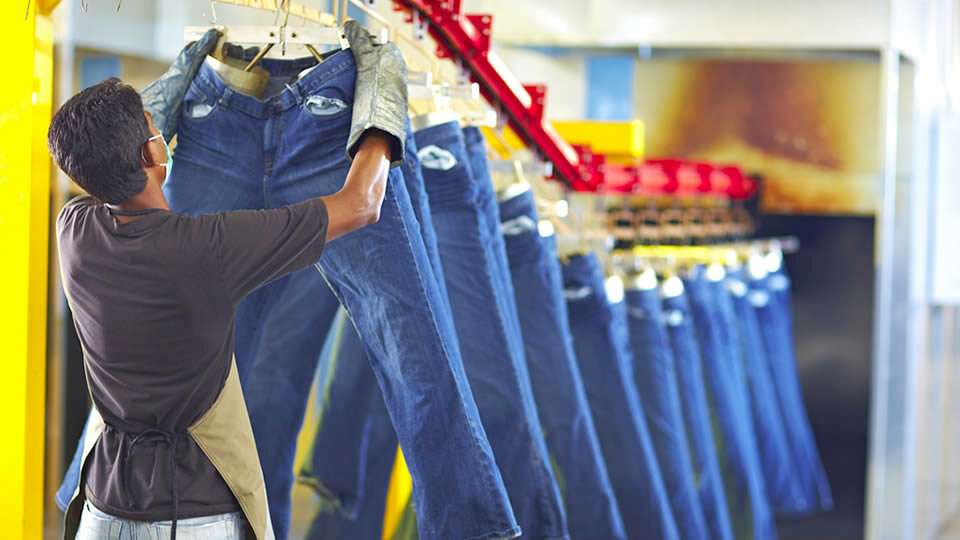
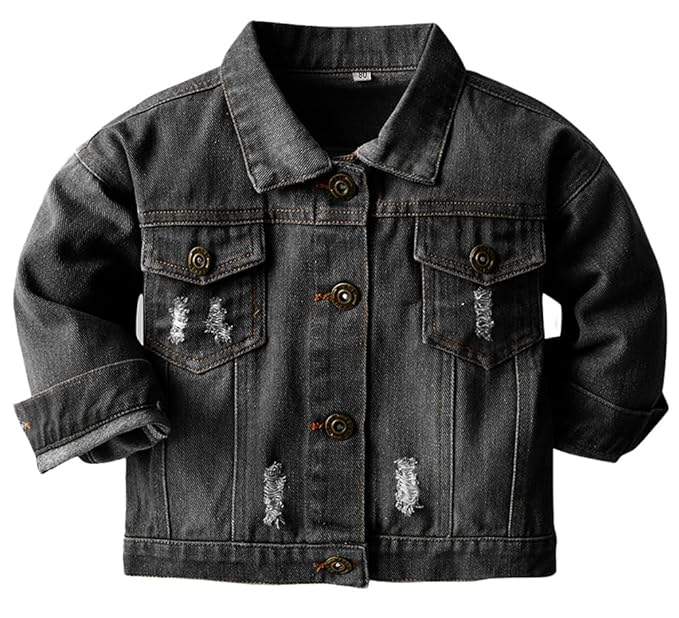
Innovative product designs enhance premium denim jeans market
A Technavio market research estimates the global premium denim jeans market to grow at a CAGR of more than 8 per cent, during the forecast period, as per their latest report. Their study covers the present and growth prospects of the international premium denim jeans market from 2017 to 2021. The report also lists women, men, and children as the three major end-user segments, of which women’s segment accounts for close to 56 per cent market share in 2016.
Technavio expounds three market drivers that are contributing to the growth of global premium denim jeans market: Innovative product designs; Acceptance of denim jeans as a business casual attire; and Increasing preference for high-end and premium designer labels. Branded jeans are constantly innovating to combat fierce competition from counterfeit apparel manufacturers. The new jeans are comfortable because they are made of soft knitted denim. This also provides traditional sportswear functionalities such as thermo-regulation, moisture management, UV protection, anti-rip features and durability.
Narendra Nandaigari, a lead analyst at Technavio for apparel and textile research points out jeans are differentiated from other apparel due to the incredible stretch and flexibility they offer. This is achieved by blending cotton or spandex with the denim. This innovative approach has also helped the vendors to sustain the hike in the price of cotton. Manufacturers of jeans are setting the trend of offering a new generation of fabric by delimiting the boundaries through hybrid blending techniques. For instance, Diesel introduced Jogg Jean, a hybrid jean, which has the characteristics of jersey material yet looks like an authentic denim-made jean.
There is a growing acceptance of denim jeans/jackets as a business casual attire at the workplaces. Google, Zappos, Facebook and Twitter are some of the many organisations that permit employees to dress in casual attire. There is also an increasing preference for high-end and premium designer labels which permits people to showcase their wealth, social status and fashion sense. This has forced brands to focus on the production of a range of jeans. that offer new styles, sizes, colours, designs, and other aesthetic features. These factors in luxury jeans encourage customers to buy more than just one pair of jeans to match with their accessories or current trends.
Huntsman launches new non-fluorinated DWR
Huntsman Textile Effects, the high quality dyes and chemical manufacturer who develops innovative solutions including built in freshness, sun protection and reduce water consumption — has introduced Phobotex RSY non- fluorinated durable water repellent (DWR). This will permit brands and retailers to meet global demand for eco-friendly clothing that require extreme rain- and stain-protection.
Internationally, the market for outdoor apparel is growing and customers demand comfort and high-performance protection. Rain- stain- and soil- resistant effects are therefore of prime importance. Today, the industry is shifting away from traditional formulations based on per-fluorinated chemicals (PFCs) due to environmental health and safety concerns.
Lee Howarth, Global Marketing Manager for Finishing at Huntsman Textile Effects disclosed, “Phobotex RSY durable water repellent raises the bar for performance on synthetics, allowing brands to offer high-performance weather protection to outdoor enthusiasts with an assurance of eco-friendly sustainability. As a trusted partner to the industry, Huntsman Textile Effects continues to lead the transition to non-fluorinated DWR alternatives that meet stringent environment, health and safety standards.”
Phobotex RSY durable water repellent is an environmentally friendly, non- fluorinated formulation that textile manufacturers can bank on to produce sustainable textile products without compromising on performance. This new addition complements Huntsman Textile Effects’ existing range of durable water repellents.
Providing effective protection in extreme environments, Phobotex RSY durable water repellent repulses rain, sleet and snow and performs well on synthetics and blends. It is reported to be an ideal solution for high-performance outerwear fabrics while offering breathable comfort and durable water repellence. Fabrics treated with Phobotex RSY durable water repellent also repel stains, so they look new for longer periods of time and can be easily spot cleaned
More...
HKTDC opens upgraded full-fledged Seoul office
Trade and business ties between Hong Kong and the Republic of Korea are set to strengthen with the launch of Hong Kong Trade Development Council’s (HKTDC) office in Seoul. The upgraded full-fledged office will further boost Hong Kong’s trade and business promotion in Korea. “Hong Kong and Korea share a long and close partnership,” said Margaret Fong, HKTDC Executive Director. New opportunities have emerged with the Belt and Road Initiative, the Guangdong-Hong Kong-Macau Bay Area development plan and Hong Kong’s recently signed a Free Trade Agreement (FTA) with ASEAN three more good reasons for Korean companies to expand their business in Hong Kong.
We welcome more Korean firms to use Hong Kong as a base to unlock the massive business opportunities that the Belt and Road Initiative and the Bay Area bring,” said Fong. “With the signing of the Hong Kong-ASEAN Free Trade Agreement earlier this month, Hong Kong can offer an additional platform for Korean companies to tap the ASEAN markets,” she added.
The Belt and Road Initiative launched in 2013 aims to reinforce infrastructural and financial links from Asia to Europe. Among the key financing bodies for Belt and Road projects is the Asia Infrastructure Investment Bank, of which Korea is a founding member and the fifth-largest shareholder. With its extensive international connections and world-class services, Hong Kong is a key connecting global businesses to opportunities on the Belt and Road and in the Bay Area.
The Seoul Office is among more than 40 HKTDC offices globally that help promote Hong Kong’s role as a platform for doing business with the Chinese mainland, Asia and the world. Major imports and exports between the two economies include semiconductors, electronic valves and tubes, as well as telecom equipment and parts. Korean companies in Hong Kong are involved in financial services, logistics, transportation and cosmetics, among other sectors.
Guess’ Q3 to get a boost from sales in Europe and Asia
Guess is currently following a strategy of expanding its presence in Europe and Asia while moderating its presence in the American market. The company is targeting millennials as the primary segment for its apparels, and to that end it is strengthening its digital presence and upgrading its omni-channel capabilities. It is also working to improve its website to improve and simplify the user experience.
According to CEO Victor Herrero, Guess' Americas Retail and Wholesale revenues were still in the red, down 13.4 per cent and 16.8 per cent, though operating margins improved thanks to a profit improvement plan.
Guess has issued its fourth quarter guidance and expects a consolidated net revenue increase between 10 and 12 per cent, GAAP earnings per share and adjusted earnings per share to be in range of $0.48 and $0.55. Full year consolidated net revenue is expected to increase between 6 and 6.5 per cent, GAAP EPS is projected to be between $0.36 and $0.43, and adjusted EPS is expected be in range of $0.56 and $0.63.
Guess has been directly operated in 982 retail stores in the Americas, Europe and Asia and is taking several steps creating a better balance between the American retail and wholesale businesses.
Tirupur’s RMG units face tough times with GST and export slump
Depression has gripped the knitwear export cluster in Tirupur following a significant decline in exports, in terms of value, in October. Approximately 8,500 units are engaged in manufacturing of textile products and garments in the knitwear hub, apart from a large number of job-working units, the vast majority of them run by households.
And here lies the crunch. Experts say it is the job-working units that see the sword of Damocles hanging by a thread over their head and they may have to close shop as they are unregistered units. These units do not have an industrial licence nor any relevant qualifications to be registered under the new tax regime as they are in the unorganised sector, reveals an exporter.
In the last two months, some workers who turned-entrepreneurs have decided to re-join the workforce just to make ends meet, while others are in the playing the waiting game hoping that things will return to normal. Raja M Shanmugham, President, Tirupur Exporters’ Association reveals, the garment sector has reached its endurance limit. Any delay in government intervention in handholding the sector by way of reinstating the old duty drawback structure and restoring the remission of State levies under RoSL (Rebate of State Levies) would drive them out of business.
Data records readymade garment exports from the country have dramatically dropped, registering a negative growth from June 2017 as against the year ago period. It peaked at a negative growth of 41 per cent in rupee terms in October, registering a turnover of 5,398 crore as against 9,110.75 crore in October 2016. Exporters feel this situation can be avoided if the government extends a line of support as in the past. On the flip side, while there is gloom on the export front, the domestic market is showing signs of a revival.
First estimate of India’s new season cotton shows a surplus
The Cotton Association of India (CAI) has released the first estimate of the country’s cotton crop, for the current season (October 2017-September 2018), at 37.5 million (375 lakh) bales of cotton, each weighing 170 kg. Last year’s crop was 33.725 million (337.25 lakh) bales (170 Kgs each). The projected increase this year is due to a 19 per cent growth in acreage as against the last season.
India’s cotton balance sheet for this new season will record a surplus with a closing stock of 3.9 million bales. Exports this season are expected to remain at 6.3 million bales of 170 kg each (the same level as last year). Total domestic demand is expected to be 32 million bales. It is not likely that production will exceed beyond 37.5 million bales. Yields this season will be affected by an infestation of pink bollworm and unseasonal rainfalls in cotton-growing areas during September and October. Many farmers diversified to cotton during the kharif season (June-July) following stagnant prices for pulses and oil seeds. Cotton delivery has just begun hence the exact scenario of quality and production will be known only by the end of the month.