OAR to map global clothing and footwear factories
A fashion data organisation, OAR aims to crack down on slavery and worker abuse by mapping every clothing and footwear factory in the world, with a free, open-source tool launched recently. OAR seeks to untangle opaque supply chains by identifying every factory by name and address, increasing transparency for workers and businesses.
A growing number of big brands, from sportswear giant Adidas to fashion retailers H&M and ASOS, are sharing information about their supply chains amid mounting regulatory and consumer pressure on companies to ensure their products are slavery-free. The OAR gathers data released by brands, factory groups, governments and other sources, and allows users to search for factories by brand names and locations.
According to the International Labor Organization (ILO) and rights group Walk Free Foundation, about 25 million people worldwide were estimated to be trapped in forced labor in 2016.
India’s synthetic textile capacity to increase in next three years
Synthetic textile manufacturers in India are planning capacity addition over the next two to three years. The industry saw nearly 3,00,000 tons of new capacity across the entire value chain in the past two to three years. The overall capacity of the synthetic textile value chain is now five million tons a year. China’s is 55 million tons. As against 73 per cent of polyester and 27 per cent of cotton blend in textiles globally, India continues to have a lower percentage of polyester use, of just 40 per cent in the overall textile sector. The capacity additions planned now, of around 0.5 million tons in the next two or three years, will meet domestic demand and help in higher export. The demand for polyester fiber is increasing as the demand for sports and yoga wear is increasing across the world.
Substantial growth in imports into India of manmade fiber and manmade staple fiber and textiles is not a good sign for the industry. In September 2018, input tax credit, a big blocker of working capital for the entire industry, was released. The industry expects further support in terms of a uniform tax structure and a high import duty would help.
Chinese company invests in Pakistan
Chinese private textile company Challenge Apparels will establish a state-of-the-art garment manufacturing facility in Pakistan. The aim is to enhance Pakistan’s exports and help generate thousands of new jobs in the country over the next couple of years.
Challenge Apparels is among the leading exporters to top brands around the world, especially in developed countries. Pakistan is facilitating investors through various reforms and hopes to benefit from the US-China trade war. If businessmen from China bring fabrics to Pakistan for making the finished products, and export those to the US, then they will not only able to maintain their client base but Pakistan will also benefit. Enabling Chinese textile exports this way will give a boost to Pakistan’s exports and deal with the balance of payments situation. When Chinese businessmen carry out their exports jointly with Pakistan, making use of the raw materials as well as Pakistan’s human resources, it will add to the earnings of Pakistan. Also China is helping Pakistan's spinning mills become more cost efficient and competitive. Almost 80 per cent of the yarn and other textile products will be re-exported to China for value addition to sell the finished goods at better prices in the international market.
Indonesia’s APR opens new plant in Riau
Asia Pacific Rayon (APR) opened a new plant in Pangkalan Kerinci, Riau, early this year. The plant will produce 240,000 tonne of viscose-rayon—soft fiber made from dissolved cellulose—every year.
APR recently showcased the results of its collaboration with eight Indonesian fashion designers who turned out high-fashion outfits using viscose-rayon as part of the 2019 Indo Intertex fashion and textile exhibition held at JIEXPO Kemayoran in East Jakarta.
The company hopes to showcase its fine viscose-rayon on the catwalks of Paris, Milan and New York as a part of the couture collections of many creative young designers from Indonesia trying to make it on the world stage. APR plans to exports 96,000 tonne of viscose-rayon this year, mostly to Turkey, Pakistan, Sri Lanka and Bangladesh.
Strong economy, world class infrastructure to help India deal with GSP denial
"The United States Trade Representative (USTR) recently announced, India and Turkey will soon lose their Developing Beneficiary Country (BDC) status under the General System of Preferences (GSP) of the WTO. GSP entails duty free access to less developed or developing countries to aid development. It allows the less developed countries to procure cheap raw materials for procuring high end finished goods while the latter are granted access to competitive markets at lowest barriers."
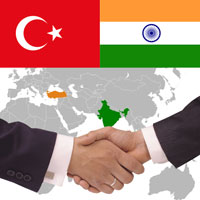 The United States Trade Representative (USTR) recently announced, India and Turkey will soon lose their Developing Beneficiary Country (BDC) status under the General System of Preferences (GSP) of the WTO. GSP entails duty free access to less developed or developing countries to aid development. It allows the less developed countries to procure cheap raw materials for procuring high end finished goods while the latter are granted access to competitive markets at lowest barriers.
GSP denial to increase import duty
If India is denied GSP benefits, import duty on Indian products exported under this scheme will increase. Indian products would be levied the Most Favored Nation (MFN) or effective applied tariff rates, which are higher than those for BDC. This would affect their price competitiveness in the US markets.
Majority products exported under the GSP belong to the micro, small and medium enterprises which are a major source of 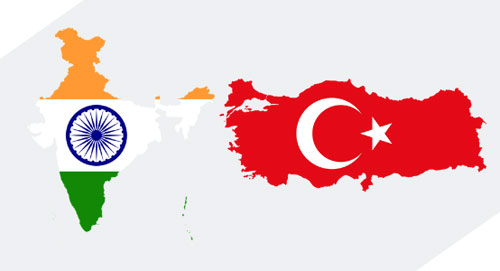 employment for the lower middle-income class of the society. Recent trade tensions between the two nations will have a spillover effect on this section- especially the semi and unskilled workforce. Unemployment figures for 2018 show a remarkable rise from previous levels. At a situation like this, unfavorable effects via the GSP might lead to unprecedented impacts on the economy.
India’s competitors in the US markets, Bangladesh, Indonesia, Brazil, Egypt, Cambodia and South Africa will continue to get duty free market access, while India will be subject to standard tariff rates. Unless Indian commodities have a genuine comparative advantage, they will lose their competitiveness.
Resolving issue through a dialogue
New Delhi can appeal to the WTO against this US action. Its policy should focus on taking a pragmatic stance and resolve the issue by engaging in dialogue with the US. The Indian government must also provide incentives to exporters such as GST relief or exemption for small and medium enterprises in order to retain their competitiveness in the global market. Alternative markets such as the EU and UAE can also be explored. New Delhi must initiate talks with these countries and set up Export Promotion Councils with additional emphasis on the intermediate goods sector. State governments should ensure that the SME sectors are provided with adequate infrastructure- both physical and financial.
To tackle uncertainty surrounding international politics and economics, especially the Trump Administration, India must create a strong domestic economy with world class infrastructure and investment. Unless this is achieved, small disturbances like these will continue to impact the global economy.
Growing applications for recycled plastic fabric globally
Recycled plastic fabric is a collection of waste plastic fabrics that are recycled, processed with various technologies, and finally treated with chemicals and additives to produce a newer plastic fabric. Adidas, G-Star Raw, and Patagonia are some brands that produce fabrics from recycled wool and recycled polyester, which is made from fiber created from used plastic bottles, unusable manufacturing waste, and worn-out garments.
In terms of product, the global recycled plastic fabric market can be categorized into polyester terephthalate, polyurethane, polypropylene, nylon, and others. Recycled polyester-based fabrics are ten times stronger than normal polyester fabrics and can resist the growth of fungi, mold, and bacteria. Based on application, the market can be classified into clothing, industrial, medical, and household and furnishing. Clothing is a leading application segment of the global recycled plastic fabric market.
Rapid expansion of the textile industry across the globe and a shift in demand towards sustainable products manufactured by leading companies to reduce energy and carbon emissions are expected to boost the segment. Medical application of recycled plastic fabrics is also expected to gain popularity due to the rise in the geriatric population and an increase in demand for antimicrobial textiles.
Many companies in the US, Italy, Germany etc. are joining hands with environmental organizations to recycle waste plastic bottles in order to create sustainable products.
US lifts ban on Uzbek cotton
Uzbek cotton is no longer on the US list of banned products. The US had imposed a ban in 2010 over suspicion that Uzbek cotton was produced, or manufactured by forced child labor. But now the US feels the use of forced child labor in cotton harvest in Uzbekistan has been significantly reduced.
For years, rights watchdogs have been accusing Uzbek authorities of forcing children to pick cotton, one of the Central Asian country’s biggest exports. Uzbekistan for decades has mobilized students as well as staff at schools and medical clinics and hospitals to pick cotton.
Uzbekistan is the fifth largest cotton producer in the world. It exports about 60 per cent of its raw cotton to China, Bangladesh, Turkey, and Iran. Uzbekistan’s cotton industry generates more than a billion dollars in annual revenue, or about a quarter of the country’s gross domestic product. Uzbekistan will deepen reforms in the textile industry to fully reprocess raw cotton domestically and increase the export potential of the country. Stimulating measures will be provided for enterprises engaged in exports of textile products. Traditionally, cotton has been Uzbekistan's most important cash crop. But the country has been taking steps to develop its textile industry to produce value-added products rather than exporting raw cotton.
Reebok sees business in China
Reebok has been investing in China for some time, recognizing the tremendous potential of Chinese market. In 2018, Reebok saw its largest revenue gains in Asia-Pacific, with a three per cent increase in net sales on a currency-neutral basis. The market is its third largest, after Europe and North America. To help solidify its position among Chinese consumers, Reebok is crafting products and marketing tailored specifically to the market.
Among the brand’s new looks in China is the Advanced Concepts’ Sole Fury sneaker developed by Helen Kirkum. The British designer is best known for what some call a Frankenstein-like approach, where she repurposes elements from other products on her shoes. To create this special release, she broke down Reebok’s 3D Opus 98, Instapump Fury, Run.R 96 and Ventilator silhouettes to make three unique visions of Sole Fury.
US sportswear brand Reebok has an unmatched heritage with some of the most iconic footwear silhouettes in the industry, an authentic fitness brand. While Reebok’s revenue fell three per cent in 2018, its costs came down even more, and management expects the business to finally start expanding. The hope is that new footwear lines like the CrossFit Nano and the FloatRide Run will spur sales. The aim is to make sure that the brand heat is based on real products.
PVH Corp’s full year revenue up eight per cent
PVH Corp’s fourth quarter revenue fell one per cent. Tommy Hilfiger’s revenue went up two per cent with the label’s international revenue rising three per cent and sales in North America increasing two per cent. The brand’s comparable store sales increased 16 per cent internationally and five per cent in North America. Calvin Klein’s quarterly revenue fell two per cent. The brand’s international revenue actually increased two per cent with comparable store sales in the segment rising six per cent. However, this progress was more than offset by a seven per cent decrease in the brand’s revenue in North America, where sales fell seven per cent. Revenue in PVH’s Heritage Brands business fell five per cent.
PVH’s full year revenue was up eight per cent. Here too Tommy Hilfiger led progress with a 12 per cent increase in revenue, reflecting a growth of 13 per cent in international comparable store sales and five per cent in North American comps. Calvin Klein posted an eight per cent increase, with particularly strong growth seen in Europe and Asia, as well as in North American wholesale. Overall, the brand’s international comps increased five per cent while North America saw a smaller comps rise of one per cent.
India looking at flat apparel exports
India’s apparel exports are expected to remain flat during this financial year and the first half of next year. Exports to key markets have fallen due to a decline in demand especially in the United Arab Emirates. The problem is further compounded by increasing competition from other exporting nations like Cambodia or Bangladesh that enjoy low labor costs that India cannot compete with.
Tech upgrade incentivisation, market diversification, and innovation are good starting points to help India’s apparel exports regain their upward growth. As India cannot compete on lowering labor costs, the focus could be on expanding schemes for tech upgrades and introducing more policies that incentivise apparel exporters to upgrade technology. The search for new markets is on. Four new markets with high potential for future growth include the UK, Chile, Israel and Japan. By identifying products with high growth potential, and leveraging individual strengths like tech innovation, exporters can start to push their profits and efficiency margins.
India’s apparel exports which were expected to grow steadily, maintained a CAGR of 12.06 per cent to touch $82 billion by fiscal ’21. The relative stability of apparel vis-a-vis other exports created the perception of strength in the sector, but issues are clearly there.
More...
ISKO I-SKOOLTM 6 participates in the denim seminar
The project ISKO I-SKOOLTM 6 showcased at the traditional Denim Seminar. The seminar was held from March 18-19, 2019 at the Creative RoomTM, ISKO’s style and design research hub in Castelfranco Veneto (TV), aimed at nurturing young talents. The two-day learning event focused on both technical and soft skills development, featuring practical sessions to transform designs into real garments. It also unveiled an exclusive partner line-up which included the Gold Partner Jeanologia; Silver Partners Reca Group, Riri Group and Lenzing Group and supporting Partners Everest Textile Technologies and The Tailor Pattern Support.
Isko’s partners shared their expertise through several activities presented to the young designers. The wide range of topics covered included all aspects of denim creation, including its history and production from field to final garment.
Cotton exports from Egypt up 45 per cent
Cotton exports from Egypt increased 45.1 per cent during September-November 2018 over the corresponding period of the previous year. Consumption of cotton in the domestic market, however, fell 42.2 per cent year-on-year. This was due to suspension of manufacturing activities by some textile factories in the country.
Egypt will promote products made of Egyptian cotton. A clear map of textile industries in Egypt will be drawn up to help define priorities to lure foreign investments and maximize the value added of Egyptian cotton. A special unit will be formed to ensure the optimal use of the Egyptian cotton brand and to sign deals with international textile companies on that score under the agreement. Egypt is eager on upgrading the system of cotton cultivation and the textile industry to better meet the demands of the local market and enhance exports. Egyptian cotton fibers are considered by many to be the best because of their length, strength, and softness. Egyptian cotton is the preferred option for towels and bedding among American consumers. Egyptian cotton is also the name most people associate with quality and the cotton fiber they say they are prepared to pay a premium for. Egyptian cotton’s length, strength, firmness, color, trash count and maturity have all improved.
Bangladesh is top draw for Japanese companies interested in investing
Bangladesh is top destination for business expansion by Japanese companies in the next one or two years. The country gets the top position among Asian and Oceania regions despite problems in quality control, deregulation and securing labor force. The main reason why Japanese firms are willing to expand their business in Bangladesh is low production cost. Bangladesh provides the lowest wage to manufacturing workers among 19 countries surveyed.
Next to Bangladesh, Japanese firms want expansion in India, Myanmar and in Vietnam in that order. For Bangladesh out of total export earnings from Japan in the last fiscal, 74.8 per cent was from readymade garment sector. And apparel exports to Japan have seen a 13.73 per cent rise. Meanwhile, Japan has shown a keen interest in hiring skilled labor from Bangladesh for its textile industry. Since the garment sector is growing fast in Bangladesh, foreign investors choose it as an investment destination. Ready workforce at a reasonable wage, duty-free market access to major export destination, preferential location in the heart of the Asia-Pacific region and policy support are catalysts attracting foreign investment in the textile and apparel industry.
AEPC organises Fashion Forecasting Seminar
"Apparel Export Promotion Council (AEPC), under the awareness initiatives program organised the first Fashion Forecasting Seminar on March 25, 2019 at the Apparel House in Gurgaon. The seminar focused on the Spring & Summer 2020 & Autumn-Winter 2020-21 collections."
 Apparel Export Promotion Council (AEPC), under the awareness initiatives program organised the first Fashion Forecasting Seminar on March 25, 2019 at the Apparel House in Gurgaon. The seminar focused on the Spring & Summer 2020 & Autumn-Winter 2020-21 collections.
The seminars were organised in association with WGSN, the leading trend forecasting agency of the world. The speaker at the event was Mannino - Head of WGSN LIVE from WGSN London office. She provided insights on key commercial items, colors and trends for spring – summer 2020 and Textile Trends for AW 20/21.
She also covered the methods on which these trends are forecasted at WGSN along with they are dissected into macro trends.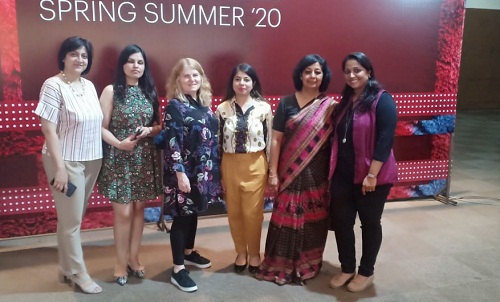 The Spring/summer 2020 season was divided into three broad themes namely Code Create, Empower Up, and Designing Emotion.
The Code Create theme fused science, nature and technology to showcase a womenswear range that embraces futuristic aesthetics grounded by a sense of practicality and reality. The collection featured colors rooted in nature such as clear waters, mint foam and rosewater alongwith rich, earthy reds that highlighted the continuing importance of transseasonal tones.
The Empower Up! theme featured a palette of upbeat mid-tones. Having a nostalgic and sun-faded quality, these tones recalled the 1980s surf culture and cities by the sea, such as Miami, Sydney, Los Angeles and Cape Town.
The Designing Emotion theme explored the interplay between people and technology. This trend combined the industrial with the artisanal with its designs offering a sense of emotional and human connection. The color palette included lean and comforting mid-tones like Yellow and orange that work easily with each other.
These themes were presented on 3D mood boards developed by WGSN.