Fall in Indian cotton production likely
India’s cotton production in 2018-19 is estimated at 343 lakh bales, less than the previous year’s harvest of 348 lakh bales. Steadily falling global prices along with weak demand for cotton yarn may drag domestic prices lower in the months ahead. Output is seen taking a hit as high summer temperatures, delayed onset of monsoons and water shortage especially in key cotton growing states of Telangana, Andhra Pradesh, Karnataka and Maharashtra have affected cotton yield, which has driven prices higher. Domestic spinning mills are inclined to import and save costs. However, it is hard for small and medium enterprises to import, as they may not have the financial muscle to buy and store. On the other hand, weak garment exports have been weighing on the demand for yarn. So the trend of rising domestic cotton prices may reverse over the next few months. At present, imported cotton is nearly Rs 3,000 to Rs 4,000 cheaper than the domestic price.
Fall in global prices has tempered the rise in domestic cotton prices. In global markets, cotton prices have declined largely as the escalating US-China trade war has hit demand for the commodity. While the US is one of the largest exporters of the commodity, China is the largest consumer.
Intertextile’s Accessories Vision to feature over 600 exhibitors
Around 600 exhibitors will participate in Accessories Vision, the comprehensive accessory product zone at Intertextile Shanghai Apparel Fabrics, from September 25 to 27, 2019. This exhibition will feature new exhibitors from Cambodia and South Africa further diversifying the international exhibitor line-up, which also includes suppliers from Hong Kong, Italy, Japan, Taiwan and more, as well as leading Chinese companies.
Accessories Vision product zone offers visitors access to a wide variety of suppliers, both Chinese and international, who will showcase a huge range of high-quality products at competitive prices. The zone also includes options essential for smart branding, such as eco-friendly tags and labels. Alongwith big names like 3M, Avery Dennison, Ideal Fastener and Shimada Shoji, the exhibition will features new exhibitors include include Huashengda Zipper from Cambodia and Prime Fastener from South Africa.
Other highlighted exhibitors include Hong Kong Bright Zipper & Machinery, Monica Crystal Accessories, U.R.Label & Printing, Wai Hung Weaving Factory, 3M, Mitchell, Mainetti.
The fair will be held concurrently with Yarn Expo Autumn, CHIC and PH Value at the National Exhibition and Convention Center (Shanghai). Intertextile Shanghai Apparel Fabrics – Autumn Edition 2019 is co-organised by Messe Frankfurt (HK) Ltd; the Sub-Council of Textile Industry, CCPIT; and the China Textile Information Centre.
Asean gets closer to RCEP
Asean members have reached common ground on the Regional Comprehensive Economic Partnership. The mega trade deal, stuck in negotiations for the past seven years, has a total 20 chapters, seven of which have now been completed. In the context of increasing trade tensions and protectionism, promoting RCEP negotiations bear an important meaning as it strengthens rule-based multilateral economic connectivity and free trade throughout the Asia Pacific region. The challenge is that India and China, members of the trade bloc, have no free trade agreement to build upon, and have been holding up completion of some chapters to gain leverage in negotiations on other chapters. Hence, the remaining 13 chapters will be concluded together as they are interlinked with one another.
The Regional Comprehensive Economic Partnership is a free trade agreement between 10 member states of Asean –Brunei, Cambodia, Indonesia, Laos, Malaysia, Myanmar, the Philippines, Singapore, Thailand, Vietnam – and Australia, China, India, Japan, South Korea and New Zealand.
The 28th round of RCEP negotiations will be hosted by Vietnam in October. Thailand is this year’s Asean chair. RCEP will cover nearly half the global economy. In 2018, trade between the RCEP countries represented up to a third of global trade.
Savio offers innovative Industry 4.0 solutions at ITMA 2019
"Savio, the leading supplier of winding, twisting and rotor spinning machines, with manufacturing plants spanning over Italy, China, India and Czech Republic, is exhibiting innovative, highly automated, energy saving Industry 4.0 solutions in all displayed machines at ITMA 2019. These solutions include winding systems that are ideal for many different needs, supporting customers in the textile challenge and developing new applications to meet their requests."
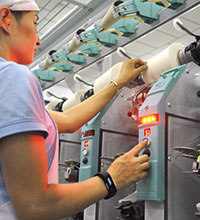 Savio, the leading supplier of winding, twisting and rotor spinning machines, with manufacturing plants spanning over Italy, China, India and Czech Republic, is exhibiting innovative, highly automated, energy saving Industry 4.0 solutions in all displayed machines at ITMA 2019. These solutions include winding systems that are ideal for many different needs, supporting customers in the textile challenge and developing new applications to meet their requests.
Savio’s Polar Evolution and EcoPulsarS winding machines can easily process special and challenging yarns, thanks to special splicing and tension control devices for ensuring perfect joints and perfect package shape, while always monitoring off-standard values.
Direct Link System offers bespoke solutions
This latest solution from Savio is the Multi Link that connects multiple ring spinning frames to one Savio winder,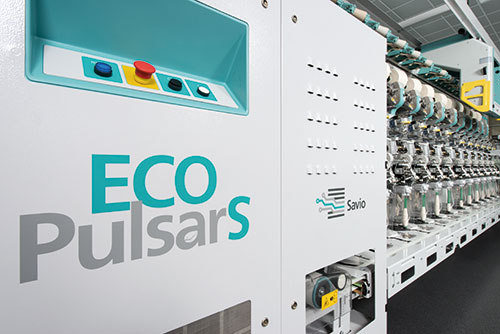 becoming a tailor-made circuit to link two or three RSFs to one winding machine. A special iPeg tray guarantees the circulation of RSF bobbing to/from winder. This solution optimises space, reduces energy-consumption and production costs. This automatic bobbin transport shortens servicing paths for the operators and allows an ergonomic material flow. The costs for production, space and energy are reduced, while keeping the quality consistent even with long and multi-connected machines.
Savio way for Industry 4.0
Industry 4.0 is the actual trend of automation and data exchange in manufacturing technologies. Connectivity, data management, remote machine set-up and operator real time interactivity: this is the Savio way for smart solutions for textile mills.
Nowadays, Savio is focusing on developing ‘smart’ components that transmit data online. The new possibilities offered by the connection of these machines translates into the different levels of Savio Industrial IoT, with the possibility of progressive sophistication (Basic, Business or Executive).
Three different levels of Savio Industrial IoT include different option levels, each corresponding to a different dose of Industry 4.0 applied to Savio textile winding machinery, from simple connectivity and machinery data downloading, to remote machine setup, to operator real-time interactivity. The leap in quality of textile machinery is evident in the new control systems, which allow for example employees to receive alarm signals directly to their wrist by smartwatch. When one of the winding machines present a problem, the anomaly signal is sent to the operator through a smartwatch, Savio Smart Bracelet, able to communicate also the type of intervention required, thus minimising the break downtimes of machine.
This data management system relieves mill operators of time- consuming routine work. Thanks to data analytics, a wealth of data are available, allowing to manage the different production phases in the best possible way and to monitor all significant parameters anytime and anywhere, making use of mobile devices. All these features enable Savio customers to control overall equipment effectiveness, increase workforce efficiency, and maximise quality and working time. Another direction of technological development concerns maintenance, with numerous systems already connected in real time with the assistance network, to minimise intervention times, also through remote actions via software without having to send technicians on site. Savio Winder 4.0 is also meant as communication between machine operator and service specialist in case of need.
Stäubli launches new-generation machines at ITMA
"At ITMA, Stäubli is exhibiting a wide range of machinery equipped with state-of-the-art high-end technologies and software solutions that offer new and expanded benefits to textile mills. Stäubli solutions can boost weaving or sock-knitting performance and overall mill efficiency, besides offering decisive functional advantages. The new generation machines on offer are:"
 At ITMA, Stäubli is exhibiting a wide range of machinery equipped with state-of-the-art high-end technologies and software solutions that offer new and expanded benefits to textile mills. Stäubli solutions can boost weaving or sock-knitting performance and overall mill efficiency, besides offering decisive functional advantages. The new generation machines on offer are:
SAFIR S60 automatic drawing-in system with ‘Active Warp Control’
The SAFIR series of drawing-in systems offers unique advantages thanks to AWC (Active Warp Control),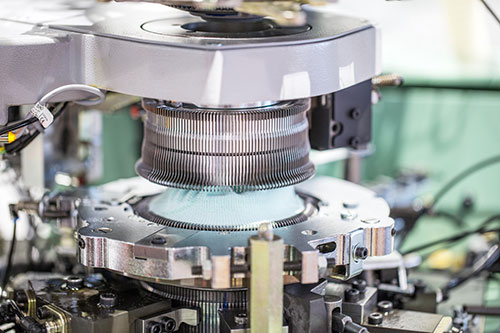 Stäubli’s exclusive yarn-repeat management system. The precision of this ingenious technology leads to more first-quality output, supports on-time delivery, and boosts the overall productivity of the weaving department. AWC is based on optical, non-contact recognition and measurement of yarn characteristics using two cameras.
New S1792 cam motion expands the broad range of frame-weaving solutions
Stäubli’s frame-weaving solutions are renowned for reliable high-speed weaving and adaptability to any kind of plain or patterned fabric and any kind of weaving machine. This versatility, in conjunction with robustness and high quality, has made the broad range of 1600/1700 series of cam motions and the S3000/S3200 series of electronic rotary dobbies well known as extremely reliable workhorses
LXXL Jacquard machine with NOEMI electronic system for luxury and technical fabrics
The LXXL machine boasts a large format (up to 25,600 hooks or 51,200 hooks in a tandem installation), for flat, terry, and velvet fabrics. It is dedicated to luxury and high-quality fabrics for clothing, upholstery silk weaving, bed linen, coverings, and technical applications.
Like the LX/LXL, the LXXL features lifting motion that ensures precise shedding geometry and absolutely vibration-free movement even at high speeds. The optimally coordinated kinematics of all moving parts within the machine and the directly mounted components such as the drives enable routine weaving of very heavy fabrics.
New-generation machine for selvedging
The N4L is Stäubli’s latest answer to the challenges of selvedge weaving, allowing the weaving of complicated patterns at the highest speeds using the most delicate and precious yarns for high-fashion fabrics. The machine is available in two formats: 80 or 128 hooks. It features robust construction and dust-proof design.
ALPHA 500 series of Schönherr carpet systems
The ALPHA 500 carpet weaving system adds immense flexibility to any carpet-weaving mill. It weaves the highest-quality applications and allows responding swiftly to rapidly changing market demands. Visitors may observe the high-performance operation up close, including the latest servo-controlled dobby of the UNIVAL 500 series and the unique servo cutting device that produces carpet surfaces of unequalled evenness.
Knitting solutions: D4S toe closing device shortens sock production
Stäubli’s D4S automatic toe closing device rapidly closes the sock on the knitting machine with a smooth seam, significantly shortens sock production, ensures top quality and uniformity of the product, and makes for very short idle times. The automatic sock pick-up and seaming operations are electronically controlled by the 2900SL controller, and this setup will boost the performance of any mill producing socks, woollen stockings, pantyhose, or medium-to-large diameter knitted goods used in various sectors.
Stäubli Robotics presents HelMo, the mobile robot system
HelMo is an autonomously driving and navigating vehicle developed especially for human-robot collaboration. At ITMA, HelMo will be at work replacing bobbins. Thanks to its modular design and robust drive technology, it can be used in virtually any industrial area, including, logistics, assembly, and quality control.
Stäubli has the core competencies in shedding (cam motions, dobbies, and Jacquard machines) and weaving preparation (drawing-in, leasing, and warp-tying machines.
ITMA: Uster launches fabric inspection Q-BAR 2 and FABRIQ EXPERT
"Uster quality systems which include fabric inspection, launched Uster Q-BAR 2 and Uster FABRIQ EXPERT at ITMA 2019. Uster Q-BAR 2 and Uster FABRIQ EXPERT aim to support textile mills in guaranteeing delivery of desired roll quality, using the best technology available for monitoring and improving production at the earliest-possible stage."
 Uster quality systems which include fabric inspection, launched Uster Q-BAR 2 and Uster FABRIQ EXPERT at ITMA 2019. Uster Q-BAR 2 and Uster FABRIQ EXPERT aim to support textile mills in guaranteeing delivery of desired roll quality, using the best technology available for monitoring and improving production at the earliest-possible stage.
This includes locating any defects quickly, supporting identification of the root causes and initiating corrective action. The expertise of EVS technology – with intelligent visual detection and fault-recognition algorithms – is now enhanced by Uster’s overall experience in quality management systems for the wider textile industry. The advantage of Q-BAR 2 is the rapid stop of weaving when it identifies a defect, before it reaches critical size for subsequent processes.
Full on-loom quality transparency
FABRIQ EXPERT is the key to early detection of quality issues, based on comprehensive quality data gathered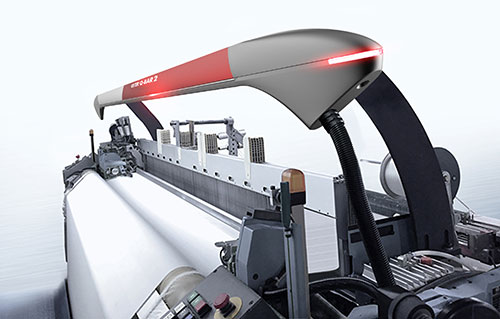 during on-loom inspection of fabrics. It provides weavers with an overview of their entire installation, via Q-BAR 2 systems fitted over each machine.
Quality partner for fabric producers
Combining industry-leading technology of automated vision-based inspection with USTER’s unrivalled stature in quality management systems and services creates the perfect ‘dream team’ for fabric manufacturers. They can now have access to highly-effective automated fault detection, as well as total transparency of weaving quality performance, provided during on-loom inspection. Uster Fabric Inspection offers real benefits for weavers in terms of both customer satisfaction and their own long-term business success.
Uster launches Quality Management Platform at ITMA
"Five ‘Value Modules’ of Uster QUALITY EXPERT has been launched at ongoing ITMA, after being successfully tested by customers around the globe. These modules will give spinners an objective and accurate view of the entire spinning process, leading to higher yields and consistent quality: ‘Managing a textile mill with quality in mind’ in practice."
 Five ‘Value Modules’ of Uster QUALITY EXPERT has been launched at ongoing ITMA, after being successfully tested by customers around the globe. These modules will give spinners an objective and accurate view of the entire spinning process, leading to higher yields and consistent quality: ‘Managing a textile mill with quality in mind’ in practice.
Quality Management Platform for long-term business success
By increasing productivity, the Quality Management Platform contributes directly to improved business security for textile producers. “Profitability and future sustainability of a textile mill depends a lot on the optimization of production and the predictability of produced quality,” says Thomas Nasiou, CEO of Uster Technologies. “Our customers are partners and we want to support them to stay successful and tackle challenges, by providing the best services and systems.”
Uster believes the future of quality management is preventive action points out Nasiou, “A mill is good, if it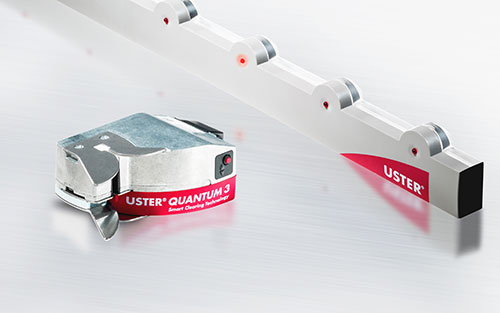 delivers good quality but a mill is great, if it delivers same quality.”
This new reality for mills enables data-based preventive control. It is delivered exclusively by Uster Technologies through QUALITY EXPERT, the ultimate Quality Management Platform. The system connects, integrates, analyses and interprets vital quality information from every stage of the fiber-to-yarn process. This analysis is based on Uster application know-how and produces alerts about exceptions and suggestions for fixing them, as well as improvements when necessary.
Optimize ring spinning, control contamination – and much more
The five Value Modules will give tangible benefits to operators, quality managers and mill managers.
Ring Spinning Optimization (RSO)
RSO focuses on the most costly part of yarn making – ring spinning – using data from Uster QUANTUM 3 yarn clearers at winding and Uster SENTINEL in ring spinning to ensure yarn quality stays constant, even at high speeds. Spinners can correlate end-breaks with winding data, as well as with fiber properties, in a single system. This result in improved cop build-up quality, fewer quality variations and reduction in alarms, delivering significant profitability increases to yarn producers.
Total Contamination Control (TCC)
Double protection by Uster JOSSI VISION SHIELD and Uster QUANTUM 3 gives spinners control over balancing quality and productivity, a transparency that enhances cost efficiency and maximizes profits. It means they can make good choices about raw cotton purchases and reduce waste of ‘good’ fiber. Optimizing ejections and cuts gives precise control over levels of contamination, ensuring the yarn meets customer demands.
Alarm center
This provides direct guidance to machine operators, alerting the appropriate personnel and pointing them to the exact location of an issue. Knowledge from these alarms is stored and used for future reference, enabling even faster reactions.
Mill analysis
Intelligent, data-based analysis by Uster QUALITY EXPERT provides customers with an excellent overview of mill operations. Information is stored centrally, for easy access and total transparency. The result is savings in both time and money.
Yarn prognosis
Accurate forecasting of how yarns will perform in downstream processes brings security and confidence to both spinners and their customers. It means spinning mills can isolate below-par quality and remove it, sending out only yarn which meets customer specifications.
Uster Technologies is the world’s leading provider of quality management solutions from fiber to fabric.
"Lindauer Dornier GmbH has launched the standard variant of its rapier weaving machine P2 at ITMA 2019. More flexible, faster and more efficient than P1, The P2 is the result of almost seven decades of expertise in developing and building rapier weaving machines. With its improved shed geometry and more rigid frame, better insertion performance, maintenance-free drive (developed in-house) and optimised positiveactive center transfer, the P2 henceforth replaces the P1 as the most flexible rapier weaving machine in the world."
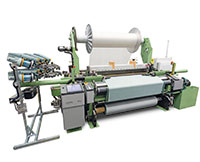 Lindauer Dornier GmbH has launched the standard variant of its rapier weaving machine P2 at ITMA 2019. More flexible, faster and more efficient than P1, The P2 is the result of almost seven decades of expertise in developing and building rapier weaving machines. With its improved shed geometry and more rigid frame, better insertion performance, maintenance-free drive (developed in-house) and optimised positiveactive center transfer, the P2 henceforth replaces the P1 as the most flexible rapier weaving machine in the world.
Better operability,greater investment security
The new P2 is 240 millimeters shorter and 40 millimeters lower than P1. "This simplifies its operation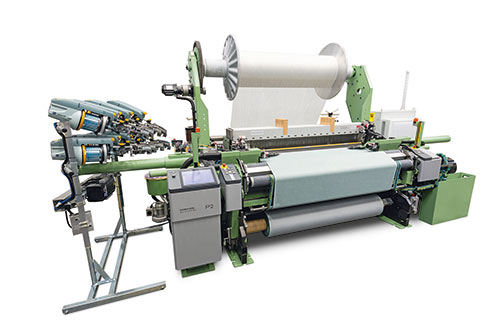 enormously", declares Thomas Laukamp, Predevelopment Manager of the machine. Furthermore, the P2 machine structure consists of clearly defined primary and auxiliary modules. This module-based construction principle is intended above all to make conversion and expansion work simpler. This in turn assures the user greater investment security, because users can respond more rapidly to changes in the market.
The P2 can be adapted easily and quickly for processing different yarns for clothing, home and technical textiles as well as for high-quality composite semi-finished materials.The central module in frame construction is 75 percent more rigid than the P1 and is also designed for optimum force flow. The torsional rigidity of the reed shaft has been increased by 50 percent to lend more stability to the weaving process.
Supreme flexibility in three variants Whether it is used with cam motion, dobby (up to 24 shafts) or Jacquard machines with up to 30,000 hooks and in conjunction with the EasyLeno® leno system developed by DORNIER – with up to 16 filling thread colors the P2 is the ideal tool for creative, flexible, precise and efficient production of top quality clothing and home textiles or technical textiles in glass, carbon or aramid.
The new machine is available in three variants: Besides the standard configuration, the P2V is a reinforced version offering a reed beat-up force as much as 37 kN, and the P2S heavy-duty weaving machine is supplied with a maximum reed beat-up force of 50 kN for very heavy and dense technical fabrics. Like all weaving machines from DORNIER, all variants of the P2 are equipped with high-performance interfaces so they can be integrated easily in the IT/tool environments in the weaving mills.
Patented innovations for maximum productivity
Besides the unrivaled DORNIER SyncroDrive® drive concept, three other patented, optional innovations by DORNIER offer potential for raising productivity further:the color selector and feed system DisCoS (DCS)enables exceedingly simple processing of up to eight colors; the Weft Saver (DWS) waste saving device enables weaving without a left catch selvedge, reducing waste, and the double weft rapier heads (DoPPIO) with free color transfer and parallel weft insertion.
Zegna presents color trends
Zegna Baruffa Lane Borgosesia will present its latest yarn and color trends at the upcoming Pitti Filati trade show, to be held from June 26-28, 2019 in Florence. The range includes:
City: Beige inspires this range. The term beige was originally used to define a fabric obtained from unbleached wools and more than often the term was used to indicate the product itself. Today it represents a color that is neutral and reassuring but which, with the passing of time, has taken on a character of itself, to be combined with bright colors but which gladly carries a style of its own.
Mood: The range depicts a universe in grey, many types of shaded blues, white and yellow lights, colored lights, sudden flashes of every color, multiplied by the reflection of infinite crystals. It is inspired by the urban landscape, its most authentic and recognisable colors, its changing rhythm, the cultural scene and passing time. Gold has the same weight as the other shades.
Brocade: This range is driven by the color Naples Yellow – one of the shades of gold most used in a rather complex family of colors. Its presence within this range, which would otherwise have been considered as too opaque and intensely wintery, gives warmth and brightness.
M&B Hangers President bags TRSA Maglin/Biggie Lifetime Achievement Award
Milton M. Magnus III, President, M&B Hangers, Leeds, AL, was recently named the winner of TRSA’s Maglin/Biggie Lifetime Achievement Award, which honors exceptional lifetime contributions by an associate member to improve the association and industry. Magnus III will receive his award during the Annual Awards Dinner on Sept. 19, in conjunction with the TRSA 106th Annual Conference in Boston, MA.
Magnus is a longtime, active member of TRSA. He promotes TRSA’s value to the industry, supporting the association through personal involvement and enabling his company’s management to give their time to TRSA activities. He’s been an active supporter of TRSA’s advocacy efforts and is one of TRSAPAC’s strongest supporters, donating annually to ensure the linen, uniform and facility services industry is well represented in front of policymakers. Magnus has served on a variety of committees and currently chairs the associate committee. He is also a current member of the TRSA Board of Directors.
Magnus joined M&B Hangers 45 years ago. Under his leadership, the company has grown and diversified to a full-line hanger manufacturer in the United States. M&B Hangers operates manufacturing plants in Leeds, AL, and in PiedrasNegras, Mexico.
More...
NRF urges USTR to avoid additional tariffs
A recently released study by the National Retail Federation urged the Office of the U.S. Trade Representative to avoid 25 percent tariffs on $300 billion in Chinese goods. The report prepared by the Trade Partnership Worldwide projected that American consumers will have to pay $4.4 billion more each year for apparel, $2.5 billion more for footwear, $3.7 billion more for toys, and $1.6 billion more for household appliances if the administration proceeds with the additional tariffs.
David French, Senior Vice President-Government Relationa, NRF has urged the Office of US Trade Representative to reevaluate a strategy based solely on tariffs and work with its allies to put international pressure on China.
According to him, it would be impossible for all market participants in the industry to simultaneously move sourcing to other countries if the tariffs are levied. The retailers would be forced to continue to use Chinese suppliers and pass on higher costs to their customers – just in time for the holiday shopping season.
As part of monthly consumer surveys conducted by Prosper Insights & Analytics, NRF has been tracking the public’s growing concern over the trade war. The June survey found 81 percent of consumers are “concerned the ongoing trade war will cause prices to increase,” a 12 percent increase since November 2018.
In addition to French’s oral testimony, NRF submitted comments to USTR detailing the negative economic impact of the proposed tariffs on American businesses, workers and consumers.
Fashion SVP Summer Edition to be held in London
UK sourcing and manufacturing expo Fashion SVP will hold its summer edition from June 25-26at the Olympia exhibition center in London. The show’s resident denim section, formerly known as Source Denim, will feature Orta Anadolu as a first-time exhibitor, while Pioneer Denim will return to the show as an exhibitor. Both of these companies will present their latest innovations, with focus on sustainable solutions. Other denim manufacturers due to participate include Denim Club from India, Turkish suppliers Kilim Group and Tusa, and Marjomotex from Portugal.
Fashion SVP has again partnered with Fashion Enter – the social enterprise striving be a center of excellence for sampling, grading, and production as well as learning and the development of skills within the fashion and textiles industry. This collaboration will provide visitors with practical, interactive 'drop-in' workshops relevant for start-ups and established fashion players alike.
LVMH Group Co to launch menswear
LVMH group’s luxury multibrand e-tail site 24S will launch a menswear collectionin January 2020. The collection will feature labels like Balenciaga, Fendi, Gucci, Off-White and Acne Studios, as well as exclusive items by Dior and Celine, two labels also owned by Bernard Arnault's luxury goods giant.
Introducing menswear was a part of the group’s strategic plan ever since it launched its operations. The brand will offer an unrivalled product range and service, by showcasing the best in fashion to its customers from all over the world. 24S, which changed name last May, dropping 24 Sèvres, the name it started with, isn’t the only luxury multi brand e-tailer to introduce menswear. Last March, My theres a hired Australian manager Chris Kyvetos, making him its first purchasing director for menswear
H&M opts for cleaner transport
H&M is backing greener commercial transport initiatives in a bid to become more environment-friendly.
The Swedish fashion conglomerate has a collaboration with the transport giant Maersk to champion its new, carbon-neutral ocean product -- a biofuel-blend that incorporates fuels such as wasted cooking oil that has been tested to propel vessels, showing promising results in reducing the emissions from ocean shipping.
H&M aims at achieving a fossil-free commercial heavy transportation system by 2050. Its ambition to become climate positive by 2040 requires cooperation and engagement from all parties in the supply chain. The group wants to use its size to be a force for good and enable scaling innovative solutions, such as the carbon neutral ocean product, for a greener commercial transport.
Luxury fashion brand Ralph Lauren plans to set science-based greenhouse gas reduction targets by 2020 and 100 per cent renewable energy targets by the end of this year. In May PVH, the parent company behind Calvin Klein and Tommy Hilfiger, unveil Forward Fashion, the evolution of its corporate responsibility strategy that aims at reducing its negative impacts to zero, focusing on eliminating carbon emissions by using more renewable energy sources and cutting waste to zero by avoiding landfill solutions.