Government announces new scheme to strengthen textile value chain
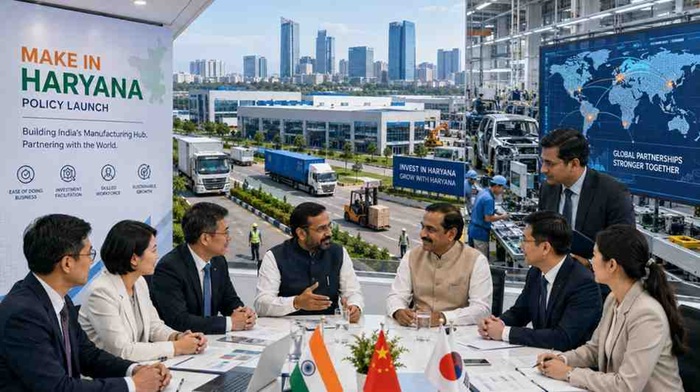
The Union government has announced a ‘Scheme for Assistance to Strengthen Specific Sectors in the Textile Value Chain’ effective from September 4, 2018, to December 31, 2023. As against the policy that attracted fresh investments in ginning, spinning and garmenting, the assistance scheme covers segments such as weaving, knitting, dyeing/printing, machine carpeting, technical textile, composite units and other activities in the such as embroidery, winding, sizing, twisting and crimping.
The scheme provides financial assistance through credit-linked interest subsidy of six per cent for micro small and medium enterprises (MSMEs) and 4-6 per cent for large enterprises, with an upper ceiling of Rs 20 crore per annum. Further, the scheme offers subsidy in power tariff of up to Rs 3 per unit for weaving, and Rs 2 per unit for other eligible segments with a validity of five years.
The assistance scheme is meant for new units being set up. These newer units would be more cost-effective, and compete with us on price difference. Already, the existing textile industry in Gujarat is struggling due to multiple reasons. Around 30 textile processing units have been shut in recent months, with the remaining 320 odd units functioning at only 70 per cent of the original capacity. Surat, the biggest textile market in the state, alone has seen daily production fall from 40 million metre per day to 25 million metre per day.
Based on the subsidy under the new scheme, newer units could carry a 15-20 per cent production cost advantage over the existing ones. Apparently, the scheme also offers assistance covering all existing units which are compliant with the government’s energy, water and environment conservation norms, and have been in operation for more than three years.
The scheme provides 20 per cent assistance on the cost of with a ceiling of Rs 30 lakh, and 50 per cent assistance for audit fees with a limit of Rs 1 lakh. The benefits can be availed once in two years during the operative period of the scheme. A one-time financial assistance of up to 50 per cent of cost, with a limit of Rs 25 lakh, is provided for and modernization. The scheme provides assistance of up to 25 per cent of capital expenditure on common facilities and infrastructure, with a limit of Rs 15 crore for setting up textile parks.
H&M’s Q4 sales up nine per cent
H&M sales rose nine per cent in the fourth quarter. The fashion retailer is on course to increase annual profits for the first time in four years following heavy investment in online and other services to adapt to a changing market. Over the past few years the Swedish-based retailer has invested in online services, new store concepts and independent brands to broaden its customer base and turn itself around. Germany is H&M's biggest market. The group has embarked on a road to recovery after slowing footfall at its core H&M-branded stores caused years of sliding group profits, mounting inventories and shrinking market value. Shares in the world's second-biggest apparel group have climbed 53 per cent this year.
Full-year profits are expected to grow for the first time since 2015, despite still-high inventory and investment levels. H&M has partnered with a startup Unspun on a project that recreates a 3D body scan into a pattern that can be used to customize jeans. H&M will begin implementing the project in its stores next year. Since last September, H&M’s innovation hub, The Laboratory, has been making the first software tests with one hundred clients of the Weekday chain. Customers are given the opportunity to customize Weekday jeans styles changing its trim, stitching and pockets and then using their body scan to fit the jeans.
Cambodia’s CDC approves three garment investment projects
The Council for the Development of Cambodia (CDC) has approved three investment projects in the bags and garments sector with a total capital investment of $8.8 million. These projects including setting up a bag factory for Quan Ming Handbag (Cambodia) Industrial, a bag and belt factory for Gd New Sky Leather Products Co, and a garment factory for Tao And Kiven Garment.
These factories will generate 3,448 jobs. They will be located in Phnom Penh, and Kandal and Kampong Speu provinces.
As Cambodia may be at risk of losing duty-free export opportunities to the European Union (EU) if the Everything But Arms (EBA) agreement is withdrawn, the country is diversifying its export portfolio to reduce any potential impact. The country is expanding its export portfolio to combat any potential effect. It is also trying to reinforce its productivity and competitiveness in the export sector, which will help its products compete with those of other countries.
Stäubli showcases weaving and knitting innovations at ITMACH India 2019
Stäubli presented its latest textile machines for weaving and knitting at ITMACH India 2019. The company showcased its new TIEPRO warp tying machine, S1692 cam motion and the S3260 electronic rotary dobby along with Stäubli TF weaving systems.
Weavers attending the exhibition also learned about Stäubli’s broad range of Jacquard weaving machinery. Covering virtually any application, this range includes machine formats with up to 25,600 hooks (or up to 51,200 by combining two machines) as well as Jacquard weaving harnesses for perfect coordination between the Jacquard and the weaving machine.
Locally active in the Indian market since 1947, Stäubli is a renowned player in the Indian textile industry. The company also offers in-house training for machine operators and support for customers’ production teams as part of change management. Maintenance and spare parts schemes are also locally available and highly appreciated.
Dame Zandra Rhodes to be an opulent speaker for Pure London
Pure London is delighted to announce British designer Dame Zandra Rhodes to the AW20/21 show for a keynote address on day one. Zandra will take to the newly created Nomad stage in the National Hall of Olympia London to discuss her ‘50 Years of Fabulous’ at 3.30 pm on Sunday 9th February 2020.
As one of the most enduring and iconic designers of the generation, this year Zandra celebrates her own Jubilee in the fashion industry. Visitors will experience her speak about the ups and downs of continuing to thrive in the fashion world, offering fascinating insights and no doubt a few interesting stories over the years. Over the past 50 years, Zandra has dressed figureheads of the fashion industry in her signature creations, which combine vibrant patterns and finishes with superior-quality fabrics. Her seasonal collections are a fine display of her textile expertise and experience, captured in the colourful and timeless dresses printed and beaded by hand at her London atelier.
Zandra marked her 50 years in fashion in September 2019 with a retrospective exhibition at the Fashion and Textile Museum, a book published by Yale and a collection for SS20 entitled 'The Jubilee Collection.' The fashion icon shows no signs of slowing down - announcing future collaborations with the likes of IKEA and working on her AW20 collection to be shown in February 2020 at LFW.
The new Nomad Stage offers a dedicated platform for industry leaders, change-makers and personalities to discuss the most pertinent and significant global topics in the industry, share their stories and offer practical business advice.
PTJ2020AW /JFW-JC2020 strengthens trade
The Premium Textile Japan (PTJ) 2020 Autumn/Winter and JFW JAPAN CREATION (JFW-JC) 2020 textile shows took placeamid an unprecedented downturn in the apparel market. Although the fairs started initially with relatively visitors (85%compared with the previous year) on the first day, things recovered by day two, with numerous visitors gracing both showvenues and a total of 16,800 visitors recorded over both days.
The PTJ fair was particularly successful awash with buyers who were constantly sourcing new fabrics. Equally prominentwere numerous buyers from leading apparel companies, despite recent trends suggesting a decline in this area. The stand-out feature on the occasion was the increased number of overseas buyers, following on from the previous record breaking PTJ show held in May (with over 150 buyers from 19 countries/regions).
Although no detailed breakdown has yet beenannounced, with multiple registrations from Chinese group buyers alongside other visitors from Asian countries Korea, Taiwan and Singapore as well as the States and Turkey, reflecting significant interest in Japan fabrics.The highlight of this edition was the increased no. of new exhibitors. The Turkey Pavilion made its debut as an overseasparticipation by group, while many domestic companies also joined the fair, seeking to acquire new customers to offset adecline in orders from existing clients via limited routine sales.
Nike continues with healthy profit and sales
Nike has overcome rising costs and new competition in both the online and offline sales channels to post market-thumping sales and profit growth. The footwear and sports apparel giant’s financial resources are a major asset. It intends to press that advantage to keep rivals in catch-up mode. Evidence of that strategy is the company's recent acquisition of the data analytics company Celect and with Nike's aggressive spending on marketing, research and development, and the direct-to-consumer sales channel. At the same time, the growth stock is cutting in places that aren’t delivering healthy returns, including by developing fewer products and discontinuing models when they don't quickly resonate with consumers. These initiatives impact selling expenses, which ticked slightly higher to more than 31 per cent of sales last quarter.
Nike expects sales growth to accelerate in fiscal 2020. This may be possible by efforts at raising gross profit margin through more direct-to-consumer sales. On the other hand, if Nike stumbled in the weeks gross profit margin should also expand, leading to earnings growth in the mid-single digits. China accounted for nearly a quarter of Nike’s global growth last year. At home, its success in standing out against rivals like Under Armour will depend on Nike's continued ability to launch popular new products.
Zilingo acquires nCinga
Singapore-based fashion startup Zilingo has acquired nCinga in a cash and stock deal. The acquisition will enable Zilingo to help customers in the United States, Europe and Australia, where brands traditionally lack transparency over supply chain and manufacturing processes. Zilingo will also help to expand the reach of nCinga’s software to core fashion manufacturing markets such as Bangladesh, India, Vietnam, Indonesia, Thailand and Turkey.
Zilingo, has built several pieces of the supply chain — manufacturing, logistics, payments, etc, for retailers and brands. nCinga is a startup from Sri Lanka founded in 2014 and offers an IoT platform to enable real-time production monitoring on factory floors and data analytics tools. Zilingo will deploy the Sri Lankan startup’s Manufacturing Execution System software across its network of 6,000 factories and 75,000 businesses. In fact Zilingo has long been a client of nCinga and nCinga’s product has helped the startup drastically improve efficiency and drive insights by digitizing the shop floor. The Sri Lankan startup’s work has been crucial to Zilingo’s mission of creating a transparent, sustainable, economically viable and socially responsible apparel supply chain.
Retailers continue to struggle with meeting consumer demands for fast, responsibly produced products due to inefficiencies and information asymmetry.
Oonana helps US fashion brands bypass retailers
Oonana, based in the US, is an online retail marketplace started by manufacturers to provide clothing brands a low cost and low risk platform to sell direct to consumer. With Oonana, US fashion brands can simply upload their existing product images on the site and defer the costly marketing and time-consuming customer service to the platform. As a marketplace, Oonana is also able to attract and keep more customers by offering a wider selection of vendors and styles. But unlike other marketplaces, Oonana can offer one central shipment of multi-vendor orders which eliminates multiple packages and higher shipping costs for consumers. The direct access gives shoppers first availability on the newest styles and the lowest retail prices by bypassing retailers. Oonana’s full retail proceeds go directly back to the fashion brands (Oonana only takes a small commission).
Fashion brands have had a rough run the past years with record levels of retailer closings that have dwindled their customer base. Continuing downward industry trends and ever-increasing cost pressures from the explosion of fast fashion have left clothing brands to deal with razor-thin margins and cut-throat practices from retailers. It’s clear that the traditional supply chain in fashion is broken and many clothing manufacturers are turning to a new direct-to-consumer model.
E-commerce can boost South Asian exports
Increasing use of e-commerce by consumers and firms in South Asia can potentially help increase competition and firm productivity, and encourage diversification of production and exports, says the World Bank. By unleashing its online trade potential, South Asia can better integrate into international value chains, increase its market access, and strengthen commercial linkages between countries across the region.
Online transactions can be strengthened by leveraging the reputation of large e-commerce platforms to offer consumer protection, return and redress, and data security as an initial substitute for robust contractual and consumer protection mechanisms, and permitting cross-border e-commerce payments. While cross-border trade within South Asia represents only five per cent of the region’s total trade, e-commerce has the potential to stimulate regional trade by bridging the gap between buyers and sellers on different sides of national borders. Apart from firms, consumers in South Asia stand to gain significantly from the potential reduction in costs and availability of a greater variety of e-traded goods and services.
Although e-commerce has grown significantly in South Asia, online sales account for a mere 1.6 per cent and 0.7 per cent of total retail sales in India and Bangladesh, compared to 15 per cent in China and around 14 per cent globally.
More...
KHADI & SILK SHOW AT IFW Chandigarh
Delhi Fashion Club organised “LOCAL TO GLOBAL KHADI” in Chandigarh during “International Fashion Week” which was held on 14th December 2019 at Hyatt Regency, Chandigarh. With this show DFC also celebrates 150yr of Mahatma Gandhi and 100 years of Charkha.
With this show DFC tried to give a platform to such designers who are working closely with the weavers , artisans & making garments with a vision for a better tomorrow for the world and the nation. DFC Promotes “sustainable fashion” concept which is spreading globally & not only talks about eco-friendly fabrics but also urge to design zero waste garments. This helps in saving our environment & Forests as well by avoiding the use of toxic dies and chemicals.
To support the cause during this Fashion Week, Delhi Fashion club organised a unique fashion show consisting of two designers Arbin Tonjam from Manipur (Represented North East Handloom) and Celebrity Designer Ashok Maanay from Banglore (Represented National Handloom Silk).
Delhi Fashion Club presented this show on day one of the fashion week which witnessed the richness of Handlooms & textile of North Eastern State Manipur. Show started with North east textile promotion followed by National Silk handlooms show, Arbin presented his Manipuri handloom to promote north east & accessories for the models includes wooden sticks headgear which were beautifully amalgamated with Manipuri sensibilities of designs, whereas Ashok Maanay’s collection was made of Silk & used handloom sarees and Royal pagdi and silk shalls for mens too, making them look like royal family queens and kings.
Handicraft export to experience remarkable growth
The 33rd Annual General Meeting [AGM] of the Export Promotion Council was held today at New Delhi. Ravi K. Passi, Chairman EPCH while addressing the AGM informed that with the active support of the Council, exporting community performed very well with respect to exports from the Country which was Rs. 23,029.36 crores in 2017-18 and reached to the tune of Rs. 26,590.25 in 2018-19 crores registering an impressive growth of 15.46% over the previous year.
 The 33rd Annual General Meeting [AGM] of the Export Promotion Council was held today at New Delhi. Ravi K. Passi, Chairman EPCH while addressing the AGM informed that with the active support of the Council, exporting community performed very well with respect to exports from the Country which was Rs. 23,029.36 crores in 2017-18 and reached to the tune of Rs. 26,590.25 in 2018-19 crores registering an impressive growth of 15.46% over the previous year.
Passi further informed about multifarious activities related to marketing, product and design development, skilling, compliance and other initiatives undertaken by EPCH during 2018-19 which included participation in International fairs within India and in the overseas markets, organizing informative seminars all across craft clusters, providing handholding to entrepreneurs, exporters and artisans and Council’s active engagement with MSME’s SFURTI programme in Northern Eastern Region.
He informed that Council also represented various issues pertaining to GST, MEIS benefits and the range of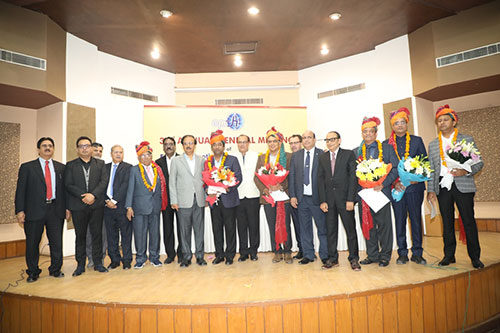 other issues affecting handicrafts sector at the highest level including Ministry of Textiles, Ministry of Commerce & Industry and Ministry of Finance.
With an objective to offer avenues for technological upgradation, skill development and marketing opportunities, EPCH set up Handicrafts Productivity Centre and Testing Laboratory at Jaipur, upgraded the Saharanpur Common Facility Centre with latest and modern technology machines elaborated Shri Passi.
Rakesh Kumar, Director GeneralEPCH while speaking on the occasion informed the members present in the meeting about Council’s PAN India reach and active participation of the prominent exporters from various crafts pockets in development, promotion and growth of exports of Handicrafts. He further informed the House about the tremendous increase of participation in IHGF Delhi Fair (Autumn/Spring) as well as footfall of overseas buyers in IHGF Delhi Fair in recent IHGFs. The DG-EPCH further informed the House about the council’s future plans to actively engage the social media platforms to increase its reach within India as well across the globe and also providing backward and forward linkages for overall growth of handicrafts sector.
During 33rd AGM six members of the Committee of Administration were also elected. The newly elected members includeRaj Kumar Malhotra of M/s Asian Handicrafts Pvt. Ltd., Gurgaon from Northern Region, HansrajBaheti of M/s Thar Art Exports, Jodhpur and LekhrajMaheshwari of M/s Rajasthan Handloom & Handicrafts Industries, Jaipur from North West Region, Nabeel Ahmad of M/s Nawab Regency, Moradabd, Kamal Soni of M/s Vallabh Metal Inc., Moradabd and Sharad Kumar Bansal of M/s Bansal Impex, Moradabad are elected from Central Region informed Rakesh Kumar, DG – EPCH.
The Handicrafts exports during the eight months of current financial year from April to November, 2019-20 is Rs. 17,292.68 crores registering a growth of over 2.72% over the same period in last year.
CHIC trade looks forward to substantial growth spectrum
From 11th to 13th March 2020, the latest edition of CHIC March 2020 takes place in Shanghai and paves the way to the most coveted fashion market in the world.
One of Asia's largest trade fair for fashion and lifestyle presents around 1,000 Chinese and international exhibitors on an enlarged 145,000 m² in the National Exhibition & Convention Center, who will be efficiently networked with the expected 100,000 visitors. CHIC offers a comprehensive upgrade for 2020. For the first time, all exhibition segments have been integrated as separate show-in shows and have been sharply defined with new names. In the international area CHIC WORLDWIDE brands from Italy, France, Germany, Korea, etc. presents themselves and their new collections. Individual exhibitors come from Spain, Poland, Switzerland, Turkey, Singapore, Vietnam, India etc.
The Strategic marketing measures provide even more targeted support for international exhibitors: cooperation with influential Chinese key opinion leaders (KOLs) are being intensified, the cooperation with the most important sales platforms is being expanded, and the VIP matching with invitations of key accounts has been increased. The business seminars CIHC TALKS will be expanded internationally in March 2020; the CHIC SHOWS show the relevant trends on the Chinese market.
Education, awareness to fuel use of recycled fibers in denim making
"The focus on recycled fibers at the Spring/Summer 2021 Kingpins New York edition, once again highlighted the importance of recycling in fashion. As Ozge Ozsoy, Marketing Chief of Bossa noted recently, fashion industry’s interest in recycling is growing with brands taking many steps to lessen their negative impact on the environment"
 The focus on recycled fibers at the Spring/Summer 2021 Kingpins New York edition, once again highlighted the importance of recycling in fashion. As Ozge Ozsoy, Marketing Chief of Bossa noted recently, fashion industry’s interest in recycling is growing with brands taking many steps to lessen their negative impact on the environment.
New collection from recycled jeans
Bossa became the first textile company to produce 100 per cent recycled fabric through its Re-Set collection, which it launched in 2006. The mill currently makes around 11 per cent of its clothes from recycled products and plans to increase this to 25 per cent. The mill recently launched a project where it collects used jeans from consumers to recycle into new products. These recycled jeans are a part of the mill’s new Future Denim collection made from a range of 100 per cent sustainable fabrics including organic cotton, recycled cotton recycled polyester, Eco-T400 and Refibra, and combined with Bossa’s water-saving blue dyeing process.
Fibers from recycled PET bottles
Like Bossa, Pakistan-based Artistic Milliners’ makes fabrics from recycled yarns.
The mill’s portfolio of recycled fibers includes pre-consumer recycled cotton, post-consumer recycled cotton, industrial waste and branded fibers like Tencel’s Refibra, Roica by Asahi Kasei and Unifi’s Repreve and Ocean Repreve. For Spring/Summer 2021, the company launched new R&D platforms, bio-vision and circular blue, to support zero waste design product development for fiber technologies and water and energy usage. Its most popular recycled alternatives include post-consumer waste and recycled polyester. Its Repreve fiber is recycled from PET bottles. The company plans to recycle around 20 billion plastic bottles by 2020 to make this fiber. 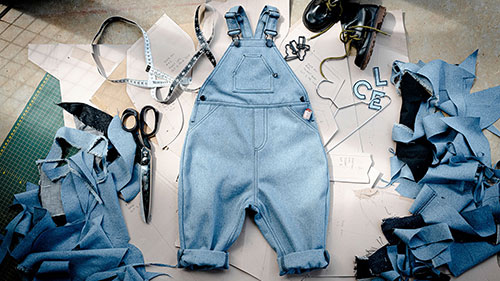
Fabrics made from Repreve or pre-consumer recycled cotton with Recycled Claim Standard and Global Recycled Standard certifications also dominate the portfolio of Prosperity Textile. At Kingpins, the mill presented many inspiring ideas on recycling, like the Indigo Renew line, which is upcycled from the indigo cotton yarn wastes produced at dyeing mills. Since the yarns are already dyed, no further indigo dyeing is needed to create the signature blue tone. The company also introduced fabrics made from the newly launched Lyra Ecomade and T400 Ecomade fibers made recycled materials.
Pakistan-based Soorty mill uses Repreve in a variety of stretch fabrications. The company’s Repreve range complements its other recycling initiatives, including a range of denims made with organic cotton and 20 percent post-consumer recycled cotton or industrial recycled cotton.
Expanding recycling cotton program
Mexico-based Global Denim also launched its Spring/Summer 2021 range made from Repreve. The brand soon plans to launch its recycling cotton program-Ecoloop on a broader scale. Through this program, the mill creates new fabrics with recycled cotton yarn sourced from post-consumer jeans and its own floor scraps and textiles from its commercial partners, launched last year as a small conceptual line. Approximately 20 to 25 per cent of the mill’s collection for Spring/Summer 2021 has 10 to 15 per cent recycled cotton content in its makeup.
Another denim mill that priortises recycling is: Artistic Fabric & Garment Industries (AFGI). In 2016, the company’s in-house shredding plant was certified under the GRS to process post-consumer waste jeans into new fibers. This allows it to transform discarded jeans into new yarns, fabrics and jeans. At Kingspins, it presented a ‘100 percent sustainable jean’ made with 70 percent post-industrial recycled cotton and 30 percent post-consumer recycled cotton.
Increasing the recycled content in denims
Though the US market is yet to adopt entirely recycled jean, many American labels are now considering using more recycled content in their denim. Currently, denims sold in the US contain only 5 per cent recycled content as these cost more than the regular jeans. Brands are challenged by justifying the higher cost for a product that consumers still correlate to be made by ‘used’ goods.
Thus, the use of recycled fibers in the denim fabric process is still in its infancy. To create more awareness about the concept, brands will have to work on educating shoppers. For this, the suppliers can organise educational platforms in collaboration with retailers. However, they also need to ensure that they provide sold and trustable information about their products to the consumers.