Protect garment workers’ interest, urge experts to brands cancelling orders
 As major international brands canceled their orders due to the COVID-19 outbreak, millions of workers employed in Asian garment factories were left without a job. Many were laid-off without severance pay or outstanding pay which shows that brands do not respect their workers, points out Akter, Founder, Awaj Foundation, a labor rights organization at a recent forum organized by Cornell University’s ILR School. Bangladesh, which employs over four million workers, pays them a meager $95 a month. The country lost over $3.18 billion worth of garment orders affecting nearly 2.28 million workers, says the BGMEA.
Brands reiterate commitment to workers
Hence, Akter urged US and EU brands to take responsibility for their orders and workers’ welfare. On their part, brands reiterated their commitment to long-term business in Bangladesh. For instance, Adidas revealed it is working in close collaboration with partners to shift some orders to the second half of the year. The company has initiated a program to increase the health and safety requirements for suppliers by providing additional protective masks, hand sanitizers, health checks, and more intensive cleaning measures. It is also promoting the exchange of information among partners to leverage the experience gained in China.
Like Bangladesh, over 130,000 garment workers in Cambodia too lost their jobs as about 250 factories suspended operations. The country employees around 8,00,000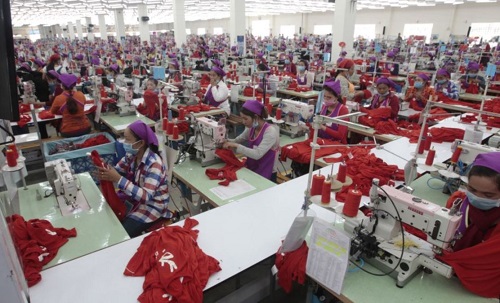 workers in its factories which produce around 80 per cent of Cambodia’s garment exports, revealed a joint association of Garment Manufacturers Association in Cambodia (GMAC), Cambodia Footwear Association, and the European Chamber of Commerce in Cambodia. Ken Loo, Secretary-General, GMAC, estimates around 300,000 workers will lose their jobs in future.
The rapid spread of COVID-19 has made garment workers across the world extremely vulnerable. To alleviate the effects of this pandemic, H&M recently joined a Call to Action in support of garment workers. The call urges brands to protect workers’ income, health, and employment by paying for manufactured goods and goods in production.
Focus on building long-term partnerships
Though neither suppliers nor big brands were prepared for the pandemic of this magnitude, experts are urging them to institute safety measures for workers. Sarosh Kuruvilla, Professor, Industrial Relations at Cornell University’s ILR School has urged suppliers to institute an unemployment insurance scheme for these workers.
Brands should also take this opportunity to scout talent from other industries that have a better knowledge of building strategic partnerships within their supply chains, feels David Hayer, Senior Vice President, Global Sustainability at Gap Inc. Instead of focusing only on seasonal orders, they should build long-term partnerships from production to retailer levels, he emphasizes.
First Global Talents Digital to present over 50 collections
The first edition of Global Talents Digital on June 10-11, 2020 will presenting over 50 designer collections and digital artworks from 20 countries – Great Britain, Germany, Australia, Russia, USA, Peru, Poland, etc. Combining real and virtual collections, Global Talents Digital drives an attention to excessive consumption and environmental problems. Most of the GTD participants are following sustainable and ethical fashion practice.
To support sustainable future of fashion, Global Talents Digital has partnered with short video platform TikTok to launch a 2-day challenge with hashtag #rewiringfashion (#перезагружаюмоду in Russian). The main idea was to promote live-streaming event and to attract an attention of the general audience to overconsumption and changes that fashion industry faces due to coronavirus threats.
The hashtag #перезагружаюмоду (#rewiringfashion) has been viewed over 8,5 million times, raising the actual number of social media hits of Global Talents Digital to 10 million in the first day. The challenge was joined by fashion designers and influencers like Linus Leonardsson, Igor Chapurin, Natalia Osmann, Karina Nigay, etc.
Global Talents Digital is off-season international project that combines new cutting-edge fashion collections, digital art and virtual influencers in one event. Global Talents Digital is blurring the lines between actual fashion and virtual world, using the advantages of both. Some real collections were presented by virtual models. Some virtual influencers have presented their own digital fashion capsules along with real designers. GTD features AR and ‘see now, buy now’ options, making the streaming event quite interactive. The second edition of Global Talents Digital is scheduled to August 2020.
PVH Corp introduces cost-cutting measures
As a part of its attempts to navigate the challenges posed by the coronavirus crisis, PVH Corp has introduced a number of cost-cutting measures over the past few weeks.
These include furloughings, hiring freezes, salary reductions and decreased working hours, as well as the elimination or reduction of a range of discretionary and variable operating expenses, including marketing, travel, consulting services, and creative and design costs.
The first quarter sales of the company, which owns brands like Tommy Hilfiger and Calvin Klein declined by 43 per cent. The New York-based company reported $1.34 billion revenue during the quarter. Its Tommy Hilfiger brand posted a 39 per cent decline in revenue, while the revenues of Calvin Klein fell by 46 per cent. PVH’s heritage brand segment also reported a 47 per cent decrease in revenue.
The company expects 85 per cent of its stores to have reopened by mid-June and highlighted that, although second quarter-to-date sales are currently running down approximately 25 per cent globally, traffic and sales trends are improving each week.
Reebok, Cottweiler collaborate for a new shoe collection
Reebok and Cottweiler have collaborated to launch a new collection of shoes called Zig 3D Storm. The Reebok Zig 3D Storm was first launched at the Cottweiler presentation for Paris Fashion Week SS20. Available in two colors, it comes with a moulded mesh upper, influenced by track spike, along with a zigzag-shaped sole, creating a sense of movement with the dynamic design. The Zig 3D Storm will be available on the official Reebok website and Superkicks for Rs. 17,999.
Reebok originally introduced the ZigTech technology in the 2010’s Zig Pulse shoe which set a new standard for innovation, function and disruptive design. Transcending its performance-based origin, Zig Kinetica fuses innovative sport tech with sleek style to create a highly functional shoe that seamlessly transitions from gym to street.
The Zig Kinetica has a zigzag sole to channel and return the kinetic energy by way of a three-part system that includes Floatride Fuel, Zig Energy Shell and Zig Energy Brands to make a unique sole design.
Global shipments of textile machinery declines in 2019
According to the 42th annual International Textile Machinery Shipment Statistics (ITMSS) released by ITMF, global shipments of new short-staple spindles, open-end rotors and long-staple spindles declined 20 per cent, 20 per cent and 66 per cent, respectively in 2019 compared to the previous year. The survey was compiled in cooperation with more than 200 textile machinery manufacturers representing a comprehensive measure of world production.
Shipments of draw-texturing spindles declined 4.5 per cent while delivery of shuttleless looms shrunk 0.5 per cent. Similarly, shipments of large circular machines contracted by 1.2 per cent while that of flat knitting machines fell by 40 per cent. Deliveries in the finishing segment also dropped 2 per cent on average.
The total number of shipped short-staple spindles decreased by about 1.7 million units in 2019 to a level of 6.96 million. Most of the new short-staple spindles (92 per cent) were shipped to Asia & Oceania where delivery decreased by 20 per cent. While levels stayed relatively small, Africa and South America saw shipments increasing by 150 per cent and 120 per cent respectively. The six largest investors in the short-staple segment were China, India, Uzbekistan, Vietnam, Pakistan, and Bangladesh.
Global shipments of single heater draw-texturing spindles increased 12 per cent to 25'500 in 2019. With a share of 88 per cent, Asia & Oceania were the strongest destinations for single heater draw texturing spindles. China and Chinese Taipei were the main investors in this segment with a share of 64 per cent and 12 per cent of global deliveries respectively.
Industry bodies pan Kohl’s for cancelling orders
Various industry organizations have criticized retailer Kohl’s for cancelling garment orders even as the brand paid out a hefty dividend to stakeholders. One of the US’s largest clothing retailers, Kohl’s recently cancelled orders worth approximately $100 million from Korea and $50 million from Bangladesh and refused petitions from suppliers asking for the option to renegotiate payments. According to the BGMEA, this could lead to loss of jobs for around 500,000 workers in the country.
Kalpona Akter, Founder of the Bangladesh Center for Worker Solidarity, a union organization supporting garment workers, urged these brands to do the right thing and pay their bills. The Korean Federation of Textile Industries also appealed to Kohl’s to honor its existing agreement with suppliers and not use “force majeure” clauses in contracts to avoid paying for clothing already made and ready to ship. India.
Scott Nova from the Worker’s Rights Consortium (WRC) termed Kohl’s actions as being tantamount to exploitation and exposed the huge power imbalance in the global garment supply chain.
Ludhiana textile firms request government to allow PPE exports
Textile firms in Ludhiana have requested the government to allow them to export the surplus PPE available with them. Around 12 textile firms certified to make PPE in Ludhiana are in fix as a central government designated nodal procurement agency of COVID-19 emergency supplies, Hindustan Latex Ltd (HLL), has temporarily halted new orders owing to issues concerning quality control.
These 12 firms were the HLL’s sole suppliers and had received orders to manufacture PPE suits in lakhs earlier. The decision will indirectly affect other vendors as well. HLL Lifecare is instructing these firms to pause their supplies for uncertain/ indefinite period which is forcing these manufacturers into financial and operational difficulties.
Lululemon ‘s Q1 revenues decline 17 per cent
The first quarter revenues of Lululemon ended May 3, 2020, declined by 17 per cent to $652.0 million compared to $782.3 million in the prior-year period. The retailer’s sales in digital direct-to-consumer segment increased by 68 per cent representing 54.0 per cent of tota net revenue, compared to only 26.8% in the same period in the previous year. However, this growth could not compensate for sales lost due to widespread store closures. In response to the Covid-19 pandemic, Lululemon temporarily closed all of stores in mainland China in February, followed by all of its locations in North America, Europe and certain countries in Asia Pacific in March.
All of the company’s stores in China have now reopened, as well as 295 of its locations in other regions where closures were implemented. Lululemon’s quarterly net income declined to $28.6 million, or $0.22 per diluted share, from $96.6 million, or $0.74 per diluted share, in the first quarter of fiscal 2019.
Victoria's Secret appoints Deloitte as administrators
Lingerie behemoth Victoria’s Secret has appointed Deloitte as an administrator for its UK wing, with a rapid fall from grace for the brand’s global entity. Most of the company’s 800 staff were furloughed when Deloitte was installed to oversee proceedings, and at time of writing no redundancies have been announced.
Professionals from Deloitte have been installed to oversee a 'light touch' administration, with all of Victoria Secret’s 25 leasehold sites having been shut since March, when the UK’s COVID-19 lock-down began. Victoria’s Secret employs over 800 staff across Britain, most of whom were furloughed when administrators were appointed.
Deloitte envisages major changes to brand’s businesas to exit the administration process. It plans to either restructure the lease terms of its deal with Sycamore Partners across the portfolio, and, or, achieve a sale of the company’s assets to a third party.
Guess to cut 9 per cent global store network
Guess plans to cut around 9 per cent of its global store network by closing 100 stores across the world. Most of these closures over the next 18 months will be in North America and China as many of the retailer’s leases in these regions are set to expire soon. The brand reduced its expenses during the shutdown by furloughing all store workers and half its corporate workforce while laying off 150 employees at its Los Angeles headquarters. Its management also cut some salaries by as much as 70 percent and cancelled all capital expenditures that weren’t critical.
The fashion retailer suspended rent payments in April and is now in negotiations with landlords. About 70 percent of the company’s leases globally are set to expire in the next three years.
In the US and Canada, one-third of Guess stores have their leases ending soon and 15 percent of its European shops will come up for renewal in the next year.
More...
Luxury fashion to become timeless, authentic, socially responsible post COVID-19
 The global luxury fashion industry was already in the midst of a transformation pre-COVID-19 how the pandemic has accelerated a few more changes in the segment. Brands have adopted trends to shore them through the crisis. A recent webinar by IMD Business School on what the COVID-19 crisis might mean for the luxury industry, revealed a few inflection points that would help the luxury fashion firms come out stronger post the crisis.
Localization to be the new mantra
For long, luxury fashion has relied on global supply chains for success. Fashion brands have often off shored their manufacturing to low-cost nations, even though it violated claims of heritage-based origin. However, COVID-19 crisis might compel these brands to go local as Western consumers may prefer more locally-made products, particular highly-priced goods. This might give rise to a less efficient phase of globalization as luxury companies would tighten their link with their place of origin and start keeping buffer inventories in each region or even country. These luxury players may also maintain a separate portfolio for local luxury brands.
This would change relationships between Western luxury brands and China as Chinese consumers would favor more local brands such as Nio, Mao, Geping and Erdos. Western brands would then have to either incubate or play a local strategy.
Breaking away from seasonality to focus on authenticity
Localization would lead to digitization of events and experiences making bi-annual fashion shows a thing of the past, believes Achim Berg, global leader of Apparel, Fashion & Luxury group at McKinsey. Proliferation of show formats may become the new norm as brands will break away from seasonality of collections as millennials may shift their attention to a more durable, less ephemeral take on luxury in the coming recession.
Pablo Mauron, Managing Director China, Digital Luxury Group, also expects the pandemic to change the shopping habits of Chinese millennials. For the first time, millennials will realize the transient nature of their economic growth and focus on saving money. On other hand, luxury brands will have to focus on experiences, heritage and authenticity to remain relevant to their newly discerning customers.
New business models to emerge
Berg believes, COVID-19 may also accelerate the adoption of new business models by consumers to reduce waste. Businesses of companies engaged in selling second-hand products like Rent the Runway and Panoply may suddenly take off as consumers might look to save more cash. This might also create a new source of revenue for luxury fashion companies besides offering new partnership opportunities.
Businesses to be more agile
COVID-19 has also illustrated the importance of being agile for fashion firms. It is important for fashion firms to break away from traditional organizing and leadership styles and be more diverse so that it can easily bounce back in times of uncertainty. Business agility helps companies to rapidly shift its resources, stocks and inventories and accelerate decision making. It also helps these companies to mobilize the collective energy of these employees more effectively.
ICAC releases two COVID-19 documents
International Cotton Advisory Committee (ICAC) has released two COVID-19 related documents. The first of these, Impact of the COVID-19 Lockdown on the Cotton Market’ is a four-page brochure that outlines the current situation on supply and demand, prices and trade, as well as potential scenarios for each sector under a slow recovery or a speedier one. It also describes policy responses to the pandemic and recommendations for the industry as a whole to mitigate the damage.
The second document titled, The Role of Cotton in Face Masks’, a research paper that reached a clear conclusion about making non-surgical face masks to protect against COVID-19 infection and spread: Cotton is superior to synthetics and other fibre types. The critical finding is that cotton’s ability to absorb, dehydrate and deactivate the virus — combined with the fact it’s biodegradable and can be impregnated with antimicrobial nanoparticles — make it the best choice for non-surgical, do-it-yourself face masks.
ICAC Executive Director Kai Hughes said that while the statistics and data in the Impacts report give readers a sense of where the industry stands right now, another important aspect of the report is ‘that the ICAC is providing recommendations — specific actions that governments and organisations can consider now to help facilitate the recovery — and it also shows how policy responses could potentially impact that recovery timeline’.
Marc Jacobs cuts workforce by 10 per cent
LVMH- owned luxury brand Marc Jacobs is the latest to announce cutting its workforce by 10 per cent including senior designer Olymp Le-Tan at its corporate headquarters, blaming the pandemic’s harsh ramifications for sales in the past couple of months.
The company had let go off some retail associates already but the total headcount of layoffs would be 60 employees. However, what’s noteworthy is that they have not reduced the salaries of the other employees during the crisis.
Other than this, Marc Jacobs urged people to stop focusing on the loss of property happening in America due to the ongoing protests following the death of George Floyd saying that property can be built back but life cannot.
With over 1,300 employees and a presence in 60 countries with 280 stores, Marc Jacobs offers ready-to-wear apparels and accessories for women.
H&M criticized for deferring payments to suppliers
A “COVID-19 tracker” designed by labor advocates to hold retailers accountable for reneging on payments to garment suppliers in countries such as Cambodia and Bangladesh has placed H&M brand on probation.
Though H&M was one of the first companies to pump the apparel-production brakes in the early days of the COVID-19 pandemic, it also leapt to commit to paying for all finished and in-production orders under previously agreed-upon terms.
But the Swedish retailer now carries an asterisk next to its name—an indication that at least one supplier has raised concerns about H&M’s follow-through on its word. Scott Nova, executive director of the WRC, says the nonprofit is currently investigating the claim before it makes a decision about a possible change in designation. For now, H&M stands slightly apart from payment-committed firms such as Adidas, Asos, Zara owner Inditex, Marks & Spencer and Target.