AEPC organizes seminar to promote substitution for polyester fabric imports with Reliance Industries (RIL)
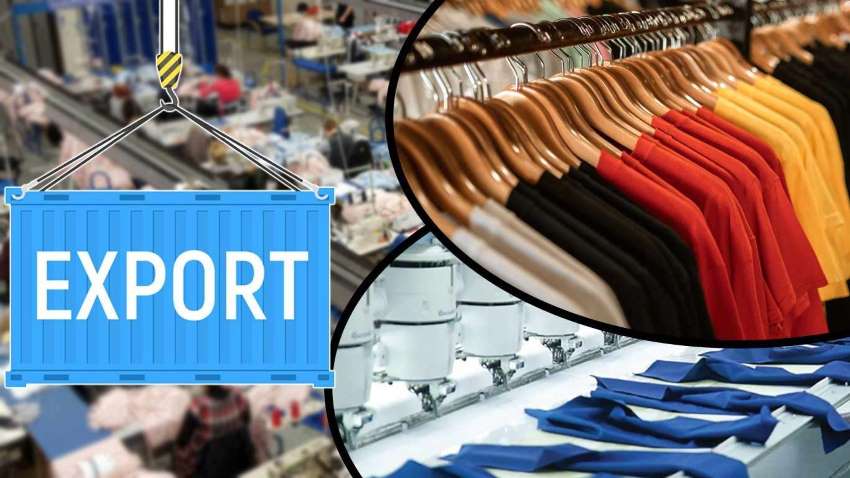
The Apparel Export Promotion Council (AEPC) organized a webinar to promote import substitution of polyester fabric and to explore new sources in association with Reliance Industries (RIL). Titled ‘Sourcing of Polyester Fabric’, the seminar was attended by 50 industry players.
Reliance Industries partners shared their fabric supply chain to India and updated on new fabric sourcing at the webinar. Ritesh Sharma, Head-Brand & Retail, Reliance Industries informed, his company has launched the Hub Excellence Program to enable the entire value chain to take advantage of the manufacturing and technical support, quality and supply assurance, access to innovative products, manufacturing support, and one-stop solution for all requirements.
Roshan Baid, Paragon Apparels said, the importance MMF fibre textiles is increasing across the world as a substitute for cotton. World trade in MMF fibre garments is estimated at $500 billion. However, India’s share of MMF garments in its apparel exports is just 10 per cent.
Sudhir Sekhri, Chairman, Export Promotion Sub Committee, AEPC, appealed to Reliance Industries to divert its focus from production of fibers to high-end fabrics.
VF Foundation invests $320,000 in garment workers’ welfare in Asia Pacific
The VF Foundation invested more than $320,000 towards welfare of garment workers throughout the Asia-Pacific region, including its two most recent grants in India & Cambodia.
Throughout India, garment workers and their children have grappled with challenges wrought by COVID-19. Over 80 per cent of Indian apparel workers surveyed by GoodWeave report they lost their job since the beginning of the pandemic. Many of those people have struggled to put food on the table for their families ever since.
To help those impacted most by the global pandemic, The VF Foundation donated $50,000 to Goodweave for relief work in India. The donation directly funded enough food packs to feed nearly 4,000 families of four for up to one month. Filled with rice, flour, dal (lentils), oil, sugar, salt, as well as soap, the packs provide essential nutrition and sustenance during this critical time. In total, the gift positively impacted approximately 16,000 garment industry workers and their children in Northern India.
The funding for this latest round of gifting was generated primarily from a cause-marketing campaign conducted by VF’s running shoe brand, Altra®. Throughout April 2020, the brand donated the proceeds of one of its most popular running shoes to the GlobalGiving COVID Relief Fund. The VF Foundation matched those dollars two-for-one, which more than tripled their efforts and brought the total donation to 100,000.
Brands defer cleaner production of viscose
As per a report by Changing Markets published jointly with the Clean Clothes Campaign, Ethical Consumer, WeMove.EU and Fashion Revolution, global luxury brands are dragging their feet on making viscose less toxic.
The report evaluated 100 brands and retailers for their commitments and progress on cleaner production of viscose and other man-made cellulosic materials like modal and rayon, which have been associated with toxic chemical pollution as well as deforestation. The results show while there is more attention on viscose compared to a few years ago, there is still much work to do.
Versace, Prada, Dolce & Gabbana and Giorgio Armani, as well as most of the US brands, including Michael Kors, Nike and Forever 21, ranked lowest — indicating a lack of any credible viscose-specific policy for safer chemical management or transparency of any kind, according to Changing Markets.
The worst-ranked companies have no meaningful policy on viscose and disclose nothing about their supply chain, said Urška Trunk, Changing Markets campaign manager. On the other hand, top-ranking companies, including Levi Strauss & Co, Reformation, Esprit, H&M, Inditex and M&S, have concrete commitments to clean up their viscose supply chains by 2025.
Espirit to lose two top executives
Fashion group Espirit is set to lose two of its top executives. Anders Kristiansen, who took charge in 2018 as CEO of the company, tendered his resignation to the company’s board of directors on December. Similarly, Johannes Schmidt-Schultes, CEO too plan to depart soon. Both of them will leave the company by February 28, 2021, says a report by Fashion Network.
Esprit’s new CEO will not be based in Germany, a country where, in March, the company filed for a protection procedure relating to its German business, including the company headquarters. Ultimately, Esprit will close down half of its retail network in Germany, for a loss of 1,100 jobs. The group is not struggling in Europe alone. In April, it decided to cease trading in the majority of its Asian markets too.
As of June 30 2020, Esprit had the equivalent of 3,400 full-time employees. In the 2019-20 financial year, which closed on June 30, the group’s sales fell by 23.6%, down to HKD9.874 billion (€1.09 billion). The group's losses before interest and tax seriously deepened in the course of the financial year, increasing by 65.7%, from HKD2.080 billion to HKD3.447 billion (€380 million).
UK signs trade continuity agreement with Mexico
The UK has signed a trade deal with Mexico which guarantees tariff-free trade and other benefits for British businesses and consumers.
As per a TexIntel report, the UK-Mexico Trade Continuity Agreement particularly benefits the automotive, pharmaceutical, textiles, agriculture, food and drink industries and other manufacturing industries.
Both countries have also committed to start negotiating a new and ambitious free trade agreement next year, which will go much further than the existing deal.
This agreement also represents another step towards the UK’s accession to the Comprehensive and Progressive agreement for Trans-Pacific Partnership (CPTPP), to which we aim to apply for formal accession in early 2021. Both sides have agreed that our future bilateral negotiations should run in parallel to this process.
Joining CPTPP would put the UK at the centre of an increasingly influential trade network of 11 dynamic economies in the Indo-Pacific region that already accounts for 13 per cent of global GDP and would rise to 16 per cent with our accession.
This agreement also guarantees UK businesses the assurance to operate in the Mexican market. It could save around £59 million worth of duties that would have been levied on UK exports to Mexico under WTO terms.
Spandex operating rate to remain high in December
Operating rate of spandex market is expected to remain high in December. Supply will touch yearly high, but demand may diminish temporarily. As per CCF Group, the diversification between supply and demand is likely to enlarge. Supply of spandex is estimated to gradually become normal and the delivery of substantially less varieties will need to queue. Trading under high price and small lots is supposed to reduce. Price is anticipated to be negotiable for some large lots.
Recently, rigid demand for spandex turned muted after downstream plants witnessed diminishing orders and slightly cut run rate. Some dealers also reduced replenishing. Supply tightness of spandex has been eased slightly and stocks started mounting, while overall stocks on spandex market remained low. Price of some spandex 20D and 30D was high boosted by seasonal demand, while that of 40D/70D/140D inched down amid falling orders. Price of spandex hiked by around 40 per cent compared with the bottom level and started shivering at high level in Dec, even moving down in some regions.
In view of supply, spandex market entered prosperous cycle after Q3 with soaring price and greatly improving profit. Most units kept running at high capacity, excluding some old units to be eliminated. Current operating rate of spandex market was at 93 per cent and is supposed to remain high in December supported by low stocks and high cash flow. Monthly production of spandex may hit yearly high in Dec.
Demand for spandex tends to weaken and sales were mainly driven by rigid demand now. Operating rate of spandex downstream mills accumulated to historic high in Sep-Nov as local and export orders for thermal fabrics, fabrics for sportswear, yoga clothes and bedding etc. were hot. However, mills concentrated on delivering in November, but orders for spring wear and summer wear failed to chase up sufficiently.
US retail sales decline for second consecutive month in November
Weighed down by new COVID-19 infections and decreasing household incomes, retail sales in the US declined for second consecutive month in November. As per the Commerce Department, sales dropped 1.1 per cent in November even as the data for October was revised to show sales falling 0.1 per cent instead of climbing 0.3 cent as previously reported. Excluding automobiles, gasoline, building materials and food services, retail sales declined by 0.5 per cent last month after downwardly revised 0.1 per cent dip in October.
Also, the economy added the fewest jobs in six months in November. The number of people filing new claims for unemployment benefits jumped to a near three-month high in the first week of December. As per a Reuters tally of official data, the United States is struggling with a fresh outbreak of COVID-19 infections, with the death toll from the respiratory illness rising above 300,000. Many state and local governments have imposed new restrictions on businesses, while some consumers are avoiding shopping malls, restaurants and bars.
The situation has been compounded by the loss of a weekly unemployment supplement. More than $3 trillion in government coronavirus relief is almost depleted. At least 9 million unemployed and underemployed Americans will lose government-funded benefits on Dec. 26, with Congress struggling to agree on another rescue package.
Pitti Immagine to hold next physical edition as per schedule
Raffaello Napoleone, CEO, Piiti Immagine has confirmed its next physical event will be held as per schedule in in February.The organizer expects around 300 brands to attend the show. Pitti has three distinct evens, Uomo for men, Bimbo for kids wear and Filati for thread. The organization launched a digital project, Pitti Connect, in July. The platform attracted 288 brands for the Uomo, and around 550 when Filati and Bimbo were added. The next edition of Pitti Connect, featuring menswear will be held online in January.
As per reports, Pitti will stage a joint physical trade show of its three divisions from February 21 to 23. The entire event will be staged inside Fortezza da Basso, the giant medieval fortress that is the main attraction of Pitti.
Pitti operates a sliding payment structure for stands inside the fortress, depending on floor level, access and set up. However, a ballpark figure for brands is around 300 euros per square meter.
Second COVID-19 induced lockdown affect Bangladesh garment exporters
Lockdowns and tightening of restrictions in several European countries to tackle the second wave of infections have started affecting Bangladesh garment exporters. As per Rubana Huq, President, BGMEA, the lockdown announced by Germany till January 10, will aggravate the negative impact on the exports. The industry is already in such a week position that repetition of even a fraction of first wave is likely to have an intense impact on it, she said.
MA Jabbar, Managing Director, DBL Group, added the second wave, as well as the lockdowns ahead of Christmas in Europe, have already impacted shipment from his company. However, he hopes the situation to improve by April as the vaccinations in Europe will hopefully be completed by then. During the first wave, the sector accepted high discounts and delayed payments to clear the cancelled goods, which had its impact on the financial stability of the industry, Huq said.
Garment prices declined by 4.85 per cent year-on-year since September. Factories had to pay wages and all the regular payments, and forced loans have been created against factories mostly working for bankrupted buyers, she added. As per BGMEA, the garment industry lost $6 billion in export in FY20.
Furla to reorganize US operations
Italian leather goods brand Furla plans to reorganize operations in the US by closing stores at Roosevelt Field Mall, Aventura Mall, Copley Place Mall and Houston. The new plan will allow Fulra to emerge from its Chapter 11 bankruptcy process rapidly. Known for handbags, the brand currently operates 14 stores and outlets. As per recent reports, the company has stabilized operations in the US and achieved almost all of its internal objectives.
Founded in Bologna in 1927, Furla is currently negotiating with the owners of its other US stores and will announce which of its remaining locations in the country will stay open by the end of January 2021. The brands’ products are distributed through 500 monobrand stores around the world. It is confident its American subsidiary will emerge from the pandemic stronger than ever and return to growth in early February 2021.
More...
Pakistan benefits from early opening of textile mills
This early opening of its textile mills gave Pakistan an edge over competitors in textile exports, says the Eurasian Times. As Shahid Sattar, Secretary-General, All Pakistan Textile Mills Association, reveals, the country bagged all orders diverted from China, India and Bangladesh. As per a Bloomberg report, companies like Guess Inc, Hugo Boss AG, Target Corp and Hanesbrands moved to Pakistan when other Southasian nations went into lockdown.
External factors like the US-China tensions and ongoing supply disruptions induced by the COVID-19 pandemic in India and Bangladesh helped orders from the West to almost double since July, said Khurram Mukhtar, a textile exporter in Pakistan. Cost and tariff advantages over Chinese competitors in European and American markets and supply chain disruptions in India and Bangladesh helped Pakistan emerge as textile leader on a global scale.
The approach also prevented economic hardship that came after the lockdown. In contrast, India’s total lockdown trapped workers in the big cities that was followed by massive migration. Experts have argued that while the movement of labor from cities to villages was low in Pakistan, the virus that came to cities through international travelers, stayed in the cities only.
Future Fashion Factory receives £2 million funds for new projects
Industry-led research and development program Future Fashion Factory has secured £2 million in funding for new innovation projects. As per a Drapers Online, the funding will be used to discover sustainable alternatives to traditional materials and design processes. Future Fashion Factory has approved 13 new projects including a new digital system for 3D-woven fashion design under development by Twelve Oaks Software; a vegan, petroleum and freshwater-free alternative to down or polyester for insulated clothing put forward by SaltyCo; and HydroCotton’s approach to more sustainable cotton production.
Each of these projects addresses a challenge identified by industry partners from Future Fashion Factory’s community of more than 270 fashion businesses and professionals.
Set up last year, Future Fashion Factory aims to improve speed, productivity and sustainability in the UK’s clothing supply chain. It is led by the University of Leeds, in partnership with the University of Huddersfield and Royal College of Art. Based in Leeds, the program initially received £5.5 million in funding from non-governmental public body the Arts and Humanities Research Council and planned to raise an additional £3 million from industry.
COVID-19 dampens spirit as textile and apparel exports decline across countries
 The COVID-19 pandemic has affected flow of orders amongst major textile and apparel exporting countries of the globe. While India had already lost many textile orders to China before RCEP was signed, the agreement has further widened loss of orders.
Vietnam’s annual textile and apparel exports to drop
As per a report from Vietnam Industry and Trade Electronic News, Vietnam’s textile and apparel exports are expected to drop by 9.3 per cent to $24.76 billion in the first 10 months of this fiscal. Its annual exports are expected to drop by 10 per cent year-on-year to $33-35 billion on account of drop in demand from European and American markets.
As per reports, the value of Vietnamese textile and apparel exports dropped by 2 percent during the first quarter and by 27 per cent in the second quarter. Though they improved slightly in the third quarter, Vietnam’s textile and apparel exports are still expected to drop by 10 per cent year-on-year to reach $35 billion. This drop has forced textile and apparel companies in Vietnam to adjust their product structure and shift from traditional to high-end products including suits, shirts, work clothes, knitted garments and traditional shirts.
Sri Lanka notes lowest decline in apparel exports
The country saw a 21.97 per cent decline in textiles and apparels exports during the first nine months of this year, says a Daily Financial Times report. Sri Lanka’s apparel exports declined to their lowest in five years to $3.1 billion during the period.
Sri Lanka Joint Apparel Association Forum (JAAF) also estimates a 22.15 per cent fall in Sri Lankan textile and apparel exports to $1.4 billion. According to the association, the country’s exports to the EU fell by 21.36 per cent year-on-year to $1.3 billion while its exports to other countries/regions fell 23.25 per cent year-on-year to $400 million.
Insufficient raw material slow Myanmar’s orders
Statistics from Myanmar’s Ministry of Commerce reveal, apparel exports in FY2019-20 declined 6.95 per cent to $4.28 billion from $4.6 billion in the same period last year. The country’s apparel industry enjoys preferential tariffs on its exports to EU. Its apparel exports constitute 30 per cent of the total export value. However, the onset of the pandemic blocked its raw material imports slowing down its orders from the international market. As the result Myanmar had close down some of its apparel factories, leaving thousands of employees unemployed.
To avoid raw material shortage, experts advised Myanmar’s government and private units to establish a complete supply chain of spinning, weaving, dyeing and finishing, sewing and manufacturing in the apparel industry.
Jordan introduces discounts to boost sales
As per the Jordan Industry Association, in the first nine months of this year, Jordan exported apparels and leather worth approximately $1.27 million, reports Petra News. This was a 15 per cent year-on-year decline from previous year. Jordan expects this decline to widen to 25 per cent in Q4 of the current year before gradually returning to normal in early 2021. Some of these companies are presently manufacturing masks, protective clothing and shoes for local needs. They export around $550 million worth of goods annually, leading to a creation of 33,000 jobs.
Jordan’s weekend apparel sales account for 50 per cent of its total apparel sales, says a Jordan Times report. Though the country began preparations for winter sales in September itself, 90 per cent of its products remain unsold in the warehouses. To boost sales and increase cash flow within the industry, Jordanian merchants plan to discount prices this season, leading to fierce competition. Jordan currently has 11,000 apparel stores, which accounts for 60 per cent of stores in major commercial centers. The country exports its apparels to countries such as China, Turkey, India, Bangladesh, Egypt and European countries.
Xinjiang Cotton Ban: An opportunity for India to boost exports
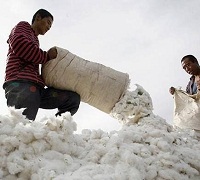 The US-China trade war intensified recently with the Trump administration banning cotton imports from the sprawling Chinese quasi-military organization, Xinjiang Production and Construction Corps (XPCC).
As per a report, the XPCC produces more than 2/3 of China’s cotton. In 2019, the organization exported around $11 billion worth of cotton textile and apparel products from China. US’ ban on cotton from this region would have sweeping consequences for apparel firms and other companies importing cotton products.
Intertwined supply chain makes traceability difficult
Many US firms rely on XPCC-produced cotton for the smooth functioning of supply chains. However, the intertwined nature of global supply chain makes it difficult for companies to trace XPCC imported cotton. Even the largest companies are unable to guarantee that the apparels made by them do not contain XPCC cotton. For such firms, COVID-19 has highlighted the importance of having a diversified supply chain. Many have already shifted to the China+1 model with the XPCC ban further expediting their efforts.
The ban may actually work in India’s favor as it may encourage global brands to place more orders with Indian exporters, says credit rating agency, ICRA. Some Indian exporters have begun receiving increased orders while others are negotiating with international buyers to fill the vacuum caused by the ban on XPCC cotton.
India to fill vacuum caused by XPCC ban
This had raised the prospects for Indian cotton exports. Cotton Association of India estimates India’s cotton exports to rise by 63 per cent this fiscal to touch 65 lakh( 6.5 million) bales against June estimate of 40 lakh bales. In the previous year, India had exported 50 lakh(5 million) bales reported Cotton Corporation of India. The reasons for improved estimates include: higher demand for surgical gowns and mask production, coupled with lower input prices domestically.
Even as the value of Indian rupee fell to a two-month low in early November, global cotton prices rose to their highest levels in 17 months, which increased traders’ profit. At the beginning of November, Indian cotton traded at around 74 cents per pound to importers in China, Bangladesh and Vietnam; while cotton from Brazil and the United States traded at 77 cents per pound.
This year, India is expected to lots of surplus cotton to boost exports. In fact, downward revision of production figures by the US from 17.06 million bales in September to 17.05 million in October has helped boost Indian exports.