Puma launches project to recycle old soccer jerseys
Puma plans to launch an innovative manufacturing process to convert existing soccer jerseys into new ones. Called Re:Jersey, the project helps brand reduce waste and adopt more circular production models in the future, says a Spin Off report. The process involves chemically breaking down the garments into their main components, filtering out the colors and chemically reassembling the materials to create a yarn having the same performance characteristics as virgin polyester.
Currently, around 75 per cent Re:Jersey uniforms are made from repurposed soccer jerseys. The remaining 25 per cent are made from Seaqual Marine Plastic1, a material obtained from recycling marine litter into new sustainable products.
The products created as a part of the Re:Jersey project will be worn on the pitch during pre-match warm-ups by Puma clubs Manchester City, AC Milan, Borussia Dortmund and Olympique de Marseille. The teams will wear the jerseys ahead of their respective league matches in late April and May, starting with Manchester City vs Watford on April 23.
Mayer & Cie bags 2022 Top 100 award for innovative processes
Albstadt-based circular knitting machine and braiding machine manufacturer Mayer & Cie, has bagged a 2022 Top 100 award for its innovative processes in particular. The company recorded a 40 per cent sales growth to over €100 million last year and hopes to maintain its market edge this year. As per a Knitting Industry report, the company continued to rely on digitization of both its processes and products. Even in difficult years, it focused on optimizing core processes in order to be able to hit the ground running when the market recovers, says Sebastian Mayer, Chief Digital Officer.
Mayer now plans to make several investments in machinery especially at its headquarters in 2022. It recently launched new CHP cogeneration units. Since Q4 2020, the Albstadt textile machinery manufacturer’s order position has remained stable with orders from all over the world, especially its core markets Turkey, China and India.
In braiding machine division, order position recovered in 2021. Sales of new machines and, especially, spare parts exceeded the 2020 figures significantly. It aims to expand in this area by developing existing machines and launching new ones, says Benjamin Mayer, Managing Director
19th ITMA 2023 to occupy all 12 halls of Milan exhibition complex
The 19th edition of ITMA 2023 is set to occupy all 12 halls of the Fiera Milano Rho exhibition complex in Milan, Italy as the exhibition has sold around 95 per cent space. To be organized from June 8-14 next year, the exhibition has so far booked over 111,000 sq. mt. of net exhibition space. It is expected to be attended by over 1,364 exhibitors from 42 countries.
Despite economic and geopolitical uncertainties, the response to ITMA 2023 has been overwhelming, says Ernesto Maurer, President, Cematex, the European Committee of Textile Machinery Manufacturers. Charles Beauduin, Chairman, ITMA Services adds, ITMA has emerged as the quintessential platform for the industry to buy and sell, and to collaborate face-to-face.
The three countries with the highest number of exhibitors include Italy, Germany and Spain. Exhibitors from China, Turkey and India are also likely to participate in large numbers. They will span the finishing, spinning, weaving, printing, knitting, winding and nonwovens segments.
Global custom T-shirt printing market to surpass $9 million by 2032: Report
The global custom T-shirt printing market is expected to grow at a 9.70 per cent CAGR to surpass $9 billion upto 2032, as per a recent report by Future Market Insights (FMI). As per an Apparel Resources report, growth in this market is being triggered by the growing trend of wearing graphic, pre-printed T-shirts with movie logos and slogans.
Younger customers are opting for customized T-shirts due to the availability of a wide range of colors, patterns, garments, words or images printed on these T-shirts. This is spiking sales of pre-printed and creative graphic T-shirts. Brands are also designing custom printed T-shirts to raise social awareness, raise a voice and support a cause is on the rise.
The custom T-shirt printing market in the US is expected to contribute over 78.90 per cent of share in North America. India is expected to spearhead the growth in South Asia custom T-shirt printing market, with sales increasing at 16.60 per cent CAGR through 2022 and beyond. Whereas, sales of custom printed T-shirts in
Japan are expected to rise at over 15 per cent CAGR over the forecast period. Based on design, the artwork segment is expected to grow at 12.50 per cent CAGR from 2022 to 2032, adds the report.
Surat aims to be India’s new garment hub
India’s leading MMF manufacturing hub, Surat now aims to make a mark in garment manufacturing as well. The city currently manufactures around four crore metres of grey fabric annually. Of this, a small portion is used locally for manufacturing ethnic garments. The largest share is used to manufacture saris and the remaining is exported. Currently, Surat has around 1 lakh stitching machines. But, majority of these are used for stitching lace on saris, says Ashish Gujarati, President, Southern Gujarat Chamber of Commerce and Industry (SGCCI).
The city has around 200 medium and small size garment units. However, there are many new and emerging entrepreneurs, adds Gujarati. The Chamber is also exploring opportunities for garment parks in Surat and requesting the government to provide land. SGCCI also plans to participate in CMAI Fab Show in Mumbai next month to promote and explore opportunities in garment manufacturing in the city. It will organize workshops to create awareness about garment manufacturing at the event.
Desertion by western retailers compels Russia to seek new partners
The exodus of western retail companies is compelling Russia to look at China, India, Iran and Turkey to plug the gap and combat its growing isolation in the face of sanctions. An organization representing developers, shopping centre owners and retail chain operators, The Russian Council of Shopping Centres (RCSC) is negotiating with corresponding representatives in the four countries about finding alternatives to western brands.
Through this, the council hopes to supplement or completely replace goods of the defunct brands with ones of a similar quality and design. Igor Maltinsky, Director-Development, Melon Fashion Group says, the main challenge facing domestic retail firms is the uncontrollable growth of production costs, due to huge increases in procurement and logistics costs, as well as many other related factors. The group owns four, mainly women, fashion brands: Zarina, Befree, Love Republic and Sela and had 846 stores across Russia and CIS at the end of 2021. It plans to launch an IPO this year.
Victoria’s Secret forays into swimwear with Frankies Biknis
Lingerie brand Victoria’s Secret is foraying into the swimwear market with an $18 million investment in Los Angeles-based brand Frankies Biknis. The investment is a continuation of the company’s efforts to expand partnerships with culturally relevant brands founded by women entrepreneurs, says Martin Waters, CEO, Victoria’s Secret Lingerie.
The acquisition also gives Victoria’s Secret a bigger piece of the fast-growing swimwear industry. The company offers swimwear brands like Frankies Bikinis, Beach Riot, Bfyne, Vitamin A, Miraclesuit, Baobab, Roxy and Skinny Dippers, among others, on its website. The investment in Frankies Biknis gives it further insight into the Gen Z and Millennial customer mindset, says Patti Cazzato, Head -Emerging Businesses. Victoria’s Secret seeks to curate relationships with brands that will help it access categories and customer segments it currently lacks in and culturally relevant brands.
Founded by Francesca Aiello in 2012, Frankies Bikinis has expanded into footwear, men’s swim seperates, , beauty, activewear, cell phone cases and ready-to-wear apparel, in addition to collaborations with names like Alo Yoga, streetwear brand Kith, model Sofia Richie, actress Hailee Steinfeld and tennis star Naomi Osaka.
Welspun India forays into the mattress category
Home textiles major Welspun India has forayed into the mattress category under its home linen brand Spaces.
As per a Daily Pioneer report, the company has launched 'SpacesMatchress' with a variety of offerings on the back of extensive market research as an extension of its home wellness offerings.
ManjariUpadhye, CEO, of Welspun India, Domestic Business, says, the company's deep understanding of stated and unstated consumer requirements helps it to innovate and offer the most relevant products and solutions to the country's diverse and fast-growing consumer base.
The brand offers customizable, orthopedic, firm and fab mattress ranges for different consumer preferences. These mattresses are available with the benefits of an in-built mattress protector, odor-free and anti-pilling, 12 years warranty, among others, the company said.
Welspun India’s move to enter the mattress category highlights the brand’s aggressive focus on the domestic market and its aim to capitalize on emerging opportunities in this high-potential segment with innovative offerings.
Intertek discusses industry issues with BGMEA
A delegation of Intertek led by Sandeep Das, Regional Managing Director, South Asia discussed issues concerning the Bangladesh apparel industry with Farque Hassan, President, BGMEA.
As per a Business Standard report, they talked about how Intertek could play more important role in addressing consumers' need for safety and product quality in line with international and domestic regulations, read a press release.
They also discussed how Intertek could better support garment factories in Bangladesh to ensure their products adhere to the highest safety standards, and also remaining globally competitive.
Hassan invited Intertek to actively participate in the "Made in Bangladesh Week" scheduled to be held in Dhaka in November and join hands with BGMEA to promote Bangladesh's apparel industry globally. He also urged Intertek to share the industry's achievements, which they have found during their first-hand audit, with international buyers.
SAE-A adopts Coats Digital’s GSDCost for international standard time benchmarks
One of the largest apparel manufacturers in the world, SAE-A Trading Co., has implemented Coats Digital’s GSDCost solution in all 41 of its production facilities, across ten countries. The solution will enable the company to establish international standard time benchmarks, based on accurate Standard Minute Values (SMVs), to optimise processes, drive increased efficiency and productivity across its entire workforce, and enable SAE-A to provide increased transparency around its global labour costs to support its own -and its brand partners’ social responsibility goals.
Established in 1986, SAE-A, is one of the world’s largest fashion manufactures, operating in Korea, the USA, Indonesia, Vietnam, Guatemala, Nicaragua, Cambodia, Myanmar, Haiti and Costa Rica, and is headquartered in Seoul. From yarn-production through its fabric mills to retail operations in Korea, SAE-A continues to invest in technology and new innovation to become one of the few apparel manufactures able to capitalize on a complete vertical-integration of its supply chain. With a focus on high standards of quality and a first-in-class workforce, SAE-A is a key supplier to some of the world’s biggest retailers, including: Target, Walmart, Kohl’s, Gap, Mast and Carhartt. SAE-A holds itself to stringent environmental standards and actively supports sustainability, fair wages and educational/medical programmes across the local communities of its global operations.
More...
Textile Fair registers 300 exhibitors at Autumn/Winter’22 edition
Held in Angel, north-west London from March 22-23 March, the Autumn/Winter’22 edition of the Textile Fair trade show was attended by around 300 exhibitors .
As per a Drapers Online report, the show welcomed 2,000 visitors on the first day – similar to pre-pandemic levels. However, the number of exhibitors declined from 480 during the pre-pandemic period.
John Kelley, Event Director, hoped the next edition of the event will be attended in full capacity. Currently, exhibitors are dealing with the increasing cost pressures due to increasing energy prices, he added.
Stephen Conway, Managing Director, Emblem Weavers, added, the increase in raw material prices has compelled manufacturers to increase product prices by 5 per cent. However, a few suppliers have increased prices by almost 25 per cent, he added.
Freight charges are escalating, added Ruth Mason, Marketing Manager, Harris Tweed Hebrides.
Sustainability was also a key focus at the event as several designers focused on finding sustainable solutions. For instance, Designer Jake Treddenicksearched for deadstock materials for his made-to-order menswear model Treddenick.
Rising energy, freight and raw material prices were a key concern for both suppliers and designers at the fair. Rising demand for sustainable fabrics is also fuelling cost increase, said suppliers.
Global RMG market to reach $1, 268.3 billion by 2027
Valued at $983.7 billion in 2019, the global readymade garments market size is projected to reach $1,268.3 billion by 2027. As per report by Allied Market Research Report, the market will grow at 8.8 per cent CAGR from 2021 to 2027. The outer clothing segment is estimated to grow at a CAGR of 8.8 per cent during the forecast period.
The demand for readymade garments is expected to increase during the forecast period, owing to change in consumer’s product purchase pattern. In addition, surge in concern among individuals about physical appearance has increased the spending on toiletries and clothing, thus boosting the sale of various readymade clothing throughout the globe. Furthermore, increase in frequency of direct to consumer advertisements and aggressive promotion by key players to push sales for clothing has significantly contributed toward the growth of the readymade garments market.
However, negative impact of garment manufacturing on environment and rise in cases of labor exploitation hinder market growth. Conversely, surge in demand for, functional sports apparel is expected to provide opportunities for readymade garments market growth for the market expansion during the forecast period.
UKFT, Livery to hold one-day conference on best sustainability practices
A one day conference will be held by the non-profit organisation UK Fashion and Textile Association (UKFT) and the textile group, Livery to share best practice on sustainability within the UK textile industry and discuss the future course of the industry. The conference is scheduled to be held on May 12.
Speakers from UK manufacturers, global brands and a variety of textile innovators will share experiences to help businesses and the wider industry to promote their own sustainable credentials,
Leaders from UK textile manufacturers will learn about sustainability ideas for various businesses and how these companies are addressing challenges by emphasizing on how the UK textile manufacturing industry can use sustainability to boost its competitiveness.
Delegates should be leaders from UK-based textile manufacturing companies, rather than fashion brands, retailers, garment manufacturers or others from outside of the UK textile supply chain.
Tax increase may surge business costs for Bangladesh exporters: BTMA
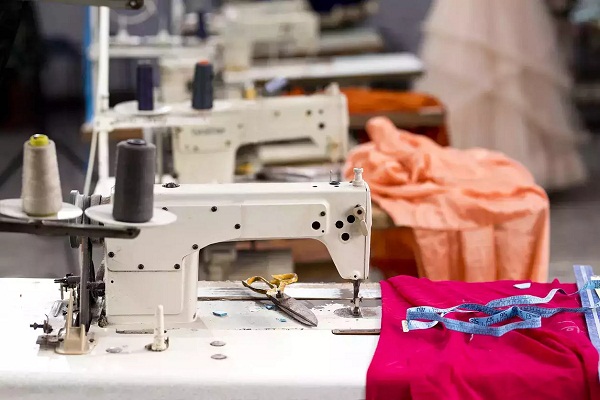
Acceding to the textile industry’s long standing demand, the National Board of Revenue (NBR) in Bangladesh has initiated certain reforms to simplify the harmonized system (HS) code used for importing various spare parts of textile mills. The Bangladesh Textile Mills Association (BTMA) has been complaining for long about the rise in import prices of spare parts due to the complexities in HS code. The association has sent a list of 122 electrical, electronic and mechanical items to the NBR needs to include in the list of HS codes to make imports cheaper.
Inclusion to ease exporters’ complexities
As per a Business Standard report, a HS code is used by custom officials to identify export-import goods. The NBR currently has a list of HS Codes for over 200 items that received reduced tariff rates. However, the list was prepared two decades ago and does not include the new equipment and spare parts required by textile factories, says Khorshed Alam, Former Director, BTMA and Chairman, Little Star Spinning Mills. Manufacturers have to pay over 26 per cent duty-tax for commercial imports of spare parts, he adds.
Moreover Mohammad Ali Khokon, President, BTMA points out, manufacturers are compelled to use third and fourth generation machinery as it has been almost 20 years since the inclusion of equipment and spare parts on the reduced rate list. Hence, including the machinery mentioned in NBR list would ease the complexity and harassment faced by exporters.
Boost to local MMF production
The revenue board also plans to lower VAT on raw materials imports for blended yarn and fabrics like polyester, synthetic, viscose and Lycra. Another initiative on the anvils is maintaining income tax rate for textile and spinning mills at 15 per cent till 2026. The board believes, these initiatives will help the Bangladesh textile industry grow local MMF production and reduce cotton import bills. The initiatives will also complement the upcoming National Industrial Policy that proposes to grant import substitute industries tax breaks and subsidies.
Ministry urges for lower tax rates
The textile ministry has also urged NBR to extend existing lower tax on textiles. This will benefit entrepreneurs involved in yarn production, dying, finishing, coning, fabrics production, fabrics dying, finishing, printing and other similar activities, it adds. The ministry has also demanded maintaining existing tax rates to enable the textile sector to add 2.5 million spindles with an investment of $2.5 billion within 2023.
Currently, the import tax rate for ready-made garments in Bangladesh is 12 per cent while the tax rate for the textile sector is 15 per cent. For entrepreneurs having a sustainability certificate, the tax rate is around 200 basis points lower. The corporate tax rate in the country for publicly listed companies is 22.5 per cent and 30 per cent for non-listed companies.
Mohammad Ali Khokon, President, BTMA highlighted, the industry imported over 5.52 lakh tons of woven fabrics in 2021 as local spinning millers could supply only 40 per cent of domestic demand. He feels, levying a huge turnover tax on imports is likely to increase exporters cost of doing business in the country.