SIMA hails RBI’s decision on Exim trade with Indian rupee
The Southern India Mills Association (SIMA) has welcomed the RBI announcement on the international trade settlement in Indian rupees, saying this would benefit Indian exporters and importers, who have been facing challenges owing to the tightening of monetary policies all over the world.
SIMA says the policy would encourage countries having substantial trade with India and having a forex shortage to increase their trade thereby opening more opportunities to boost exports apart from helping India reduce its trade deficits on account of oil imports. Though the real benefit would be reaped only after considerable time, in the long run this would encourage several countries intending to trade in Indian rupees to opt for such trade and thereby make the rupee a currency for international trade.
Since several textile exporters are struggling to realize the money from certain countries, including Russia and Sri Lanka that are currently facing economic crisis and sanctions, the RBI decision would greatly help to settle export/import payments and encourage a cordial trade relationship.
The Indian textile and clothing industry’s exports account for around 10 per cent of the country’s exports. The textile industry has been facing challenges on account of volatility in forex rates especially the US dollar rates. The rupee has depreciated to a record level in recent days.
Fashion makers in Italy connect with local suppliers for marketing expertise

Fashion brands across the world may rejoice over putting pandemic gloomiest seasons behind but fashion manufacturers in Italy, both big and small, are keeping a close watch on current economic and geopolitical scenario. As per a Woman’s Wear Daily report, the government in Italy is introducing a range of initiatives to help fashion companies retain business. It is helping established and new brands connect with local supply chain besides offering marketing expertise.
Engaging third party manufacturers
Supporting SMEs since 2015, David Clementoni, Founder, Artisan has developed a platform to recruit firms with employees numbering four to 100. He has also been engaging third-party manufacturers across 30 out of 54 of Italy’s fashion manufacturing hubs and helping them connect with international fashion brands and retailers. Introduced in its current version in 2019, the platform has onboarded around 700 manufacturing, points out Clementoni. He is continuously hunting for new players to add to the platform. New players have led to the evolution of the platform’s goals. Brands continue to join the platform as they look to re-shore production from abroad to leverage the ‘Made in Italy’ label. As of June, the platform boasted of 10,000 registered brands.
The platform aims to ensure efficient and effective execution of business, says Clementoni. It acts more as a facilitator than an intermediary as its business model is based on royalties from produced goods and add-on services provided by it, he adds. Artisan recently collaborated with British platform Arts Thread, which has 300,000 users from fashion schools across the globe, and Italy’s Camera Buyer to allow local retailers develop house brands. Through these initiatives, the platform aims to attract 60,000 brands by 2028 and generate more than 370 million euros in business.
Connecting with players beyond Italy
Like Artisan, Italy’s association of leather goods manufacturer Assopellettieri has been boosting relationships between manufacturing and players operating outside Italy through its Mipel Lab format, developed in collaboration with tanning industry trade show Lineapelle.
An area within Lineapelle’s biannual fair, the format introduced a digital business-to-business platform in collaboration with the Intesa Sanpaolo bank and Ds Group, which provided the AI-enabled software. The association aims to seek new opportunities for our enterprises, says Franco Gabrelli, President, Assopellettieri. Leather goods firms in the country have been moving towards third-party manufacturing as sales of in-house brands are declining with growing competition from fashion houses having marketing prowess.
Having 16 manufacturers, which together post revenues of €500,000 million, the association looks to Italy’s supply chain besides engaging brands operating outside Italy due to rising production and logistics costs from overseas manufacturing, adds D’Alessandro.
Earlier, brands viewed manufacturing costs as squandering, as they often had to deal with two to four intermediaries. This dented their bottom lines and wasted resources, affirms D’Alessandro. They also had to seek reliable production partners and offer high-value services which weren’t feasible for small manufacturers. Hence, they preferred to outsource production to neighboring countries such as Spain and Portugal were seen as less expensive. However, this is no longer the case, he pronounces.
Focus on more classic items will help brands tide over recessionary times

Posting a ‘V-shaped’ rebound from the pandemic, global luxury sales surged 7 per cent to $301 billion in 2021 over 2019 pre-pandemic levels, reveals consulting firm Bain & Co. Sales of luxury players including Chanel and Hermes’ grew almost 30 per cent. However, the impending global economic recession threatens to derail this growth story, explains a Business of Fashion report. With inflation and interest rests soaring across Europe and North America, rising fuel and food prices are straining household budgets. Primary driver of the luxury industry, the US saw its economy shrink 1.6 per cent Q-o-Q between January-March, indicates the Bureau of Economic Analysis. EU Statistics agency Eurostat figures reveals, inflation in Europe reached its highest levels of 8.6 per cent in June.
So far, consumer expenditure on luxury items has been resistant to deteriorating economic conditions. This can be seen from the 19 per cent rise in sales compared to the pre-pandemic sales, says Bain. The analysts attribute this to revenge spending after resumption in travel, socializing and travel.
Luxury’s share in sales declining
However, despite continuing sales upsurge through summer, the share of people indulging in luxury sales is set to decline. Statistics show, wealthy shoppers tend to spend less when the market is down though the impact of this decline is often less dramatic than other groups. A few analysts expect luxury sales to be more resilient during the current crisis as lower income and middle-class consumers have been more affected than high-income earners. Previous recessions had affected luxury consumers more than this time, notes Adam Cochrane, Analyst, Deutsche Bank
Distinction between luxury and affordable brands blurs
Yet, luxury sales are not determined by ultra-rich consumers only. Even middle class and aspirational shoppers make up for a significant percentage of this category. Off late, brands have been introducing more accessible products in categories like streetwear, sneakers, eyewear and small accessories to attract these shoppers.
The distinction between absolute luxury and more accessible brands has blurred as brands are offering products at wider price points, says Federica Levato, Partner, Bain & Co. Brands appealing to higher-income groups are likely to perform better during the current recession while those appealing to aspirational consumers will be the hardest hit.
Brands with strongest recall to win
The pandemic made a clear distinction between the winners and losers as companies with strongest brand recall excelled while smaller players struggled. The impending recession is expected to make this this distinction even clearer.
According to UBS, one of the only companies to report positive sales growth during the recession is likely to be Hermes. They also expect positive sales by LVMH while Tod’s and Ferragamo are expected to falter.
Scale allows luxury players to invest in brand building, especially during difficult times like these, says Daniel Langer, CEO, Equité and Executive Professor, Pepperdine University. They can play a bigger role in influencing consumers and boosting their emotional well-being, he adds.
Brands like Chanel are exploring this strategy to tide over pandemic losses. It increased marketing spend by $1.8 billion in 2021. This enabled it to increase revenues by 23 per cent to $15 billion last year. The recession can prove to be a great opportunity for brands to play a bigger role in the industry and invest in winning customers’ trust.
Better equipped to face difficult times
Depending on how quickly China recovers from the recession, Bain & Co expect the luxury industry to grow between 5 and 15 per cent this year. However, the industry seems to be better prepared to face the crisis than it was in 2008.
Brands seem to be better equipped to respond to unpredictable demand with shortened lead times and more agile supply chains. They also have a better control over distribution channels, and are strategically reducing dependence on wholesale channels. This enables them to achieve a higher margin on each sales and boost bottom lines. It also enables them to control discounts and encourage full-price sales
Brands need to also focus on inventory management during times of volatile demand. They need to stock more classic times like bags, shoes and fine jewelry, that can be carried over from season to seaon. This will enable them to retain brand value and be culturally revelant.
India’s leather exports to grow in 2022-23
India’s exports of leather and leather products are expected to grow in 2022-23 on account of growing demand for these products in global markets, says the Council of Leather Exports. Changes in global market dynamics caused by the pandemic have created huge export opportunities for the sector. Also with a slew of trade agreements signed and in the pipeline and active support of the government are helping sustain the export growth in the remaining months of this year.
Shipments from the sector rose by 32.5 per cent in 2021-22 from the previous year. The healthy export growth witnessed in 2021-22 is continuing this year also, with export of leather, leather products and footwear increasing in April to May 2022 from April to May 2021. In this period exports to the USA registered a growth of about 78.5 per cent. Shipments to India's largest market Europe too registered a growth of 44.6 per cent during the first two months of this fiscal. Exports to other markets like Canada, Australia, the UAE have also grown this year. Signing of trade pacts with the UAE and Australia are expected to help in further boosting outbound shipments.
Mills in Tamil Nadu join in recycling
More than 200 small mills involved in recycling cotton waste into yarn and fabrics across Tamil Nadu have come together and formed a recycle textile federation called Recycle Textile Federation. Creating awareness among members on the markets where the products and services have a demand is the focus of the federation.
Headquartered in Coimbatore, the federation presently has 230 members representing various mills from Tamil Nadu. The federation has plans to bring together such mills across the country to collectively address the needs of the industry, identify markets in different parts of the world, and direct its members to cater to places that need their products and services.
There are 400 mills in Tamil Nadu that process/recycle cotton waste and PET bottles into yarns and garments, with Coimbatore and Tirupur having 180 such mills. The federation would first strive to bring them together and function as an entity that would represent their common needs and demands and would also go for national and international coordination.
Roica displays at Milano Unica
Roica’s partners are presenting their latest innovations at Milano Unica, July 12 to 14, 2022. For instance, Cifra is presenting its innovative garments for men and women, combining fashion and function. The garment design offers a perfect shape with body mapping technology that creates dedicated ventilation zones, for a feeling of comfort and freshness as well as an innovative aesthetic impact. A few of the yarns by Roica’s partners are Roica EF, a sustainable recycled stretch yarn obtained from pre-consumer materials and Roica V550, a sustainable degradable stretch yarn which smartly breaks down without releasing harmful substances.
Roica is Asahi Kasei’s iconic premium stretch fiber manufacturer. Roica is able to redefine performance, sustainability and circularity of stretch, while delivering the style, support and, most importantly, 360° comfort requested by a new generation of consumers. Showing its leadership, the company marks a unique milestone in the world of stretch, enhancing a contemporary wardrobe made of groundbreaking principles that are easily conveyed and transparently visible to the end consumer. Cutting-edge tools such as hangtags provide, through simple and well-designed icons, clear and concise functional information showing for each application the values and performances of each Roica family component: Roica Color Perfect, Roica Resistance, Roica Feel Good, Roica Eco-Smart and Roica Contour.
Indian exporters face price pressures
Global apparel brands are negotiating hard with Indian exporters as cotton prices have fallen 15 per cent and the rupee has depreciated against the dollar. They want Indian apparel exporters to supply garments at the pre-covid level prices.
The impending recessionary pressure in the US and Europe is forcing global brands to negotiate hard with Indian exporters, who have now started looking at other countries like Japan, Australia and Latin America for developing new markets for Indian apparels.
Since the rupee has depreciated against dollar, foreign buyers are driving hard bargains to lower the prices of garments. However Indian exporters can’t give huge discounts despite the rupee weakening because cotton prices have not come down to the 2019 level. As per Narendra Goenka, Chairman, Apparel Export Promotion Council (AEPC), cotton prices have dropped by 15 per cent from the high of Rs 1 lakh per candy (356 kg). It will fall further in the coming weeks.
Raja M Shanmugham, president, Tirupur Exporters Association (TEA) says, global buyers now want garments at the pre-covid prices. For instance, the price of a product that was sold at $7 this year due to high cotton prices, they are now asking for $5, the price at which it was sold in pre-covid times. At best, they can offer a price which is 15 per cent lower than what they are offering now.
The recessionary trend in the US and Europe will impact orders for spring 2023 that are manufactured and shipped between October to March. Exporters are expecting a decline of export orders up to ten per cent for spring 2023, which will impact the second half of the current financial year. This means that the projected garment exports for FY 23 will be missed. Exporters are now looking at newer markets like Japan, Latin America and Australia to make up for the expected losses.
Bangladesh-based Sonnet Textile Industries produces Fifa tees
Sonnet Textile Industries, based in Bangladesh, has produced about six lakh pieces of Fifa T-shirts for the Fifa World Cup to be held in Qatar this year. The factory has made the T-shirts on behalf of Fifa-licensed Russian sports chain shop Sportmaster. And this is not the first time for Sonnet which made two lakh pieces of official jackets with Fifa logo for the 2018 Russia World Cup. The apparel maker also received a work order for three lakh T-shirts for the 2020 Euro Cup.
Sonnet established in 2009 amid the global recession and survived on sub-contracting all through 2009. In April 2010, the factory received an order from the US for the first time to baby rompers. In 2010, a group of Russian buyers visited Sonnet and they ordered 2.45 lakh T-shirts. The company then focused on marketing. In 2011, Sonnet received an order from a US buyer that helped it stabilize the balance sheet. With the US order, Sonnet recovered its losses, stabilized its courses and started expanding. It has not had to look back since then.
Now, about 1,800 people work at the three factories. Its T-shirts, jackets, active wear and sportswear are exported to Russia. It exports sleepwear and undergarments to the US. Children's items, rompers and T-shirts go to Italy. Besides, Japan sources various garments for men, women and children from the company.
Japan’s May textile and apparel imports up 13 per cent
Japan’s textile and apparel imports in May grew 13 per cent year-on-year and 10.4 per cent month-on-month. Imports from China moved up 15.3 per cent from the same period last year and 21 per cent compared to last month. Japan’s textile and apparel imports in January to May were down 0.1 per cent from the same period last year and 2.7per cent compared with the same period in 2019.
Both in terms of import volume and value, Japan’s textile and apparel import demand recovered in May, showing a large rise, and Japan’s textile and apparel imports value from China was only slightly lower than that of the total imports.
In recent years, the proportion of import volume and value of Japan's textile and apparel imported from China in total imports had a certain seasonal rule, accounting for the largest share in September or October every year, then gradually falling back to a relatively low level in April or May of the next year, and then fluctuating. Japan's textile and apparel imports growth hit a new-2022 high because of the low base in the same period of 2020.
Global denim jeans market to grow at 4.2 per cent: Study
Global denim jeans market is growing at a CAGR of 4.2 per cent. As per a report by Allied Market Research, titled, ‘Denim Jeans Market’, denim jeans market was valued at $56.2 billion in 2020 and is estimated to reach $88.1 billion by 2030, growing at a CAGR of 4.2 per cent from 2021 to 2030. The most recognizable fabric in the world is undoubtedly denim. No other type of fabric has attracted such widespread acclaim around the world. Consequently, the denim industry has been viewed as a lucrative alternative in the mass market.
The Asia-Pacific region is providing lucrative opportunities for growth, owing to a rise in disposable income in emerging economies such as China and India, which has significantly increased the spending capacity of people on clothing for personal grooming, thereby boosting the growth of the global denim jeans market. Factors such as a growing standard of living, introduction of denim jeans with antimicrobial properties, launch of eco-friendly denim jeans, surge in trend of wearing denim jeans in work stations, offices and special occasions, and per capita consumption of the denim jeans are contributing to the growth of the market in more than one way.
Key market players are focusing on product innovations with various designs, patterns, colors, and fitting. On top of that, several fashion influencers on social media and e-commerce platforms are helping the fashion industry to grow with a wide array of denim jeans types such as skinny, tapered, athletic, and regular fit.
More...
India’s leather exports to grow in 2022-23
India’s exports of leather and leather products are expected to grow in 2022-23 on account of growing demand for these products in global markets, says the Council of Leather Exports. Changes in global market dynamics caused by the pandemic have created huge export opportunities for the sector. Also with a slew of trade agreements signed and in the pipeline and active support of the government are helping sustain the export growth in the remaining months of this year.
Shipments from the sector rose by 32.5 per cent in 2021-22 from the previous year. The healthy export growth witnessed in 2021-22 is continuing this year also, with export of leather, leather products and footwear increasing in April to May 2022 from April to May 2021. In this period exports to the USA registered a growth of about 78.5 per cent. Shipments to India's largest market Europe too registered a growth of 44.6 per cent during the first two months of this fiscal. Exports to other markets like Canada, Australia, the UAE have also grown this year. Signing of trade pacts with the UAE and Australia are expected to help in further boosting outbound shipments.
Preference for ‘Made in the USA’ clothes on the rise in America

Even though most apparel sold in the US is made overseas, many designers and brands in the country continue to flaunt their garments as ‘Made in the US’.
As per a Lifestyle Monitor report, the US currently makes 97 per cent of its apparel overseas. This is in sharp contrast to the 1960a when about 95 per cent of the apparel sold in the country were made in the country, says the American Apparel and Footwear Association. However, change in the trade policies in the 1990s led the industry to seek low-cost manufacturing from developing countries. The apparel and textile industry lost 81 per cent of its jobs from 1979 and 2019, shows data from the US Bureau of Labor Statistics.
Focus on local manufacturing
To control the steep decline in manufacturing activities, American apparel makers and retailers need to focus on manufacturing, according to 61 per cent of surveyed Americans by the Thomas Network. Nearly 45 per cent of them opined, the quality of American products is superior.
Rob Magness, Founder and Lead Designer, Grown & Sewn, the Brooklyn, NY-based brand, says, the desire to offer American quality fuelled his ambitions to start his company more than a decade ago. Known for its cotton twill and canvas pants and shirts, Grown & Sewn also offers cotton work shirts, T-shirts and a railmen’s-inspired jacket. Its goal is to offer good value to customers through clothes that people wear every day, says Magness.
Around 52 per cent consumers to the 2020 and 2021 Cotton Incorporated Lifestyle Monitor Survey consider it important to buy clothes made in the US. Nearly 38 per cent say, they always or usually check the country-of-origin information before purchasing clothing, according to the Monitor™ research. Another 36 per cent say they check it sometimes while 53 per cent and 43 per cent of women say their clothing choices are often determined by the country of origin.
Most apparels, sold both online and in-store at Grown & Sewn’s location in Brooklyn, as well as other store locations in the US and Japan, are manufactured at a family-owned factory in San Francisco, says Magness.
Despite the pandemic, both long-term and newcomer American-made brands continue to operate smoothly. Starting as the Ashland Shirt & Pajama Company in Ashland, PA in 1932, the company metamorphosed into Gitman Bros., a boutique shirt maker, in 1978 and continues to cut and sew its shirts in Lafayette, TN. Its neckwear is made in Pilot Mountain, NC. The company recently presented its collection at the Man/Woman Paris SS23 show. Meanwhile, created by sisters Jakki and Connie Wang, Wee Monster offers kid’s wear designed and produced in Los Angeles. The brand not only creates local jobs but also supports local vendors.
Local garments over sustainable
MonitorTM research shows, customers are mostly likely to purchase apparel marketed ‘Made in the US,’ over clothes marketed sustainable, environmentally friendly or recycled. The virtual event held by The Fashion Institute of Technology showcased over 6,500-plus Garment District businesses operating in New York’s garment center. Attendees viewed the offerings of factories in Manhattan including Super Rush Trims, Majo Sourcing and Thready Made.
Some customers’ definitely appreciate Made in USA apparel from brand, says Magness. However, others don’t where the product is made. American brands should just focus on their niche products and clientele and continue to offer them good and consistent products, he opines.
Future outlook for apparel retail globally remains positive despite obstacles
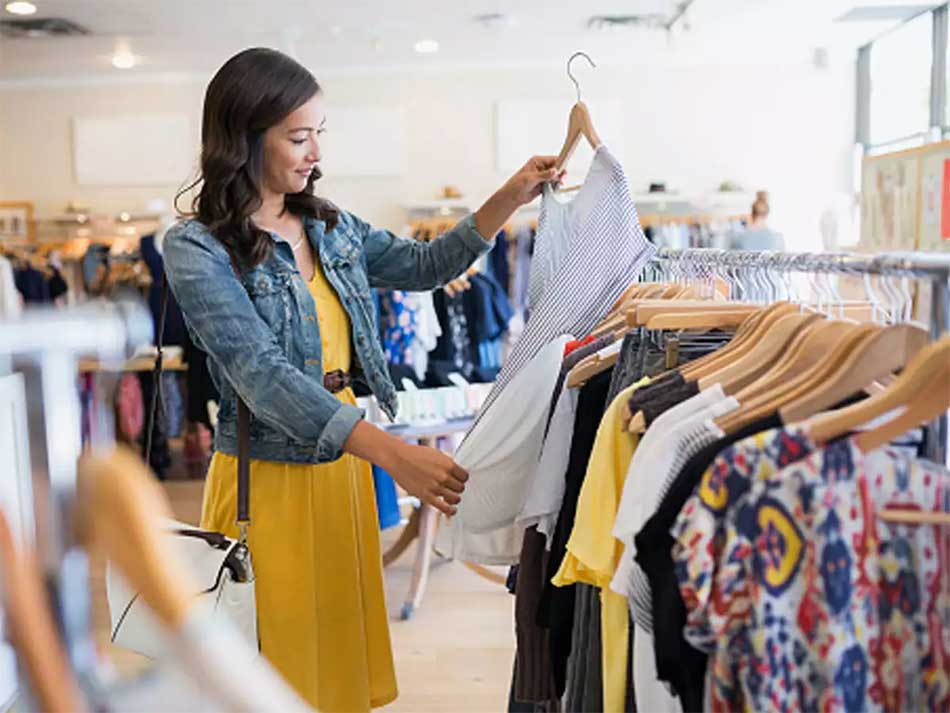
Even as a few sectors continue to reel under the COVID pressures, across the world, apparel retail, is booming. Figures show, 2022 was particularly a good year for fashion retail as it managed to navigate through all challenges, be it the Omicron scare or the ongoing Russia-Ukraine conflict.
US leads retail sales growth at 13.76%
As per an Apparel Resources report, the growth in global fashion retail was led by the US, whose retail sales revenues grew by 36.37 per cent to $264.05 billion in 2021 over 2020. This growth continues in 2022 with sales in the country growing by 13.76 per cent to $81 billion during the January-April’22 period. Clothing imports by the country also grew by 40.55 per cent Y-o-Y to $32.43 billion, show statistics from OTEXA.
Imports from Bangladesh dominate with 65% share
Most of the clothing imports by the US during 2021 and the first four months 2022 have been from India and Bangladesh. In 2021, the share of US’ clothing imports from Bangladesh and India increased by 36.71 per cent and 38.74 per cent to $7.15 billion and $4.19 billion respectively. In the first four months of 2022, this further increased by 65 per cent and 56 per cent to $3.30 billion and $2.10 billion respectively.
Pent-up demand, revenge buying fuelling growth
Growth has been stimulated by factors including a pent-up demand, wage growth, revenge buying and reopening of the economy across the US and the UK. Introduction of new fashion styles by retailers is also fuelling growth, believe experts. The top five most sold garments in the US during 2021 included T-shirts, trousers, jackets and blazers, undergarments and denim apparels.
Apparel sales in the UK grow 15%
The scenario in the UK is similar to the US with apparel retail sales growing 15 per cent to £38.10 billion in 2021. UK’s clothing imports too declined by 9.50 per cent to £20.80 billion during the year. UK’s clothing imports surged 39 per cent on Y-o-Y basis in January to February ’22 to £ 3.70 billion, whereas store sales grew by 58 per cent to £12.50 billion in the first two months of 2022, as per the latest data available on Office of National Statistics, UK. Figures from Eurostat also show, EU’s apparel imports increased by 5.60 per cent to €72.30 billion in 2021 after a massive slump recorded in 2020. Imports from Bangladesh grew by 20 per cent to €14.30 billion.
From January-March 2022, EU’s apparel imports grew by 30 per cent to €21.70 billion compared to the corresponding period last year. Imports from Bangladesh and India grew to €4.77 billion and €1.10 billion worth of apparels during Q1 ’22, respectively.
Japan’s apparel retail market to grow 4.13% till 2026
Apparel retail sales and imports by the third largest apparel market in the world – Japan- fluctuated from 2019-2021. In 2021, Japan’s apparel imports declined 1 per cent to $23.80 billion. In the first three months of 2022, these imports further dropped by 0.7 per cent to $5.90 billion.
However, despite this decline, the apparel retail market in Japan is slated to grow at a CAGR of 4.13 per cent till 2026. Apparel sales in chain stores associated with the Japan Chain Stores Association (JCSA) grew by 7.30 per cent Y-o-Y to $518.57 million in April’22. Most of the growth was reported in menswear with women’s wear and kid’s wear also staying positive.
However, experts are skeptical about sustaining this growth in coming months. As recent reports suggest, US retailer Target has canceled orders of home textiles and apparel from suppliers besides cutting prices to clear unsold inventory. Notwithstanding these occasional hindrances, the overall outlook for the industry appears bright.
E-com can spread across value chain: Study
A report offered by Global Data Plc shows how e-commerce can be integrated across the apparel value chain. The report will act as a guide for companies and will recommend whether they should invest, ignore, or explore specific aspects of e-commerce.
Global online apparel sales were estimated at $425 billion in 2020. As consumer spending shifts from physical stores to online channels, e-commerce will remain the fastest-growing area of retail. Moreover, COVID-19 has led to an unprecedented number of high-street closures and caused foot traffic to fall, leaving shoppers with little choice but to purchase items online.
E-commerce websites facilitate the online transaction of goods and services through the transfer of information and funds over a network. There are different e-commerce websites for every field, including online retailers, auction websites, and business-to-business services. Increased smartphone ownership and the need to enhance customer experience have resulted in e-commerce businesses offering both a website and an app. The popularity of mobile devices is driving e-commerce businesses to focus on mobile apps, although operating an app-only format is no guarantee of success.
Amazon was an e-commerce pioneer, starting as an online bookstore in 1994, before expanding rapidly into related areas like fashion, music, consumer electronics, games, and toys.