Welspun Living has shattered industry benchmarks by securing a world-leading score of 90 in the 2025 S&P Global Corporate Sustainability Assessment (CSA). This achievement marks a staggering 24-point ascent from its 2023 performance, catapulting the Indian home-textile giant to the number one global position in the ‘Textile, Apparel & Luxury Goods’ category. While many global peers have struggled to maintain momentum amidst tightening reporting standards, WLL’s environmental score of 94 out of 100 underscores a profound shift. Indian manufacturing is no longer just a high-volume hub; it is increasingly becoming the global gold standard for ESG-led production.
The competitive edge of circularity in retail
This milestone arrives as the $130 billion global home textile market pivots toward ‘sustainable luxury.’ With global retail giants like Walmart and Costco increasingly linking vendor contracts to ESG transparency, WLL’s top-tier ranking serves as a powerful market-access tool. ‘Growth must be responsible and transparent,’ states Dipali Goenka, Managing Director & CEO, highlighting that WLL’s focus on circular material flows and clean energy is now a core business driver. By outperforming its global competitors in social and governance metrics, WLL is effectively de-risking its supply chain against upcoming international regulations. This leadership is critical as India aims to scale its textile exports to $100 billion by 2030, proving that environmental stewardship and aggressive commercial growth are no longer mutually exclusive.
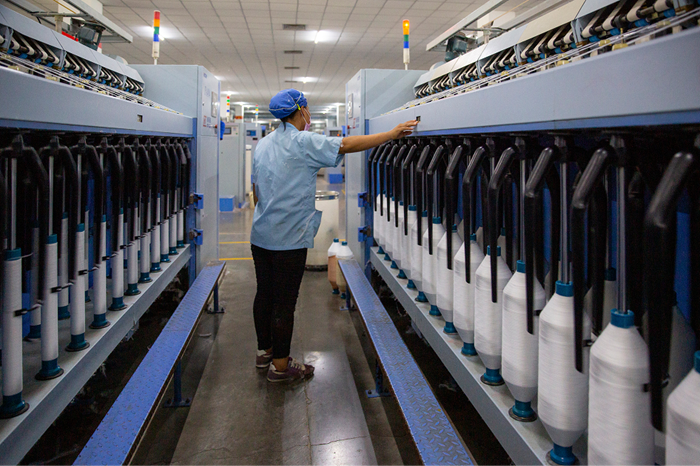
A key entity of the $3.6 billion Welspun World, Welspun Living Limited (WLL) is a global leader in home textiles, specializing in towels, bed linens, and flooring solutions. Operating across more than 60 countries, the company maintains world-class integrated manufacturing facilities in India, serving as a primary supplier to top-tier global retailers. WLL’s strategic growth plan is built on three pillars: Branding, Innovation, and Sustainability, with a specific focus on expanding its domestic retail presence and increasing its share of value-added products.