In Nigeria, textile manufacturing is a key local industry, supported by a chain of suppliers such as cotton growers and natural dye makers. However, traditional methods of dyeing fabrics are threatened by cheap imports from abroad. Nigerians have a love of naturally dyed fabrics with many prints based on traditional motifs. In northern regions, it is common for cloth to be a single color, such as indigo. Dyers use dye-pits (two or three meters deep). The cloth is left in these for a day or two, before being rinsed and left to dry. Sometimes, indigo cloth is beaten and given an extra coating of indigo powder to give a deeper shade and a glossy shine or sheen.
Nigeria's textile industry used to be the third largest in Africa. But now the country spends about 100 billion naira annually on importing clothing materials. If half of this could be made locally, the drain of foreign exchange could be stopped. Jobs could be created. Buying home made goods can stimulate the domestic economy.
Leadership failed to sustain the manufacturing and textile industries when the country discovered oil. A return to agriculture and manufacturing could enable Nigeria come out of recession. Once industries are back, Nigeria could be not just an investment destination but also a job destination.





Nigerian textiles need to be revived
- 1
- 2
- 3
- 4
- 5
- 6
- 7
- 8
- 9
- 10
Polyester’s reign vs. Lyocell’s strain, can green fibers survive?
The recent job cuts announced by Lenzing, a pioneer in sustainable cellulosic fibers, are a stark reflection of the complex... Read more
Indian Textile and Apparel Exports Hit Hard in September: As US tariffs take hol…

The Indian textile and apparel industry has shown the first clear signs of being impacted by the new US tariffs,... Read more
Fast, cheap, unstoppable, Shein shockwave hits Germany’s fashion retial

In a country known for its deep-rooted retail traditions, discerning shoppers, and a growing emphasis on sustainability, the rise of... Read more
Europe’s Circular Turn: The Danish vision shaping a new industrial era
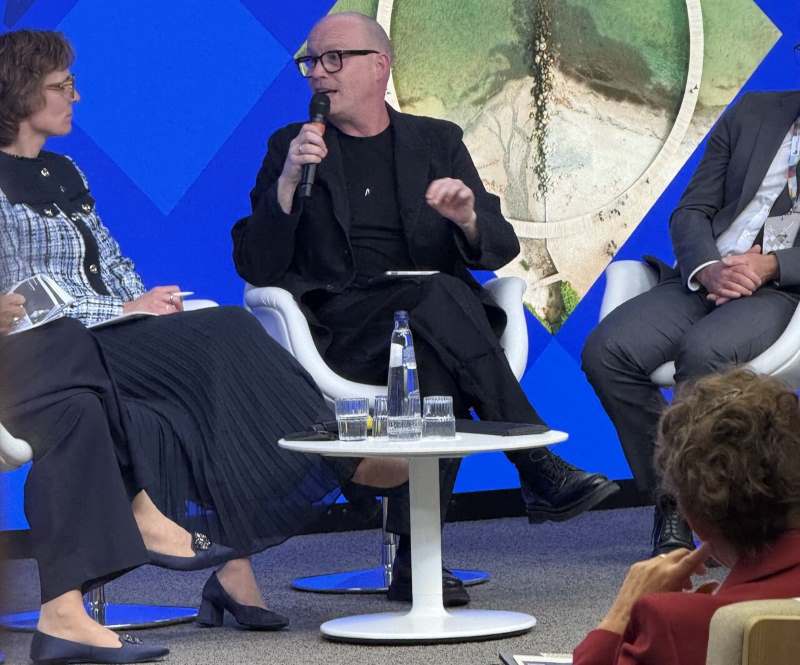
In a speech that captured both urgency and ambition, Danish MEP Rasmus Nordqvist stood before an audience of European policymakers,... Read more
“The US government’s economic data makes no sense. It’s a con.” says David Birnb…

“The US government’s economic data makes no sense. It’s a con,” declares David Birnbaum, strategic planner for the global garment... Read more
India's fiber sector spins a new thread of growth
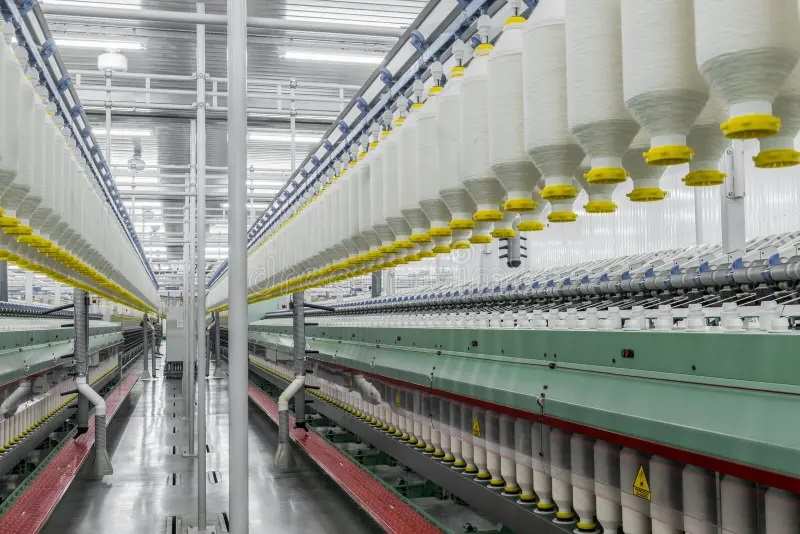
India's clothing fiber sector is on the cusp of a revolutionary decade, moving beyond its traditional identity as a cotton... Read more
Global Supply Chain Earthquake: The 100% ‘Trump Tariff’ and the scramble for Chi…
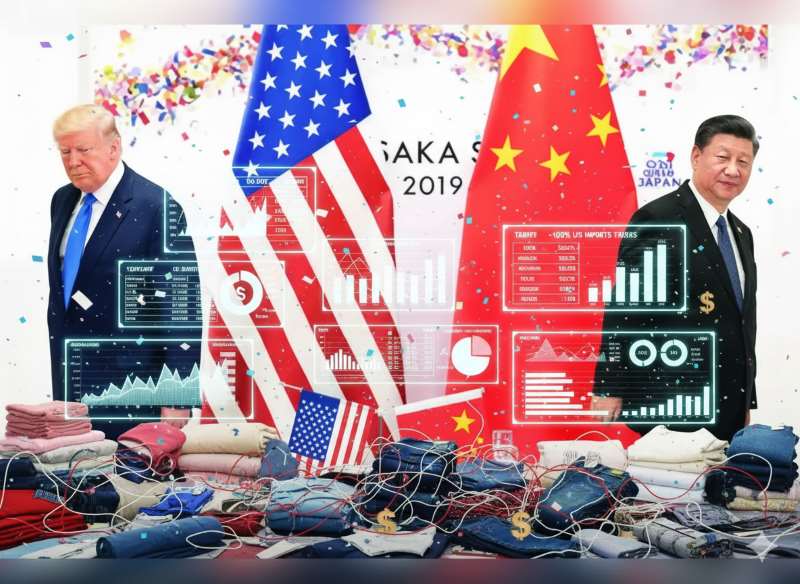
The imposition of an additional 100% tariff on all Chinese goods by President Donald Trump—a move that underscores the fickleness... Read more
Trump's 100% Tariff on China: Why should Indian apparel exporters not view this …
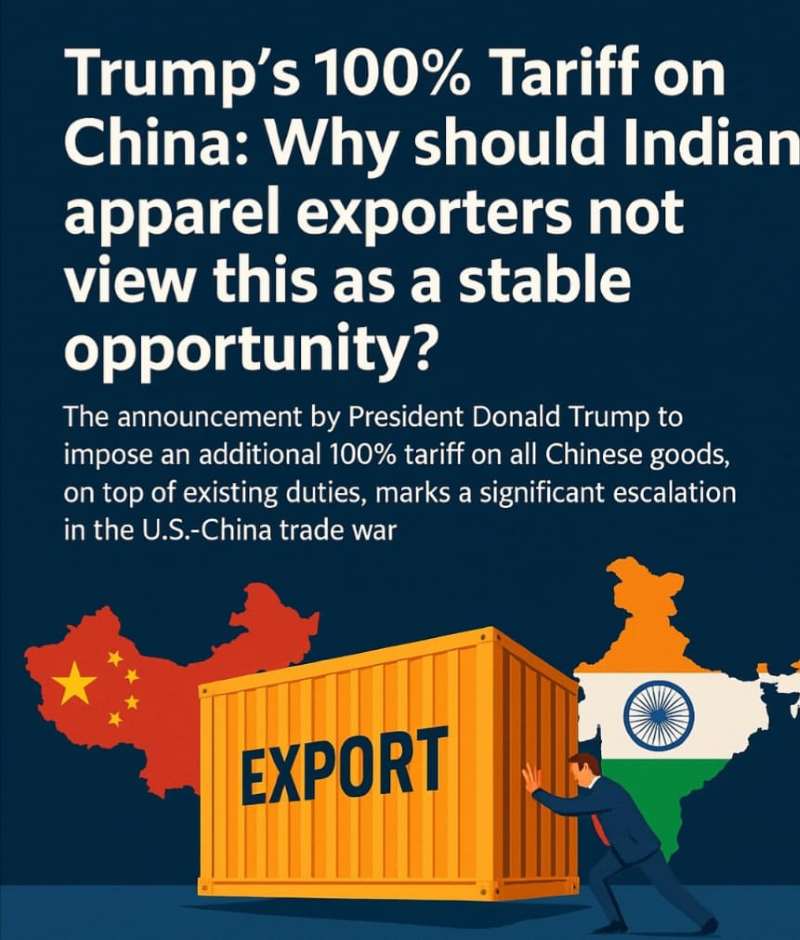
The announcement by President Donald Trump to impose an additional 100% tariff on all Chinese goods, on top of existing... Read more
Yarn Expo Autumn 2025: A premier international platform for the yarn industry

Yarn Expo Autumn 2025 concluded a highly successful run, firmly establishing its position as the premier international platform for the... Read more
The Fashion Week of the Decade In Paris: A new chapter for the industry

The highly anticipated fashion week season, which came to a close recently in Paris, was not "business as usual". The... Read more

