New York is currently the world’s best city for conventional retailers. Los Angeles takes the runner-up spot, while Singapore completes the podium at the third place. New York offers an ideal location based on its socio-economic, demographic and political factors, as well as its tourist appeal and the quality of its infrastructure.
Demographics, the economy, politics, the socio-economic landscape, tourism, retail, fashion and trendiness represent the eight major areas analysed to give a score to these urban areas, underpinned by criteria such as population, wealth, GDP growth, minimum wage, tax barriers, airport passenger traffic, tourist figures and the entrepreneurial climate.
The ranking has been done by Hot Retail Cities whose mission is to help fashion companies better understand where they operate and where they can set up shop going forward. The report provides an analysis detailing the retail conditions in 100 cities around the globe. Based on these characteristics, the report measures each city’s degree of merit for conventional retailers.
The hope is that this tool, which offers great insight into all aspects and trends to identify the hottest retail cities, will become a key driver over time to optimise each city’s retailing conditions.
Retailers are faced with the challenge of serving a global market with local tastes. Their success in ultimately establishing a footprint within a certain market will depend on how well they analyse the local landscape.





New York ranked top retail city
- 1
- 2
- 3
- 4
- 5
- 6
- 7
- 8
- 9
- 10
Intertextile Shanghai Spring 2026: Driving fashion’s future AI and sustainabilit…
As the global fashion supply chain rapidly evolves through technological advancements, China continues to cement its role as a leader... Read more
H&M Foundation and Accenture warn incremental change can’t save fashion’s cl…

A new report from the H&M Foundation and Accenture reveals that the fashion industry has reached a critical inflection point,... Read more
A Stitch in Time: How circular fashion is moving from niche to the norm

Once considered a fringe movement, circular fashion is rapidly becoming a mainstream business reality. The linear model of ‘take, make,... Read more
H&M invests in AltMat to scale India’s Next-Gen fiber innovation

In a defining move for India’s sustainable fashion ecosystem, H&M Group Ventures has made its first textile investment in the... Read more
EURATEX Director General pitches "New Business Model" at textile confe…
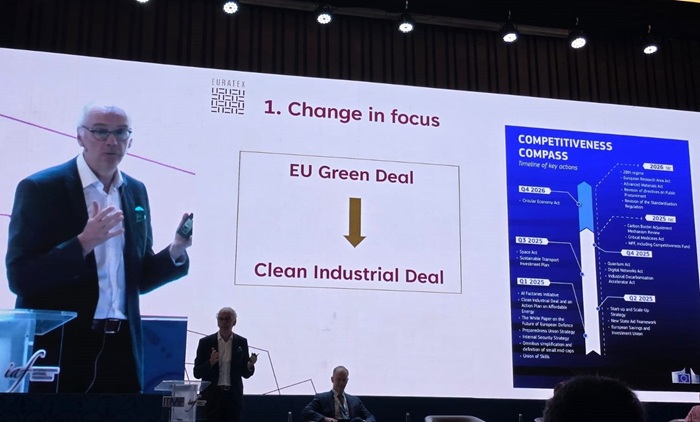
The global textile and apparel value chain is at a critical juncture, requiring a fundamental shift in its operating philosophy.... Read more
From Runway to Atmosphere: When clothes begin to clean the air

At Paris Fashion Week, Stella McCartney once again blurred the line between fashion and science. Her latest innovation, denim that... Read more
Obsessed with Talent: How a ‘Cultural Revolution’ is powering Trussardi’s fashio…
The inaugural 'Italian Fashion Days in India' (Le Giornate della Moda Italiana nel Mondo) officially kicked off yesterday, October 28,... Read more
Global apparel trade moderates in 2025 as Asian exports weaken, Wazir Advisors r…

The global apparel trade continues to reflect the delicate balance between recovery and restraint, as revealed in the October 2025... Read more
Margins, Machines, and Misunderstandings: Inside the global garment shake-up and…

The global garment industry, long a symbol of globalization’s success and excess is entering an age of disruption. Traditional business... Read more
New markets, new factories, India’s apparel industry looks to Africa

In the quiet industrial corridors of Ethiopia’s Hawassa Industrial Park, rows of sewing machines with local workers assemble garments destined... Read more

