Hugo Boss shareholders heard about the luxury fashion brand’s illegal treatment of union members in Turkey at the company’s annual general meeting in Stuttgart, Germany.
The company has a long-running anti-union policy in Izmir, which has seen many unionised workers illegally sacked since Industrial Global Union’s Turkish affiliate, Teksif, began organising at the factory in 2011.
Said Industrial Organizing and Campaigns Director Adam Lee, that Hugo Boss’ anti-union behaviour in Izmir is a threat to shareholder value. The ongoing violations have generated negative media coverage. Over 107,000 potential Hugo Boss customers have signed a petition demanding that Hugo Boss respect workers’ rights. The longer these violations in Izmir continue, the greater the risk that the Hugo Boss brand will be damaged.
Out of the 163 lawsuits for unfair dismissals since October 2011, the Turkish courts have sided with workers in 76 per cent of finalised cases. The Fair Labor Association (FLA), which Hugo Boss is affiliated to, also concluded in a January 2016 report that many of these dismissals were related to unionization efforts.
Meanwhile, despite the court decisions and FLA report, Hugo Boss claims there are no problems in Izmir.

- 1
- 2
- 3
- 4
- 5
- 6
- 7
- 8
- 9
- 10
Crude correction gives polyester a fresh cost advantage
A sustained correction in crude oil and petrochemical benchmarks is reshaping the economics of synthetic yarns, widening the cost gap... Read more
Chinese apparel majors trade volume for margin in premiumisation push
China’s apparel and consumer goods market is moving beyond the traditional volume-at-any-cost model, with leading domestic brands betting on premium... Read more
India’s MMF push faces rising risk from China’s petrochemical dominance
India’s ambition to build a globally competitive synthetic textile industry is facing constraints as downstream capacity alone cannot solve: concentration... Read more
Shein’s Vietnam retreat exposes the limits of nearshoring
The global apparel industry has spent the past few years pursuing a straightforward strategy: reduce dependence on China by moving... Read more
Regional pavilions compete on fiber strengths and supply chain niches at Yarn Ex…
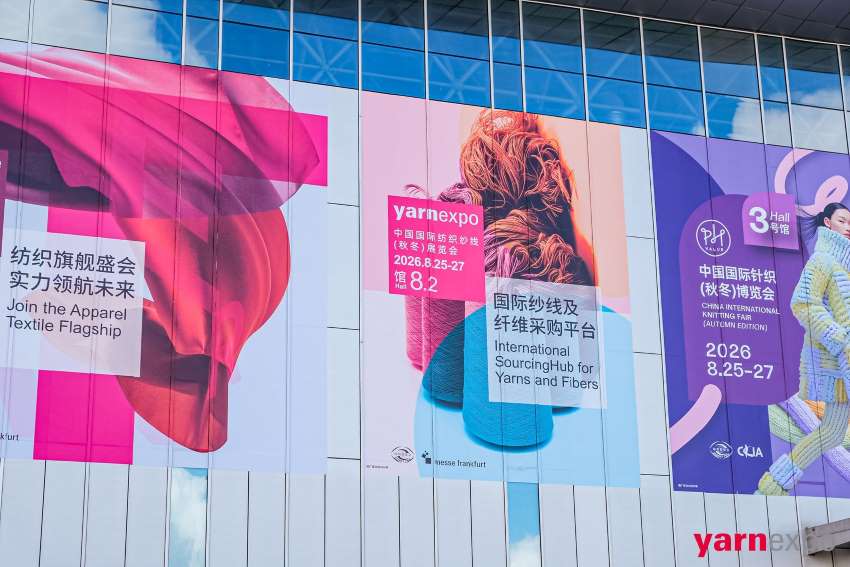
The trade floor at Yarn Expo Autumn 2026 in Shanghai, held between Aug 25-27, capitalizing on a sharp rebound in... Read more
Inside activewear's shift from stitched mesh to precision engineered textiles
The global functional apparel market, on track to touch $640 billion, is looking at a production shift as activewear manufacturers... Read more
Brazil’s cotton dominance puts Asian spinners on a new sourcing map
Brazil’s emergence as the world’s largest cotton exporter is no longer simply an agricultural success story. It has given a... Read more
Textile industry sees long-term growth but $100-bn export goal stays a stretch: …
India’s textile and apparel industry is entering a phase of optimism, but that confidence is tempered by a hard export... Read more
Apparel trade slumps as global textile mills move upstream
Global manufacturing is growing, but finished apparel is failing to capture that growth. United Nations Industrial Development Organization (UNIDO) data... Read more
Global apparel value chain converges in Shanghai as Intertextile Autumn 2026 ope…
The global apparel and textile community gathered in full force yesterday, August 25, 2026, as the Autumn Edition of Intertextile... Read more