Factories in Ethiopia making clothes for top global brands pay their workers far less than counterparts in other low-paying countries says the Stern Center for Business and Human Rights.
Ethiopia has no official minimum wage for the private sector. The low monthly wage paid to garment workers in Ethiopia does not cover their basic needs. Even after additional payments of attendance bonuses and expenses for food and transportation, most workers struggle to get by. As a result of the dissatisfaction among the workforce, factories replace all of their workers every 12 months on an average, pushing training costs up and efficiency down.
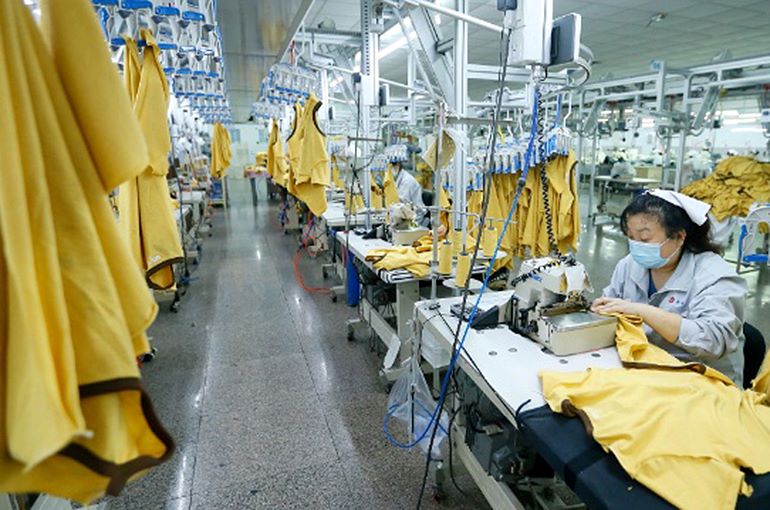
Ethiopia is Africa’s second most populous country, with about 105 million people who still largely survive off agriculture. Hawassa Industrial Park is one of five manufacturing hubs in Ethiopia. It is the largest specialized apparel and textile park in Africa and was built in just nine months, with Chinese help. The park has modern halls where leather and textile products are produced for the European and American markets. The park has 25,000 workers and there are plans to increase the workforce to 60,000. Many young women working at the sites receive very little training and face cultural conflicts with managers from south or east Asia.

- 1
- 2
- 3
- 4
- 5
- 6
- 7
- 8
- 9
- 10
Global Sourcing Expo Sydney 2026: Bridging the gap in global apparel procurement
The upcoming Global Sourcing Expo Sydney, scheduled for June 16–18, 2026, at the International Convention Centre (ICC) Sydney, is poised... Read more
Zara’s precision retail model leaves global competitors drowning in inventory
The global apparel sector is currently grappling with a punishing inventory overhang, yet Inditex, the parent company of Zara, has... Read more
Beyond the mall collapse, the profit push driving 2026 retail closures
The American retail sector has entered 2026 in the midst of one of its most impactful recalibrations in decades. Over... Read more
Status, Rewired: Health, AI and experience are displacing heritage luxury
The global luxury industry is not facing a demand fall it is confronting a redefinition of value. As bellwethers like... Read more
No More Easy Wins: Why global retailers are losing ground in China
China’s retail sector has entered a new phase, one defined not by aspiration, but by scrutiny. The long-standing advantage enjoyed... Read more
India’s 45°C economy is reshaping apparel retail and consumer spending
The intensifying heatwaves sweeping across the Indian subcontinent are no longer mere meteorological anomalies; they have become the primary engineers... Read more
FY26 Textile Scorecard: Integration, specialization are winning the margin battl…
As the curtains close on FY2025-26, India’s textile industry is revealing a sharp divide. On one side stand integrated and... Read more
Intertextile Shenzhen 2026: Pioneering the Future of Textile Innovation
As Shenzhen cements its status as China’s premier hub for manufacturing, artificial intelligence, and startup cultivation, Intertextile Shenzhen Apparel Fabrics... Read more
The Devil Wears Prada 2 reflects fashion’s power shift, where consumers replace …
" " The release of The Devil Wears Prada 2 has sparked a debate far bigger than a Hollywood sequel. What... Read more
The 30-minute problem reshaping the $63 bn leggings market
The global leggings makers are racing to solve one of the apparel industry’s most expensive hidden problems: discomfort that appears... Read more