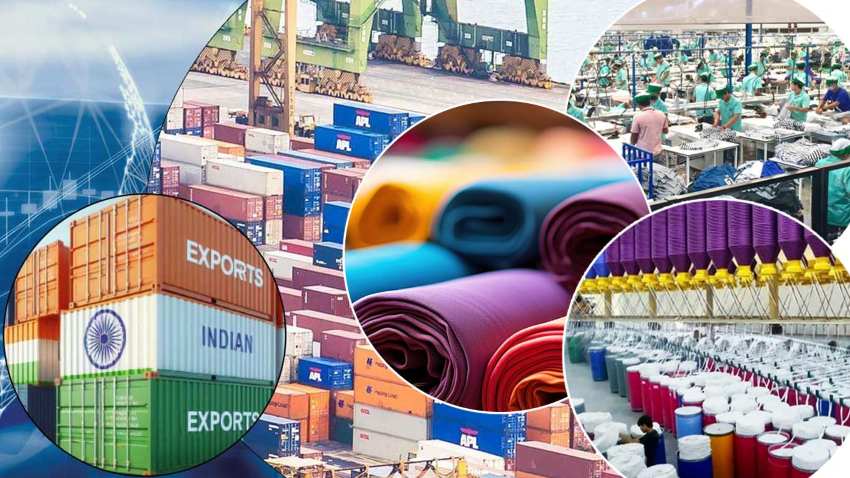
According to the data released recently by the International Trade Administration’s Office of Textiles and Apparel, or OTEXA, denim brands and retailers implemented a big shift in sourcing strategy in the first quarter of 2016.
In the first three months of 2016, denim imports from China represented 24.6 percent of the total, down from 24.9 percent a year ago.Imports from Mexico suffered an even bigger fall, dropping from 30 percent of total U.S. denim imports in the first quarter of 2015 to 26.7 percent in 2016.
Meanwhile, Bangladesh and Pakistan each gained 100 basis points of share, to become the number 3 and 4 suppliers of denim jeans to the U.S. market. This is consistent with industry trends showing a shift in denim market share toward the fast fashion retailers that are a favorite of younger consumers.
Total U.S. imports of denim jeans fell by 4.3 percent to $674.6 million in the first quarter. Units declined 3.5 percent to 85 million, resulting in a drop of 0.8 percent in the average cost of a pair of imported jeans.
Men’s and boy’s jeans suffered the biggest drop, with the dollar value of imports down 7.8 percent to $351.6 million.Women’s and girls’ jeans imports were virtually flat at $323 million in the quarter.

- 1
- 2
- 3
- 4
- 5
- 6
- 7
- 8
- 9
- 10
Why US apparel prices defied inflation while product quality improved
As inflation reshapes nearly every aspect of American household spending, one consumer category continues to stand apart. Housing costs have... Read more
The Resale Revolution: Vinted’s marketplace model reshapes European retail
The French fashion market has reached a turning point. In a development that highlights the growing influence of circular commerce,... Read more
France declares war on ultra-fast fashion with new green law, will reshape globa…
France has become the first major economy to legislate specifically against the ultra-fast fashion business model, a watershed moment for... Read more
France declares war on ultra-fast fashion with new green law, will reshape globa…
France has become the first major economy to legislate specifically against the ultra-fast fashion business model, a watershed moment for... Read more
Click-and-Collect: Why retailers are turning pickup counters into sales machines
Modern retail has changed the role of the physical store. Once viewed primarily as a point of sale or inventory... Read more
Why fashion e-commerce returns persist despite smarter sizing technology
For over a decade, the fashion sector has invested heavily in virtual fitting rooms, AI-powered size recommendations, and 3D body... Read more
A Quest for Essence: Unveiling the 2027 A/W Trends at Intertextile Shanghai Appa…
As the global textile industry looks toward the upcoming season, the Intertextile Shanghai Apparel Fabrics – Autumn Edition stands ready... Read more
Beyond globalization, local consumer behavior rewriting fashion retail strategy
The traditional blueprint for global fashion expansion is being rewritten. For decades, apparel companies assumed globalization would gradually create a... Read more
Virtual wardrobes redraw retail boundaries as gaming platforms become fashion ec…
The boundary between physical clothing and digital apparel is rapidly eroding as gaming environments evolve into fully functioning consumer markets.... Read more
From Estimates to Audits: Virgin PET data disrupts global synthetic fiber econom…
The global textile industry is recalibrating how environmental impact is measured, priced, and regulated. While polyester continues to dominate global... Read more