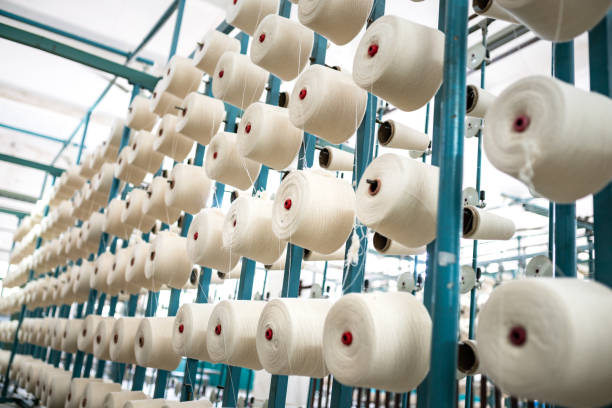
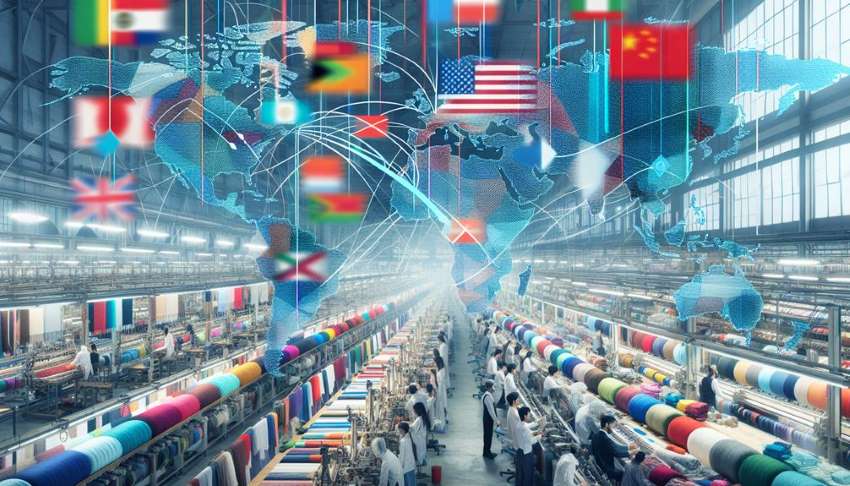
August and September saw poor demand for polyester industrial yarn in China. But polyester industrial yarn export growth expanded rapidly, far higher than that of 2015. Foreign buyers largely procured ahead of time. August/September exports may see negative growth rates. The G20 regulation did not affect PIY production much, only about 10 per cent of total PIY capacity in China.
Downstream plants widely stocked raw materials with expectations of higher prices in future. Foreign sales were brisk in the first half of 2016. The polyester textile filament market was heavily impacted as a lot of plants shut down and spot prices were pushed up. Downstream may need to replenish their stocks and polyester industrial yarn plants may cut inventory at the point. Their profits were very thin. Demand for downstream products, for geo-technique or car use, etc. too decreased.
Sales promotion is one way of stimulating downstream demand and improving the market situation. Polyester industrial yarn has been one of the most widely used yarns among all types of industrial yarns and it is known for its high tenacity, low elongation and high abrasion resistance. High tenacity yarns are required in a variety of industrial applications such as conveyor belts, ropes, geo-grids, lashings /slings, automotive seat belts and industrial fabrics.

- 1
- 2
- 3
- 4
- 5
- 6
- 7
- 8
- 9
- 10
Status, Rewired: Health, AI and experience are displacing heritage luxury
The global luxury industry is not facing a demand fall it is confronting a redefinition of value. As bellwethers like... Read more
No More Easy Wins: Why global retailers are losing ground in China
China’s retail sector has entered a new phase, one defined not by aspiration, but by scrutiny. The long-standing advantage enjoyed... Read more
India’s 45°C economy is reshaping apparel retail and consumer spending
The intensifying heatwaves sweeping across the Indian subcontinent are no longer mere meteorological anomalies; they have become the primary engineers... Read more
FY26 Textile Scorecard: Integration, specialization are winning the margin battl…
As the curtains close on FY2025-26, India’s textile industry is revealing a sharp divide. On one side stand integrated and... Read more
Intertextile Shenzhen 2026: Pioneering the Future of Textile Innovation
As Shenzhen cements its status as China’s premier hub for manufacturing, artificial intelligence, and startup cultivation, Intertextile Shenzhen Apparel Fabrics... Read more
The Devil Wears Prada 2 reflects fashion’s power shift, where consumers replace …
" " The release of The Devil Wears Prada 2 has sparked a debate far bigger than a Hollywood sequel. What... Read more
The 30-minute problem reshaping the $63 bn leggings market
The global leggings makers are racing to solve one of the apparel industry’s most expensive hidden problems: discomfort that appears... Read more
Why the resale explosion is failing to slow apparel production
The global apparel industry is confronting an uncomfortable paradox. The explosive rise of the resale economy, once viewed as a... Read more
Can India’s textile sector convert FTAs into global dominance?
What began as a cautious China Plus One sourcing strategy for global apparel trade, has now evolved into a full-scale... Read more
No More Easy Wins: Why global retailers are losing ground in China
China’s retail sector has entered a new phase, one defined not by aspiration, but by scrutiny. The long-standing advantage enjoyed... Read more