Towns in a district of Andhra Pradesh have won the geographical indication (GI) tag for the production of kalamkari.This involves carving out intricate designs on wooden blocks and using these to print patterns on fabric.
The name kalamkari is derived from the words qalam (pen) and kari (craftmanship), meaning drawing with a pen.
But there has been a spurt in the use of modern and chemical methods that threaten the traditional art of block printing on fabric using organic and vegetable dyes.
To keep up with growing demands and reduce production costs and time, many villagers have started using chemical dyes and the screen printing method to produce the famed textile style. The modern technique involves digitally creating designs and then making large stencils, which are used instead of blocks.
What the screen printing method can produce in 40 minutes, block printing or hand painting can take days.
The process of kalamkari involves several steps, one of which is to wash the fabric in the Krishna River to ensure that the color lasts longer. The water in the river has the correct mineral composition required to help the colors develop and set. However, the chemical dyes used by other producers have begun to pollute the river.

- 1
- 2
- 3
- 4
- 5
- 6
- 7
- 8
- 9
- 10
End of De Minimis: How tariffs are reshaping cross-border fashion commerce
Today, competitive advantage is no longer determined solely by production speed or low-cost manufacturing in global fashion industry. Instead, regulatory... Read more
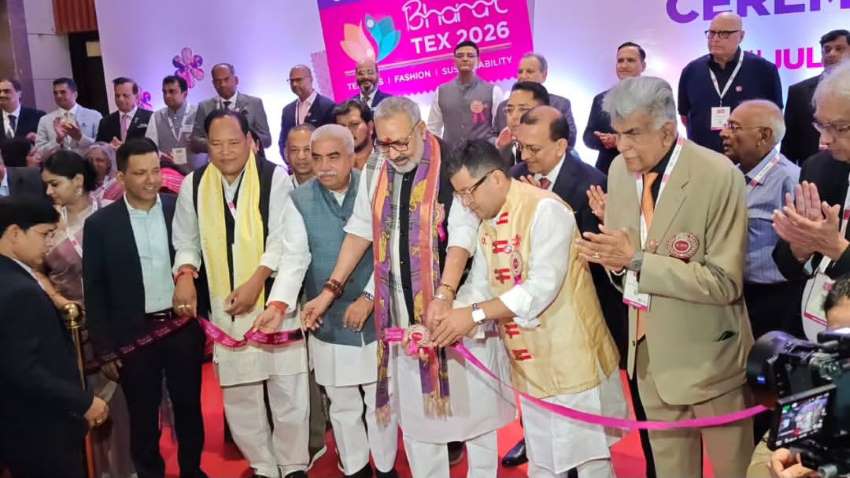
Bharat Tex 2026 ends on historic high as India strengthens global apparel leader…
Bharat Tex 2026 has officially wrapped up, marking the most successful chapter in the event’s history. The four-day textile extravaganza... Read more
Home textile exports under pressure as retailers shift to leaner buying models: …
The global home textile industry has entered a prolonged demand readjustment phase as consumer caution, persistent inflation and conservative retail... Read more
Inventory intelligence replaces discounts in new secondhand wholesale trade
The global secondhand apparel industry has entered a new phase of commercial maturity. Once defined by bulk liquidation, aggressive discounting... Read more
Collection, sorting, cost replace technology as the bottleneck in circular fashi…
For years, the global fashion industry treated fibre-to-fibre recycling as a scientific challenge. Chemical recycling technologies, enzyme-based processes and advanced... Read more
Beyond Blue Jeans: How brand identity is reshaping a $103 bn market
The global denim industry is entering a new phase of competition, one in which branding psychology is becoming as valuable... Read more
Beyond Tariffs: How a unified US apparel industry wants to rebuild regional manu…
In a rare show of consensus, some of the US' most influential apparel, footwear and textile organisations have come together... Read more
India-UK CETA: Tariff-free UK access puts India's textile sector on growth track
India's textile and apparel industry is ready for one of its biggest export opportunities in decades as the India-UK Comprehensive... Read more
AI tailoring gains momentum as custom suits transforms premium apparel retail
Technology is reshaping one of fashion's oldest categories menswear. AI, digital body scanning and automated manufacturing are replacing conventional tailoring... Read more
Can trade deals and manufacturing reforms deliver India's textile vision?
India's textile and apparel industry has entered one of its strongest revival phases after several difficult years marked by pandemic... Read more