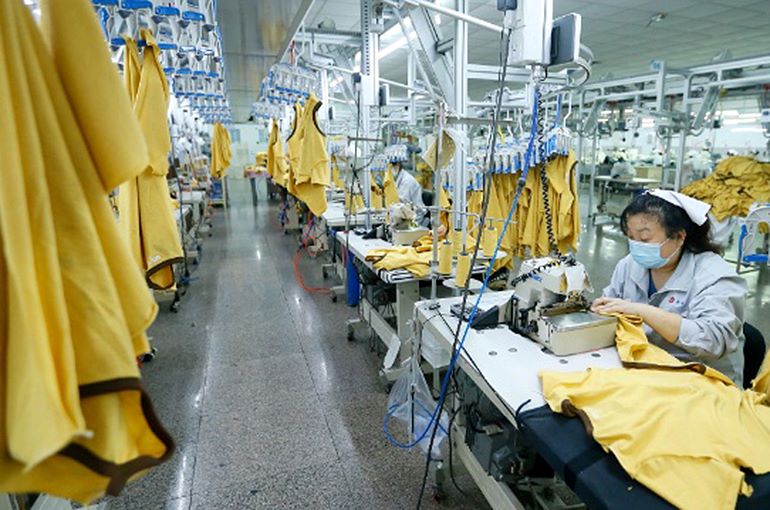
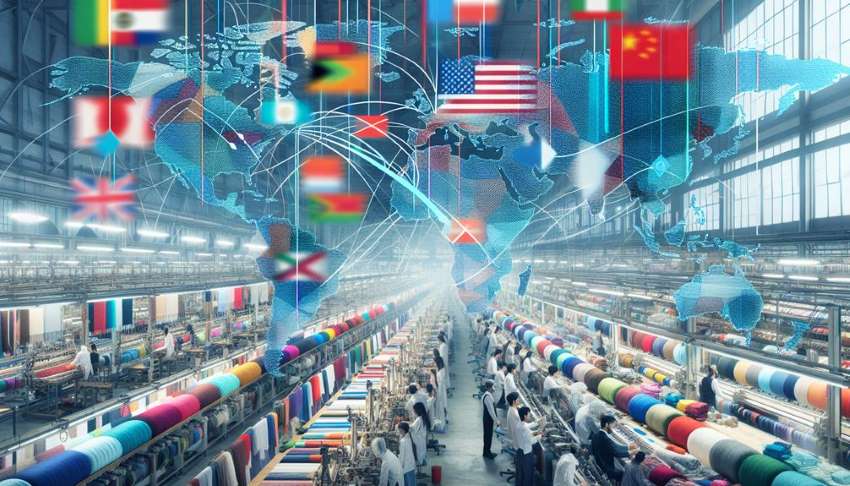
Cambodian garment factory workers are fighting for minimum wages though export earnings of the garment sector is about a third of the country’s GDP. Cambodia has one of the lowest minimum wages in the Asia-Pacific. There are more than 6,00,000 garment workers in the country, most of them women. Aside from receiving low wages, workers also suffer poor working conditions.
Some factories have been hit by strikes lasting for as long as a year. Strikes are often violently dispersed by government forces, resulting in the deaths of workers. Learning from this debacle, garment workers decided to revive the campaign for wage increase, this time have directed their appeal to global clothing brands that buy and sub-contract supplies from Cambodia. The campaign was aimed at pressuring global brands such as H&M, Walmart, Levi’s, Gap, Puma, C&A, Adidas and Zara to directly negotiate higher wages for workers with their suppliers.
Garment workers say they are justified in using this strategy. They say global clothing brands have amassed more than enough profit which can be used to for the welfare of workers in Cambodia. However, the government reiterated its position that a substantial wage increase would scare away investors and disrupt local economy.

- 1
- 2
- 3
- 4
- 5
- 6
- 7
- 8
- 9
- 10
Crude correction gives polyester a fresh cost advantage
A sustained correction in crude oil and petrochemical benchmarks is reshaping the economics of synthetic yarns, widening the cost gap... Read more
Chinese apparel majors trade volume for margin in premiumisation push
China’s apparel and consumer goods market is moving beyond the traditional volume-at-any-cost model, with leading domestic brands betting on premium... Read more
India’s MMF push faces rising risk from China’s petrochemical dominance
India’s ambition to build a globally competitive synthetic textile industry is facing constraints as downstream capacity alone cannot solve: concentration... Read more
Shein’s Vietnam retreat exposes the limits of nearshoring
The global apparel industry has spent the past few years pursuing a straightforward strategy: reduce dependence on China by moving... Read more
Regional pavilions compete on fiber strengths and supply chain niches at Yarn Ex…
The trade floor at Yarn Expo Autumn 2026 in Shanghai, held between Aug 25-27, capitalizing on a sharp rebound in... Read more
Inside activewear's shift from stitched mesh to precision engineered textiles
The global functional apparel market, on track to touch $640 billion, is looking at a production shift as activewear manufacturers... Read more
Brazil’s cotton dominance puts Asian spinners on a new sourcing map
Brazil’s emergence as the world’s largest cotton exporter is no longer simply an agricultural success story. It has given a... Read more
Textile industry sees long-term growth but $100-bn export goal stays a stretch: …
India’s textile and apparel industry is entering a phase of optimism, but that confidence is tempered by a hard export... Read more
Apparel trade slumps as global textile mills move upstream
Global manufacturing is growing, but finished apparel is failing to capture that growth. United Nations Industrial Development Organization (UNIDO) data... Read more
Global apparel value chain converges in Shanghai as Intertextile Autumn 2026 ope…
The global apparel and textile community gathered in full force yesterday, August 25, 2026, as the Autumn Edition of Intertextile... Read more