FW


A key consortium of leading Export Promotion Councils (EPCs) and industry associations, the Bharat Tex Trade Federation (BTTF) is set to host the third edition of India’s premier global textiles and apparel event, Bharat Tex. The upcoming event is scheduled to run from July 14 to 17, 2026, at the Bharat Mandapam in New Delhi.
Building on mega-event success
The first two editions of Bharat Tex have already cemented the event's reputation as India’s definitive global textile mega-event. Held from February 14 to 17, 2025, the second edition of the event was a resounding success, spanning over 2.2 million sq ft across both the Bharat Mandapam and the India Expo Centre & Mart in Greater Noida..
The 2025 edition of the event hosted over 5,000 exhibitors. It attracted 6,000 international buyers from more than 120 countries and over 120,000 total visitors. The edition also hosted over 80 knowledge sessions and over 8,000 B2B/B2G meetings
The event generated estimated export opportunities of nearly $2.5 billion and secured investment commitments exceeding Rs 2,100 crore.
A unified platform for the textile value chain
Naren Goenka, Chairman, BTTF, emphasizes, following the remarkable success of the 2024 and 2025 events, the 2026 edition is positioned to reach new heights as India’s unified showcase for the entire textile value chain.
The 2026 show will continue to embody the Prime Minister’s transformative 5F Vision: Farm to Fiber, Fiber to Factory, Factory to Fashion, and Fashion to Foreign. This framework is crucial for bringing together every link of the industry under one cohesive roof. Furthermore, the event will align with the broader governance ethos of ‘Reform, Perform, Transform and Inform,’ demonstrating how India's textile ecosystem is advancing toward innovation, inclusivity, and sustainability.
Bharat Tex 2026 is poised to be one of the largest gatherings of its kind, uniting the world’s leading textile manufacturers, buyers, and industry visionaries. It will serve as a confluence of business, innovation, and knowledge exchange, featuring an inspiring series of thought-leadership sessions and experiential showcases.
Focus on global dialogue and sustainability
Bhadresh Dodhia, Co-Chairman, BTTF, highlights, a central feature of Bharat Tex 2026, the Global Textile Dialogue 2026 will convene global industry leaders, CXOs, policymakers, and sustainability experts to deliberate on critical industry topics, including Industry 4.0, ESG imperatives, R&D collaborations, and evolving trade dynamics.
Bharat Tex 2026 is designed to further strengthen India’s position as a sustainable and trusted global sourcing hub, Dodhia adds. It will offer new opportunities for MSMEs, startups, and artisans to engage with global markets, investors, and technology partners. The event will spotlight India’s leadership in circular manufacturing, responsible production, and textile innovation, while celebrating craftsmanship and creativity through dedicated design labs, innovation pavilions, and fashion showcases, he avers.
More than just showcasing textile strength; Bharat Tex 2026 is about stitching together possibilities, people, and progress. As the world gathers in New Delhi, India is ready to tell its most compelling textile story yet.
The Italian textile machinery sector experienced a significant slowdown in Q3, FY25. As per figures compiled by the ACIMIT (Association of Italian Textile Machinery Manufacturers) Economics Department, the orders index declined by 16 per cent to settle at an absolute value of 41.8 points.
The decline was uniform across both key markets. Orders in the domestic market declined by 17 per cent with the indeed reaching 49.9 points while foreign orders contracted by 16 per cent to reach an index value of 40.7 points.
Acknowledging the challenging business climate, Marco Salvadè, President, ACIMIT, notes, overall demand remains weak with the decline in domestic order intake reflecting the difficult period being experienced by the textile supply chain in Italy.
Despite the negative quarterly performance, the sector maintains a stable order backlog, ensuring four months of guaranteed production,
While total order intake for the first nine months of 2025 declined, Salvadè points to pockets of resilience abroad. Official data for the first half of the year shows Italian textile machinery exports growing in key markets, including India, Pakistan, and Egypt.
Optimism has also been fueled by the recent conclusion of the main Asian trade show for textile machinery, ITMA ASIA + CITME 2025, held in Singapore. Salvadè expressed satisfaction with the event, stating that the 100 Italian exhibitors likely benefited from both the quantity and quality of visitors, generating promising business prospects.
He concluded by saying, the groundwork laid at the trade fair will translate into a stronger order intake within a geopolitical context marked by reduced uncertainty.
Apparel Group and the owner of the Martha Stewart brand, Marquee Brands have invited global lifestyle icon Martha Stewart to inaugurate her new flagship store at the Mall of the Emirates. This event represents a significant step in the partnership between Apparel Group and Marquee Brands, highlighting their joint commitment to introducing world-class lifestyle experiences to the region.
The grand opening will feature a ceremonial curtain opening led by Martha Stewart and Sima Ganwani Ved, Founder and Chairwoman of Apparel Group. Following the ceremony, the two founders will engage in a special discussion, where Stewart is expected to share her insights on creativity, design, entrepreneurship, and the process of building an enduring global brand, offering inspiration to local audiences and industry leaders.
The Mall of the Emirates store is the latest addition to the brand's growing presence in the UAE, joining recently opened Martha Stewart stores at City Centre Mirdif and Dubai Hills Mall.
Each store offers a carefully curated selection of products that embody Stewart’s timeless aesthetic and signature approach to beautiful, functional living. The store offers product categories including home décor, entertaining essentials, kitchenware, bedding and bath products and general lifestyle merchandize.
Ved opines, more than a partnership, having Martha Stewart in Dubai with Apparel Group feels like a meeting of shared values, creativity, and the belief that everyday life deserves to be extraordinary.
The strategic partnership between Apparel Group and Marquee Brands continues to successfully introduce globally admired lifestyle brands to the region, utilizing innovation and world-class design to redefine the retail experience.
In H1, FY26, India’s largest listed garment exporters, Pearl Global Industries(PGIL) registered a 17.0 per cent Y-o-Y rise in PAT to Rs 138 crore.
The company also recorded a 12.7 per cent Y-o-Y rise in consolidated revenue to Rs 2,541 crore in H1FY26. This was driven by high value-added product sales in Vietnam and Indonesia.
In Q2, FY26, PGIL’s consolidated revenue increased by 9.2 per cent Y-o-Y to Rs1,313 crore. Its PAT increased by 29.4 per cent Y-o-Y to Rs 72 crore during the quarter.
On a standalone basis, PGIL’s revenue increased to Rs 531 crore in H1, FY26 while PAT rose to Rs 41 crore during the period. In Q2, FY26, the company’s revenue increased to Rs 264 crore while PAT rose to Rs 15 crore.
The Company shipped 19.9 million pieces in Q2FY26, highest ever in Q2 series up from 19.3 million pieces in Q2FY25. It also upgraded to eFlow Nanobubble technology, replacing traditional water-based washing in Bangladesh. This advancement enables the company to save up to 32 per cent while reducing power consumption by 9 per cent and improving time efficiency by 20 per cent.
Pallab Banerjee, Managing Director, says, the company’s strong financial performance reflects their resilience amid an evolving trade environment. In Q2FY26, Pearl Global improved profitability, demonstrating their ability to navigate trade complexities, including 50 per cent US tariff on India.
Swedish textile startup Syre AB is planning a significant funding round, aiming to raise as much as $700 million. The capital infusion is earmarked for the construction of a new factory in Vietnam, a move made possible by a recent supply agreement with Nike Inc.
Dennis Nobelius, Chief Executive Officer, confirms, the company has secured a multi-year deal to supply the world’s largest sportswear group with recycled polyester. This major contract is expected to significantly strengthen Syre's prospects for new financing, adds Nobelius.
Co-founded in 2023 by Hennes & Mauritz AB (H&M) and Vargas Holding AB, Syr previously raised $100 million in 2024 to fund its first facility in North Carolina. Nobelius noted that the company is now adopting a more sequential approach to fundraising, contrasting with earlier Vargas-backed ventures.
Syre intends to start approaching lenders and investors within the next six months, with the goal of finalizing a capital raise in the region of $500 million to $700 million in about a year’s time.
The substantial funds raised will be dedicated to constructing the Vietnamese plant in 2027, with commercial production targeted for late 2029. However, the project's progress is partially contingent on the Vietnamese government finalizing import licenses for textile waste, which is a key prerequisite for delivering large-scale circular production in the country.
Valued at $14.12 billion in 2024, the global linen viscose market is expected to reach $38.84 billion by 2033, growing at a CAGR of 11.9 per cent during the forecast period 2025–2033.
The foundational inputs for the linen viscose market are experiencing measurable shifts. In 2024, European flax cultivation for premium linen fiber expanded to an impressive 205,000 hectare.
Concurrently, viscose producers globally sourced over 6.5 million metric tons of essential dissolving wood pulp. These figures underscore the massive scale of the initial supply chain.. Investment in 2024 yielded 3 new flax seed cultivars, each promising higher fiber yields per plant and enhancing raw material efficiency from the very start of the value chain.
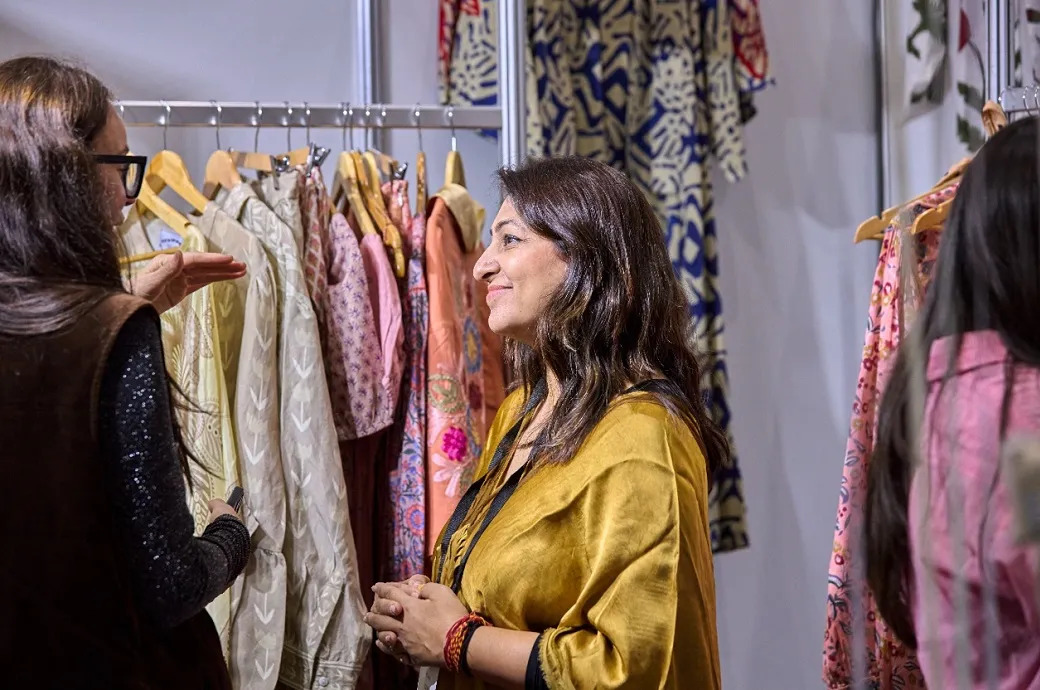
The highly anticipated Global Sourcing Expo is set to return to the Melbourne Convention and Exhibition Center from November 18, through November 20, 2026. This pivotal event brings together hundreds of leading manufacturers, suppliers, and industry professionals from across the globe, firmly establishing itself as the must-attend sourcing event of the year for the Southern Hemisphere.
Following a hugely successful Sydney event earlier this year, the Melbourne edition promises to deliver even greater opportunities for strategic sourcing, professional learning, and international connection. Trade professionals - including those involved in product sourcing, supply chain management, and the fashion and retail sectors - are encouraged to secure their complimentary registration today to access three days of intensive business opportunities.
A global marketplace of opportunity
Featuring an immense marketplace, this year’s Expo hosts more than 900 exhibitors under one roof. It provides attendees with an unparalleled access to global sourcing opportunities across major consumer goods categories, including apparel, textiles, footwear, accessories, and home furnishings. The international attendance highlights the Expo’s truly worldwide reach, featuring dedicated pavilions and suppliers from diverse economic hubs.
Some of the nations participating in the event include sourcing powerhouses such as Bangladesh, China, Hong Kong, Indonesia, India, Nepal, Pakistan, South Korea, Türkiye, the US, and Vietnam, alongside delegations from various countries across the African continent. This convergence of manufacturers provides a crucial, efficient platform for businesses to establish direct sourcing partnerships and stabilize their supply chains in an ever-changing global climate.
Key industry partnerships
A significant highlight of the show is the robust array of participating industry associations, which represent the collective craftsmanship and production capabilities of some of the world’s leading export nations. The presence of these prestigious organizations underscores the Expo’s global standing and the strong international support it garners from governments, trade bodies, and industry leaders.
Key groups attending include major Indian export bodies such as the Federation of Indian Export Organizations (FIEO), the Apparel Export Promotion Council (AEPC), The Cotton Textiles Export Promotion Council (Texprocil), and specialized councils for products like carpets and leather. Furthermore, the event hosts international partners like the Export Promotion Bureau Bangladesh (EPB) and the Trade Development Authority of Pakistan (TDAP), alongside associations like the India SME Forum and the Garment Association Nepal.
Knowledge that powers business: The seminar series
Adding substantial educational value to the visitor experience, the Melbourne edition features the highly anticipated Global Sourcing Seminar Series. This unmissable program is packed with insights, strategies, and future-focused discussions designed to help businesses navigate current industry challenges and thrive in the years ahead. The curriculum covers all the vital topics shaping the future of sourcing and retail, ensuring attendees leave with actionable knowledge. Core themes include the integration of artificial intelligence (AI) in design and logistics, marketing innovation, comprehensive sustainability practices, and the latest trends in supply chain transformation. With a lineup of renowned experts and industry thought leaders, attendees can learn directly from the best minds in business, technology, and responsible manufacturing.
Conveniently held in a theater directly on the show floor, the seminar series maximizes accessibility, making it an extraordinary opportunity for attendees to connect ideas with real-world applications and network with peers and experts alike.
Connecting the world through trade
Much more than a typical exhibition, the Global Sourcing Expo Melbourne 2026 functions as a powerful platform for global collaboration, innovation, and industry connection. By combining world-class exhibitors, deep international participation, and a dynamic educational seminar program, the Expo offers an unparalleled setting for learning, networking, and critical business growth.
In Q2, FY26, luxury winter apparel manufacturer, Canada Goose registered a 1.8 per cent rise in revenue to $272.6 million. However, the company’s revenue declined by 0.8 per cent when calculated in constant currency. This overall growth was primarily propelled by robust performance in the company's Direct-to-Consumer (DTC) channel, which successfully counteracted softer results recorded in its wholesale and other revenue segments.
The company's Gross Profit rose by 3.7 per cent to $170.1 million. Consequently, the Gross Margin improved to 62.4 per cent, up from 61.3 per cent in the prior fiscal year. This margin expansion was attributed to a favorable shift toward the higher-margin DTC sales mix and continued improvements in pricing discipline.The company’s DTC revenue increased by 21.8 per cent to $126.6 million, highlighted by a 10.2 per cent increase in comparable sales. Conversely, wholesale revenue saw a minor decline of 1.0 per cent to $135.9 million, which the company noted was consistent with its planned channel discipline. Other revenue streams dropped sharply by 62 per cent to $10.1 million, largely due to fewer Friends & Family and employee sale events during the quarter.
Strategically, Canada Goose introduced its Fall/Winter 2025 collection, featuring urban-inspired designs and refreshed hero products. To boost its global profile, Canada Goose partnered with NBA MVP Shai Gilgeous-Alexander and appointed actor Hsu Kuang-Han as a global brand ambassador, targeting increased consumer engagement across North America and the Asia Pacific region. Furthermore, the company continued its retail footprint expansion, notably relocating its Paris flagship store to the renowned Champs-Elysees and opening one new store, bringing its worldwide total to 77 locations.
A global leader in innovative and sustainable fiber solutions for the apparel and personal care industries, the Lycra Company opened its largest spandex production facility: the Lycra fiber (Yinchuan) Plant in Ningxia Province, China. This significant milestone underscores the company’s continued investment in the Chinese market and its strong commitment to developing localized supply networks, distributing products faster, and advancing smart manufacturing capabilities.
The Yinchuan facility is being developed in partnership with The Lycra Company and the Yinchuan Financial Capital Investment Group, with a total investment exceeding RMB 800 million (approximately $110 million). In its initial phase, the plant will add 30,000 tons of spandex production capacity, projected to generate an annual output exceeding RMB 1 billion and create approximately 500 jobs. Capacity is slated to eventually expand to 120,000 tons annually, addressing the rapidly growing demand for high-quality spandex across China and the wider Asia-Pacific region, while enabling faster, more flexible supply chain solutions for customers.
As The Lycra Company’s second production site in China, the Yinchuan facility integrates the company’s expert management teams and global Research & Development (R&D) capabilities to create a highly automated, intelligent production ecosystem. Production at the new plant will strictly align with the company’s sustainability framework, focusing on driving energy savings, reducing emissions, and advancing manufacturing processes. This strategy ensures that business growth and environmental responsibility remain inextricably linked.
A Swedish supplier of furniture to IKEA stores globally, Inter Ikea registered a 26 per cent decline in its annual operating profit in FY25, due to increased costs, primarily fueled by the impact of US tariffs.
The IKEA brand owner reported, their operating profit for the fiscal year that ended August 31 declined to €1.7 billion ($1.98 billion), from €2.3 billion the previous year. Their revenue also saw fell to €26.3 billion from €26.5 billion, following the company’s efforts to lower prices.
Inter IKEA noted, commodity prices and logistics costs had increased in the latter half of the fiscal year due to market uncertainties following the announcements of U.S. tariffs. Overall sales from IKEA stores across 63 global markets declilned for the second consecutive year to €44.6 billion ($52.01 billion). This occurred as the budget furniture retailer continued its strategy to cut prices and attract more customers. While IKEA has reduced prices overall, the higher U.S. tariffs forced the company to raise prices on certain products imported into the U.S. from factories in Europe and China.
To address these pressures, the company is looking toward local production. The Lithuanian furniture manufacturer SBA, a key IKEA supplier, recently opened its first US factory in North Carolina. This plant is manufacturing top-selling IKEA products like the Billy bookcases and Kallax shelving units.
Henrik Elm, Chief Financial Officer, Inter IKEA clarifies, the factory was planned before President Donald Trump began his tariff increases. However, the timing is very timely since that is also helping us to mitigate the effects of the tariffs on those top-selling products, he notes.
Despite the decline in profit, Inter IKEA saw a positive sign in sales volume. Wholesale sales volumes increased by around 6 per cent compared to the prior year, indicating that shoppers were responding to the lower prices by purchasing more items.