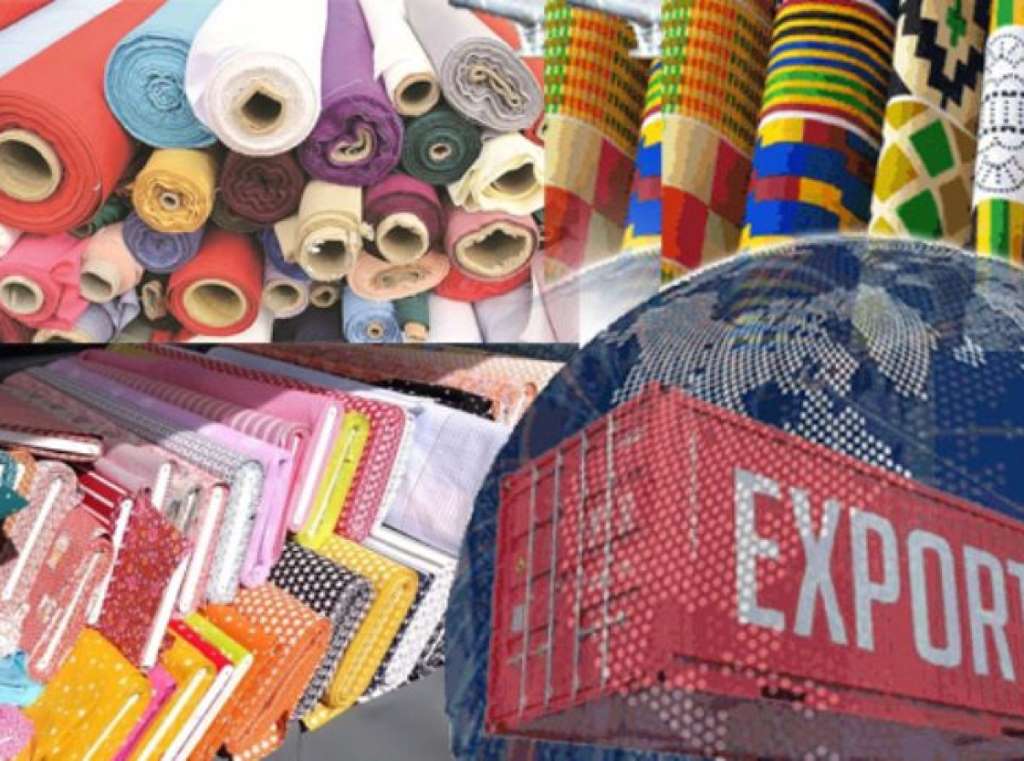
The condition of handloom weavers in Andhra Pradesh is worsening. The Andhra Pradesh State Handloom Weavers Cooperative Society is yet to release their dues. The society is yet to release Rs 12 crores in arrears to around 50 primary weavers’ co-operative societies that are present in East Godavari. Lack of funds is not the only issue weavers are faced with. Imposition of GST has forced some weavers’ societies to resort to making school uniforms with polyester made out of power looms.
Andhra Pradesh boasts of 80 per cent of the country’s handlooms, most of which are in East Godavari, Krishna and Kadapa districts. There are 1.40 lakh looms in Andhra Pradesh, but the number of weavers far outnumbers the looms in the country or the state.
Meanwhile India’s power loom weavers and business owners want the current GST rate for power loom trading to be retained at five per cent. They say any change would negatively affect their business. Instead the power loom sector hopes for more assistance and a stable tax rate. Many power loom manufacturers are small-scale businesses. Weaving units have also asked for release of funds under the Technological Upgradation Fund Scheme and say delay in release of these funds could hamper their expansion plans, which are meant at generating thousands of jobs.

- 1
- 2
- 3
- 4
- 5
- 6
- 7
- 8
- 9
- 10
Crude correction gives polyester a fresh cost advantage
A sustained correction in crude oil and petrochemical benchmarks is reshaping the economics of synthetic yarns, widening the cost gap... Read more
Chinese apparel majors trade volume for margin in premiumisation push
China’s apparel and consumer goods market is moving beyond the traditional volume-at-any-cost model, with leading domestic brands betting on premium... Read more
India’s MMF push faces rising risk from China’s petrochemical dominance
India’s ambition to build a globally competitive synthetic textile industry is facing constraints as downstream capacity alone cannot solve: concentration... Read more
Shein’s Vietnam retreat exposes the limits of nearshoring
The global apparel industry has spent the past few years pursuing a straightforward strategy: reduce dependence on China by moving... Read more
Regional pavilions compete on fiber strengths and supply chain niches at Yarn Ex…
The trade floor at Yarn Expo Autumn 2026 in Shanghai, held between Aug 25-27, capitalizing on a sharp rebound in... Read more
Inside activewear's shift from stitched mesh to precision engineered textiles
The global functional apparel market, on track to touch $640 billion, is looking at a production shift as activewear manufacturers... Read more
Brazil’s cotton dominance puts Asian spinners on a new sourcing map
Brazil’s emergence as the world’s largest cotton exporter is no longer simply an agricultural success story. It has given a... Read more
Textile industry sees long-term growth but $100-bn export goal stays a stretch: …
India’s textile and apparel industry is entering a phase of optimism, but that confidence is tempered by a hard export... Read more
Apparel trade slumps as global textile mills move upstream
Global manufacturing is growing, but finished apparel is failing to capture that growth. United Nations Industrial Development Organization (UNIDO) data... Read more
Global apparel value chain converges in Shanghai as Intertextile Autumn 2026 ope…
The global apparel and textile community gathered in full force yesterday, August 25, 2026, as the Autumn Edition of Intertextile... Read more