From commodity to control, Asia’s growing grip on the polyester chain
"
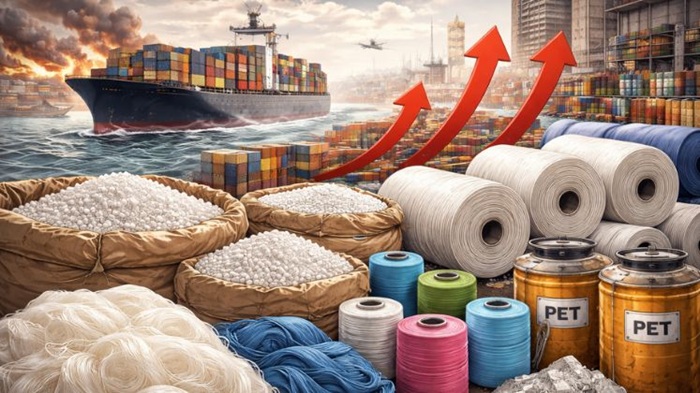
" The global polyester market has seen a reset that extends far beyond crude-linked volatility. Polyester, now accounting for over half of global fiber consumption, is no longer governed solely by input costs or cyclical demand. Instead, it is being reshaped by a concentrated supply chain centered on Purified Terephthalic Acid (PTA), the critical feedstock underpinning polyester production. What was once a diffuse, globally distributed industry is evolving into a tightly controlled system, where geographic concentration is redefining pricing power, margins, and long-term competitiveness.
Asia’s capacity lead
The most decisive shift lies in the overwhelming concentration of new PTA capacity within Asia. Nearly nine out of every ten tonnes of incremental capacity are now being added in the region, with China leading the expansion at an unprecedented scale.
Table: Asia’s new PTA capacity distribution
|
Region |
Share of new PTA capacity |
Current capacity status |
|
China |
57% |
Dominant Leader |
|
Rest of Asia (India, S. Korea) |
32% |
Rapidly Expanding |
|
Rest of World |
11% |
Stagnant / Retracting |
With global PTA capacity estimated between 93 and 95 million tonnes, this imbalance is no longer marginal, it is systemic. The Asia-Pacific region has effectively become the nucleus of polyester feedstocks, eroding the neutrality that once defined global supply chains. For producers outside Asia, the implication is clear: access to raw materials is mediated by a single regional bloc, altering both cost structures and negotiating leverage.
The overcapacity strategy
Unlike traditional commodity cycles, where oversupply triggers production cuts, the current polyester landscape is defined by sustained high utilization rates despite weakening demand. Large integrated producers, particularly in China continue operating at utilization levels exceeding 80 per cent, even during downturns. This is not inefficiency; it is strategy. By maintaining output, these firms protect market share and exert downward pressure on global prices, effectively forcing less integrated competitors into lower margins.
The result is a persistent wall of supply that distorts pricing signals. Polyester feedstock prices may appear low, but the underlying volatility makes forward planning increasingly difficult for yarn spinners and fabric manufacturers. This dynamic marks a departure from conventional market logic. Pricing is no longer purely demand-driven; it is influenced by industrial policy, scale economics, and integration depth within dominant producing regions.
The defining competitive advantage in this new scenario is vertical integration. Major producers, particularly in eastern China’s industrial clusters, have built end-to-end control across the value chain—from crude refining to paraxylene (PX), PTA, and downstream polyester products. This integration allows companies to redistribute margins internally. Losses at the PTA level can be offset by gains in downstream textiles, enabling firms to sustain aggressive pricing strategies that independent players cannot match.
The mega-refinery model
Between 2023 and 2024, several large-scale integrated complexes in China completed their expansion cycles, creating what can be described as ‘mega-refinery ecosystems’.
Table: China’s mega refinery ecosystem
|
Segment |
Independent producers |
Integrated mega-refineries |
|
PTA Margins |
Highly volatile |
Absorbed internally |
|
Feedstock Costs |
Market-linked |
Controlled via transfer pricing |
|
Downstream Competitiveness |
Margin-constrained |
Cost-advantaged |
|
Earnings Stability |
Cyclical |
Relatively stable |
While global PTA margins declined sharply during this period, integrated players reported stable earnings. Their downstream polyester and textile units benefited from internally priced feedstocks, effectively insulating them from market shocks. For independent spinners in regions such as Turkey and Vietnam, this creates a disadvantage. They must procure feedstocks at market rates while competing against finished products priced on integrated cost bases.
The ripple effects extend beyond manufacturing into the global apparel and home textiles sectors. Brands have historically relied on diversified sourcing strategies to stabilize input costs. That assumption is increasingly fragile. As PTA and polyester production consolidate geographically, pricing power shifts upstream. Brands and retailers now operate in a system where raw material costs are indirectly influenced by the strategic priorities of a concentrated group of producers. This introduces a new layer of risk. Even in scenarios where crude oil prices stabilize, supply chain disruptions and pricing volatility can persist due to capacity concentration rather than demand fluctuations.
The petrochemical nexus
At the core of this transformation is the coming togehter of petrochemicals and textiles into a single industrial system. Large players across the Asia corridor including China, India, and parts of the Middle East are investing heavily in integrated complexes designed to extract maximum value from hydrocarbons. These investments are not limited to conventional polyester. They extend into recycled fibers and sustainable variants, positioning integrated producers to dominate both volume and innovation in the next decade.
The implications are profound. Control over feedstocks is no longer just a cost advantage; it is a strategic lever that shapes global trade flows, pricing benchmarks, and competitive dynamics across the textile value chain.
The ongoing increase of PTA capacity into Asia signals a broader realignment of the global textile economy. Polyester is no longer a neutral commodity responding to market forces it is becoming a managed resource. For producers, the path forward will depend on integration, scale, and geographic positioning. For brands, it will require a reassessment of sourcing strategies and risk exposure. The era of fragmented supply chains is giving way to one defined by concentration and control. In this new order, the balance of power in the polyester market is no longer negotiated in trading floors it is engineered in industrial corridors.
Value fashion concomitants capitalize on transatlantic demand to counter European softness
International discount fashion conglomerates are scaling up their brick-and-mortar storefront configurations within premier global retail zones to capture a growing pool of price-conscious shoppers. In a landmark geographic expansion, Irish retail powerhouse Primark opened its massive 54,000 sq ft flagship destination at Herald Square in Manhattan’s bustling Penn District. The four-story retail complex moves directly into high-rent metropolitan real estate, offering ultra-low merchandise baselines, including women's denim starting at US$ 12 and basic men's tees for US$ 5. By centralizing high-density, offline-only store environments in key urban transportation hubs, the fashion group bypasses expensive digital e-commerce logistics, relying instead on pure transactional volume and immediate consumer footfalls to safeguard corporate operating profitability.
Robust regional volumes compensate for subdued Eurozone spending
This calculated North American deployment addresses a noticeable divergence across the global retail sector. Financial disclosures from parent entity Associated British Foods plc (ABF) for the 24 weeks ending February 28, 2026, reveal that while Primark's sales across continental Europe dropped by 5.6 per cent due to strained consumer confidence, its United States division registered an industry-defying 12 per cent sales surge. Kevin Tulip, President, Primark US, indicated, this 40th domestic storefront represents a critical milestone in establishing the brand's permanent commercial footprint within the epicenter of American fashion. To sustain this momentum amid broader raw material price hikes, the enterprise is optimizing its supply chain by deploying massive, youth-focused activewear and high-turn licensed collections, maintaining a stable 10 per cent full-year adjusted operating margin target.
Global value retail & supply architecture
Primark operates as the fast-growing value apparel and lifestyle division of Associated British Foods (ABF), distributing fashion, footwear, beauty, and homeware entirely through a dedicated, physical-first brick-and-mortar retail grid.
Originally established in Dublin in 1969 under the Penneys banner, the international clothing brand commands a global network of over 440 storefronts, actively targeting a landmark operational footprint of 60 domestic US locations through upcoming fiscal cycles.
US soft goods retail displays structural resilience as core apparel expenditures defy two-year inflation peak
The latest Advance Monthly Retail Trade data from the United States Census Bureau demonstrates an unconventional divergence between consumer sentiment and hard commercial outlays across the apparel retail sector. Despite headline inflation accelerating to 3.8 per cent due to escalating West Asia tensions and volatile domestic pump costs, core retail spending marked its seventh consecutive month of sequential expansion. While overall clothing and accessory store sales registered a localized 1.5 per cent monthly contraction following a highly inflated March tax-refund wave, the soft goods segment maintains robust structural momentum. According to the CNBC/NRF Retail Monitor tracking. actual merchant transactions, clothing and apparel spending increased by 10.89 per cent Y-o-Y, positioning garment procurement as one of the primary drivers of discretionary retail growth.
Promotional pricing frameworks secure mid-market volume retention
This consumption trajectory indicates that while American households are actively deferring big-ticket home furnishings and automotive investments, everyday wardrobe updates remain prioritized. Corporate retail groups are capitalizing on this behavioral pattern by engineering highly targeted mid-market pricing models to protect gross margins without alienating budget-conscious families. Matthew Shay, President and CEO, National Retail Federation, reported, consumers continue to demonstrate remarkable spending discipline, effectively supported by steady wage growth and a tight domestic labor market. Rather than executing broad price hikes to absorb upstream synthetic fiber and logistics inflation, national chains are leveraging advanced inventory analytics to adjust discount cycles, preserving transaction volumes across high-demand casual wear and athleisure lines.
Retail analysis & sector monitoring
The National Retail Federation (NRF) operates as the world’s largest retail trade association, representing department stores, apparel specialties, discount chains, and online marketplaces across the United States.
Based in Washington, DC, the organization provides comprehensive macroeconomic forecasting, consumer behavior analysis, and unified industry representation regarding global trade tariffs, supply chain security, and employment legislation affecting millions of American workers.
Indian apparel exporters target tariff equalization to overturn Bangladesh and Vietnam dominance
The structured rollout of India's newly signed bilateral trade arrangements is triggering a massive strategic realignment among domestic garment manufacturers aiming to bridge a long-standing 10 per cent tariff disadvantage. According to a newly published 300-page strategic playbook by Wazir Advisors, titled Unlocking Duty-Free Growth, the near-simultaneous operationalization of Free Trade Agreements across nine preferential corridors - spanning the European Union, the United Kingdom, and New Zealand—unlocks access to a combined $177 billion apparel import market. For over a decade, Indian readymade garment shipments have faced steep inbound duties while competing manufacturing hubs like Bangladesh and Vietnam capitalized on duty-free Least Developed Country status or customized trade pacts, severely restricting India’s market share despite its robust raw cotton and synthetic fiber foundation.
Policy revisions and trade diversification spur export resilience
The institutional transition arrives as a major commercial cushion for the domestic manufacturing grid. Latest data from the Ministry of Textiles reveals, India's total textile and apparel exports, heavily supported by the state-backed extension of the RoSCTL duty remission scheme, grew 2.1 per cent to reach Rs 316,334.9 crore for the financial year ending March 2026. Within this performance, RMG shipments expanded by 2.9 per cent to Rs 139,349.6 crore, proving resilient even amidst severe international freight volatility. Trade statistics indicate, newly active corridors are already yielding strong volume returns; garment exports to the United Arab Emirates and the United Kingdom increased by 22.3 per cent and 7.8 per cent respectively over the fiscal period.
Rules of origin audits modernize factory floor compliance
To fully monetize these emerging duty-free windows, corporate houses are rapidly re-engineering their procurement and operational architecture to satisfy strict trade criteria. Varun Vaid, Business Director, Wazir Advisors, states. the shifting trade equation demands localized, data-backed intelligence so that exporters can transform immediate structural access into sustainable order books. A primary challenge centers on compliance with specific Rules of Origin clauses, which mandate precise transformation stages within domestic boundaries to prevent the illegal transshipment of semi-processed Chinese fabrics. Apparel conglomerates are consequently deploying internal supply chain tracking mechanisms to formally verify the yarn-forward and fabric-forward origins of outbound consignments, thereby eliminating administrative risks and preventing punitive custom audits at international destination ports.
Wazir Advisors operates as a premier management consulting firm specializing in operational strategy, international trade benchmarking, supply chain restructuring, and joint-venture cross-border transactions.
Industry Specialization Headquartered in India, the corporate practice focuses on the global textile, apparel, technical materials, and retail sectors, providing technical feasibility studies and investment mapping for institutional stakeholders.
Leveraging proprietary analytics like the Market Access Prioritization Score framework, the consultancy guides industrial capacity expansion and digital marketplace transformations, building upon a multi-decade legacy of advising corporate boards and ministerial bodies.
Global athletic brands establish direct retail stations to professionalize East African sportswear
International athletic apparel consolidators are shifting away from indirect wholesale distribution to deploy advanced, corporate-backed retail environments in Sub-Saharan Africa's key economic centers. Under a major multi-market expansion strategy, Nike officially inaugurated its first regional flagship store in East Africa, securing a 500 square meter footprint at Nairobi’s prominent Sarit Centre. Rather than leaving inventory distribution to independent, third-party stockists, the brand is leveraging its multi-country licensing partnership with Maltese retail conglomerate Hudson Holdings Limited. This structural adjustment moves consumer interactions into a controlled corporate framework, providing immediate, authenticated access to top-tier technical running apparel and footwear innovations, while introducing fixed price transparency to a fashion market historically subject to erratic parallel import rates.
Capital investments capture suburban athleisure volume acceleration
The physical scale-up targets a profound shift in consumer purchasing habits across Kenya's urban hubs, where a rising middle-class is driving high-volume demand for premium lifestyle apparel. Kieran Murphy, Country General Manager of Hudson Brand Development Kenya, reported that the advanced store concept marks an essential step in strengthening the brand's long-term commercial posture within East Africa, focusing specifically on dedicated athlete support and performance merchandising. By establishing a physical baseline in Nairobi, the brand insulates its regional sales pipeline from digital shipping bottlenecks, capturing high-margin athletic wear allocations. This physical destination model serves as a vital proof-of-concept for international apparel enterprises looking to transition from speculative multi-brand commerce into high-yield, direct-to-consumer regional networks.
Sports retail architecture & brand licensing
Hudson Kenya, operating under Hudson Holdings, acts as the primary master distributor and premium retail operator for global sportswear, lifestyle, and fashion portfolios across North and Sub-Saharan Africa. Headquartered in Malta with dedicated regional offices in Kenya, Morocco, and Algeria, the group manages complex cross-border logistics to supply authentic technical garments and footwear lines to approximately 30 African countries.
European trade barriers shift sourcing dynamics for technical textile and nonwoven materials
The European Commission’s decision this month to levy provisional anti-dumping duties ranging from 45.6 per cent to 50.0 per cent on Chinese polyester (PET) spunbond imports is forcing global technical textile supply chains to rapidly reconfigure. Triggered by a formal trade complaint from regional industrial heavyweights Freudenberg Performance Materials and Johns Manville, the fiscal penalties target needle-punched sheets primarily utilized as stabilization layers in construction membranes. The eight-month trade probe concluded that state-supported Chinese manufacturing had severely undercut European market prices, causing domestic production volumes and corporate profitability to contract. Industrial consumers across Europe are now evaluating localized alternatives or adjusting procurement budgets to absorb the substantial tariff hikes, which remain in force until a definitive five-year determination is made this November.
Custom classification audits reduce compliance risks
To prevent international exporters from bypassing these stiff penalties, trade regulators are stepping up enforcement on structural shipping declarations. Industry experts report, some brokers have historically misclassified technical nonwovens under obsolete customs codes to avoid enhanced administrative scrutiny. Jacques Prigneaux, Market Analysis & Economic Affairs Director, Edana, emphasized, precise adherence to updated TARIC customs databases is mandatory for ongoing trade transparency. Industry analysts point out that corporate legal departments are executing comprehensive supply chain audits to guarantee complete compliance, as national customs authorities are authorized to implement additional retroactive punitive fines dating back up to 90 days.
Nonwoven industry representation & governance
The European Disposables and Nonwovens Association (EDANA) operates as the premier global trade association representing the nonwoven textiles, absorbent hygiene, and related raw material supply industries. Headquartered in Brussels, Belgium, the organization represents over 300 member companies across more than 40 nations, providing technical standardizations, market intelligence, and unified regulatory lobbying before international policy bodies.
H&M launches new heritage-led kidswear collection in partnership with Laura Ashley
H&M and iconic British lifestyle brand Laura Ashley have announced a strategic kidswear partnership for the Spring/Summer 2026 season, marking a significant move toward ‘heritage-led’ retail.
Launching on May 21, 2026, the collection integrates archival floral prints and coastal motifs into contemporary silhouettes for babies and children. This initiative arrives as H&M navigates a complex fiscal landscape; the group reported a 1 per cent decline in local currency sales for Q1 FY26 but achieved a notable operating margin improvement to 3.0 per cent, up from 2.2 per cent the previous year. By leveraging Laura Ashley’s established brand equity - which saw an 81 per cent Y-o-Y growth in its womenswear and girlswear categories earlier this year - H&M is successfully pivoting toward high-margin, "emotional value" pieces that command stronger price resilience.
Operational resilience amid infrastructure consolidation
The collaboration reflects H&M's broader 2026 strategy of optimizing its physical footprint while deepening product relevance. As the group manages a reduction of 163 stores globally compared to 2025, it is increasingly relying on high-impact limited editions to drive footfall and online conversion. The Laura Ashley range emphasizes durability and technical material science, utilizing lightweight poplin, seersucker, and crinkle jersey to meet the growing consumer demand for ‘hard-wearing’ yet aesthetic children's apparel. By combining our archival prints with H&M’s design lens, we are introducing nostalgia to a generation that prioritizes both style and functional longevity, notes Helen Ashmore, Head-Design, Laura Ashley. This launch serves as a primary case study in how mass-market retailers are utilizing licensing to mitigate the ‘sustainability intent gap,’ offering natural-fiber-rich collections that retain higher resale value in an active secondary market.
H&M (Hennes & Mauritz) is a global fashion leader operating in 70+ markets. In 2026, the firm is prioritizing ‘profitable growth’ through store portfolio optimization and high-profile design collaborations. Currently, 30 per cent of sales are digital, with a fiscal focus on inventory productivity and margin expansion across its multi-brand ecosystem.
Textiles Ministry debunks CCN international report on Panipat
The Ministry of Textiles has officially countered a recent CNN International report that characterized Panipat as a dumping ground for Western fast fashion. In a detailed rebuttal released on May 14, 2026, the government asserted that India’s textile recycling ecosystem is a sophisticated Rs 22,000 crore ($2.29 billion) economy driven predominantly by domestic needs, not foreign waste. Contrary to claims of environmental negligence, a 2026 Ministry study, Mapping of Textile Waste Value Chain in India, reveals, 90 per cent of processed waste originates locally, with imports accounting for a mere 7 per cent. This data underscores a robust internal circularity where nearly 97 per cent of pre-consumer industrial scrap is recovered and reintegrated into the supply chain.
Scientific validation and the shift toward formalization
Addressing allegations of pollution and health risks, the Ministry cited a Life Cycle Assessment by IIT Delhi, which confirmed that recycling activities in clusters like Panipat reduce greenhouse gas emissions and fossil fuel depletion by 30–40 per cent compared to virgin fiber production. While the government acknowledged friction points - such as the management of blended synthetics and safety protocols in informal units - it highlighted the transition toward formalization via the Atal Centre of Textile Recycling and Sustainability. Isolated instances of non-compliance should not overshadow a sector providing vital resource efficiency and livelihoods, the Ministry stated. This defense marks a strategic effort to protect India’s reputation as a global sustainability partner in the evolving retail landscape.
India’s textile recovery network
The Ministry of Textiles oversees India's $150 billion+ textile industry, focusing on production, exports, and circularity. Key hubs like Panipat and Tiruppur lead in fiber recovery and upcycling. Future growth centers on the National Technical Textiles Mission, targeting high-value recycling to boost global competitiveness and environmental compliance.
SIMA hails Tamil Nadu’s call for elimination of cotton import duty
Written by FWThe Southern India Mills’ Association (SIMA) has supported the petition by C Joseph Vijay, Chief Minister, Government of Tamil Nadu, to eliminate the 11 per cent import duty on cotton. This executive intervention comes at a volatile juncture for the apparel sector, where a 25 per cent rise in domestic cotton prices - climbing from Rs 54,700 to Rs 67,700 per candy in just two months - has severely compressed manufacturing margins. With yarn prices following suit, rising to Rs 330 per kg, the industry faces an acute liquidity drain that threatens the viability of India’s $184 billion textile business.
Bridging the productivity deficit
The urgency of this policy shift is underscored by a widening supply-demand gap. While the Ministry of Textiles recently approved the Rs 5,659 crore ‘Mission for Cotton Productivity’ to address stagnant yields, the industry remains in a deficit cycle. Domestic production for the 2025-26 season is estimated at approximately 291 lakh bales, trailing a domestic demand of 328 lakh bales. Durai Palanisamy, Chairman, SIMA, emphasizes, while the Mission is a welcome long-term structural fix, the immediate 11 per cent tariff barrier renders Indian mills uncompetitive against Asian rivals who enjoy duty-free access to global fiber markets.
Safeguarding the value chain
Industry analysts warn that a shortage of even 1 lakh bales risks the livelihoods of 1 lakh workers across the value chain. By removing the import duty, the government could stabilize supply without impacting farmers, who remain insulated by a Minimum Support Price (MSP) currently 20 per cent above market rates. This fiscal recalibration is viewed as essential for India to reach its $350 billion textile vision by 2030, ensuring that regional clusters in Tiruppur and Coimbatore can maintain their export commitments amidst intensifying global competition.
A primary textile representative in South India
Founded in 1933, SIMA serves as the primary representative for the organized textile value chain in South India. Managing a diverse portfolio from spinning to technical textiles, the association oversees a membership of over 1,000 entities. SIMA is currently focused on facilitating the transition toward sustainable manufacturing and high-density planting systems to boost India’s long-term cotton self-reliance and global market share.
Pearl Global defies trade headwinds with milestone revenue growth
While the global apparel sector grappled with retaliatory tariffs and supply chain volatility in 2026, Pearl Global Industries (PGIL) leveraged its multi-national manufacturing footprint to post record-breaking financial results. The company crossed the landmark Rs 5,000 crore revenue threshold, finishing FY26 at Rs 5,025 crore, an 11.5 per cent Y-o-Y increase. This growth was primarily fueled by a strategic shift toward high-value-added products and a robust volume of 78.1 million pieces shipped.
Despite specific penal duties imposed by the US on Indian operations, PGIL’s presence in Indonesia, Bangladesh, Vietnam, and Guatemala allowed it to reroute production efficiently, maintaining a consolidated PAT of Rs 270 crore, up 17 per cent from the previous year.
Capacity expansion and strategic acquisitions drive future scale
To sustain this momentum, the Group has reached a total installed capacity of 101 million pieces per annum, with plans to inject Rs 200–250 crore in capital expenditure during FY27. A key component of this expansion includes the acquisition of an additional 10 per cent stake in PT Pinnacle Apparels, Indonesia, bringing PGIL’s ownership to 99.92 per cent. Pallab Banerjee, Managing Director, noted, while energy and logistic costs are rising due to Gulf conflicts, the company’s disciplined execution and pricing strategies - factoring in raw material hikes with global retail partners - position it to absorb these macroeconomic shocks. With a recent credit rating upgrade to [ICRA] A+ (Stable), the firm is transitioning from a regional exporter to a dominant global supply chain orchestrator.PT Pinnacle Apparels, Indonesia.
Global supply chain leadership
Pearl Global Industries is a premier multinational apparel manufacturer established in 1987, specializing in knits, woven, and activewear for top-tier global brands. Operating 25 units across five countries, the firm is currently executing a high-growth strategy backed by a Rs 5,025 crore revenue base and a stable [ICRA] A+ rating.
More...
The End of Youth Obsession: Retail’s shift toward the silver economy

Forget the youth obsession, the ‘Silver Economy’ is no longer peripheral, it is the nucleus of global retail growth. In 2026, women over 50 are the ultimate power consumers, wielding 75 per cent of US household wealth. This isn't just about volume; it’s about the stability premium. Compared to the fickle trends of Gen Z, these shoppers offer retailers higher margins, rock-solid loyalty, and a return rate that is almost 30 per cent lower than their younger counterparts.
The 50+ purchasing power matrix
Current market data highlights a stark contrast in consumption behavior between the traditional youth focus and the emerging silver surge. While Gen Z drives high-volume fast fashion with high return costs, the mature shopper operates on a high-investment, low-churn model. Retailers successfully capturing this segment are seeing a rise in Lifetime Value (LTV), as these shoppers often maintain brand relationships for decades rather than seasons.
Table: Comparative consumers by demography (forecasts 2026)
|
Metric |
Women 50+ (Silver Economy) |
Gen Z/Alpha (Trend Drivers) |
|
Global Market Value (2026) |
$15.75 bn (Specialized segment) |
$241.88 bn (Broad market) |
|
Avg. Return Rate (Online) |
18-20% |
44% |
|
Spend per Item |
High (Investment-focused) |
Low to Mid (Volume-focused) |
|
Primary Value Drivers |
Material Integrity, Craft, Provenance |
Viral Trends, Influencer discovery |
|
Digital Adoption |
Rising (Omnichannel/Webrooming) |
Mobile-First / Social Commerce |
Material integrity and ease with intention
The narrative of ‘more is more’ is being replaced by ‘ease with intention’. This consumer is increasingly discerning, seeking garments with provenance, a story of where and how the product was made. This has led to the widespread adoption of Digital Product Passports (DPPs), with 74 per cent of high-wealth consumers now willing to pay a price premium for fully traceable, sustainability-verified items. The shift is not just aesthetic but structural; retailers are moving away from over-designed capsules toward atmospheric retail environments that encourage lingering and tactile engagement.
For example, a shift is visible in mid-market brands like Next and Gap who have effectively premiumized their offerings to cater to the silver shopper. By moving into the accessible luxury space offering high-end fabrics like cashmere and organic silk within a streamlined retail footprint, they have captured the displaced luxury customer who has been priced out of traditional heritage houses.
Key Findings from the 2026 Retail Transition:
• Showrooming vs. Webrooming: 67 per cent of shoppers in this demography engage in ‘webrooming’ (researching online but buying in-store), making the physical flagship store a critical touchpoint for validating quality.
• Return on loyalty: Brands focusing on agile sourcing and material longevity are seeing a 15 per cent increase in repeat purchase rates among women over 50.
• Regional dominance: The Asia-Pacific region, led by China and Japan, is projected to dominate the silver fashion retail market by 2030, driven by a rapidly aging yet increasingly affluent middle class.
The Silver Economy is the economic ecosystem surrounding the 50-plus demography, currently the fastest-growing consumer group globally. Originally focused on health and financial services, the sector has grown into premium apparel, longevity-focused beauty, and specialized digital retail. The market for middle-aged and elderly women’s clothing is projected to reach $15.75 billion by 2026, growing at a steady 5 per cent CAGR. This growth is underpinned by high disposable income and a cultural shift toward active aging. So far, fashion retail overlooked this group in favor of youth culture; however, the 2026 strategy reset has seen brands like Hermès and specialized high-street lines prioritize craftsmanship and material durability to secure long-term brand value and combat the high costs of the fast fashion churn.
Footprint up, like-for-like down, Primark’s demerger comes at a critical moment
Associated British Foods’ decision to demerge Primark into a standalone listed entity, marks one of the most consequential shifts in global fashion retail this year. Seen as a move to unlock shareholder value by removing the conglomerate discount, the spin-off also places sharper scrutiny on the retailer’s operating fundamentals at a moment when expansion is masking deeper cracks in productivity.
Primark’s half-year results for the 24 weeks ended February 28, 2026 reveal this contradiction clearly. Group sales rose 2 per cent to £4.7 billion, but that growth was driven entirely by a 4 per cent contribution from new retail space. Strip out expansion and the underlying picture changes materially, with like-for-like sales falling 2.7 per cent a sign that existing stores are generating less revenue despite a broader footprint.
The regional mix makes this difference even starker. In the UK and Ireland, which account for 45 per cent of group revenue, sales grew 2 per cent while like-for-like sales rose 1.1 per cent, supported by stronger womenswear demand and digital engagement initiatives. But Continental Europe, representing 49 per cent of revenues, saw total sales decline 1 per cent and like-for-like sales dip 5.6 per cent. The US, despite delivering 12 per cent sales growth, also reported a 5.6 per cent decline in comparable sales, underlining that expansion-led growth is compensating for lower store productivity.
|
Region |
Total sales growth |
Like-for-like (LFL) growth |
Share of total revenue |
|
UK & Ireland |
+2% |
+1.1% |
45% |
|
Continental Europe |
-1% |
-5.60% |
49% |
|
US |
+12% |
-5.60% |
6% |
|
Total Primark |
+2% |
-2.70% |
100% |
This table underscores what may become the defining challenge for a standalone Primark: growth is increasingly being purchased through physical expansion rather than organic sales momentum. For investors, that raises questions about the scalability of Primark’s high-volume, low-margin model, especially in weaker consumer markets.
Europe emerges as the pressure point
Continental Europe has become the critical stress zone. Markets such as Germany and France, once central to Primark’s expansion logic, are now being weighed down by sluggish discretionary spending and cautious consumers. The 5.6 per cent like-for-like decline in the region has prompted Primark to extend re-energising initiatives beyond the UK, including sharper assortments and refreshed merchandising.
The contrast with the UK is significant because it shows the model can still work when product relevance and digital touchpoints align. But Europe’s weakness also exposes a vulnerability that demerger makes harder to obscure: without ABF’s broader portfolio cushioning volatility, Primark’s regional underperformance will be judged more directly.
America’s growth puzzle
The US presents a different kind of challenge. Double-digit total sales growth suggests expansion traction, but declining like-for-like sales point to what analysts increasingly view as a productivity trap. New store launches are generating early demand, but sustaining volumes once novelty fades is proving more difficult. For a retailer built on dense footfall and price-led impulse buying, sustaining profit in the US requires far more than adding stores. It demands repeat traffic, localized assortments and stronger omnichannel engagement, areas where more digitally mature rivals already have an advantage.
Margin pressure meets competitive heat
Compounding productivity concerns is rising competitive intensity from ultra-fast fashion players, especially Shein, which increased its UK market share to 3.5 per cent in 2025. Primark’s response has been defensive but necessary, with trend-driven launches such as ‘Major Finds’ and campaigns like ‘Shockingly Chic’ aimed at retaining younger shoppers.
That strategy, however, has carried a margin cost. Adjusted operating profit fell to £471 million, while operating margins fell to 10 per cent amid markdown-led inventory clearing. For a business whose investment thesis rests on scale efficiencies, margin erosion adds a second pressure point alongside slowing comparable sales. The broader sector implication is significant. Primark’s long-standing reliance on store-only traffic, once a cost advantage, increasingly looks like a structural risk as cross-border e-commerce reshapes value fashion consumption.
Click-and-collect as a hybrid hedge One of the clearest signals of Primark’s evolution is its nationwide Click & Collect rollout across all 187 stores in Great Britain. Rather than replicate the costly home-delivery economics of pure-play e-commerce rivals, the retailer is using digital ordering to deepen store productivity. The model is showing operational and commercial promise. Smaller format stores can now offer access to over 5,000 products, significantly growing assortment depth without larger footprints. Incremental pickup purchases are also driving additional basket growth, while avoiding last-mile delivery costs helps preserve Primark’s price positioning. More importantly, the initiative may offer a blueprint for the standalone company’s next phase not abandoning its store-first identity, but using digital tools to strengthen it.
Demerger brings opportunity and exposure
With over 485 stores across 19 countries and annual revenues of £9.5 billion, Primark enters its standalone era with formidable scale. But the demerger also removes the protective optics of diversified group reporting. As an independent business, investors will focus far less on store openings and far more on whether existing stores can grow productively.
That makes the current moment important. Primark’s expansion engine remains intact, but the underlying economics of that growth are under pressure. The spin-off may unlock valuation upside, but sustaining it will depend on whether Primark can convert footprint expansion into durable productivity gains. In that sense, the demerger is not merely a corporate restructuring. It is a stress test of whether one of value fashion’s biggest success stories can adapt to a retail landscape increasingly defined not by scale alone, but by efficiency, digital agility and resilience.
Yarn Expo Shenzhen 2026: GBA connectivity and AI innovation drive mid-year sourcing

The global textile industry is preparing for a strategic return to the South China manufacturing heartland as Yarn Expo Shenzhen 2026 gears up for its June 9–11 edition. Located at the Shenzhen Exhibition and Convention Center (Futian), the fair arrives at a pivotal moment for the Asia-Pacific market, which remains the world’s largest regional hub for fibers and yarns. As global demand is projected to push the sector to a valuation of $108.5 billion by late 2026, the fair provides a critical mid-year checkpoint for suppliers and buyers navigating accelerated sourcing timelines.
The strategic edge of the Greater Bay Area
Shenzhen’s position within the Greater Bay Area (GBA) offers an unparalleled ‘efficiency ecosystem.’ The city acts as a physical bridge between upstream raw material suppliers and downstream manufacturing giants across Guangzhou, Hong Kong, and Southeast Asia. This geographical advantage allows attendees to collapse the traditional supply chain, linking design and production with immediate market access.
Wilmet Shea, General Manager, Messe Frankfurt (HK) , emphasizes, the fair’s primary strength lies in its ability to convert regional logistics into tangible business outcomes. By centralizing the right decision-makers in a high-tech corridor, Yarn Expo Shenzhen enables exhibitors to raise brand visibility in an increasingly crowded global market.
A structured showcase for specialized sourcing
To facilitate high-speed matching between suppliers and buyers, the 2026 edition features eight clearly defined product zones. This structure allows visitors to compare technical specifications and sustainability credentials across diverse fiber categories:
• Natural & luxury fibers: Dedicated zones for Cotton, Silk, Quality Wool, and high-end Cashmere.
• Sustainable & bast fibers: A specialized Green Linen Yarn zone reflecting the industry’s shift toward eco-conscious materials.
• Technical & synthetic innovation: Areas for Chemical and Fancy yarns, focusing on functional aesthetics and performance sportswear.
This year, the synergy with the concurrent Intertextile Shenzhen Apparel Fabrics fair is stronger than ever. As the apparel fair intensifies its focus on AI and digitalization, Yarn Expo serves as the foundational layer, showcasing the ‘smart fibers’ and sustainable blends- such as Lyocell-blends—that drive digitalized fashion production.
Innovation and sustainable Exchange
The 2026 fringe program is designed to go beyond mere product displays, offering a platform for ‘market-driven exchange.’ With one-to-one business matching sessions and trend forums, the fair addresses the growing adoption of AI in textile design and the rising demand for Global Recycled Standard (GRS) compliance.
Exhibitors like New Zealand-based Woolyarns (Perino) note, the Shenzhen fair is essential for reaching the ‘knitting community’ of the Greater Guangzhou area, providing a distinct market entry point that complements the larger Shanghai autumn shows. Domestic leaders also highlight the mid-year timing as a strategic advantage, as it avoids overlaps with major overseas exhibitions and captures the high-tech requirements of the Yangtze River Delta and GBA brands.
A comprehensive value chain platform
By running alongside PH Value and Intertextile Shenzhen, Yarn Expo 2026 provides a 360-degree view of the textile value chain. From raw fiber processing to finished knitwear and smart apparel, the combined platform serves as a barometer for the technological and ecological shifts defining the industry’s future. For stakeholders looking to secure margins in an era of rapid digitalization, Shenzhen remains the indispensable mid-year destination.
Vertical integration cushions KPR Mill against macro textile margin pressures
India's primary apparel manufacturing hubs are navigating an increasingly complex trading environment where rising operational inputs test bottom-line defense. Overcoming these sector-wide margins pressures, Coimbatore-based KPR Mill achieved an all-time high quarterly revenue of Rs 1,784.65 crore for Q4, FY25 ending March 31, 2026. This sequential rise of 21.6 per cent from the previous quarter underscores the strategic leverage of a fully vertical configuration, enabling the manufacturer to optimize execution across its raw material supply lines even as overall industry demand patterns fluctuate dynamically.
Multi-segment performance anchors group bottom line
The group's commercial resilience was significantly fortified by diversification. While the core textile division generated a dominant Rs 5,435 crore for the full fiscal year, a sharp 70 per cent increase in profitability from its alternative sugar and ethanol operations cushioned broader manufacturing challenges. This balanced operational portfolio allowed the enterprise to achieve an 11.1 per cent Y-o-Y expansion in quarterly consolidated net profit, reaching Rs 227.17 crore.
By insulating its cost structure against volatile cotton price bands, KPR Mill maintained a robust operating margin of 20.3 per cent, confirming that comprehensive backward integration remains a vital protective framework for large-scale garment exporters targetting high-volume international retail accounts.
Scaling processing efficiencies
KPR Mill is a leading Indian vertically integrated textile enterprise, producing cotton yarn, knitted fabrics, and ready-made garments for global retail markets. Utilizing an asset base featuring 370,000 spindles and an annual capacity of 177 million garment pieces, the group plans to further scale its processing efficiencies. Historically rooted in the Tirupur-Coimbatore apparel cluster, the corporation recorded total income of Rs 6,784 crore for FY26.