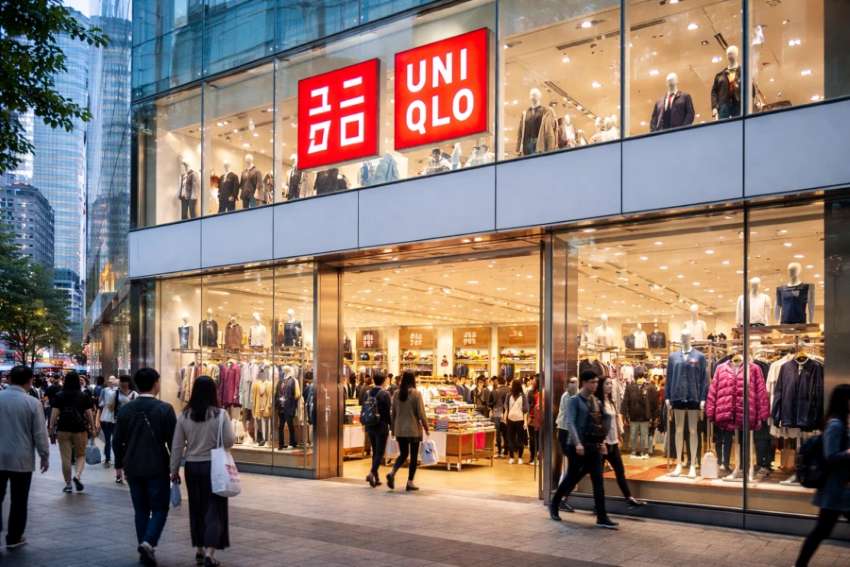


Western brand exits following the escalation of the Russia-Ukraine conflict in 2022 have changed the country’s apparel sourcing network. The withdrawal of global retailers, including Inditex, H&M Group and Fast Retailing’s Uniqlo, disrupted established European distribution channels, creating opportunities for domestic retailers, Asian manufacturers and alternative trading hubs.
Rather than eliminating demand, the disruption redirected imports towards China, Turkey, Central Asia and other non-Western suppliers. Russian retailers bypassed European distribution centres to procure directly from manufacturers or through alternative commercial corridors. Russia’s clothing, footwear and accessories market is estimated at 3.8 trillion to 4.4 trillion roubles, equivalent to approximately $40 billion-$46 billion at prevailing exchange rates. With an estimated 75-85 per cent of finished consumer garments sourced internationally, changes in import routes have significant implications for global textile and garment manufacturers.
China takes the lead
Before 2022, Russia’s apparel supply chain relied on a combination of direct imports and goods routed through European distribution centres in Germany, Poland, the Netherlands and the Baltic states. Apparel manufactured in Bangladesh, India and Vietnam for international brands could enter Russia through these established networks.
Sanctions, financial restrictions and the withdrawal of Western retailers weakened this hub-and-spoke model. Russian buyers established direct relationships with factories and intermediaries operating outside traditional European channels. China strengthened its position as Russia’s leading supplier. The supplied trade estimates indicate that Chinese textile and apparel shipments increased from $4.42 billion in 2021 to more than $6.5 billion, with China accounting for over 45 per cent of direct import sourcing in the current landscape. Its product mix includes synthetic outerwear, activewear, technical fabrics and fast-fashion manufacturing.
Turkey has expanded its role as both a garment producer and a trading intermediary. Its denim, knitwear and leatherwear shipments benefit from Black Sea shipping and overland connections. Uzbekistan and Belarus have also gained ground through regional trade integration, supplying basic knitwear, cotton garments, outerwear and uniforms.
Table: Russia’s changing supplier base
|
Supplier |
2021 trade value |
Post-2022 trend |
|
China |
$4.42 bn |
Over $6.5 bn; more than 45% of direct sourcing |
|
Bangladesh |
$1.21 bn |
Estimated $750-900 mn in direct trade |
|
Uzbekistan |
$958 mn |
Over $1.3 bn |
|
Belarus |
$902 mn |
Over $1.2 bn |
|
Turkey |
$892 mn |
Over $1.4 bn through direct exports and parallel trade |
|
Vietnam & India |
About $650 mn combined |
Estimated $750 mn combined in realigned trade |
Source: Figures supplied from trade compilations referencing UN Comtrade, WITS, Russian customs and national export bodies. Post-2022 figures are estimates and may use different product and trade-flow definitions.
These figures indicate a shift in sourcing relationships, although direct imports and re-exports should not be treated as equivalent measures. Changes in customs declarations and settlement jurisdictions can also obscure the actual country of manufacture.
Local retailers fill the gap
The departure of Western brands created opportunities for Russian fashion groups to secure prime retail locations and expand domestic labels. St Petersburg-based Melon Fashion Group, which operates Befree, Zarina, Love Republic, Sela and IDOL, has expanded its network to over 900 stores. Its sourcing model relies on direct relationships with manufacturing partners across China, Vietnam and Turkey.
The acquisition of Inditex’s Russian business by UAE-based Daher Group provided another route for commercial continuity. Replacement labels Maag, Dub, Ecru and Vilet occupied stores previously associated with Inditex brands, while production shifted to alternative supplier networks.
Online marketplaces Wildberries and Ozon have also benefited from the transition. Their platforms connect Russian consumers with domestic sellers, Chinese merchants and cross-border traders, giving smaller suppliers additional routes to market. For garment manufacturers, the change is significant: Russian buyers can place orders directly with factories rather than depending on production contracts managed through Western fashion groups.
Demand favours winterwear
Russia’s climate and consumption patterns shape its import requirements. Insulated jackets, parkas, wool coats, denim, knitwear and thermal garments remain important categories. The market is also a substantial destination for basic T-shirts, children’s clothing, hosiery and underwear.
Table: Key apparel import categories
|
Product category |
Representative products |
Trade significance |
|
Heavy outerwear |
Padded jackets, parkas, wool coats |
Major import-value category |
|
Knitted tops |
T-shirts, fleece pullovers, jersey sweaters |
High-volume basics |
|
Trousers and workwear |
Denim jeans, suits, workwear |
Large recurring demand |
|
Hosiery and underwear |
Cotton undergarments, thermal underwear |
Essential year-round categories |
|
Children’s apparel |
Knitwear, baby clothing sets |
High-turnover products |
The emphasis on durable winterwear and everyday basics creates opportunities for suppliers capable of delivering consistent quality, competitive prices and dependable replenishment. However, domestic retail inflation and higher transport costs have strengthened the focus on value-oriented merchandise.
Payments raise costs
Alternative sourcing has not removed the financial and logistical challenges associated with sanctions. Banks in China, Turkey and the UAE have tightened compliance checks on transactions connected to Russia, creating uncertainty for exporters and importers.
Estimates put additional settlement costs at 4-8 per cent per transaction compared with pre-2022 conditions. Importers have explored alternative banking arrangements, currency settlements and trading intermediaries, but these routes carry their own compliance and counterparty risks.
Longer multimodal routes through China and Central Asia have also increased transit times. Market assessment estimates show some shipments take an additional 14-28 days, while retail prices for imported apparel are 20-35 per cent above pre-2022 levels. These estimates vary by product, route and exchange-rate movements.
For suppliers in Bangladesh and India, Russia remains a potential export destination, but payment security, documentation, shipping reliability and sanctions compliance are critical considerations. Commercial intermediaries cannot eliminate the legal risks attached to restricted counterparties or prohibited transactions.
A fragmented trade map
Russia’s apparel market shows how geopolitical restrictions can redirect rather than simply eliminate international trade. Chinese manufacturers have strengthened their position, Turkish suppliers have expanded their dual manufacturing and transit roles, and regional producers have gained access through established Eurasian networks.
For global garment manufacturers, the opportunity lies in direct buyer relationships and diversified export channels. Yet higher financing costs, longer lead times and compliance uncertainty complicate the business case.
The longer-term implication is a more fragmented apparel trade system in which manufacturing competitiveness alone does not determine market access. Payment infrastructure, logistics resilience, regional trade agreements and regulatory compliance increasingly shape where garments are produced, how they move and which suppliers can serve the market reliably.