More than 50 per cent of Việtnam’s garment and textile producers are making full use of opportunities provided by FTAs but these are mainly FDI companies. Domestic garment and textile firms have, for the most part, missed out on the much-touted benefits of FTA that Việtnam has signed. Việtnam has signed about a dozen free trade agreements. Some of these are with India, Australia, New Zealand, South Korea, China, Japan, Chile and South Korea.
Garments and textiles are key export items for the country. If enterprises can take advantage of FTA opportunities, the country will be able to increase export revenues as well as expand markets. But to be able to enjoy preferential tariffs under FTAs, the products must meet the requirements under rules of origin. With weak materials supply and supporting industries, businesses in the garment and textile industries face a big challenge in complying with rules of origin.
Domestic garment and textile businesses have not taken much advantage of FTAs since they cannot meet rule of origin requirements. And one of the main reasons for this is that Vietnamese firms lack knowledge on this issue. In the first half of the year, Vietnam’s garment and textile exports increased by 11 per cent year-on-year.

- 1
- 2
- 3
- 4
- 5
- 6
- 7
- 8
- 9
- 10
The Alchemy of Adornment: Decoding the ‘Runway Trends’ and ‘Sartorial Shifts’ of…
As the global luxury sector navigates shifting economic currents, Milan continues to solidify its role as the definitive compass for... Read more
Engineered to Perform: How bio-based textiles are rewiring the $1.15 trillion at…
The global athleisure industry is entering a reset as the next phase of competition shifts from celebrity endorsements and logo... Read more
China’s inward turn, domestic demand is rewriting the export model
China is undergoing one of its most consequential economic recalibrations in decades, driven by geopolitical instability, rising Western protectionism, and... Read more
Why Shein sees itself as a technology company, not a fashion brand
The modern fashion industry has traditionally been defined by creativity, merchandising expertise and global sourcing networks. Yet few companies have... Read more
India’s textile sector turns crisis into competitive advantage
India’s textile and apparel industry has emerged from one of the most turbulent periods in its recent history, transforming a... Read more
India’s Export Divide: Textile mills advance, apparel makers face global headwin…
India’s textile and apparel (T&A) sector entered FY2027 with a striking internal contradiction. While the country’s overall merchandise exports increased... Read more
China’s inward turn, domestic demand is rewriting the export model
China is undergoing one of its most consequential economic recalibrations in decades, driven by geopolitical instability, rising Western protectionism, and... Read more
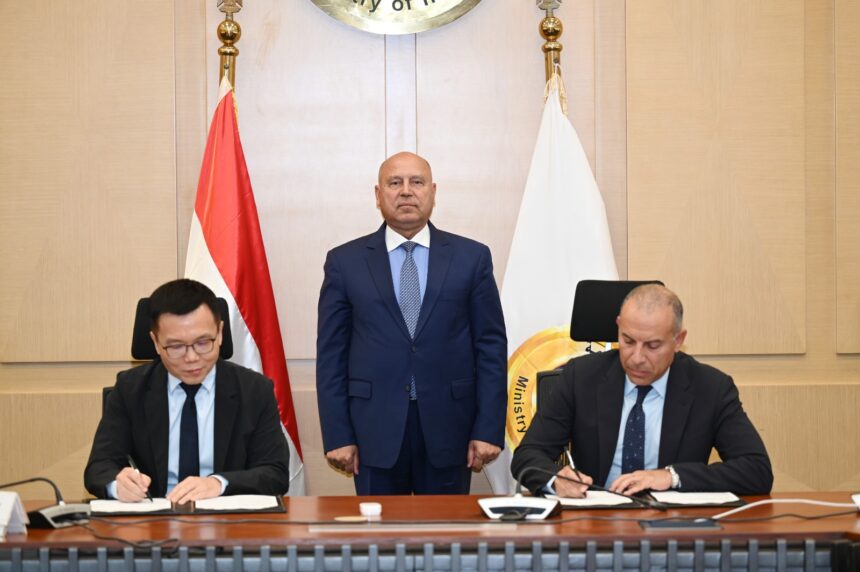
Egypt bets on a $2 bn green textile city to become Europe’s next sourcing hub
Egypt is making a decisive play to become one of the world's most important apparel manufacturing destinations after securing a... Read more
EU textile imports hit $295.66 bn as price wars mask manufacturing stress
The European Union’s textile and apparel imports grew to $295.66 billion in 2025, a 9.4 per cent year-on-year increase from... Read more
Landmark India-UK trade pact to supercharge textile export margins
The long-awaited India-UK Comprehensive Economic and Trade Agreement (CETA) is officially scheduled to commence on July 15, 2026. This breakthrough... Read more