If the US withdraws from TPP, and imposes high tariffs on goods imported from China and Mexico, it would be good news for South Asia. From TPP alone, exports of textiles and clothing from Vietnam--a major competitor for South Asian countries--would have increased by 40 per cent, mostly due to the implied zero-tariff access to the US market. This would have caused large losses to exports of textiles and clothing from Nepal and Bangladesh.
But given a US pullout from TPP, the predicted negative impacts on South Asia would not happen. Also, if the US raises tariffs for imports from China and Mexico by 10 percentage points, exports from these two countries to the US would reduce by 35 per cent and 25 per cent respectively. South Asian countries would be able to scale up their exports to the US as a result.
The US is a key export market for many South Asian countries. The top export destination for Bangladesh, India, Pakistan and Sri Lanka is the US. For Nepal, the US is the second most important export destination after India. The dependence of South Asian countries on the US, in terms of exports, means these nations would gain if the world’s largest economy raises tariffs on goods imported from China and Mexico.





US decisions to abandon TPP may benefit South Asia
- 1
- 2
- 3
- 4
- 5
- 6
- 7
- 8
- 9
- 10
Profit with Purpose: Inside the 35% margin boom in upcycled fashion wholesale

The secondhand wholesale sector, once seen as the back end of fashion, is now leading a quiet revolution, one that... Read more
Inside Lululemon’s toughest year, tariffs, trend misses, and the fight to reigni…
For over a decade, Lululemon Athletica embodied everything the premium athleisure revolution stood for technical mastery, community-driven branding, and an... Read more
India's ‘Technical Textile’ sector 'Important for the World,' says Techtextil Di…

India is emerging as a global powerhouse in technical textiles, a growth recognized by the organizers of the world's leading... Read more
Anti-Dumping probe on Chinese PTY threatens to negate QCO rollback benefits
Just days after the Indian government withdrew Quality Control Orders (QCOs) on Polyester Textured Yarn (PTY) and other textile inputs... Read more
India's new ‘Labour Codes’ weave global compliance into apparel exports
The full implementation of India's four consolidated Labour Codes (The Code on Wages, The Industrial Relations Code, The Code on... Read more
Cotton’s fragile comeback, how the US-China truce is redrawing global fiber map

When Presidents Donald Trump and Xi Jinping announced a fragile peace in Busan last week, most of the attention in... Read more
Viscose freed, industry revived as India’s raw material reforms trigger a new MM…
In a policy reversal that has given some relief across India’s textile ecosystem, the Ministry of Textiles has officially rescinded... Read more
Q3 Lyst Index reveals a turning point, Saint Laurent rises, Loewe slumps

In a fashion industry often driven by noise viral micro-trends, rapid-fire drops, and overstated marketing the third quarter of 2025... Read more
India Fashions a Greener Future: Global Fibre Summit spotlights $100 bn export g…
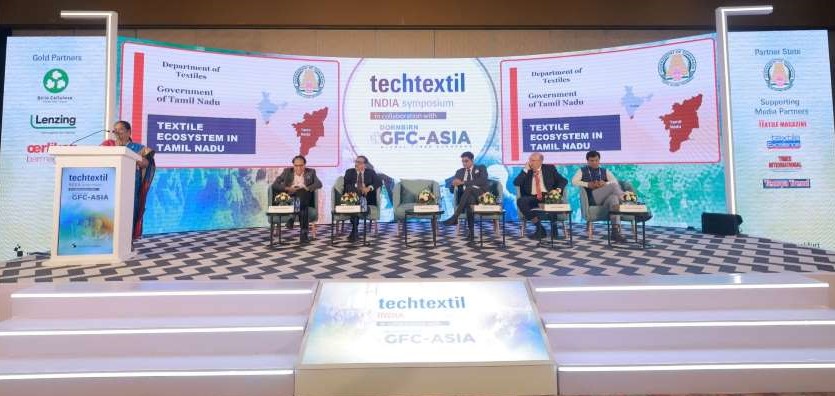
The world's largest fibre innovation congress, the Dornbirn Global Fibre Conference (GFC) Asia, made a landmark debut in Mumbai this... Read more
Techtextil India 2025: Mumbai kicks off 10th edition, focussing on sustainable a…
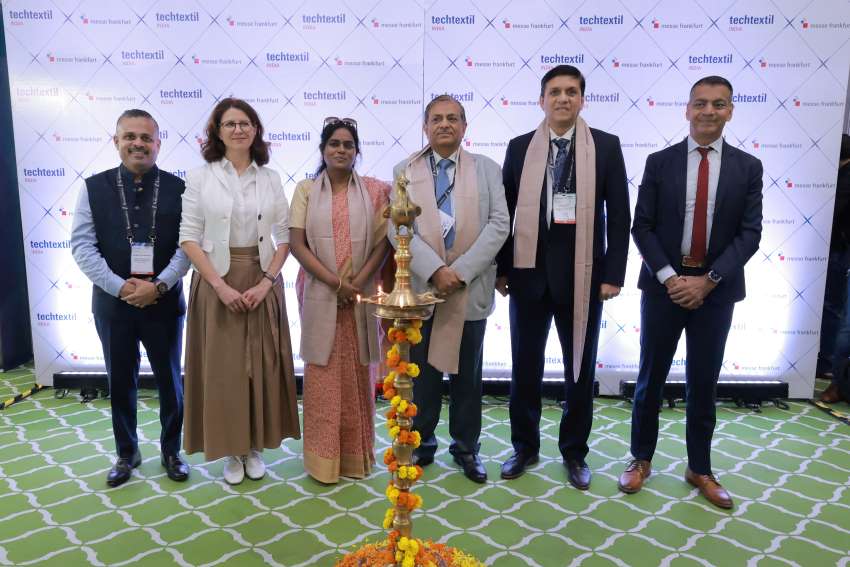
The premier trade fair for technical textiles, non-wovens, and composites, Techtextil India 2025, commenced today, November 19, 2025, at the... Read more

