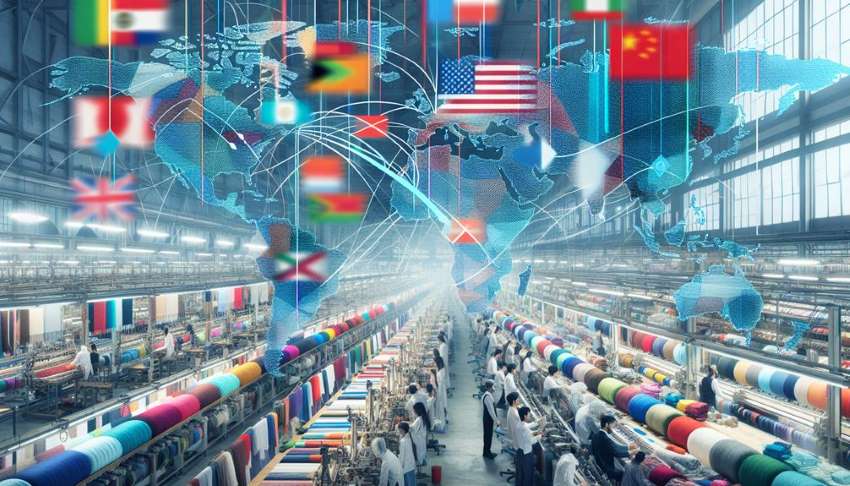
According to Shaikh Mohammad Shafiq, Chairman, Pakistan Readymade Garments Manufacturers and Exporters Association (PRGMEA), at present total export of Bangladesh is 33 billion USD out of which textiles is 27.5 billion USD which includes 26.5 billion USD of Garments only. He said, we feel our share has been taken by Bangladesh. We need to fight for it and bring it to our advantage. Their exports are now increasing at 3.5 billion USD / Year and expected to hit 50 billion USD / Year by 2020, and whatever they have been giving in their budget estimate in last three years is coming true.
Pakistan ranks 138 out of 189 on ease of doing business, while last year it was 136. The cost of making garment in Pakistan is almost double ie, US $2.7 in Pakistan and US $1.5 in Bangladesh. The 60 per cent cost component of wages has a vital impact which is 2 times in Pakistan, the other costs that includes energy and financials also burdened due to high tariff.
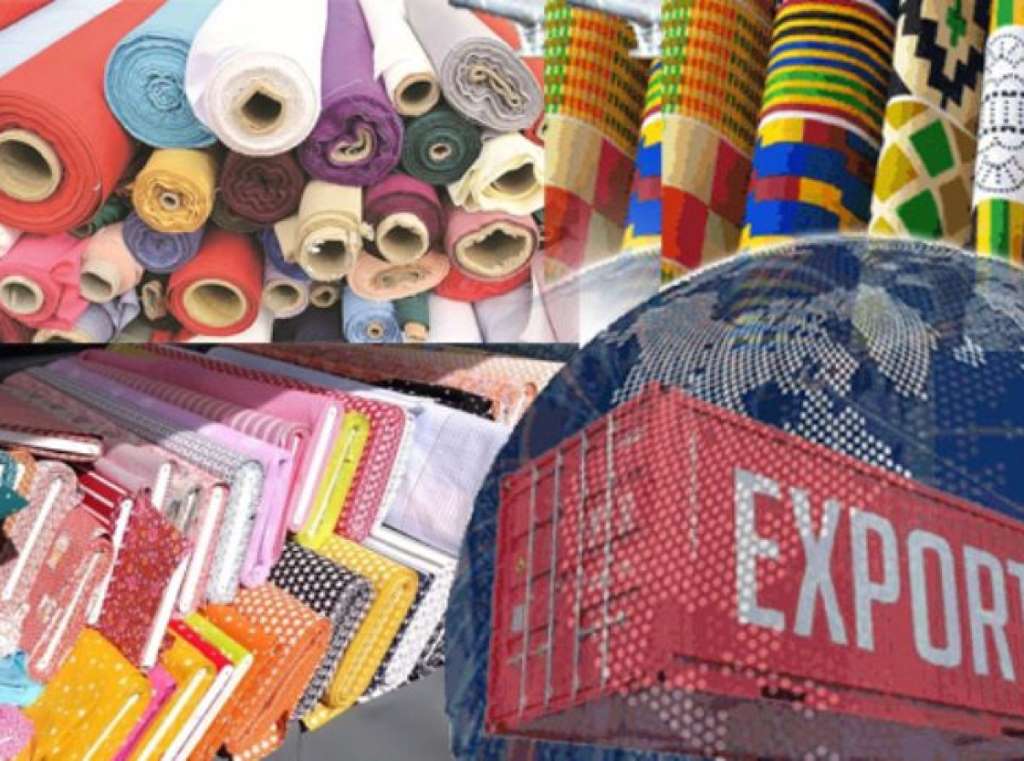
PRGMEA Chairman continued to cite Government must realize that time has gone when raw material used in textiles (yarn, fabric etc) could be exported. This trend is not going to continue and it is the reason Pakistan is facing serious downfall. Countries have to use their raw material and export only possible in the form of finished products ie., Garments. We must believe in concept that countries have to be completely vertically integrated to use their raw materials in completely finished product.

- 1
- 2
- 3
- 4
- 5
- 6
- 7
- 8
- 9
- 10
India’s MMF push faces rising risk from China’s petrochemical dominance
India’s ambition to build a globally competitive synthetic textile industry is facing constraints as downstream capacity alone cannot solve: concentration... Read more
Shein’s Vietnam retreat exposes the limits of nearshoring
The global apparel industry has spent the past few years pursuing a straightforward strategy: reduce dependence on China by moving... Read more
Regional pavilions compete on fiber strengths and supply chain niches at Yarn Ex…
The trade floor at Yarn Expo Autumn 2026 in Shanghai, held between Aug 25-27, capitalizing on a sharp rebound in... Read more
Inside activewear's shift from stitched mesh to precision engineered textiles
The global functional apparel market, on track to touch $640 billion, is looking at a production shift as activewear manufacturers... Read more
Brazil’s cotton dominance puts Asian spinners on a new sourcing map
Brazil’s emergence as the world’s largest cotton exporter is no longer simply an agricultural success story. It has given a... Read more
Textile industry sees long-term growth but $100-bn export goal stays a stretch: …
India’s textile and apparel industry is entering a phase of optimism, but that confidence is tempered by a hard export... Read more
Apparel trade slumps as global textile mills move upstream
Global manufacturing is growing, but finished apparel is failing to capture that growth. United Nations Industrial Development Organization (UNIDO) data... Read more
Global apparel value chain converges in Shanghai as Intertextile Autumn 2026 ope…
The global apparel and textile community gathered in full force yesterday, August 25, 2026, as the Autumn Edition of Intertextile... Read more
Trade pacts, integrated manufacturing power India’s textile export ambitions
Global apparel sourcing is entering a new phase in which resilience, compliance and manufacturing depth matter as much as cost... Read more
Next-gen digital Indigo systems redefine textile manufacturing economics
The global textile sector is experiencing a structural shift as industrial-scale digital dyeing technologies replace traditional indigo vats in major... Read more