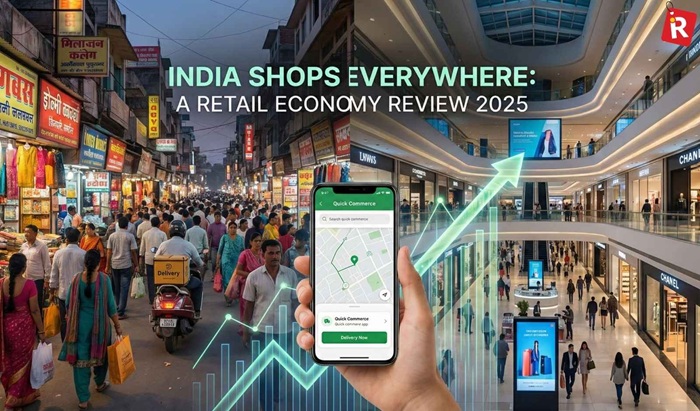
India’s domestic textile and apparel market has undergone a massive structural expansion, tripling in value over the last 15 years to reach approximately Rs 14.95 lakh crore in 2024. According to the ‘Market for Textiles and Clothing: National Household Survey 2024’ released by the Ministry of Textiles on April 6, 2026, the sector’s growth is fundamentally anchored by a sharp rise in individual consumption. Per capita demand for textiles has increased from Rs 2,119 in 2010 to Rs 6,066 in 2024, representing a CAGR of 7.8 per cent. This trajectory highlights a significant shift in consumer behavior, moving from basic necessity to diverse fashion and functional requirements across both urban and rural landscapes.
The growth is largely credited to a 52.2 per cent market dominance by Man-Made Fiber (MMF) and blended products, which have outpaced traditional cotton in volume growth due to their durability and competitive pricing. However, cotton remains a vital pillar with a 10.53 per cent CAGR, reaching an aggregate demand of Rs 3.53 lakh crore. Notably, the report identifies women as the primary drivers of this retail boom, accounting for 55.5 per cent of all textile purchases. As the industry advances into the FY26-27, the emphasis has pivoted toward circularity, with sustainable and recycled textiles now forming a Rs 37,000 crore sub-sector. Government-backed initiatives, including the Production Linked Incentive (PLI) scheme and the development of PM MITRA parks, are further aligning domestic capacity with this burgeoning internal demand.
The Ministry of Textiles is a central government body responsible for policy formulation, planning, and export promotion for the Indian textile industry. It oversees the entire value chain from natural and man-made fibers to garments and technical textiles. The Ministry currently focuses on modernizing infrastructure and achieving a US$ 350 billion market size by 2030.