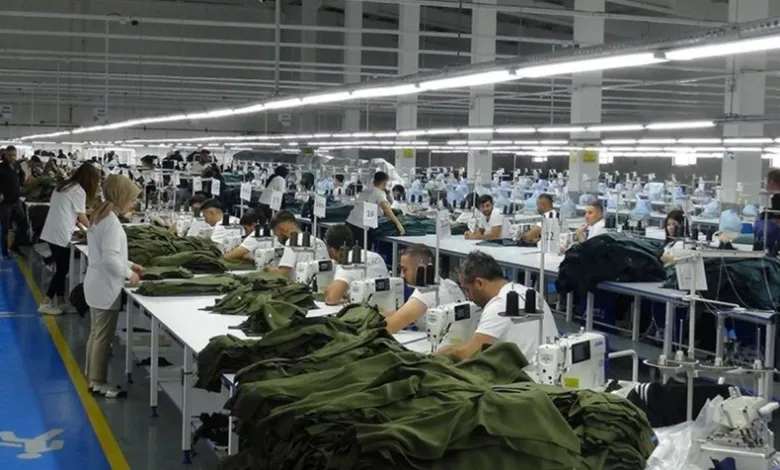
India’s packaging and labeling requirements are much more stringent than the EU’s. So India’s garment makers should revisit the policy of Maximum Retail Price (MRP) to achieve parity at the international apparel market, feels Apparel Export Promotion Council (AEPC)’s additional secretary general Vijay Mathur. He said this at the release of World Bank’s “Stitches to Riches” report in New Delhi recently. He pointed out India's growth in the global apparel sector which has been slow could have been accelerated if the country tried to adopt international practices. It hopes that when the India-EU FTA is signed, it will give India a level playing field vis-à-vis Bangladesh which currently has an advantage in the EU markets.
AEPC feels there is a need to dispel the negative perception of India in the mind of foreign investors who think that the Indian trade scenario is sluggish. AEPC has been advocating an increase in the overtime working hours from 50 hours a quarter to 50 hours a month to increase overall production.
Right now research and development activities prevalent in the Indian apparel industry are not recognized. So AEPC feels there is a need, for instance, to consider the experiments in color and fiber undertaken by the industry for sample generation as it is an important step towards business generation.

- 1
- 2
- 3
- 4
- 5
- 6
- 7
- 8
- 9
- 10
China’s apparel retreat opens $60 bn gap, but India captures little
The biggest shift in global apparel sourcing over the past 15 years has produced an uncomfortable paradox for India. China... Read more
Global fashion bets big on India as consumer confidence leads world
Global fashion retailers are reassessing growth priorities as India moves away from the weaker consumer scenario prevailing across several mature... Read more
Turkiye’s textile crisis opens new frontiers for Egypt and South Asia
The suspension of production at Orta Anadolu’s spinning and weaving complex in Kayseri in mid-September, followed by its scheduled permanent... Read more
Europe cuts apparel volumes and prices, testing South Asian suppliers
European apparel sourcing entered 2026 under simultaneous volume and price pressure, forcing suppliers to absorb a decline that is reshaping... Read more
FICCI-TAG 2026: Mandatory reporting & Textile ID rolled out; Non-Compliance …
In a stern regulatory announcement aimed at creating a robust statistical backbone for India's textile sector, Textile Commissioner Vrunda Manohar... Read more
India’s apparel exporters face a new US tariff risk as margins shrink
The enactment of the Lindsey O. Graham sanctioning Russia and Iran Act of 2026 in Washington has introduced a fresh... Read more
Cellulosics challenge polyester dominance in global fibre market
The global textile raw-materials market has entered a phase where plant-based and regenerated cellulosic fibres have gain ground against fossil-fuel-derived... Read more
From cotton to MMF cost equation is rewriting global textile trade
The global textile and apparel trade has grown from $560 billion in 2006 to $914 billion in 2025, reveals the... Read more
Polyethylene stretch yarn challenges elastane’s hold on activewear
The global activewear, denim and intimate apparel markets have built a substantial business around stretch. But the same fibre combinations... Read more
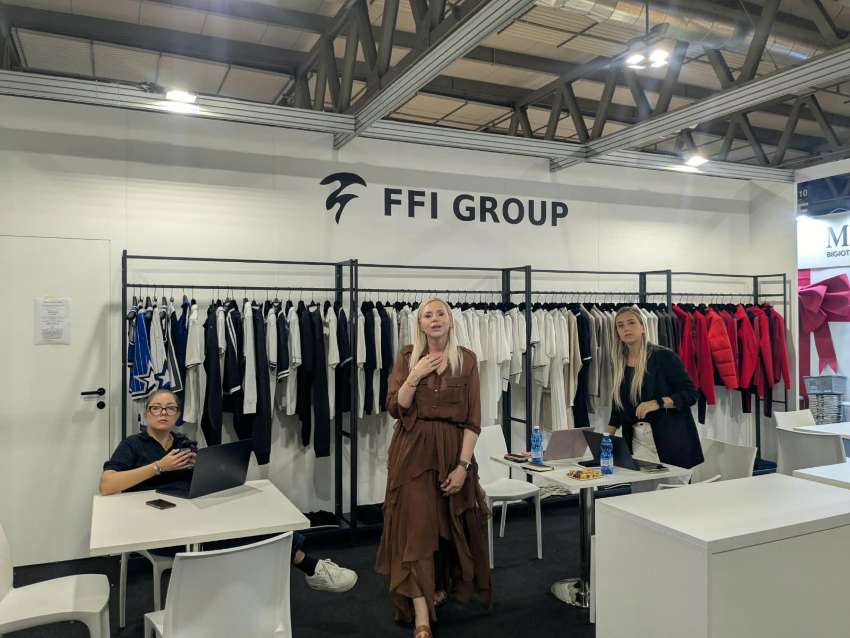
Automation Meets Italian Design: FFI Srl unveils ‘Next-Gen Robotics’ to help bra…
At the recently concluded autumn edition of Ready to Show inside Hall 10 at Fiera Milano-Rho—staged alongside the Milano Fashion... Read more