As tariff volatility, shorter retail buying cycles and aggressive price negotiations in the US expose weaknesses in the country’s traditional export model India’s textile and apparel export strategy is being reworked. With textile and apparel exports at around $36.6 billion, the pressure is no longer limited to only tariff. It is now being transmitted through buyer demands for lower prices, tighter inventories and faster replenishment.
The Department-Related Parliamentary Standing Committee on Commerce, in its 200th report, has therefore pushed for a broader policy response spanning fibre availability, manufacturing incentives, logistics, trade-risk monitoring and export finance. The underlying message is clear: protecting India’s export competitiveness will require changes across the value chain rather than simply compensating exporters for higher duties.
Tariffs expose structural gaps
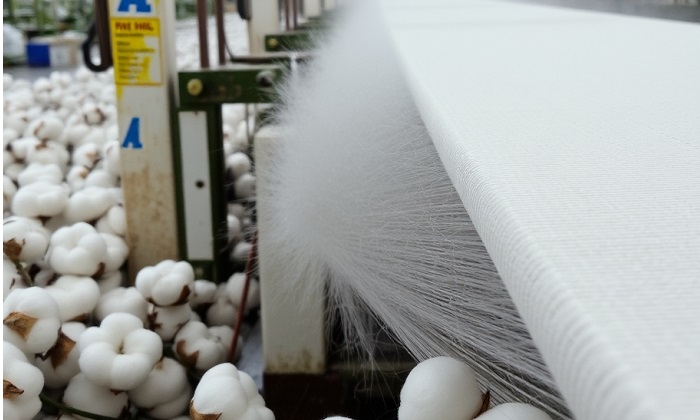
India remains heavily dependent on cotton-based exports even as global apparel sourcing is moving towards man-made fibres, performance wear and technical textiles. Nearly 65 per cent of India’s export volume is still linked to traditional cotton products, limiting the country's ability to participate fully in faster-growing synthetic categories.
The US market magnifies this vulnerability. When tariffs rise, buyers rarely absorb the entire increase. Instead, sourcing companies seek price concessions from suppliers, putting pressure on factory margins and working capital. For Indian manufacturers already operating with longer production and shipping cycles than some competing sourcing hubs, this creates a double disadvantage. The policy response is consequently shifting from export promotion towards exports, building a supply chain that can absorb tariff shocks while remaining commercially competitive.
MMF becomes strategic
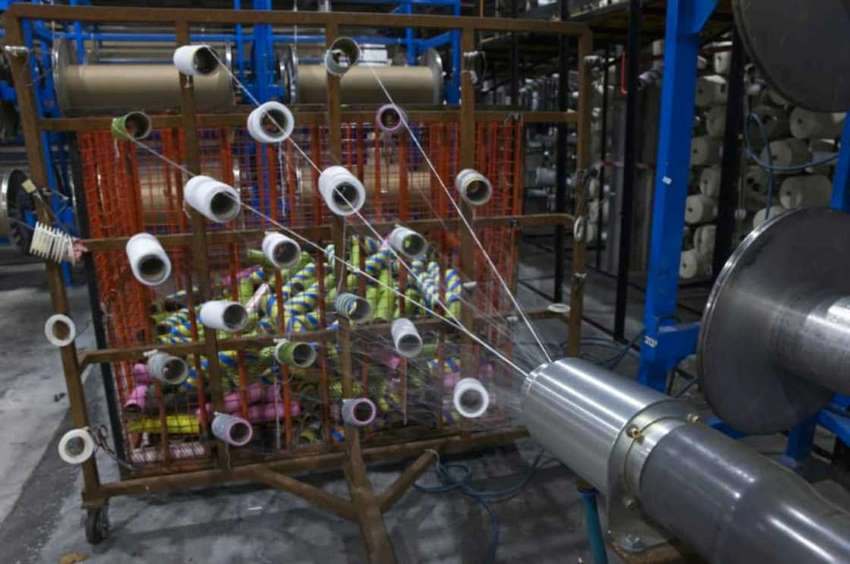
One of the most significant recommendations is the creation of dedicated man-made fibre manufacturing zones within the seven approved PM Mega Integrated Textile Regions and Apparel (PM MITRA) parks. The move addresses a long-standing weakness in India's synthetic textile ecosystem. Spinning, texturising, knitting, processing and garmenting are often geographically fragmented, increasing logistics costs and slowing production. Concentrating these activities within integrated clusters could reduce material movement and improve coordination between MSMEs and larger manufacturers.
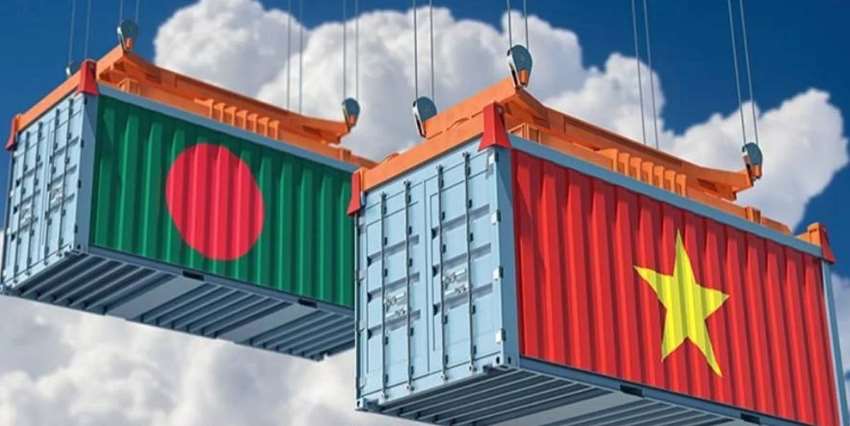
The move is particularly important because synthetic fibres are central to activewear, athleisure, performance apparel and blended fabrics. Competitors such as China and Vietnam have built deeper synthetic value chains, allowing them to respond more quickly to international buyers. At the same time, the committee has called for structural bottlenecks in the Production Linked Incentive scheme to be addressed so that investments in technical textiles and higher-value functional products translate into actual production capacity.
Speed a cost advantage
India’s competitiveness problem is not only about factory costs. It is also about time. Shipments to US eastern ports can take roughly 25 to 30 days, while nearshore suppliers in Central America can replenish retailers in a fraction of that time. With US retailers avoiding excessive inventory commitments, speed becomes part of the product's commercial value.
The committee's recommendation for government-supported bonded warehousing near major US ports is therefore strategically significant. Forward inventories could allow Indian suppliers to respond to replenishment orders without waiting for another ocean shipment.
Faster customs at Indian ports would complement this approach. Along with, bonded inventory and streamlined export clearance could help Indian suppliers compete on responsiveness rather than attempting to win every order through lower FOB prices.
Financial buffers need redesign
Tariff shocks are ultimately transmitted into exporters' balance sheets. When buyers demand 6-8 per cent price reductions, the impact is felt through margins, receivables and working capital. The committee has proposed closer monitoring of overseas customs audits and rules-of-origin disputes through a dedicated Directorate General of Foreign Trade mechanism. Such a system could give exporters earlier warning of regulatory risks rather than forcing companies to react after shipments are held up or duties are reassessed.
The panel has also highlighted the need to strengthen support under RoSCTL and RoDTEP, alongside concessional working capital, broader credit guarantees and continuation of interest-equalisation support. The objective should not be permanent subsidy dependence. Instead, these mechanisms can provide a temporary financial buffer while companies move towards greater automation, product diversification and supply-chain integration.
Artisan exports need differentiation
The same restructuring challenge extends beyond industrial apparel. India’s handmade carpet exports, valued at around $1.54 billion annually, are facing competition from machine-tufted products, particularly from Turkey. Traditional clusters in Uttar Pradesh, Rajasthan and Kashmir cannot compete purely on manufacturing cost. Their advantage lies in proven craftsmanship and design. GI-led marketing, international buyer-seller meets and technical-upgradation grants can help translate those attributes into stronger pricing power. For artisan clusters, upgrading does not necessarily mean abandoning traditional production. It means adapting weave density, colours, designs and product formats to changing demand in Western interiors and sustainable lifestyle retail.
Tiruppur offers a template
Tiruppur shows how industry-level integration can become a defence mechanism against external trade shocks. As US buyers push for price concessions, manufacturers are looking towards integrated facilities combining synthetic knitting, processing and automated cutting. Access to larger integrated industrial parks can reduce internal logistics and allow suppliers to shift between cotton, synthetic and blended products according to demand.
The reported experience of manufacturers investing in the Virudhunagar PM MITRA park points towards a broader lesson: scale and integration can protect margins more effectively than cost cutting alone. For a sector traditionally dominated by fragmented units, shared infrastructure, common processing facilities and closer fibre-to-garment integration could create productivity gains that individual MSMEs may struggle to achieve independently.
Corporate shift mirrors policy
Large manufacturers are already moving in the same direction. Arvind Ltd, for examples, has been expanding its presence across denim, advanced woven fabrics and technical textiles while increasing its exposure to synthetic blends and industrial fabrics. This reflects the wider transition underway across India's textile industry. The next phase of export growth will depend less on expanding basic cotton capacity and more on developing differentiated products, integrated manufacturing and faster fulfilment.
The bigger reset
India’s response to US trade uncertainty is therefore evolving from a narrow tariff-management exercise into a structural competitiveness programme. The immediate priority is to cushion exporters from tariff-driven margin compression. The larger challenge is to reduce the reasons buyers can demand those concessions in the first place.
That means deeper MMF integration, faster logistics, stronger technical-textile capacity, automated production and more resilient trade-finance systems. If PM MITRA parks and policy reforms successfully connect these pieces, India could emerge from the current tariff cycle with a more diversified export architecture. The real test will be whether policy support produces globally competitive supply chains or simply offsets the cost of remaining structurally slower and more cotton-dependent than its rivals.