
India is strengthening its case as a textile recycling hub, challenging perceptions that it primarily absorbs discarded Western clothing. Data cited by the Ministry of Textiles puts the country’s annual managed textile waste at approximately 7.8 million tonnes, with domestic waste accounting for the bulk of the supply.
The ministry’s figures indicate that 97perc ent of pre-consumer manufacturing waste, including fabric offcuts and production scraps, is recycled into the production cycle. This recovery base gives Indian recyclers access to locally generated feedstock while supporting demand for recycled fibres and yarns.
The data also challenges the notion that imported discarded clothing dominates India’s recycling industry.
Table: Annual textile waste composition in India
|
Source of waste |
Volume (Approx.) |
Percentage share |
|
Domestic Generation |
7.02 mn tonnes |
90% |
|
Imported Material |
0.54 mn tonnes |
7% |
|
Total Managed Waste |
7.80 mn tonnes |
100% |
The figures point to domestic waste as the industry’s principal feedstock. However, the listed source volumes total 7.56 million tonnes, while the shares add up to 97 per cent. The underlying dataset needs clarification before publication.
A Rs 22,000 crore market
India’s textile waste ecosystem generates an estimated Rs 22,000 crore ($2.6 billion) in annual economic activity, according to the Federation of Indian Chambers of Commerce and Industry (FICCI).
The business extends beyond waste collection. Recovered fibres are converted into yarns and products such as blankets and carpets, creating a secondary raw-material market for textile manufacturers.
Environmental savings add to the commercial case. Research by IIT Delhi indicates that mechanical recycling can reduce greenhouse gas emissions and fossil fuel consumption by up to 40% compared with virgin fibre production. Water savings are also possible, depending on the fibre and processing route.
For exporters, these gains could help meet rising buyer expectations on resource efficiency, recycled content and supply-chain sustainability.
Panipat’s waste-to-yarn model
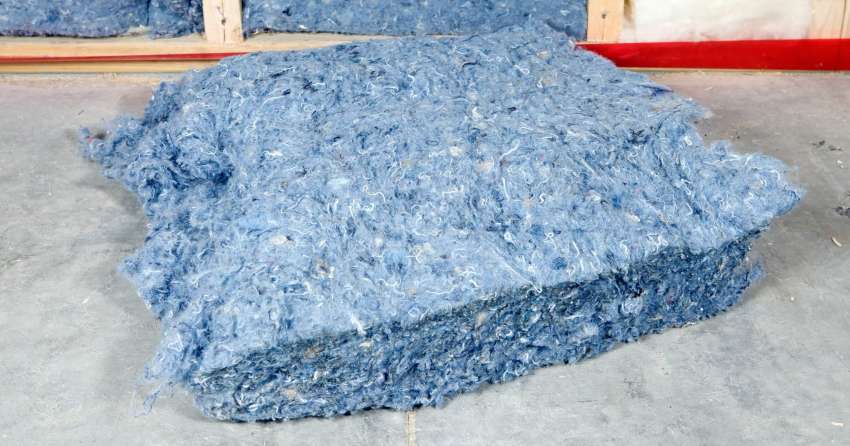
Panipat in Haryana showcases how recovered textiles can feed an established manufacturing cluster. The region processes discarded woollens and acrylics into reclaimed fibres, which are spun into shoddy yarn and used to make blankets, carpets and other products.
Some units process imported post-consumer textiles under applicable actual-user licensing arrangements. The model turns discarded material into a marketable industrial input, reducing dependence on virgin fibres for selected applications.
However, the cluster also highlights the challenges of moving from informal processing to more formal, environmentally compliant production. Better waste handling, worker safety and regulatory oversight will be essential to sustain growth.
Collection is the next hurdle
India’s strong recovery of factory waste does not eliminate its challenges in post-consumer recycling. Used garments are harder to process because they contain fibre blends, dyes, trims and finishes. Fragmented collection and sorting systems further complicate recovery.
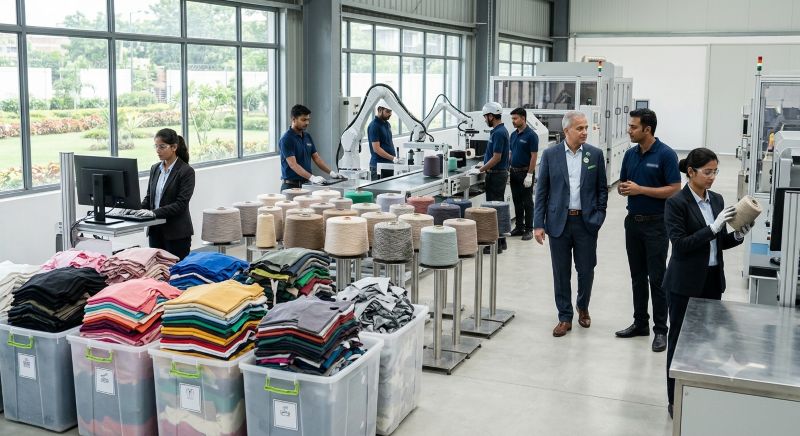
Investment in automated sorting and sensor-based fibre identification could improve material purity and expand the range of recyclable textiles. Yet wider adoption will depend on processing costs, consistent feedstock supply and demand for recycled outputs.
The industry must also improve traceability and environmental compliance if it is to secure larger orders from global brands seeking verifiable circular-material supply chains.
Scaling circularity
India’s textile industry is targeting $250 billion in production by 2030. Recycling can support this ambition by recovering material value, reducing reliance on virgin inputs and creating additional revenue streams.
The next phase requires more than high factory-waste recovery rates. Stronger post-consumer collection, better sorting infrastructure and commercially viable fibre-to-fibre recycling will determine how much value India can capture from discarded textiles.
India has an established recycling base. Turning it into a globally competitive circular manufacturing system will require measurable recovery performance, transparent data and consistent environmental standards.